


-
 Mexique
The Distribution of wine in Mexico
7 mars 2021
- Distribution
Résumé
Suivons l’histoire de Nike, tirée de la biographie de son fondateur Phil Knight, pour en tirer quelques leçons sur les contrats de distribution internationaux: comment négocier le contrat, établir la durée de l’accord, définir l’exclusivité et les objectifs commerciaux, et déterminer la manière adéquate de résoudre les litiges.
Ce dont je parle dans cet article
- Le conflit entre Blue Ribbon et Onitsuka Tiger et la naissance de Nike
- Comment négocier un accord de distribution international
- L’exclusivité contractuelle dans un accord de distribution commerciale
- Clauses de chiffre d’affaires minimum dans les contrats de distribution
- Durée du contrat et préavis de résiliation
- La propriété des marques dans les contrats de distribution commerciale
- L’importance de la médiation dans les contrats de distribution commerciale internationale
- Clauses de règlement des litiges dans les contrats internationaux
- Comment nous pouvons vous aider
Le différend entre Blue Ribbon et Onitsuka Tiger et la naissance de Nike
Pourquoi la marque de vêtements de sport la plus célèbre au monde est-elle Nike et non Onitsuka Tiger?
Shoe Dog est la biographie du créateur de Nike, Phil Knight: pour les amateurs du genre, mais pas seulement, le livre est vraiment très bon et je recommande sa lecture.
Mû par sa passion pour la course à pied et l’intuition qu’il y avait un espace dans le marché américain des chaussures de sport, à l’époque dominé par Adidas, Knight a été le premier, en 1964, à importer aux États-Unis une marque de chaussures de sport japonaise, Onitsuka Tiger, venant conquérir en 6 ans une part de marché de 70%.
La société fondée par Knight et son ancien entraîneur d’athlétisme universitaire, Bill Bowerman, s’appelait Blue Ribbon Sports.
La relation d’affaires entre Blue Ribbon-Nike et le fabricant japonais Onitsuka Tiger a été, dès le début, très turbulente, malgré le fait que les ventes de chaussures aux États-Unis se déroulaient très bien et que les perspectives de croissance étaient positives.
Lorsque, peu après avoir renouvelé le contrat avec le fabricant japonais, Knight a appris qu’Onitsuka cherchait un autre distributeur aux États-Unis, craignant d’être coupé du marché, il a décidé de chercher un autre fournisseur au Japon et de créer sa propre marque, Nike.
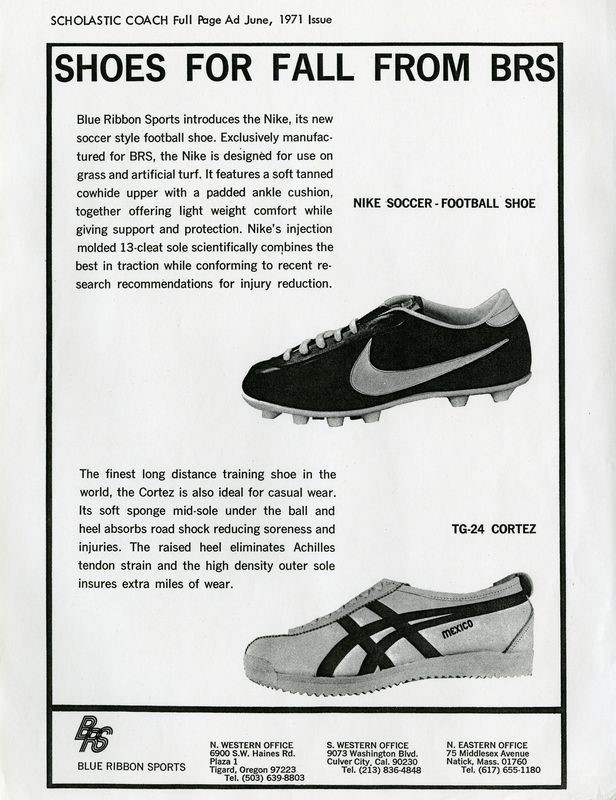
En apprenant le projet Nike, le fabricant japonais a attaqué Blue Ribbon pour violation de l’accord de non-concurrence, qui interdisait au distributeur d’importer d’autres produits fabriqués au Japon, déclarant la résiliation immédiate de l’accord.
À son tour, Blue Ribbon a fait valoir que la violation serait celle d’Onitsuka Tiger, qui avait commencé à rencontrer d’autres distributeurs potentiels alors que le contrat était encore en vigueur et que les affaires étaient très positives.
Cela a donné lieu à deux procès, l’un au Japon et l’autre aux États-Unis, qui auraient pu mettre un terme prématuré à l’histoire de Nike.
Heureusement (pour Nike), le juge américain s’est prononcé en faveur du distributeur et le litige a été clos par un règlement: Nike a ainsi commencé le voyage qui l’amènera 15 ans plus tard à devenir la plus importante marque d’articles de sport au monde.
Comment négocier un accord de distribution commerciale internationale?
Voyons ce que l’histoire de Nike nous apprend et quelles sont les erreurs à éviter dans un contrat de distribution international.
Dans sa biographie, Knight écrit qu‘il a rapidement regretté d’avoir lié l’avenir de son entreprise à un accord commercial de quelques lignes rédigé à la hâte à la fin d’une réunion visant à négocier le renouvellement du contrat de distribution.
Que contenait cet accord?
L’accord prévoyait uniquement le renouvellement du droit de Blue Ribbon de distribuer les produits exclusivement aux Etats-Unis pour trois années supplémentaires.
Il arrive souvent que les contrats de distribution internationale soient confiés à des accords verbaux ou à des contrats très simples et de courte durée: l’explication qui est généralement donnée est qu’il est ainsi possible de tester la relation commerciale, sans trop engager la contrepartie.
Cette façon de faire est cependant erronée et dangereuse: le contrat ne doit pas être considéré comme une charge ou une contrainte, mais comme une garantie des droits des deux parties. Ne pas conclure de contrat écrit, ou le faire de manière très hâtive, signifie laisser sans accords clairs des éléments fondamentaux de la relation future, comme ceux qui ont conduit au litige entre Blue Ribbon et Onitsuka Tiger: objectifs commerciaux, investissements, propriété des marques.
Si le contrat est également international, la nécessité de rédiger un accord complet et équilibré est encore plus forte, étant donné qu’en l’absence d’accords entre les parties, ou en complément de ces accords, on applique une loi avec laquelle l’une des parties n’est pas familière, qui est généralement la loi du pays où le distributeur est basé.
Même si vous n’êtes pas dans la situation du Blue Ribbon, où il s’agissait d’un accord dont dépendait l’existence même de l’entreprise, les contrats internationaux doivent être discutés et négociés avec l’aide d’un avocat expert qui connaît la loi applicable à l’accord et peut aider l’entrepreneur à identifier et à négocier les clauses importantes du contrat.
Exclusivité territoriale, objectifs commerciaux et objectifs minimaux de chiffre d’affaires
La première raison du conflit entre Blue Ribbon et Onitsuka Tiger était l’évaluation de l’évolution des ventes sur le marché américain.
Onitsuka soutenait que le chiffre d’affaires était inférieur au potentiel du marché américain, alors que selon Blue Ribbon la tendance des ventes était très positive, puisque jusqu’à ce moment-là elle avait doublé chaque année le chiffre d’affaires, conquérant une part importante du secteur du marché.
Lorsque Blue Ribbon a appris qu’Onituska évaluait d’autres candidats pour la distribution de ses produits aux États-Unis et craignant d’être bientôt exclu du marché, Blue Ribbon a préparé la marque Nike comme plan B: lorsque cela a été découvert par le fabricant japonais, la situation s’est précipitée et a conduit à un différend juridique entre les parties.
Ce litige aurait peut-être pu être évité si les parties s’étaient mises d’accord sur des objectifs commerciaux et si le contrat avait inclus une clause assez classique dans les accords de distribution exclusive, à savoir un objectif de vente minimum de la part du distributeur.
Dans un accord de distribution exclusive, le fabricant accorde au distributeur une forte protection territoriale contre les investissements que le distributeur réalise pour développer le marché attribué.
Afin d’équilibrer la concession de l’exclusivité, il est normal que le producteur demande au distributeur ce que l’on appelle le chiffre d’affaires minimum garanti ou l’objectif minimum, qui doit être atteint par le distributeur chaque année afin de maintenir le statut privilégié qui lui est accordé.
Si l’objectif minimum n’est pas atteint, le contrat prévoit généralement que le fabricant a le droit de se retirer du contrat (dans le cas d’un accord à durée indéterminée) ou de ne pas le renouveler (si le contrat est à durée déterminée) ou de révoquer ou de restreindre l’exclusivité territoriale.
Dans le contrat entre Blue Ribbon et Onitsuka Tiger, l’accord ne prévoyait aucun objectif (et en fait, les parties n’étaient pas d’accord sur l’évaluation des résultats du distributeur) et venait d’être renouvelé pour trois ans: comment peut-on prévoir des objectifs de chiffre d’affaires minimum dans un contrat pluriannuel?
En l’absence de données fiables, les parties s’appuient souvent sur des mécanismes d’augmentation en pourcentage prédéterminés: +10% la deuxième année, +30% la troisième, +50% la quatrième, et ainsi de suite.
Le problème de cet automatisme est que les objectifs sont convenus sans disposer des données réelles sur l’évolution future des ventes du produit, des ventes des concurrents et du marché en général, et peuvent donc être très éloignés des possibilités actuelles de vente du distributeur.
Par exemple, contester le distributeur pour ne pas avoir atteint l’objectif de la deuxième ou troisième année dans une économie en récession serait certainement une décision discutable et une source probable de désaccord.
Il serait préférable de prévoir une clause de fixation consensuelle des objectifs d’une année sur l’autre, stipulant que les objectifs seront convenus entre les parties à la lumière des performances de vente des mois précédents, avec un certain préavis avant la fin de l’année en cours.
En cas d’absence d’accord sur le nouvel objectif, le contrat peut prévoir l’application de l’objectif de l’année précédente ou le droit pour les parties de se retirer, moyennant un certain délai de préavis.
D’autre part, il ne faut pas oublier que l’objectif peut également être utilisé comme une incitation pour le distributeur: il peut être prévu, par exemple, que si un certain chiffre d’affaires est atteint, cela permettra de renouveler l’accord, de prolonger l’exclusivité territoriale ou d’obtenir certaines compensations commerciales pour l’année suivante.
Une dernière recommandation est de gérer correctement la clause d’objectif minimum, si elle est présente dans le contrat: il arrive souvent que le fabricant conteste la non-atteinte de l’objectif pour une certaine année, après une longue période pendant laquelle les objectifs annuels n’avaient pas été atteints, ou n’avaient pas été actualisés, sans aucune conséquence.
Dans ce cas, il est possible que le distributeur invoque une renonciation implicite à cette protection contractuelle et donc que la rétractation ne soit pas valable: pour éviter les litiges à ce sujet, il est conseillé de prévoir expressément dans la clause Minimum Target que le fait de ne pas contester la non-atteinte de l’objectif pour une certaine période ne signifie pas que l’on renonce au droit d’activer la clause dans le futur.
Le délai de préavis pour la résiliation d’un contrat de distribution internationale
L’autre litige entre les parties concernait la violation d’un accord de non-concurrence: la vente de la marque Nike par Blue Ribbon, alors que le contrat interdisait la vente d’autres chaussures fabriquées au Japon.
Onitsuka Tiger a affirmé que Blue Ribbon avait violé l’accord de non-concurrence, tandis que le distributeur a estimé qu’il n’avait pas d’autre choix, étant donné la décision imminente du fabricant de résilier l’accord.
Ce type de litige peut être évité en fixant clairement une période de préavis pour la résiliation (ou le non-renouvellement): cette période a pour fonction fondamentale de permettre aux parties de se préparer à la fin de la relation et d’organiser leurs activités après la résiliation.
En particulier, afin d’éviter des malentendus tels que celui qui s’est produit entre Blue Ribbon et Onitsuka Tiger, on peut prévoir que, pendant cette période, les parties pourront prendre contact avec d’autres distributeurs et producteurs potentiels, et que cela ne viole pas les obligations d’exclusivité et de non-concurrence.
Dans le cas de Blue Ribbon, en effet, le distributeur avait fait un pas de plus que la simple recherche d’un autre fournisseur, puisqu’il avait commencé à vendre des produits Nike alors que le contrat avec Onitsuka était encore valide: ce comportement représente une grave violation d’un accord d’exclusivité.
Un aspect particulier à prendre en considération concernant le délai de préavis est sa durée: quelle doit être la durée du préavis pour être considéré comme équitable ? Dans le cas de relations commerciales de longue date, il est important de donner à l’autre partie suffisamment de temps pour se repositionner sur le marché, en cherchant d’autres distributeurs ou fournisseurs, ou (comme dans le cas de Blue Ribbon/Nike) pour créer et lancer sa propre marque.
L’autre élément à prendre en compte, lors de la communication de la résiliation, est que le préavis doit être tel qu’il permette au distributeur d’amortir les investissements réalisés pour remplir ses obligations pendant le contrat; dans le cas de Blue Ribbon, le distributeur, à la demande expresse du fabricant, avait ouvert une série de magasins monomarques tant sur la côte ouest que sur la côte est des États-Unis.
Une clôture du contrat peu après son renouvellement et avec un préavis trop court n’aurait pas permis au distributeur de réorganiser le réseau de vente avec un produit de remplacement, obligeant la fermeture des magasins qui avaient vendu les chaussures japonaises jusqu’à ce moment.
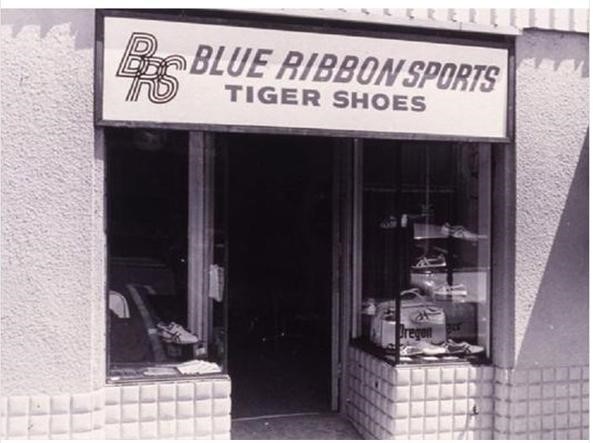
En général, il est conseillé de prévoir un délai de préavis pour la résiliation d’au moins 6 mois, mais dans les contrats de distribution internationale, il faut prêter attention, en plus des investissements réalisés par les parties, aux éventuelles dispositions spécifiques de la loi applicable au contrat (ici, par exemple, une analyse approfondie pour la résiliation brutale des contrats en France) ou à la jurisprudence en matière de rupture des relations commerciales (dans certains cas, le délai considéré comme approprié pour un contrat de concession de vente à long terme peut atteindre 24 mois).
Enfin, il est normal qu’au moment de la clôture du contrat, le distributeur soit encore en possession de stocks de produits: cela peut être problématique, par exemple parce que le distributeur souhaite généralement liquider le stock (ventes flash ou ventes via des canaux web avec de fortes remises) et cela peut aller à l’encontre des politiques commerciales du fabricant et des nouveaux distributeurs.
Afin d’éviter ce type de situation, une clause qui peut être incluse dans le contrat de distribution est celle relative au droit du producteur de racheter le stock existant à la fin du contrat, en fixant déjà le prix de rachat (par exemple, égal au prix de vente au distributeur pour les produits de la saison en cours, avec une remise de 30% pour les produits de la saison précédente et avec une remise plus importante pour les produits vendus plus de 24 mois auparavant).
Propriété de la marque dans un accord de distribution international
Au cours de la relation de distribution, Blue Ribbon avait créé un nouveau type de semelle pour les chaussures de course et avait inventé les marques Cortez et Boston pour les modèles haut de gamme de la collection, qui avaient connu un grand succès auprès du public, gagnant une grande popularité: à la fin du contrat, les deux parties ont revendiqué la propriété des marques.
Des situations de ce type se produisent fréquemment dans les relations de distribution internationale: le distributeur enregistre la marque du fabricant dans le pays où il opère, afin d’empêcher les concurrents de le faire et de pouvoir protéger la marque en cas de vente de produits contrefaits ; ou bien il arrive que le distributeur, comme dans le litige dont nous parlons, collabore à la création de nouvelles marques destinées à son marché.
À la fin de la relation, en l’absence d’un accord clair entre les parties, un litige peut survenir comme celui de l’affaire Nike: qui est le propriétaire, le producteur ou le distributeur?

Afin d’éviter tout malentendu, le premier conseil est d’enregistrer la marque dans tous les pays où les produits sont distribués, et pas seulement: dans le cas de la Chine, par exemple, il est conseillé de l’enregistrer quand même, afin d’éviter que des tiers de mauvaise foi ne s’approprient la marque (pour plus d’informations, voir ce billet sur Legalmondo).
Il est également conseillé d’inclure dans le contrat de distribution une clause interdisant au distributeur de déposer la marque (ou des marques similaires) dans le pays où il opère, en prévoyant expressément le droit pour le fabricant de demander son transfert si tel était le cas.
Une telle clause aurait empêché la naissance du litige entre Blue Ribbon et Onitsuka Tiger.
Les faits que nous relatons datent de 1976: aujourd’hui, en plus de clarifier la propriété de la marque et les modalités d’utilisation par le distributeur et son réseau de vente, il est conseillé que le contrat réglemente également l’utilisation de la marque et des signes distinctifs du fabricant sur les canaux de communication, notamment les médias sociaux.
Il est conseillé de stipuler clairement que le fabricant est le propriétaire des profils de médias sociaux, des contenus créés et des données générées par l’activité de vente, de marketing et de communication dans le pays où opère le distributeur, qui ne dispose que de la licence pour les utiliser, conformément aux instructions du propriétaire.
En outre, il est bon que l’accord établisse la manière dont la marque sera utilisée et les politiques de communication et de promotion des ventes sur le marché, afin d’éviter des initiatives qui pourraient avoir des effets négatifs ou contre-productifs.
La clause peut également être renforcée en prévoyant des pénalités contractuelles dans le cas où, à la fin du contrat, le distributeur refuserait de transférer le contrôle des canaux numériques et des données générées dans le cadre de l’activité commerciale.
La médiation dans les contrats de distribution commerciale internationale
Un autre point intéressant offert par l’affaire Blue Ribbon vs. Onitsuka Tiger est lié à la gestion des conflits dans les relations de distribution internationale: des situations telles que celle que nous avons vue peuvent être résolues efficacement par le recours à la médiation.
C’est une tentative de conciliation du litige, confiée à un organisme spécialisé ou à un médiateur, dans le but de trouver un accord amiable qui évite une action judiciaire.
La médiation peut être prévue dans le contrat comme une première étape, avant l’éventuel procès ou arbitrage, ou bien elle peut être initiée volontairement dans le cadre d’une procédure judiciaire ou arbitrale déjà en cours.
Les avantages sont nombreux: le principal est la possibilité de trouver une solution commerciale qui permette la poursuite de la relation, au lieu de chercher uniquement des moyens de mettre fin à la relation commerciale entre les parties.
Un autre aspect intéressant de la médiation est celui de surmonter les conflits personnels: dans le cas de Blue Ribbon vs. Onitsuka, par exemple, un élément décisif dans l’escalade des problèmes entre les parties était la relation personnelle difficile entre le PDG de Blue Ribbon et le directeur des exportations du fabricant japonais, aggravée par de fortes différences culturelles.
Le processus de médiation introduit une troisième figure, capable de dialoguer avec les parties et de les guider dans la recherche de solutions d’intérêt mutuel, qui peut être décisive pour surmonter les problèmes de communication ou les hostilités personnelles.
Pour ceux qui sont intéressés par le sujet, nous vous renvoyons à ce post sur Legalmondo et à la rediffusion d’un récent webinaire sur la médiation des conflits internationaux.
Clauses de règlement des différends dans les accords de distribution internationaux
Le litige entre Blue Ribbon et Onitsuka Tiger a conduit les parties à engager deux procès parallèles, l’un aux États-Unis (initié par le distributeur) et l’autre au Japon (enraciné par le fabricant).
Cela a été possible parce que le contrat ne prévoyait pas expressément la manière dont les litiges futurs seraient résolus, générant ainsi une situation très compliquée, de plus sur deux fronts judiciaires dans des pays différents.
Les clauses qui établissent la loi applicable à un contrat et la manière dont les litiges doivent être résolus sont connues sous le nom de « clauses de minuit », car elles sont souvent les dernières clauses du contrat, négociées tard dans la nuit.
Ce sont, en fait, des clauses très importantes, qui doivent être définies de manière consciente, afin d’éviter des solutions inefficaces ou contre-productives.
Comment nous pouvons vous aider
La construction d’un accord de distribution commerciale internationale est un investissement important, car il fixe les règles de la relation entre les parties pour l’avenir et leur fournit les outils pour gérer toutes les situations qui seront créées dans la future collaboration.
Il est essentiel non seulement de négocier et de conclure un accord correct, complet et équilibré, mais aussi de savoir le gérer au fil des années, surtout lorsque des situations de conflit se présentent.
Legalmondo offre la possibilité de travailler avec des avocats expérimentés dans la distribution commerciale internationale dans plus de 60 pays: écrivez-nous vos besoins.
Résumé
Les crises politiques, environnementales et sanitaires (telles que la crise sanitaire du Covid-19 et l’agression de l’Ukraine par l’armée russe) peuvent provoquer l’augmentation du prix des matières premières et composants et une inflation généralisée. Aussi bien les fournisseurs que les distributeurs se retrouvent confrontés à des problèmes liés à la hausse, souvent soudaine, et très substantielle, des prix de leurs approvisionnements. Le droit français pose à ce égard un certain nombre de règles spéciales constituant autant d’opportunités que de contraintes selon les intérêts en présence.
Deux situations principales peuvent être distinguées (outre de nombreux accords ou situations particuliers): celle dans laquelle les parties n’ont pas figé les conditions tarifaires (le plus souvent en instaurant un simple flux courant de commandes ou en concluant un contrat cadre sans engagement de prix ferme sur une durée déterminée) et celle dans laquelle les parties ont conclu un accord cadre figeant les prix pendant une durée déterminée.
La révision des prix dans une relation d’affaires
La situation est la suivante : les parties n’ont pas conclu d’accord cadre, chaque contrat de vente conclu (chaque commande) est régi par les CGV du fournisseur ; ce dernier ne s’est pas engagé à maintenir les prix pendant une durée minimum et applique les prix du tarif en cours.
En principe, le fournisseur peut modifier ses prix à tout moment en adressant un nouveau tarif. Il devra cependant accorder par écrit un préavis raisonnable conforme aux dispositions de l’article L. 442-1.II du code de commerce, avant que son augmentation de prix n’entre en vigueur. Faute de respecter un préavis suffisant, il pourrait se voir reprocher une rupture brutale « partielle » des relations commerciales (et s’exposer à des dommages-intérêts).
Une rupture brutale consécutive à une augmentation de prix est caractérisée quand les conditions suivantes sont réunies :
- la relation commerciale doit être établie : notion plus large que le simple contrat, en tenant compte de la durée mais aussi de l’importance et de la régularité des échanges entre les parties ;
- l’augmentation de prix doit être assimilée à une rupture : c’est principalement l’importance de l’augmentation des prix (+1%, 10% ou 25% ?) qui conduira un juge à déterminer si l’augmentation constitue une rupture « partielle » (en cas de modification substantielle de la relation qui est néanmoins maintenue) ou une rupture totale (si l’augmentation est telle qu’elle implique un arrêt de la relation) ou si elle ne constitue pas une rupture (si la hausse est minime) ;
- le préavis accordé est insuffisant en comparant la durée du préavis effectivement accordé à celle du préavis conforme à l’article L. 442-1.II, tenant compte, notamment, de la durée de la relation commerciale et de l’éventuelle dépendance de la victime de la rupture à l’égard de l’autre partie.
L’article L. 442-1.II est d’ordre public dans les relations internes françaises. Dans les relations commerciales internationales, pour savoir comment traiter l’article L.442-1.II et les règles de conflits de lois ainsi que les règles de compétence juridictionnelle, veuillez consulter notre précédent article publié sur le blog Legalmondo.
La révision des prix dans un contrat-cadre
Si les parties ont conclu un contrat-cadre (tels que approvisionnement, fabrication, …) de plusieurs années et que le fournisseur s’est engagé sur un tarif ferme, comment, dans ce cas, peut-il augmenter ses prix ? Indépendamment d’une clause d’indexation ou d’une clause de renégociation qui serait stipulée au contrat (outre les dispositions légales spécifiques applicables aux conventions particulières quant à leur nature ou à leur secteur économique), le fournisseur peut chercher à se prévaloir du mécanisme légal de « l’imprévision » prévu par l’article 1195 du code civil,
Ce mécanisme ne permet pas au fournisseur de modifier unilatéralement ses prix mais lui permet de négocier leur adaptation avec son client.
Trois conditions préalables doivent être cumulativement réunies:
- un changement de circonstances imprévisible lors de la conclusion du contrat (i.e. : les parties ne pouvaient pas raisonnablement anticiper ce bouleversement);
- une exécution du contrat devenue excessivement onéreuse (i.e. : au-delà de la simple difficulté, le bouleversement doit causer un déséquilibre de l’ordre de la disproportion);
- l’absence d’acceptation de ces risques par le débiteur de l’obligation lors de la conclusion du contrat.
La mise en œuvre de ce mécanisme doit suivre les étapes suivantes:
- d’abord, la partie en difficulté doit demander la renégociation du contrat à son cocontractant;
- ensuite, en cas d’échec de la négociation ou de refus de négocier de l’autre partie, les parties peuvent convenir ensemble (i) de la résolution du contrat, à la date et aux conditions qu’elles déterminent, ou (ii) de demander au juge compétent de procéder à son adaptation;
- enfin, à défaut d’accord des parties sur l’une des deux options précitées, dans un délai raisonnable, le juge, saisi par l’une des parties, peut réviser le contrat ou y mettre fin, à la date et aux conditions qu’il fixe.
La partie voulant mettre en œuvre ce mécanisme légal doit aussi anticiper les points suivants:
- l’article 1195 du code civil ne s’applique qu’aux contrats conclus à compter du 1er octobre 2016 (ou renouvelés après cette date). Les juges n’ont pas le pouvoir d’adapter ou rééquilibrer les contrats conclus avant cette date;
- cette disposition n’est pas d’ordre public dans les relations internes (ni une loi de police au en matière internationale). Dès lors, les parties peuvent l’exclure ou modifier ses conditions d’application et/ou de mise en œuvre (le plus courant étant l’encadrement des pouvoirs du juge);
- durant la renégociation le fournisseur devra continuer à vendre au prix initial car, contrairement à la force majeure, l’imprévision n’entraîne pas la suspension du respect des obligations.
Points clefs à retenir:
- analyser avec attention le cadre de la relation commerciale avant de décider de notifier une augmentation des prix, afin d’identifier si les prix sont fermes sur une durée minimum et les leviers contractuels de renégociation;
- identifier correctement la durée du préavis devant être accordé au partenaire avant l’entrée en vigueur des nouvelles conditions tarifaires, selon l’ancienneté de la relation et le degré de dépendance;
- documenter la hausse de prix;
- vérifier si et comment le mécanisme légal de l’imprévision a été amendé ou exclu par le contrat-cadre ou les CGV ou les CPV;
- envisager des alternatives fondées éventuellement sur l’arrêt des productions/ livraisons en se retranchant, si cela est possible, derrière un cas de force majeure ou sur le déséquilibre significatif des dispositions contractuelles.
Selon la jurisprudence bien établie de la Cour suprême espagnole, un distributeur peut avoir droit à une compensation pour la clientèle si l’article 28 de la loi sur les agences est appliqué par analogie (l' »idée inspiratrice« ). Cette compensation est calculée pour l’agent sur la base des rémunérations perçues au cours des cinq dernières années.
Or, dans un contrat de distribution, il n’y a pas de « rémunérations » telles que celles perçues par l’agent (commissions, forfaits ou autres), mais des « marges commerciales » (différences entre le prix d’achat et le prix de revente). La question est donc de savoir quelle grandeur il faut considérer pour la rémunération de la clientèle dans un contrat de distribution : soit la » marge brute » (la différence susmentionnée entre le prix d’achat et le prix de revente), soit la » marge nette » (cette même différence mais en déduisant les autres frais et taxes dans lesquels le distributeur s’est engagé).
La conclusion jusqu’à présent semblait être de calculer la rémunération du distributeur à partir de ses « marges brutes », car il s’agit d’une grandeur plus comparable à la « rémunération » de l’agent : les autres dépenses et impôts du distributeur ne pouvaient pas être déduits de la même manière que dans un contrat d’agence, ni les dépenses ni les impôts n’étaient déduits.
La Cour suprême (17 novembre 1999) avait souligné que pour calculer la rémunération des clients « il est plus approprié de la considérer comme une contribution brute, car avec elle l’agent doit couvrir tous les débours de son organisation commerciale ». En outre, les « gains obtenus » « ne constituent pas une rémunération dans le même sens » (21 octobre 2008), étant donné que ces « avantages« , « appartiennent au champ interne de l’organisation propre de l’agent » (12 mars 2012).
Récemment, cependant, l’arrêt de la Cour suprême du 1er mars 2017 (confirmé par un autre du 19 mai 2017) considère que la détermination du montant de la rémunération de la clientèle dans un contrat de distribution ne peut pas être basée sur les » marges brutes » obtenues par le distributeur, mais dans la » marge nette « . Pour parvenir à cette conclusion, la Cour se réfère à un arrêt de la même juridiction de 2016 et à d’autres de 2010 et 2007.
Cela implique-t-il un changement de jurisprudence ? À mon avis, cette lecture que fait la Cour suprême n’est pas correcte. Voyons pourquoi.
Dans l’arrêt de mars 2017, la disjonction entre marge brute ou nette est mentionnée dans le deuxième argument juridique et renvoie à l’arrêt de 2016.
Dans cet arrêt de 2016 il a été retenu que même si un autre arrêt de 2010 n’a pas décidé si le calcul devait être fait sur les marges brutes ou nettes, dans un précédent arrêt de 2007, il a été admis que ce qui était similaire à la rémunération de l’agent était le bénéfice net obtenu par le distributeur (bénéfices une fois déduits les frais et les impôts) et non la marge qui est la différence entre les prix d’achat et de revente.
Or, à mon avis, dans l’arrêt de mars 2017, la Cour suprême se réfère en dernière instance à l’arrêt 296/2007 pour quelque chose que ce dernier n’a pas dit. En 2007, la Cour Suprême n’a pas quantifié l’indemnisation de la clientèle, mais plutôt les dommages et intérêts. Plus précisément, et après avoir affirmé que « l’indemnisation de la clientèle doit être demandée clairement dans le procès, sans confusion ni ambiguïté », la Cour a conclu que la Chambre « doit résoudre ce qui correspond aux termes dans lesquels le débat a été soulevé… dans le procès initial. Et puisque […] une indemnité de dommages-intérêts était intéressée principalement en fonction de la durée de la relation […] la solution plus adaptée à la jurisprudence de cette Cour […] consiste à fixer comme indemnité de dommages-intérêts un montant équivalent aux bénéfices nets qui [ont été] obtenus par la distribution des produits […] pendant l’année précédant immédiatement la fin du contrat « .
Par conséquent, dans cet arrêt de 2007, la Cour ne s’est pas prononcée sur l’indemnisation de la clientèle, mais sur les dommages et intérêts.
De cette façon, la conclusion à laquelle on était parvenu en 2007 pour calculer l’indemnisation des dommages sur les marges nettes, a été transférée sans autre analyse en 2016 mais pour le calcul de l’indemnisation de la clientèle. Ce critère est maintenant réitéré dans les arrêts de 2017 de manière quasi automatique.
A mon avis, cependant, et malgré le changement jurisprudentiel, la thèse qui devrait prévaloir est que pour appliquer par analogie l’indemnité de clientèle dans les contrats de distribution, la grandeur équivalente à la » rémunération » de l’agent est la » marge brute » obtenue par le distributeur et non sa » marge nette » : il n’est pas très logique que si l’on applique l’analogie pour reconnaître l’indemnité de clientèle à un distributeur, on la déduise des montants de ses marges brutes pour atteindre sa marge ou son bénéfice net. L’agent a aussi ses dépenses et paie aussi ses impôts à partir de ses « rémunérations » et rien dans la directive 86/653/CEE ni dans la loi sur le contrat d’agence ne permet de déduire de telles grandeurs pour calculer son indemnité de clientèle. A mon avis, donc, et dans le même ordre d’idées, les distributeurs devraient être égaux : les grandeurs qui pourraient être comparées devraient être les rétributions (brutes) de l’agent avec les marges (brutes) du distributeur (c’est-à-dire la différence entre le prix d’achat et le prix de revente).
En conclusion, les jugements du 1er mars et du 19 mai 2017 insistent sur ce que je considère comme une erreur antérieure et génèrent une confusion supplémentaire à une question qui a déjà été discutée : l’application analogique de la rémunération de la clientèle aux contrats de distribution et la méthode de calcul.
Avis de mise à jour (27 janvier 2020)
Dans une récente ordonnance ( » Auto « ) de la Cour Suprême du 20 novembre 2019 (ATS 12255/2019 d’irrecevabilité du recours), la Cour a eu l’occasion de revenir sur cette question et de confirmer les critères de la dernière jurisprudence : que dans les contrats de distribution, la grandeur à considérer pour appliquer l’analogie et calculer l’indemnité de clientèle sont les » marges nettes « .
Dans cette procédure, un distributeur a fait appel de la décision de la Cour provinciale de Barcelone qui a reconnu une indemnisation basée sur les marges nettes et non sur les marges brutes. Ledit distributeur a demandé à la Cour suprême d’annuler ledit jugement au motif qu’il a été pris en application de la dernière jurisprudence, erronée selon la précédente dans l’opinion de l’appelant.
La Cour suprême, cependant, semble confirmer que, contrairement à la thèse que j’ai défendue plus haut dans ce billet, » il n’y a pas d’erreur alléguée dans la jurisprudence la plus récente dans l’interprétation analogique de l’art. 28.3 de la loi sur l’agence pour le contrat de distribution, ni, par conséquent, la nécessité de revoir la jurisprudence la plus récente en la matière « . Par conséquent, si la Cour Suprême ne révise pas sa jurisprudence la plus récente et considère que le jugement qui a appliqué les marges nettes était acceptable, nous devons considérer que la grandeur à considérer dans la compensation pour la clientèle dans les contrats de distribution est celle des marges nettes et non des marges brutes.
Avec cette décision, il semble (ou juste » il semble » ?), donc, que la Cour tranche la discussion qui, cependant et à mon avis, continuera néanmoins à susciter de nombreuses discussions.
Résumé
A la fin des contrats d’agence et de distribution, la principale source de conflit est l’indemnité de clientèle. La loi espagnole sur le contrat d’agence -comme la directive sur les agents commerciaux- prévoit que lorsque le contrat prend fin, l’agent aura droit, si certaines conditions sont remplies, à une indemnité. En Espagne, par analogie (mais avec des qualifications et des nuances), cette indemnité peut également être réclamée dans les contrats de distribution.
Pour que l’indemnité de clientèle soit reconnue, il est nécessaire que l’agent (ou le distributeur : voir ce post pour en savoir plus) ait apporté de nouveaux clients ou augmenté de manière significative les opérations avec les clients préexistants, que son activité puisse continuer à produire des bénéfices substantiels pour le commettant et qu’elle soit équitable. Tout cela conditionnera la reconnaissance du droit à l’indemnisation et son montant.
Ces expressions (nouveaux clients, augmentation significative, peut produire, avantages substantiels, équitable) sont difficiles à définir au préalable, c’est pourquoi, pour avoir du succès, il est recommandé que les demandes devant les tribunaux soient appuyées, au cas par cas, sur des rapports d’experts, supervisés par un avocat.
Il existe, du moins en Espagne, une tendance à réclamer directement le maximum prévu par la norme (une année de rémunération calculée comme la moyenne des cinq années précédentes) sans procéder à une analyse plus approfondie. Mais si cela est fait, il y a un risque que le juge rejette la requête comme non fondée.
Par conséquent, et sur la base de notre expérience, je trouve opportun de fournir des conseils sur la manière de mieux étayer la demande de cette indemnité et son montant.
L’agent/distributeur, l’expert et l’avocat devraient considérer les points suivants:
Vérifier quelle a été la contribution de l’agent
S’il y avait des clients avant le début du contrat et quel volume de ventes a été réalisé avec eux. Pour reconnaître cette compensation, il est nécessaire que l’agent ait augmenté le nombre de clients ou d’opérations avec des clients préexistants.
Analysez l’importance de ces clients lorsqu’il s’agit de continuer à fournir des prestations au mandant
Leur récurrence, leur fidélité (au mandant et non à l’agent), le taux de migration (combien d’entre eux resteront avec le mandant à la fin du contrat, ou avec l’agent). En effet, il sera difficile de parler de « clientèle » s’il n’y a eu que des clients sporadiques, occasionnels, non récurrents (ou peu) ou qui resteront fidèles à l’agent et non au mandant.
Comment l’agent opère-t-il à la fin du contrat?
Peut-il faire concurrence au commettant ou y a-t-il des restrictions dans le contrat ? Si l’agent peut continuer à servir les mêmes clients, mais pour un autre mandant, la rémunération pourrait être très discutée.
La rémunération est-elle équitable?
Examinez comment l’agent a agi dans le passé : s’il a rempli ses obligations, son travail lors de l’introduction des produits ou de l’ouverture du marché, l’évolution possible de ces produits ou services à l’avenir, etc.
L’agent perdra-t-il des commissions?
Ici, nous devons examiner s’il avait l’exclusivité ; sa plus ou moins grande facilité à obtenir un nouveau contrat (par exemple, en raison de son âge, de la crise économique, du type de produits, etc.) ou avec une nouvelle source de revenus, l’évolution des ventes au cours des dernières années (celles considérées pour la compensation), etc.
Quel est le maximum légal qui ne peut être dépassé?
La moyenne annuelle du montant perçu pendant la durée du contrat (ou 5 ans s’il a duré plus longtemps). Cela comprendra non seulement les commissions, mais aussi les montants fixes, les primes, les prix, etc. ou les marges dans le cas des distributeurs.
Enfin, il convient d’inclure tous les documents analysés dans le rapport d’expertise
Si cela n’est pas fait et qu’ils ne sont que mentionnés, cela pourrait avoir pour conséquence qu’ils ne soient pas pris en compte par un juge.
Consultez le guide pratique sur les agents de l’agence internationale
Pour en savoir plus sur les principales caractéristiques d’un contrat d’agence en Espagne, consultez notre Guide.
Très fréquemment, différents contextes commerciaux offrent l’opportunité de signer un accord de non-divulgation (« NDA ») et un protocole d’accord (« MoU ») ou une lettre d’intention (« LoI »), à tel point que ces trois acronymes – NDA, MoU et LoI – sont désormais couramment utilisés, notamment dans le cadre de négociations internationales.
Cependant, ces contrats sont souvent utilisés de manière inappropriée et avec des objectifs différents de ceux pour lesquels ils ont été établis dans la pratique commerciale internationale, avec pour résultat qu’ils sont soit inutiles parce qu’ils ne protègent pas efficacement les intérêts des parties, soit contre-productifs.
Nous commencerons par examiner les caractéristiques de l’accord de non-divulgation – NDA – et la manière dont il doit être utilisé.
Qu’est-ce qu’un accord de non-divulgation ?
Le NDA est un accord dont la fonction est de protéger les informations confidentielles que les parties (généralement identifiées, respectivement, comme la « partie divulgatrice » et la « partie réceptrice ») ont l’intention de partager, dans différents scénarios possibles : transmission d’informations pour une diligence raisonnable préliminaire relative à un investissement, évaluation de données commerciales pour un contrat de distribution, spécifications techniques relatives à un certain produit qui fait l’objet d’un transfert de technologie, etc.
En fait, la première étape des négociations exige souvent que différents types d’informations, qu’elles soient techniques, financières ou commerciales, soient mises à disposition par l’une ou les deux parties, et que ces informations restent confidentielles (ci-après les « informations confidentielles ») pendant et après la conclusion des négociations.
NDA – Qui sont les parties ?
Dès les considérants de l’accord, il est très important d’identifier correctement les parties tenues de sauvegarder les informations et de maintenir leur confidentialité, en particulier lorsque des sociétés du groupe sont impliquées et que les interlocuteurs peuvent être nombreux et situés dans différents pays. Dans ces cas, il est conseillé d’obliger la partie réceptrice à garantir la confidentialité par toutes les sociétés au moyen d’une clause spécifique. Il est également important que l’accord indique précisément les personnes appartenant à l’organisation de la partie réceptrice (employés, consultants techniques, experts, collaborateurs, etc.) qui ont le droit d’accéder aux informations, si possible en faisant signer un accord de confidentialité par toutes les personnes concernées.
NDA – Qu’est-ce qu’une information confidentielle?
L’utilisation de modèles de NDA recyclés, trouvés sur des formulaires ou proposés par la contrepartie n’est certainement pas une pratique recommandée, mais malheureusement très répandue. Ces modèles sont très souvent génériques et incluent des définitions larges des informations confidentielles ainsi que des listes très détaillées qui incluent en fait tous les contenus d’une activité commerciale, incluant souvent des domaines qui ne sont pas applicables à l’objet de l’activité négociée, ou des informations qui ne sont en fait pas réservées.
Le problème concernant ces modèles est qu’il est difficile, a posteriori, de vérifier si certaines informations auraient été incluses dans les informations confidentielles, par exemple soit parce qu’il serait difficile de déterminer si la partie réceptrice aurait déjà été en possession de ces informations avant la signature de l’accord de non-divulgation, soit parce que l’information n’aurait pas été expressément mentionnée dans une clause qui contient une liste très détaillée, mais qui n’inclut pas l’information individuelle qui nous intéresse, soit enfin parce qu’après la signature de l’accord de confidentialité, l’information confidentielle aurait été partagée en utilisant des procédures non sécurisées et non traçables (par exemple en tant que pièce jointe à un courriel).
La meilleure façon de procéder est d’identifier de manière très spécifique les seules informations qui doivent être partagées, en listant les documents dans une pièce jointe au NDA, puis en les rendant disponibles dans un format qui ne laisse aucun doute quant à leur confidentialité, par exemple en les marquant d’un filigrane ou d’un tampon « Confidential under NDA ». En outre, une bonne pratique consiste à ne donner accès aux informations confidentielles que par un moyen sécurisé (tel qu’un nuage réservé, accessible uniquement par un nom d’utilisateur et un mot de passe individuels donnés aux personnes autorisées).
NDA – Interdiction d’utiliser les informations confidentielles
Souvent, à travers les modèles standard de NDA, la partie réceptrice est seulement obligée de maintenir les informations confidentielles réservées, sans qu’il lui soit interdit de les utiliser, ce qui – surtout dans le cas de sociétés concurrentes – peut être plus dangereux que de divulguer l’information : imaginer le développement de technologies ou de brevets basés sur les données acquises, ou l’utilisation de listes de clients ou d’autres informations commerciales. Pour mettre en évidence et renforcer cette obligation, il serait plus correct de nommer le document Accord de non-divulgation et de non-utilisation (« NDNUA »).
NDA – Durée
La fonction de l’accord de non-divulgation est de protéger les informations confidentielles pendant toute la période durant laquelle elles doivent être partagées entre les parties. Il est donc important d’indiquer clairement le dernier moment où l’information sera utilisée et – dans le cas où la partie réceptrice est en possession d’une copie de l’information confidentielle – de s’assurer que la partie réceptrice renvoie ou détruise les documents et maintienne l’information réservée et s’abstienne d’utiliser l’information pendant quelques mois (mieux des années) après la fin du NDA.
Violation de la NDA
Tenter de quantifier les dommages résultant d’une violation de la clause de confidentialité est généralement très complexe : il peut donc être utile de prévoir une clause pénale, qui fixe un certain montant pour les dommages découlant d’une inexécution contractuelle. À cet effet, il est important de considérer que l’estimation de la pénalité doit être raisonnable par rapport au dommage supposé découler de la violation de la confidentialité, et que différents types de pénalités peuvent être établis en fonction des différents cas d’inexécution (par exemple, l’enregistrement ou la contrefaçon d’un brevet par l’utilisation d’informations techniques partagées, ou le contact avec certains partenaires commerciaux).
L’insertion d’une clause pénale dans le NDA présente également un autre avantage : si, au cours des négociations, la partie réceptrice s’oppose à la clause ou demande qu’elle soit réduite, cela peut indiquer une réserve mentale de manquement et, en tout état de cause, est symptomatique d’une crainte de devoir payer ce montant, qui n’aurait aucune raison d’exister si la partie entendait respecter strictement les obligations contractuelles.
NDA – Litiges, juridiction et droit applicable
Même dans ce cas, il existe une pratique malheureuse, qui est celle de reléguer ce type de clause à la fin de l’accord (concernant les clauses dites de minuit, à cet effet vous pouvez vous référer à ce post sur legalmondo) et donc de ne pas consacrer assez d’attention à son contenu, ce qui peut conduire à adopter des clauses complètement erronées (ou pire encore, nulles).
En réalité, il s’agit d’une disposition très importante, qui permet d’assurer l’exécution du contrat et/ou d’obtenir une décision judiciaire qui peut être exécutée de manière rapide et efficace. Il n’existe pas de solution qui s’applique à tous les cas et la négociation individuelle doit être prise en considération : par exemple, dans un accord de non-divulgation avec un homologue chinois, il peut être contre-productif de choisir la juridiction italienne et d’appliquer le droit italien, étant donné qu’en cas de non-exécution, il est généralement nécessaire de prendre des mesures juridiques et d’exécuter la décision judiciaire ou arbitrale en Chine (même avec des mesures provisoires ou urgentes). Il serait donc plus opportun de rédiger un NDA avec un texte bilingue anglais/chinois et de prévoir un arbitrage en Chine, en appliquant le droit chinois.
NDA – Conclusion
Le NDA est un outil fondamental pour la protection des informations confidentielles, et cela n’est possible que s’il est bien rédigé, en tenant compte du cas spécifique : il est conseillé de s’abstenir du » bricolage » et de demander conseil à un avocat qui sait comment rédiger un NDA en tenant compte de toutes les caractéristiques de ce type de contrat (type de négociation, informations à partager, localisation des parties et pays où le NDA sera exécuté).
Wine Market in Mexico 2020-2021
The wine market in Mexico has shown an annual growth of approximately 8% during the past 5 years.
Importations have increased during the past 10 years, increasing its value in 88%.
Mexico has the second highest consumption growth rate worldwide according to the International Organization of Vine and Wine (OIV).
Current Trends in Mexico
Mexican wines accounted for 29% of Mexico’s consumption, while the remaining 71% corresponds to imported wines.
Wine consumption is primarily concentrated in 3 cities, Mexico City, Monterrey, and Guadalajara, with a potential increase in touristic locations.
Due to the health contingency generated as a result of the COVID19, on-line sales of the various supermarkets have increased in 300% during 2020.
Digitalization of processes represents a huge potential in terms of sales’ increase, and are expected to grow in a 40% yearly.
Consumers in Mexico are under 45 years old, having a pretty good balance in terms of gender (55% male and 45 female).
Types of wine consumed (71% red, 11% white, 9% sparkling, and 9% rose and others).
Comparison of wine consumption per capita
Following we share the following available information to illustrate differences between specific countries on current wine consumption per capita.
| Country | Consumption per capita |
| France | 49.5 lts |
| Italy | 43.0 lts |
| Austria | 29.4 lts |
| Spain | 27.8 lts |
| United States | 10.14 lts |
| China | 1.7 lts |
| Brazil | 1.6 lts |
| Mexico | 1.34 lts |
For more information you can visit our country guide on wine distribution in Mexico and watch the following video
Resale prices maintenance on the internet is unlawful while ban on resale on third-party platforms seems to be a new lawful option
In a nutshell
On December 3, 2020 the French Competition Authority (the FCA) :
- reiterated clearly the illegality of behavior aimed at imposing resale prices, especially in e-commerce and then condemned Dammann Frères, a French manufacturer of premium teas, to a € 226,000 fine for imposing minimum online resale prices maintenance on its distributors
- extended the right of ban on resale on third-party platforms from selective distribution of luxury products to quite common commercial relations, and then rejected the alleged illegality of this ban.
Between “recommended” and “imposed” resale prices: a dangerous game to play
Article L 442-6 of French Commercial Code prohibits « imposing, directly or indirectly, a minimum character at the resale price of a good, at the price of a service or at a commercial margin”. The FCA has ruled that, under the pretext of communicating recommended prices to its distributors, Dammann Frères has in fact imposed resale prices on them, failure to comply with these prices being punishable by retaliations (removal or reduction of the amount of discounts granted to them, delay in deliveries, removal of their contact details from the list of distributors presented on its website, disruption of supply, or even termination of commercial relations).
The supplier justified – vainly – this practice by its will to preserve the image and the positioning of its products but above all to avoid excessive price differences between resales by distributors on the internet and those carried out by network stores (where dealers had more latitude in setting prices).
The restriction of competition resulting from resale price maintenance can be obvious when contractual stipulations directly fix the price; but it can be deduced from a set of indices which is characterized according to a method strictly applied by the FCA :
- the supplier communicates its (recommended) resale prices to distributors,
- the latter apply them significantly and,
- a “price policing” system is put in place to prevent the price agreement from being questioned by deviant distributors. This mechanism results in price monitoring by the supplier (or even by other distributors, etc.),
- this leads to pressure, or even retaliation, to force distributors to align their prices upwards, such as delivery delays, supply disruptions, removal of discounts, etc.
There is a fine line between a price surveillance mechanism and a price constraint mechanism. This legal insecurity has been criticized and the European Commission could provide, on the occasion of the upcoming reform of the European block exemption regulation on vertical restraints, additional advice on the circumstances in which recommended resale prices should be qualified as imposed resale prices. The reform expected in 2022 could even go further by highlighting the pro-competitive effects of resale price maintenance.
Ban on resale on third-party platforms: a serious option to consider
With regard to the ban on the resale of its products on third-party platforms, openly imposed by Dammann Frères, the FCA took a rather liberal and innovative approach by applying the rules of the Coty case law (ruling of 6 12 2017, Coty Germany GmbH, C 230/16) to decide ultimately that there is no need to prosecute and therefore to fine. If this approach is confirmed later on by French courts, it will have a considerable impact on suppliers ‘policy who seek to control and restrict the terms of resale of their products on third-party platforms such as Amazon or e-Bay.
In this case, the FCA noted that the tea manufacturer’s market share was less than 30% and that this restriction did not constitute a hardcore restriction. Indeed, the FCA noted that this practice (i) did not prohibit distributors from selling products online nor from marketing themselves through third party websites (advertising and use of search engines) and (ii) did not constitute a restriction on the number of distributors, as the prosecution file did not evidence the number of customers of these platforms amongst the group of online buyers.
The FCA’s decision is therefore extends the Coty case law according to which the supplier of a selective distribution network for luxury products can prohibit the resale of its products on third-party platforms in order to preserve the image of its products (see our comments Here).
The FCA had already extended the Coty case law to technical products in a decision of 24 October 2018 (n ° 18-D-23), concerning the practices of the company Stihl, leader in mechanized garden equipment (mainly confirmed on appeal, Paris court of appeal 17 10 19), where the FCA, in a premonitory manner, stated: “it is important to specify that the analysis carried out by the Court of justice in the Coty ruling for the online marketing of luxury products seems likely to be extended to other types of products ”(see our comments Here).
The FCA is now going even further because, even though Dammann Frères teas are “high-end” positioned, they are neither luxury products nor even distributed through a selective distribution network.
Key takeaway
As part of its relations with its distributors, the supplier must ensure:
- not to stipulate any express minimum resale price clause;
- not to implement a system, nor tolerate practices, of commercial retaliation against distributors deviating from the minimum « recommended » prices (or even threaten them to do so);
- not to prohibit them from selling the products online or from advertising online;
- carefully examine the possibility of prohibiting them from reselling its products on third-party platforms.
International debt recovery is perhaps one of the most challenging issues in business. Companies are usually excited when starting their new international ventures, but when payments of distributors, clients, franchisees… stop, difficulties arise, particularly when they happen abroad. Recovery is most of the times complicated, causes expenses, nightmares and sometimes undertakings simply decide to give up. We herein provide some tips to consider in the prevention phase.
The following is a summary of the ideas which were discussed in a webinar organized by Legalmondo and the Chamber of Commerce of Treviso/Belluno in Italy in November 11, 2020.
What are the best practices to manage international receivables?
The first question regards the best practices companies could put into practice to avoid or, at least, to try to minimize the impact of lack of payment when international businesses are concerned.
The following main points were mentioned as worth considering at an early status of the negotiations and business development.
Verification of the identity of the company
Who is the company we are dealing with? It is important to check its existence, legal situation and capacity to carry on business. And also, the faculties or authorization of the person signing the type of contract. Is this the right authorized person? Has this person followed the legal requirements to do it? In particular, during this period of international pandemic, when the electronic signatures are used and when agreements are frequently signed with non-original signatures but only on pdf documents.
Request of financial information
What is the credit rating of the company? Seek to obtain official accounting information, either filed with the register of companies (when possible according to the local rules), or through private investigation research: tax regularity certificate to attest that the company is in compliance with applicable rules (in places when this is possible), comfort letters from shareholders or third parties (banks)… It is important to have a reasonable certitude about the capacity of that company to carry on the concrete business. And when possible, to do it on a regular basis.
Use the right contract
What is the correct type of contract for the commercial relationship? Seek advice from a lawyer specialized in the law of the country where the debt will be collected. This will be an essential element, for example, to know when the ownership of the acquired asset is legally transferred; when the parties have agreed to pay the invoices; the validity of the general conditions (or if they have to be drafted in the local language or in the language of the negotiations or what happens when they are contradictory: the seller’s and the purchaser’s); whether this is a distribution contract or a mere supply of products and the related obligations and consequences depending on the applicable law…
Write down your agreements
Avere le condizioni per iscritto non solo sul tipo di contratto ma anche sulle modalità, condizioni e ritardi di pagamento. Ed essere consapevoli del tipo di documenti necessari per la validità dell’accordo. Uno scambio di e-mail creerebbe un obbligo? Sarebbero necessari passaggi più formali per avere un contratto / obbligo valido (notaio, registrazione, firma separata di alcune condizioni)?
Follow your contract
If there is a contract in place, it is important to follow what has been signed or agreed, to ensure that these conditions are then respected. A different and sustained commercial practice could imply a tacit change the original written agreement.
Document all transactions
From the order by the client/distributor, its acceptance by the manufacturer, the transport document, linked to the receipt of goods, and until the final invoice, all paperwork should be clear and consistent. In case of lack of payment, all these documents might be necessary to prove the correct performance of the contract.
Has the debtor risen objections?
Also check your own defaults. It is quite frequent that the non-paying party justifies its decision on a previous breaching. If there is such previous alleged infringement by a supplier, for instance (related to the shipment of goods: delays, defective products, etc.), it will be probably more complicated to ask for the payment from the distributor or, at least, it will be required an additional procedure.
Be clear on the accrual of interests for late payments
In EU countries, legislation based on the 2011/7 Directive allows to combat late payment in commercial transactions with special interest rates: make sure this is mentioned in the contract, as non-EU based companies might not be aware of this, and the difference with the general legal interest can be substantial.
Seek guarantees for your credits
This obviously can vary depending on the type of contract and the relationship between the parties. A guarantee is advisable not only at the beginning, but also when the relationship lasts for several years. Sometimes, trust in your counterparty in the past makes more difficult to ask for additional guaranties and this could imply that late payments are not correctly managed.
Consider also additional guaranties on sold goods such as, when permitted by the law, retention of title. This will imply that the ownership remains in the vendor’s hand until the complete payment. In some cases, it is also possible to have additional guarantees when the retention of title can be registered at special public registries. These special conditions should also be verified locally in order to know their extent and to respect the way they shall be agreed, accepted, and documented.
Check out our webinar on debt collection
On November 11, 2020, I had the pleasure to participate to the webinar on International Debt Collection organized by the Chamber of Commerce of Treviso and Belluno and Legalmondo: we discuss the best practices and share practical information on debt collection in Spain, Germany, France, USA, China, Vietnam and Singapore.
You can watch the recording of the webinar here.
Legalmondo’s helpdesk on international credit collection
If you would like to know more about how to collect a debt overseas, you can find the reports of our experts from 20 countries here.


 Canada
 Pologne

Cartels, Compliance, and Data Privacy: The New « Brazil Risk »
- Conformité
- Confidentialité - Protection des Données
-
 Brésil

EU – Mercosur and the Wine Trade: What Lawyers Need to Understand Before It Comes into Force
- Distribution
- Impôts
-
Brésil





Rising Oil Prices and International Contracts: How to Manage Hardship in Global Supply Chains
- Contrats
- Distribution
-
 Italie

US Tariffs | How to Draft Contracts to Handle Tariffs, Refunds, and Disputes
- Distribution
- Impôts
-
Italie
-
 ÉTATS-UNIS


 Chine
Chine 
U.S. Tariffs at 107% on Italian Pasta? Another episode in the saga of exporting to the United States
- Contrats
- Distribution
-
Italie

The importance of understanding the other side’s negotiating style
- Distribution
- Impôts
-
Italie
-
ÉTATS-UNIS


US Tariffs | Commercial risk management in contracts with international clients and suppliers
- Distribution
- Impôts
-
ÉTATS-UNIS

Écrire à Joaquin
France: control by the supplier of online resales by its distributors
31 décembre 2020
-
 France
- Distribution
Résumé
Suivons l’histoire de Nike, tirée de la biographie de son fondateur Phil Knight, pour en tirer quelques leçons sur les contrats de distribution internationaux: comment négocier le contrat, établir la durée de l’accord, définir l’exclusivité et les objectifs commerciaux, et déterminer la manière adéquate de résoudre les litiges.
Ce dont je parle dans cet article
- Le conflit entre Blue Ribbon et Onitsuka Tiger et la naissance de Nike
- Comment négocier un accord de distribution international
- L’exclusivité contractuelle dans un accord de distribution commerciale
- Clauses de chiffre d’affaires minimum dans les contrats de distribution
- Durée du contrat et préavis de résiliation
- La propriété des marques dans les contrats de distribution commerciale
- L’importance de la médiation dans les contrats de distribution commerciale internationale
- Clauses de règlement des litiges dans les contrats internationaux
- Comment nous pouvons vous aider
Le différend entre Blue Ribbon et Onitsuka Tiger et la naissance de Nike
Pourquoi la marque de vêtements de sport la plus célèbre au monde est-elle Nike et non Onitsuka Tiger?
Shoe Dog est la biographie du créateur de Nike, Phil Knight: pour les amateurs du genre, mais pas seulement, le livre est vraiment très bon et je recommande sa lecture.
Mû par sa passion pour la course à pied et l’intuition qu’il y avait un espace dans le marché américain des chaussures de sport, à l’époque dominé par Adidas, Knight a été le premier, en 1964, à importer aux États-Unis une marque de chaussures de sport japonaise, Onitsuka Tiger, venant conquérir en 6 ans une part de marché de 70%.
La société fondée par Knight et son ancien entraîneur d’athlétisme universitaire, Bill Bowerman, s’appelait Blue Ribbon Sports.
La relation d’affaires entre Blue Ribbon-Nike et le fabricant japonais Onitsuka Tiger a été, dès le début, très turbulente, malgré le fait que les ventes de chaussures aux États-Unis se déroulaient très bien et que les perspectives de croissance étaient positives.
Lorsque, peu après avoir renouvelé le contrat avec le fabricant japonais, Knight a appris qu’Onitsuka cherchait un autre distributeur aux États-Unis, craignant d’être coupé du marché, il a décidé de chercher un autre fournisseur au Japon et de créer sa propre marque, Nike.
En apprenant le projet Nike, le fabricant japonais a attaqué Blue Ribbon pour violation de l’accord de non-concurrence, qui interdisait au distributeur d’importer d’autres produits fabriqués au Japon, déclarant la résiliation immédiate de l’accord.
À son tour, Blue Ribbon a fait valoir que la violation serait celle d’Onitsuka Tiger, qui avait commencé à rencontrer d’autres distributeurs potentiels alors que le contrat était encore en vigueur et que les affaires étaient très positives.
Cela a donné lieu à deux procès, l’un au Japon et l’autre aux États-Unis, qui auraient pu mettre un terme prématuré à l’histoire de Nike.
Heureusement (pour Nike), le juge américain s’est prononcé en faveur du distributeur et le litige a été clos par un règlement: Nike a ainsi commencé le voyage qui l’amènera 15 ans plus tard à devenir la plus importante marque d’articles de sport au monde.
Comment négocier un accord de distribution commerciale internationale?
Voyons ce que l’histoire de Nike nous apprend et quelles sont les erreurs à éviter dans un contrat de distribution international.
Dans sa biographie, Knight écrit qu‘il a rapidement regretté d’avoir lié l’avenir de son entreprise à un accord commercial de quelques lignes rédigé à la hâte à la fin d’une réunion visant à négocier le renouvellement du contrat de distribution.
Que contenait cet accord?
L’accord prévoyait uniquement le renouvellement du droit de Blue Ribbon de distribuer les produits exclusivement aux Etats-Unis pour trois années supplémentaires.
Il arrive souvent que les contrats de distribution internationale soient confiés à des accords verbaux ou à des contrats très simples et de courte durée: l’explication qui est généralement donnée est qu’il est ainsi possible de tester la relation commerciale, sans trop engager la contrepartie.
Cette façon de faire est cependant erronée et dangereuse: le contrat ne doit pas être considéré comme une charge ou une contrainte, mais comme une garantie des droits des deux parties. Ne pas conclure de contrat écrit, ou le faire de manière très hâtive, signifie laisser sans accords clairs des éléments fondamentaux de la relation future, comme ceux qui ont conduit au litige entre Blue Ribbon et Onitsuka Tiger: objectifs commerciaux, investissements, propriété des marques.
Si le contrat est également international, la nécessité de rédiger un accord complet et équilibré est encore plus forte, étant donné qu’en l’absence d’accords entre les parties, ou en complément de ces accords, on applique une loi avec laquelle l’une des parties n’est pas familière, qui est généralement la loi du pays où le distributeur est basé.
Même si vous n’êtes pas dans la situation du Blue Ribbon, où il s’agissait d’un accord dont dépendait l’existence même de l’entreprise, les contrats internationaux doivent être discutés et négociés avec l’aide d’un avocat expert qui connaît la loi applicable à l’accord et peut aider l’entrepreneur à identifier et à négocier les clauses importantes du contrat.
Exclusivité territoriale, objectifs commerciaux et objectifs minimaux de chiffre d’affaires
La première raison du conflit entre Blue Ribbon et Onitsuka Tiger était l’évaluation de l’évolution des ventes sur le marché américain.
Onitsuka soutenait que le chiffre d’affaires était inférieur au potentiel du marché américain, alors que selon Blue Ribbon la tendance des ventes était très positive, puisque jusqu’à ce moment-là elle avait doublé chaque année le chiffre d’affaires, conquérant une part importante du secteur du marché.
Lorsque Blue Ribbon a appris qu’Onituska évaluait d’autres candidats pour la distribution de ses produits aux États-Unis et craignant d’être bientôt exclu du marché, Blue Ribbon a préparé la marque Nike comme plan B: lorsque cela a été découvert par le fabricant japonais, la situation s’est précipitée et a conduit à un différend juridique entre les parties.
Ce litige aurait peut-être pu être évité si les parties s’étaient mises d’accord sur des objectifs commerciaux et si le contrat avait inclus une clause assez classique dans les accords de distribution exclusive, à savoir un objectif de vente minimum de la part du distributeur.
Dans un accord de distribution exclusive, le fabricant accorde au distributeur une forte protection territoriale contre les investissements que le distributeur réalise pour développer le marché attribué.
Afin d’équilibrer la concession de l’exclusivité, il est normal que le producteur demande au distributeur ce que l’on appelle le chiffre d’affaires minimum garanti ou l’objectif minimum, qui doit être atteint par le distributeur chaque année afin de maintenir le statut privilégié qui lui est accordé.
Si l’objectif minimum n’est pas atteint, le contrat prévoit généralement que le fabricant a le droit de se retirer du contrat (dans le cas d’un accord à durée indéterminée) ou de ne pas le renouveler (si le contrat est à durée déterminée) ou de révoquer ou de restreindre l’exclusivité territoriale.
Dans le contrat entre Blue Ribbon et Onitsuka Tiger, l’accord ne prévoyait aucun objectif (et en fait, les parties n’étaient pas d’accord sur l’évaluation des résultats du distributeur) et venait d’être renouvelé pour trois ans: comment peut-on prévoir des objectifs de chiffre d’affaires minimum dans un contrat pluriannuel?
En l’absence de données fiables, les parties s’appuient souvent sur des mécanismes d’augmentation en pourcentage prédéterminés: +10% la deuxième année, +30% la troisième, +50% la quatrième, et ainsi de suite.
Le problème de cet automatisme est que les objectifs sont convenus sans disposer des données réelles sur l’évolution future des ventes du produit, des ventes des concurrents et du marché en général, et peuvent donc être très éloignés des possibilités actuelles de vente du distributeur.
Par exemple, contester le distributeur pour ne pas avoir atteint l’objectif de la deuxième ou troisième année dans une économie en récession serait certainement une décision discutable et une source probable de désaccord.
Il serait préférable de prévoir une clause de fixation consensuelle des objectifs d’une année sur l’autre, stipulant que les objectifs seront convenus entre les parties à la lumière des performances de vente des mois précédents, avec un certain préavis avant la fin de l’année en cours.
En cas d’absence d’accord sur le nouvel objectif, le contrat peut prévoir l’application de l’objectif de l’année précédente ou le droit pour les parties de se retirer, moyennant un certain délai de préavis.
D’autre part, il ne faut pas oublier que l’objectif peut également être utilisé comme une incitation pour le distributeur: il peut être prévu, par exemple, que si un certain chiffre d’affaires est atteint, cela permettra de renouveler l’accord, de prolonger l’exclusivité territoriale ou d’obtenir certaines compensations commerciales pour l’année suivante.
Une dernière recommandation est de gérer correctement la clause d’objectif minimum, si elle est présente dans le contrat: il arrive souvent que le fabricant conteste la non-atteinte de l’objectif pour une certaine année, après une longue période pendant laquelle les objectifs annuels n’avaient pas été atteints, ou n’avaient pas été actualisés, sans aucune conséquence.
Dans ce cas, il est possible que le distributeur invoque une renonciation implicite à cette protection contractuelle et donc que la rétractation ne soit pas valable: pour éviter les litiges à ce sujet, il est conseillé de prévoir expressément dans la clause Minimum Target que le fait de ne pas contester la non-atteinte de l’objectif pour une certaine période ne signifie pas que l’on renonce au droit d’activer la clause dans le futur.
Le délai de préavis pour la résiliation d’un contrat de distribution internationale
L’autre litige entre les parties concernait la violation d’un accord de non-concurrence: la vente de la marque Nike par Blue Ribbon, alors que le contrat interdisait la vente d’autres chaussures fabriquées au Japon.
Onitsuka Tiger a affirmé que Blue Ribbon avait violé l’accord de non-concurrence, tandis que le distributeur a estimé qu’il n’avait pas d’autre choix, étant donné la décision imminente du fabricant de résilier l’accord.
Ce type de litige peut être évité en fixant clairement une période de préavis pour la résiliation (ou le non-renouvellement): cette période a pour fonction fondamentale de permettre aux parties de se préparer à la fin de la relation et d’organiser leurs activités après la résiliation.
En particulier, afin d’éviter des malentendus tels que celui qui s’est produit entre Blue Ribbon et Onitsuka Tiger, on peut prévoir que, pendant cette période, les parties pourront prendre contact avec d’autres distributeurs et producteurs potentiels, et que cela ne viole pas les obligations d’exclusivité et de non-concurrence.
Dans le cas de Blue Ribbon, en effet, le distributeur avait fait un pas de plus que la simple recherche d’un autre fournisseur, puisqu’il avait commencé à vendre des produits Nike alors que le contrat avec Onitsuka était encore valide: ce comportement représente une grave violation d’un accord d’exclusivité.
Un aspect particulier à prendre en considération concernant le délai de préavis est sa durée: quelle doit être la durée du préavis pour être considéré comme équitable ? Dans le cas de relations commerciales de longue date, il est important de donner à l’autre partie suffisamment de temps pour se repositionner sur le marché, en cherchant d’autres distributeurs ou fournisseurs, ou (comme dans le cas de Blue Ribbon/Nike) pour créer et lancer sa propre marque.
L’autre élément à prendre en compte, lors de la communication de la résiliation, est que le préavis doit être tel qu’il permette au distributeur d’amortir les investissements réalisés pour remplir ses obligations pendant le contrat; dans le cas de Blue Ribbon, le distributeur, à la demande expresse du fabricant, avait ouvert une série de magasins monomarques tant sur la côte ouest que sur la côte est des États-Unis.
Une clôture du contrat peu après son renouvellement et avec un préavis trop court n’aurait pas permis au distributeur de réorganiser le réseau de vente avec un produit de remplacement, obligeant la fermeture des magasins qui avaient vendu les chaussures japonaises jusqu’à ce moment.
En général, il est conseillé de prévoir un délai de préavis pour la résiliation d’au moins 6 mois, mais dans les contrats de distribution internationale, il faut prêter attention, en plus des investissements réalisés par les parties, aux éventuelles dispositions spécifiques de la loi applicable au contrat (ici, par exemple, une analyse approfondie pour la résiliation brutale des contrats en France) ou à la jurisprudence en matière de rupture des relations commerciales (dans certains cas, le délai considéré comme approprié pour un contrat de concession de vente à long terme peut atteindre 24 mois).
Enfin, il est normal qu’au moment de la clôture du contrat, le distributeur soit encore en possession de stocks de produits: cela peut être problématique, par exemple parce que le distributeur souhaite généralement liquider le stock (ventes flash ou ventes via des canaux web avec de fortes remises) et cela peut aller à l’encontre des politiques commerciales du fabricant et des nouveaux distributeurs.
Afin d’éviter ce type de situation, une clause qui peut être incluse dans le contrat de distribution est celle relative au droit du producteur de racheter le stock existant à la fin du contrat, en fixant déjà le prix de rachat (par exemple, égal au prix de vente au distributeur pour les produits de la saison en cours, avec une remise de 30% pour les produits de la saison précédente et avec une remise plus importante pour les produits vendus plus de 24 mois auparavant).
Propriété de la marque dans un accord de distribution international
Au cours de la relation de distribution, Blue Ribbon avait créé un nouveau type de semelle pour les chaussures de course et avait inventé les marques Cortez et Boston pour les modèles haut de gamme de la collection, qui avaient connu un grand succès auprès du public, gagnant une grande popularité: à la fin du contrat, les deux parties ont revendiqué la propriété des marques.
Des situations de ce type se produisent fréquemment dans les relations de distribution internationale: le distributeur enregistre la marque du fabricant dans le pays où il opère, afin d’empêcher les concurrents de le faire et de pouvoir protéger la marque en cas de vente de produits contrefaits ; ou bien il arrive que le distributeur, comme dans le litige dont nous parlons, collabore à la création de nouvelles marques destinées à son marché.
À la fin de la relation, en l’absence d’un accord clair entre les parties, un litige peut survenir comme celui de l’affaire Nike: qui est le propriétaire, le producteur ou le distributeur?
Afin d’éviter tout malentendu, le premier conseil est d’enregistrer la marque dans tous les pays où les produits sont distribués, et pas seulement: dans le cas de la Chine, par exemple, il est conseillé de l’enregistrer quand même, afin d’éviter que des tiers de mauvaise foi ne s’approprient la marque (pour plus d’informations, voir ce billet sur Legalmondo).
Il est également conseillé d’inclure dans le contrat de distribution une clause interdisant au distributeur de déposer la marque (ou des marques similaires) dans le pays où il opère, en prévoyant expressément le droit pour le fabricant de demander son transfert si tel était le cas.
Une telle clause aurait empêché la naissance du litige entre Blue Ribbon et Onitsuka Tiger.
Les faits que nous relatons datent de 1976: aujourd’hui, en plus de clarifier la propriété de la marque et les modalités d’utilisation par le distributeur et son réseau de vente, il est conseillé que le contrat réglemente également l’utilisation de la marque et des signes distinctifs du fabricant sur les canaux de communication, notamment les médias sociaux.
Il est conseillé de stipuler clairement que le fabricant est le propriétaire des profils de médias sociaux, des contenus créés et des données générées par l’activité de vente, de marketing et de communication dans le pays où opère le distributeur, qui ne dispose que de la licence pour les utiliser, conformément aux instructions du propriétaire.
En outre, il est bon que l’accord établisse la manière dont la marque sera utilisée et les politiques de communication et de promotion des ventes sur le marché, afin d’éviter des initiatives qui pourraient avoir des effets négatifs ou contre-productifs.
La clause peut également être renforcée en prévoyant des pénalités contractuelles dans le cas où, à la fin du contrat, le distributeur refuserait de transférer le contrôle des canaux numériques et des données générées dans le cadre de l’activité commerciale.
La médiation dans les contrats de distribution commerciale internationale
Un autre point intéressant offert par l’affaire Blue Ribbon vs. Onitsuka Tiger est lié à la gestion des conflits dans les relations de distribution internationale: des situations telles que celle que nous avons vue peuvent être résolues efficacement par le recours à la médiation.
C’est une tentative de conciliation du litige, confiée à un organisme spécialisé ou à un médiateur, dans le but de trouver un accord amiable qui évite une action judiciaire.
La médiation peut être prévue dans le contrat comme une première étape, avant l’éventuel procès ou arbitrage, ou bien elle peut être initiée volontairement dans le cadre d’une procédure judiciaire ou arbitrale déjà en cours.
Les avantages sont nombreux: le principal est la possibilité de trouver une solution commerciale qui permette la poursuite de la relation, au lieu de chercher uniquement des moyens de mettre fin à la relation commerciale entre les parties.
Un autre aspect intéressant de la médiation est celui de surmonter les conflits personnels: dans le cas de Blue Ribbon vs. Onitsuka, par exemple, un élément décisif dans l’escalade des problèmes entre les parties était la relation personnelle difficile entre le PDG de Blue Ribbon et le directeur des exportations du fabricant japonais, aggravée par de fortes différences culturelles.
Le processus de médiation introduit une troisième figure, capable de dialoguer avec les parties et de les guider dans la recherche de solutions d’intérêt mutuel, qui peut être décisive pour surmonter les problèmes de communication ou les hostilités personnelles.
Pour ceux qui sont intéressés par le sujet, nous vous renvoyons à ce post sur Legalmondo et à la rediffusion d’un récent webinaire sur la médiation des conflits internationaux.
Clauses de règlement des différends dans les accords de distribution internationaux
Le litige entre Blue Ribbon et Onitsuka Tiger a conduit les parties à engager deux procès parallèles, l’un aux États-Unis (initié par le distributeur) et l’autre au Japon (enraciné par le fabricant).
Cela a été possible parce que le contrat ne prévoyait pas expressément la manière dont les litiges futurs seraient résolus, générant ainsi une situation très compliquée, de plus sur deux fronts judiciaires dans des pays différents.
Les clauses qui établissent la loi applicable à un contrat et la manière dont les litiges doivent être résolus sont connues sous le nom de « clauses de minuit », car elles sont souvent les dernières clauses du contrat, négociées tard dans la nuit.
Ce sont, en fait, des clauses très importantes, qui doivent être définies de manière consciente, afin d’éviter des solutions inefficaces ou contre-productives.
Comment nous pouvons vous aider
La construction d’un accord de distribution commerciale internationale est un investissement important, car il fixe les règles de la relation entre les parties pour l’avenir et leur fournit les outils pour gérer toutes les situations qui seront créées dans la future collaboration.
Il est essentiel non seulement de négocier et de conclure un accord correct, complet et équilibré, mais aussi de savoir le gérer au fil des années, surtout lorsque des situations de conflit se présentent.
Legalmondo offre la possibilité de travailler avec des avocats expérimentés dans la distribution commerciale internationale dans plus de 60 pays: écrivez-nous vos besoins.
Résumé
Les crises politiques, environnementales et sanitaires (telles que la crise sanitaire du Covid-19 et l’agression de l’Ukraine par l’armée russe) peuvent provoquer l’augmentation du prix des matières premières et composants et une inflation généralisée. Aussi bien les fournisseurs que les distributeurs se retrouvent confrontés à des problèmes liés à la hausse, souvent soudaine, et très substantielle, des prix de leurs approvisionnements. Le droit français pose à ce égard un certain nombre de règles spéciales constituant autant d’opportunités que de contraintes selon les intérêts en présence.
Deux situations principales peuvent être distinguées (outre de nombreux accords ou situations particuliers): celle dans laquelle les parties n’ont pas figé les conditions tarifaires (le plus souvent en instaurant un simple flux courant de commandes ou en concluant un contrat cadre sans engagement de prix ferme sur une durée déterminée) et celle dans laquelle les parties ont conclu un accord cadre figeant les prix pendant une durée déterminée.
La révision des prix dans une relation d’affaires
La situation est la suivante : les parties n’ont pas conclu d’accord cadre, chaque contrat de vente conclu (chaque commande) est régi par les CGV du fournisseur ; ce dernier ne s’est pas engagé à maintenir les prix pendant une durée minimum et applique les prix du tarif en cours.
En principe, le fournisseur peut modifier ses prix à tout moment en adressant un nouveau tarif. Il devra cependant accorder par écrit un préavis raisonnable conforme aux dispositions de l’article L. 442-1.II du code de commerce, avant que son augmentation de prix n’entre en vigueur. Faute de respecter un préavis suffisant, il pourrait se voir reprocher une rupture brutale « partielle » des relations commerciales (et s’exposer à des dommages-intérêts).
Une rupture brutale consécutive à une augmentation de prix est caractérisée quand les conditions suivantes sont réunies :
- la relation commerciale doit être établie : notion plus large que le simple contrat, en tenant compte de la durée mais aussi de l’importance et de la régularité des échanges entre les parties ;
- l’augmentation de prix doit être assimilée à une rupture : c’est principalement l’importance de l’augmentation des prix (+1%, 10% ou 25% ?) qui conduira un juge à déterminer si l’augmentation constitue une rupture « partielle » (en cas de modification substantielle de la relation qui est néanmoins maintenue) ou une rupture totale (si l’augmentation est telle qu’elle implique un arrêt de la relation) ou si elle ne constitue pas une rupture (si la hausse est minime) ;
- le préavis accordé est insuffisant en comparant la durée du préavis effectivement accordé à celle du préavis conforme à l’article L. 442-1.II, tenant compte, notamment, de la durée de la relation commerciale et de l’éventuelle dépendance de la victime de la rupture à l’égard de l’autre partie.
L’article L. 442-1.II est d’ordre public dans les relations internes françaises. Dans les relations commerciales internationales, pour savoir comment traiter l’article L.442-1.II et les règles de conflits de lois ainsi que les règles de compétence juridictionnelle, veuillez consulter notre précédent article publié sur le blog Legalmondo.
La révision des prix dans un contrat-cadre
Si les parties ont conclu un contrat-cadre (tels que approvisionnement, fabrication, …) de plusieurs années et que le fournisseur s’est engagé sur un tarif ferme, comment, dans ce cas, peut-il augmenter ses prix ? Indépendamment d’une clause d’indexation ou d’une clause de renégociation qui serait stipulée au contrat (outre les dispositions légales spécifiques applicables aux conventions particulières quant à leur nature ou à leur secteur économique), le fournisseur peut chercher à se prévaloir du mécanisme légal de « l’imprévision » prévu par l’article 1195 du code civil,
Ce mécanisme ne permet pas au fournisseur de modifier unilatéralement ses prix mais lui permet de négocier leur adaptation avec son client.
Trois conditions préalables doivent être cumulativement réunies:
- un changement de circonstances imprévisible lors de la conclusion du contrat (i.e. : les parties ne pouvaient pas raisonnablement anticiper ce bouleversement);
- une exécution du contrat devenue excessivement onéreuse (i.e. : au-delà de la simple difficulté, le bouleversement doit causer un déséquilibre de l’ordre de la disproportion);
- l’absence d’acceptation de ces risques par le débiteur de l’obligation lors de la conclusion du contrat.
La mise en œuvre de ce mécanisme doit suivre les étapes suivantes:
- d’abord, la partie en difficulté doit demander la renégociation du contrat à son cocontractant;
- ensuite, en cas d’échec de la négociation ou de refus de négocier de l’autre partie, les parties peuvent convenir ensemble (i) de la résolution du contrat, à la date et aux conditions qu’elles déterminent, ou (ii) de demander au juge compétent de procéder à son adaptation;
- enfin, à défaut d’accord des parties sur l’une des deux options précitées, dans un délai raisonnable, le juge, saisi par l’une des parties, peut réviser le contrat ou y mettre fin, à la date et aux conditions qu’il fixe.
La partie voulant mettre en œuvre ce mécanisme légal doit aussi anticiper les points suivants:
- l’article 1195 du code civil ne s’applique qu’aux contrats conclus à compter du 1er octobre 2016 (ou renouvelés après cette date). Les juges n’ont pas le pouvoir d’adapter ou rééquilibrer les contrats conclus avant cette date;
- cette disposition n’est pas d’ordre public dans les relations internes (ni une loi de police au en matière internationale). Dès lors, les parties peuvent l’exclure ou modifier ses conditions d’application et/ou de mise en œuvre (le plus courant étant l’encadrement des pouvoirs du juge);
- durant la renégociation le fournisseur devra continuer à vendre au prix initial car, contrairement à la force majeure, l’imprévision n’entraîne pas la suspension du respect des obligations.
Points clefs à retenir:
- analyser avec attention le cadre de la relation commerciale avant de décider de notifier une augmentation des prix, afin d’identifier si les prix sont fermes sur une durée minimum et les leviers contractuels de renégociation;
- identifier correctement la durée du préavis devant être accordé au partenaire avant l’entrée en vigueur des nouvelles conditions tarifaires, selon l’ancienneté de la relation et le degré de dépendance;
- documenter la hausse de prix;
- vérifier si et comment le mécanisme légal de l’imprévision a été amendé ou exclu par le contrat-cadre ou les CGV ou les CPV;
- envisager des alternatives fondées éventuellement sur l’arrêt des productions/ livraisons en se retranchant, si cela est possible, derrière un cas de force majeure ou sur le déséquilibre significatif des dispositions contractuelles.
Selon la jurisprudence bien établie de la Cour suprême espagnole, un distributeur peut avoir droit à une compensation pour la clientèle si l’article 28 de la loi sur les agences est appliqué par analogie (l' »idée inspiratrice« ). Cette compensation est calculée pour l’agent sur la base des rémunérations perçues au cours des cinq dernières années.
Or, dans un contrat de distribution, il n’y a pas de « rémunérations » telles que celles perçues par l’agent (commissions, forfaits ou autres), mais des « marges commerciales » (différences entre le prix d’achat et le prix de revente). La question est donc de savoir quelle grandeur il faut considérer pour la rémunération de la clientèle dans un contrat de distribution : soit la » marge brute » (la différence susmentionnée entre le prix d’achat et le prix de revente), soit la » marge nette » (cette même différence mais en déduisant les autres frais et taxes dans lesquels le distributeur s’est engagé).
La conclusion jusqu’à présent semblait être de calculer la rémunération du distributeur à partir de ses « marges brutes », car il s’agit d’une grandeur plus comparable à la « rémunération » de l’agent : les autres dépenses et impôts du distributeur ne pouvaient pas être déduits de la même manière que dans un contrat d’agence, ni les dépenses ni les impôts n’étaient déduits.
La Cour suprême (17 novembre 1999) avait souligné que pour calculer la rémunération des clients « il est plus approprié de la considérer comme une contribution brute, car avec elle l’agent doit couvrir tous les débours de son organisation commerciale ». En outre, les « gains obtenus » « ne constituent pas une rémunération dans le même sens » (21 octobre 2008), étant donné que ces « avantages« , « appartiennent au champ interne de l’organisation propre de l’agent » (12 mars 2012).
Récemment, cependant, l’arrêt de la Cour suprême du 1er mars 2017 (confirmé par un autre du 19 mai 2017) considère que la détermination du montant de la rémunération de la clientèle dans un contrat de distribution ne peut pas être basée sur les » marges brutes » obtenues par le distributeur, mais dans la » marge nette « . Pour parvenir à cette conclusion, la Cour se réfère à un arrêt de la même juridiction de 2016 et à d’autres de 2010 et 2007.
Cela implique-t-il un changement de jurisprudence ? À mon avis, cette lecture que fait la Cour suprême n’est pas correcte. Voyons pourquoi.
Dans l’arrêt de mars 2017, la disjonction entre marge brute ou nette est mentionnée dans le deuxième argument juridique et renvoie à l’arrêt de 2016.
Dans cet arrêt de 2016 il a été retenu que même si un autre arrêt de 2010 n’a pas décidé si le calcul devait être fait sur les marges brutes ou nettes, dans un précédent arrêt de 2007, il a été admis que ce qui était similaire à la rémunération de l’agent était le bénéfice net obtenu par le distributeur (bénéfices une fois déduits les frais et les impôts) et non la marge qui est la différence entre les prix d’achat et de revente.
Or, à mon avis, dans l’arrêt de mars 2017, la Cour suprême se réfère en dernière instance à l’arrêt 296/2007 pour quelque chose que ce dernier n’a pas dit. En 2007, la Cour Suprême n’a pas quantifié l’indemnisation de la clientèle, mais plutôt les dommages et intérêts. Plus précisément, et après avoir affirmé que « l’indemnisation de la clientèle doit être demandée clairement dans le procès, sans confusion ni ambiguïté », la Cour a conclu que la Chambre « doit résoudre ce qui correspond aux termes dans lesquels le débat a été soulevé… dans le procès initial. Et puisque […] une indemnité de dommages-intérêts était intéressée principalement en fonction de la durée de la relation […] la solution plus adaptée à la jurisprudence de cette Cour […] consiste à fixer comme indemnité de dommages-intérêts un montant équivalent aux bénéfices nets qui [ont été] obtenus par la distribution des produits […] pendant l’année précédant immédiatement la fin du contrat « .
Par conséquent, dans cet arrêt de 2007, la Cour ne s’est pas prononcée sur l’indemnisation de la clientèle, mais sur les dommages et intérêts.
De cette façon, la conclusion à laquelle on était parvenu en 2007 pour calculer l’indemnisation des dommages sur les marges nettes, a été transférée sans autre analyse en 2016 mais pour le calcul de l’indemnisation de la clientèle. Ce critère est maintenant réitéré dans les arrêts de 2017 de manière quasi automatique.
A mon avis, cependant, et malgré le changement jurisprudentiel, la thèse qui devrait prévaloir est que pour appliquer par analogie l’indemnité de clientèle dans les contrats de distribution, la grandeur équivalente à la » rémunération » de l’agent est la » marge brute » obtenue par le distributeur et non sa » marge nette » : il n’est pas très logique que si l’on applique l’analogie pour reconnaître l’indemnité de clientèle à un distributeur, on la déduise des montants de ses marges brutes pour atteindre sa marge ou son bénéfice net. L’agent a aussi ses dépenses et paie aussi ses impôts à partir de ses « rémunérations » et rien dans la directive 86/653/CEE ni dans la loi sur le contrat d’agence ne permet de déduire de telles grandeurs pour calculer son indemnité de clientèle. A mon avis, donc, et dans le même ordre d’idées, les distributeurs devraient être égaux : les grandeurs qui pourraient être comparées devraient être les rétributions (brutes) de l’agent avec les marges (brutes) du distributeur (c’est-à-dire la différence entre le prix d’achat et le prix de revente).
En conclusion, les jugements du 1er mars et du 19 mai 2017 insistent sur ce que je considère comme une erreur antérieure et génèrent une confusion supplémentaire à une question qui a déjà été discutée : l’application analogique de la rémunération de la clientèle aux contrats de distribution et la méthode de calcul.
Avis de mise à jour (27 janvier 2020)
Dans une récente ordonnance ( » Auto « ) de la Cour Suprême du 20 novembre 2019 (ATS 12255/2019 d’irrecevabilité du recours), la Cour a eu l’occasion de revenir sur cette question et de confirmer les critères de la dernière jurisprudence : que dans les contrats de distribution, la grandeur à considérer pour appliquer l’analogie et calculer l’indemnité de clientèle sont les » marges nettes « .
Dans cette procédure, un distributeur a fait appel de la décision de la Cour provinciale de Barcelone qui a reconnu une indemnisation basée sur les marges nettes et non sur les marges brutes. Ledit distributeur a demandé à la Cour suprême d’annuler ledit jugement au motif qu’il a été pris en application de la dernière jurisprudence, erronée selon la précédente dans l’opinion de l’appelant.
La Cour suprême, cependant, semble confirmer que, contrairement à la thèse que j’ai défendue plus haut dans ce billet, » il n’y a pas d’erreur alléguée dans la jurisprudence la plus récente dans l’interprétation analogique de l’art. 28.3 de la loi sur l’agence pour le contrat de distribution, ni, par conséquent, la nécessité de revoir la jurisprudence la plus récente en la matière « . Par conséquent, si la Cour Suprême ne révise pas sa jurisprudence la plus récente et considère que le jugement qui a appliqué les marges nettes était acceptable, nous devons considérer que la grandeur à considérer dans la compensation pour la clientèle dans les contrats de distribution est celle des marges nettes et non des marges brutes.
Avec cette décision, il semble (ou juste » il semble » ?), donc, que la Cour tranche la discussion qui, cependant et à mon avis, continuera néanmoins à susciter de nombreuses discussions.
Résumé
A la fin des contrats d’agence et de distribution, la principale source de conflit est l’indemnité de clientèle. La loi espagnole sur le contrat d’agence -comme la directive sur les agents commerciaux- prévoit que lorsque le contrat prend fin, l’agent aura droit, si certaines conditions sont remplies, à une indemnité. En Espagne, par analogie (mais avec des qualifications et des nuances), cette indemnité peut également être réclamée dans les contrats de distribution.
Pour que l’indemnité de clientèle soit reconnue, il est nécessaire que l’agent (ou le distributeur : voir ce post pour en savoir plus) ait apporté de nouveaux clients ou augmenté de manière significative les opérations avec les clients préexistants, que son activité puisse continuer à produire des bénéfices substantiels pour le commettant et qu’elle soit équitable. Tout cela conditionnera la reconnaissance du droit à l’indemnisation et son montant.
Ces expressions (nouveaux clients, augmentation significative, peut produire, avantages substantiels, équitable) sont difficiles à définir au préalable, c’est pourquoi, pour avoir du succès, il est recommandé que les demandes devant les tribunaux soient appuyées, au cas par cas, sur des rapports d’experts, supervisés par un avocat.
Il existe, du moins en Espagne, une tendance à réclamer directement le maximum prévu par la norme (une année de rémunération calculée comme la moyenne des cinq années précédentes) sans procéder à une analyse plus approfondie. Mais si cela est fait, il y a un risque que le juge rejette la requête comme non fondée.
Par conséquent, et sur la base de notre expérience, je trouve opportun de fournir des conseils sur la manière de mieux étayer la demande de cette indemnité et son montant.
L’agent/distributeur, l’expert et l’avocat devraient considérer les points suivants:
Vérifier quelle a été la contribution de l’agent
S’il y avait des clients avant le début du contrat et quel volume de ventes a été réalisé avec eux. Pour reconnaître cette compensation, il est nécessaire que l’agent ait augmenté le nombre de clients ou d’opérations avec des clients préexistants.
Analysez l’importance de ces clients lorsqu’il s’agit de continuer à fournir des prestations au mandant
Leur récurrence, leur fidélité (au mandant et non à l’agent), le taux de migration (combien d’entre eux resteront avec le mandant à la fin du contrat, ou avec l’agent). En effet, il sera difficile de parler de « clientèle » s’il n’y a eu que des clients sporadiques, occasionnels, non récurrents (ou peu) ou qui resteront fidèles à l’agent et non au mandant.
Comment l’agent opère-t-il à la fin du contrat?
Peut-il faire concurrence au commettant ou y a-t-il des restrictions dans le contrat ? Si l’agent peut continuer à servir les mêmes clients, mais pour un autre mandant, la rémunération pourrait être très discutée.
La rémunération est-elle équitable?
Examinez comment l’agent a agi dans le passé : s’il a rempli ses obligations, son travail lors de l’introduction des produits ou de l’ouverture du marché, l’évolution possible de ces produits ou services à l’avenir, etc.
L’agent perdra-t-il des commissions?
Ici, nous devons examiner s’il avait l’exclusivité ; sa plus ou moins grande facilité à obtenir un nouveau contrat (par exemple, en raison de son âge, de la crise économique, du type de produits, etc.) ou avec une nouvelle source de revenus, l’évolution des ventes au cours des dernières années (celles considérées pour la compensation), etc.
Quel est le maximum légal qui ne peut être dépassé?
La moyenne annuelle du montant perçu pendant la durée du contrat (ou 5 ans s’il a duré plus longtemps). Cela comprendra non seulement les commissions, mais aussi les montants fixes, les primes, les prix, etc. ou les marges dans le cas des distributeurs.
Enfin, il convient d’inclure tous les documents analysés dans le rapport d’expertise
Si cela n’est pas fait et qu’ils ne sont que mentionnés, cela pourrait avoir pour conséquence qu’ils ne soient pas pris en compte par un juge.
Consultez le guide pratique sur les agents de l’agence internationale
Pour en savoir plus sur les principales caractéristiques d’un contrat d’agence en Espagne, consultez notre Guide.
Très fréquemment, différents contextes commerciaux offrent l’opportunité de signer un accord de non-divulgation (« NDA ») et un protocole d’accord (« MoU ») ou une lettre d’intention (« LoI »), à tel point que ces trois acronymes – NDA, MoU et LoI – sont désormais couramment utilisés, notamment dans le cadre de négociations internationales.
Cependant, ces contrats sont souvent utilisés de manière inappropriée et avec des objectifs différents de ceux pour lesquels ils ont été établis dans la pratique commerciale internationale, avec pour résultat qu’ils sont soit inutiles parce qu’ils ne protègent pas efficacement les intérêts des parties, soit contre-productifs.
Nous commencerons par examiner les caractéristiques de l’accord de non-divulgation – NDA – et la manière dont il doit être utilisé.
Qu’est-ce qu’un accord de non-divulgation ?
Le NDA est un accord dont la fonction est de protéger les informations confidentielles que les parties (généralement identifiées, respectivement, comme la « partie divulgatrice » et la « partie réceptrice ») ont l’intention de partager, dans différents scénarios possibles : transmission d’informations pour une diligence raisonnable préliminaire relative à un investissement, évaluation de données commerciales pour un contrat de distribution, spécifications techniques relatives à un certain produit qui fait l’objet d’un transfert de technologie, etc.
En fait, la première étape des négociations exige souvent que différents types d’informations, qu’elles soient techniques, financières ou commerciales, soient mises à disposition par l’une ou les deux parties, et que ces informations restent confidentielles (ci-après les « informations confidentielles ») pendant et après la conclusion des négociations.
NDA – Qui sont les parties ?
Dès les considérants de l’accord, il est très important d’identifier correctement les parties tenues de sauvegarder les informations et de maintenir leur confidentialité, en particulier lorsque des sociétés du groupe sont impliquées et que les interlocuteurs peuvent être nombreux et situés dans différents pays. Dans ces cas, il est conseillé d’obliger la partie réceptrice à garantir la confidentialité par toutes les sociétés au moyen d’une clause spécifique. Il est également important que l’accord indique précisément les personnes appartenant à l’organisation de la partie réceptrice (employés, consultants techniques, experts, collaborateurs, etc.) qui ont le droit d’accéder aux informations, si possible en faisant signer un accord de confidentialité par toutes les personnes concernées.
NDA – Qu’est-ce qu’une information confidentielle?
L’utilisation de modèles de NDA recyclés, trouvés sur des formulaires ou proposés par la contrepartie n’est certainement pas une pratique recommandée, mais malheureusement très répandue. Ces modèles sont très souvent génériques et incluent des définitions larges des informations confidentielles ainsi que des listes très détaillées qui incluent en fait tous les contenus d’une activité commerciale, incluant souvent des domaines qui ne sont pas applicables à l’objet de l’activité négociée, ou des informations qui ne sont en fait pas réservées.
Le problème concernant ces modèles est qu’il est difficile, a posteriori, de vérifier si certaines informations auraient été incluses dans les informations confidentielles, par exemple soit parce qu’il serait difficile de déterminer si la partie réceptrice aurait déjà été en possession de ces informations avant la signature de l’accord de non-divulgation, soit parce que l’information n’aurait pas été expressément mentionnée dans une clause qui contient une liste très détaillée, mais qui n’inclut pas l’information individuelle qui nous intéresse, soit enfin parce qu’après la signature de l’accord de confidentialité, l’information confidentielle aurait été partagée en utilisant des procédures non sécurisées et non traçables (par exemple en tant que pièce jointe à un courriel).
La meilleure façon de procéder est d’identifier de manière très spécifique les seules informations qui doivent être partagées, en listant les documents dans une pièce jointe au NDA, puis en les rendant disponibles dans un format qui ne laisse aucun doute quant à leur confidentialité, par exemple en les marquant d’un filigrane ou d’un tampon « Confidential under NDA ». En outre, une bonne pratique consiste à ne donner accès aux informations confidentielles que par un moyen sécurisé (tel qu’un nuage réservé, accessible uniquement par un nom d’utilisateur et un mot de passe individuels donnés aux personnes autorisées).
NDA – Interdiction d’utiliser les informations confidentielles
Souvent, à travers les modèles standard de NDA, la partie réceptrice est seulement obligée de maintenir les informations confidentielles réservées, sans qu’il lui soit interdit de les utiliser, ce qui – surtout dans le cas de sociétés concurrentes – peut être plus dangereux que de divulguer l’information : imaginer le développement de technologies ou de brevets basés sur les données acquises, ou l’utilisation de listes de clients ou d’autres informations commerciales. Pour mettre en évidence et renforcer cette obligation, il serait plus correct de nommer le document Accord de non-divulgation et de non-utilisation (« NDNUA »).
NDA – Durée
La fonction de l’accord de non-divulgation est de protéger les informations confidentielles pendant toute la période durant laquelle elles doivent être partagées entre les parties. Il est donc important d’indiquer clairement le dernier moment où l’information sera utilisée et – dans le cas où la partie réceptrice est en possession d’une copie de l’information confidentielle – de s’assurer que la partie réceptrice renvoie ou détruise les documents et maintienne l’information réservée et s’abstienne d’utiliser l’information pendant quelques mois (mieux des années) après la fin du NDA.
Violation de la NDA
Tenter de quantifier les dommages résultant d’une violation de la clause de confidentialité est généralement très complexe : il peut donc être utile de prévoir une clause pénale, qui fixe un certain montant pour les dommages découlant d’une inexécution contractuelle. À cet effet, il est important de considérer que l’estimation de la pénalité doit être raisonnable par rapport au dommage supposé découler de la violation de la confidentialité, et que différents types de pénalités peuvent être établis en fonction des différents cas d’inexécution (par exemple, l’enregistrement ou la contrefaçon d’un brevet par l’utilisation d’informations techniques partagées, ou le contact avec certains partenaires commerciaux).
L’insertion d’une clause pénale dans le NDA présente également un autre avantage : si, au cours des négociations, la partie réceptrice s’oppose à la clause ou demande qu’elle soit réduite, cela peut indiquer une réserve mentale de manquement et, en tout état de cause, est symptomatique d’une crainte de devoir payer ce montant, qui n’aurait aucune raison d’exister si la partie entendait respecter strictement les obligations contractuelles.
NDA – Litiges, juridiction et droit applicable
Même dans ce cas, il existe une pratique malheureuse, qui est celle de reléguer ce type de clause à la fin de l’accord (concernant les clauses dites de minuit, à cet effet vous pouvez vous référer à ce post sur legalmondo) et donc de ne pas consacrer assez d’attention à son contenu, ce qui peut conduire à adopter des clauses complètement erronées (ou pire encore, nulles).
En réalité, il s’agit d’une disposition très importante, qui permet d’assurer l’exécution du contrat et/ou d’obtenir une décision judiciaire qui peut être exécutée de manière rapide et efficace. Il n’existe pas de solution qui s’applique à tous les cas et la négociation individuelle doit être prise en considération : par exemple, dans un accord de non-divulgation avec un homologue chinois, il peut être contre-productif de choisir la juridiction italienne et d’appliquer le droit italien, étant donné qu’en cas de non-exécution, il est généralement nécessaire de prendre des mesures juridiques et d’exécuter la décision judiciaire ou arbitrale en Chine (même avec des mesures provisoires ou urgentes). Il serait donc plus opportun de rédiger un NDA avec un texte bilingue anglais/chinois et de prévoir un arbitrage en Chine, en appliquant le droit chinois.
NDA – Conclusion
Le NDA est un outil fondamental pour la protection des informations confidentielles, et cela n’est possible que s’il est bien rédigé, en tenant compte du cas spécifique : il est conseillé de s’abstenir du » bricolage » et de demander conseil à un avocat qui sait comment rédiger un NDA en tenant compte de toutes les caractéristiques de ce type de contrat (type de négociation, informations à partager, localisation des parties et pays où le NDA sera exécuté).
Wine Market in Mexico 2020-2021
The wine market in Mexico has shown an annual growth of approximately 8% during the past 5 years.
Importations have increased during the past 10 years, increasing its value in 88%.
Mexico has the second highest consumption growth rate worldwide according to the International Organization of Vine and Wine (OIV).
Current Trends in Mexico
Mexican wines accounted for 29% of Mexico’s consumption, while the remaining 71% corresponds to imported wines.
Wine consumption is primarily concentrated in 3 cities, Mexico City, Monterrey, and Guadalajara, with a potential increase in touristic locations.
Due to the health contingency generated as a result of the COVID19, on-line sales of the various supermarkets have increased in 300% during 2020.
Digitalization of processes represents a huge potential in terms of sales’ increase, and are expected to grow in a 40% yearly.
Consumers in Mexico are under 45 years old, having a pretty good balance in terms of gender (55% male and 45 female).
Types of wine consumed (71% red, 11% white, 9% sparkling, and 9% rose and others).
Comparison of wine consumption per capita
Following we share the following available information to illustrate differences between specific countries on current wine consumption per capita.
| Country | Consumption per capita |
| France | 49.5 lts |
| Italy | 43.0 lts |
| Austria | 29.4 lts |
| Spain | 27.8 lts |
| United States | 10.14 lts |
| China | 1.7 lts |
| Brazil | 1.6 lts |
| Mexico | 1.34 lts |
For more information you can visit our country guide on wine distribution in Mexico and watch the following video
Resale prices maintenance on the internet is unlawful while ban on resale on third-party platforms seems to be a new lawful option
In a nutshell
On December 3, 2020 the French Competition Authority (the FCA) :
- reiterated clearly the illegality of behavior aimed at imposing resale prices, especially in e-commerce and then condemned Dammann Frères, a French manufacturer of premium teas, to a € 226,000 fine for imposing minimum online resale prices maintenance on its distributors
- extended the right of ban on resale on third-party platforms from selective distribution of luxury products to quite common commercial relations, and then rejected the alleged illegality of this ban.
Between “recommended” and “imposed” resale prices: a dangerous game to play
Article L 442-6 of French Commercial Code prohibits « imposing, directly or indirectly, a minimum character at the resale price of a good, at the price of a service or at a commercial margin”. The FCA has ruled that, under the pretext of communicating recommended prices to its distributors, Dammann Frères has in fact imposed resale prices on them, failure to comply with these prices being punishable by retaliations (removal or reduction of the amount of discounts granted to them, delay in deliveries, removal of their contact details from the list of distributors presented on its website, disruption of supply, or even termination of commercial relations).
The supplier justified – vainly – this practice by its will to preserve the image and the positioning of its products but above all to avoid excessive price differences between resales by distributors on the internet and those carried out by network stores (where dealers had more latitude in setting prices).
The restriction of competition resulting from resale price maintenance can be obvious when contractual stipulations directly fix the price; but it can be deduced from a set of indices which is characterized according to a method strictly applied by the FCA :
- the supplier communicates its (recommended) resale prices to distributors,
- the latter apply them significantly and,
- a “price policing” system is put in place to prevent the price agreement from being questioned by deviant distributors. This mechanism results in price monitoring by the supplier (or even by other distributors, etc.),
- this leads to pressure, or even retaliation, to force distributors to align their prices upwards, such as delivery delays, supply disruptions, removal of discounts, etc.
There is a fine line between a price surveillance mechanism and a price constraint mechanism. This legal insecurity has been criticized and the European Commission could provide, on the occasion of the upcoming reform of the European block exemption regulation on vertical restraints, additional advice on the circumstances in which recommended resale prices should be qualified as imposed resale prices. The reform expected in 2022 could even go further by highlighting the pro-competitive effects of resale price maintenance.
Ban on resale on third-party platforms: a serious option to consider
With regard to the ban on the resale of its products on third-party platforms, openly imposed by Dammann Frères, the FCA took a rather liberal and innovative approach by applying the rules of the Coty case law (ruling of 6 12 2017, Coty Germany GmbH, C 230/16) to decide ultimately that there is no need to prosecute and therefore to fine. If this approach is confirmed later on by French courts, it will have a considerable impact on suppliers ‘policy who seek to control and restrict the terms of resale of their products on third-party platforms such as Amazon or e-Bay.
In this case, the FCA noted that the tea manufacturer’s market share was less than 30% and that this restriction did not constitute a hardcore restriction. Indeed, the FCA noted that this practice (i) did not prohibit distributors from selling products online nor from marketing themselves through third party websites (advertising and use of search engines) and (ii) did not constitute a restriction on the number of distributors, as the prosecution file did not evidence the number of customers of these platforms amongst the group of online buyers.
The FCA’s decision is therefore extends the Coty case law according to which the supplier of a selective distribution network for luxury products can prohibit the resale of its products on third-party platforms in order to preserve the image of its products (see our comments Here).
The FCA had already extended the Coty case law to technical products in a decision of 24 October 2018 (n ° 18-D-23), concerning the practices of the company Stihl, leader in mechanized garden equipment (mainly confirmed on appeal, Paris court of appeal 17 10 19), where the FCA, in a premonitory manner, stated: “it is important to specify that the analysis carried out by the Court of justice in the Coty ruling for the online marketing of luxury products seems likely to be extended to other types of products ”(see our comments Here).
The FCA is now going even further because, even though Dammann Frères teas are “high-end” positioned, they are neither luxury products nor even distributed through a selective distribution network.
Key takeaway
As part of its relations with its distributors, the supplier must ensure:
- not to stipulate any express minimum resale price clause;
- not to implement a system, nor tolerate practices, of commercial retaliation against distributors deviating from the minimum « recommended » prices (or even threaten them to do so);
- not to prohibit them from selling the products online or from advertising online;
- carefully examine the possibility of prohibiting them from reselling its products on third-party platforms.
International debt recovery is perhaps one of the most challenging issues in business. Companies are usually excited when starting their new international ventures, but when payments of distributors, clients, franchisees… stop, difficulties arise, particularly when they happen abroad. Recovery is most of the times complicated, causes expenses, nightmares and sometimes undertakings simply decide to give up. We herein provide some tips to consider in the prevention phase.
The following is a summary of the ideas which were discussed in a webinar organized by Legalmondo and the Chamber of Commerce of Treviso/Belluno in Italy in November 11, 2020.
What are the best practices to manage international receivables?
The first question regards the best practices companies could put into practice to avoid or, at least, to try to minimize the impact of lack of payment when international businesses are concerned.
The following main points were mentioned as worth considering at an early status of the negotiations and business development.
Verification of the identity of the company
Who is the company we are dealing with? It is important to check its existence, legal situation and capacity to carry on business. And also, the faculties or authorization of the person signing the type of contract. Is this the right authorized person? Has this person followed the legal requirements to do it? In particular, during this period of international pandemic, when the electronic signatures are used and when agreements are frequently signed with non-original signatures but only on pdf documents.
Request of financial information
What is the credit rating of the company? Seek to obtain official accounting information, either filed with the register of companies (when possible according to the local rules), or through private investigation research: tax regularity certificate to attest that the company is in compliance with applicable rules (in places when this is possible), comfort letters from shareholders or third parties (banks)… It is important to have a reasonable certitude about the capacity of that company to carry on the concrete business. And when possible, to do it on a regular basis.
Use the right contract
What is the correct type of contract for the commercial relationship? Seek advice from a lawyer specialized in the law of the country where the debt will be collected. This will be an essential element, for example, to know when the ownership of the acquired asset is legally transferred; when the parties have agreed to pay the invoices; the validity of the general conditions (or if they have to be drafted in the local language or in the language of the negotiations or what happens when they are contradictory: the seller’s and the purchaser’s); whether this is a distribution contract or a mere supply of products and the related obligations and consequences depending on the applicable law…
Write down your agreements
Avere le condizioni per iscritto non solo sul tipo di contratto ma anche sulle modalità, condizioni e ritardi di pagamento. Ed essere consapevoli del tipo di documenti necessari per la validità dell’accordo. Uno scambio di e-mail creerebbe un obbligo? Sarebbero necessari passaggi più formali per avere un contratto / obbligo valido (notaio, registrazione, firma separata di alcune condizioni)?
Follow your contract
If there is a contract in place, it is important to follow what has been signed or agreed, to ensure that these conditions are then respected. A different and sustained commercial practice could imply a tacit change the original written agreement.
Document all transactions
From the order by the client/distributor, its acceptance by the manufacturer, the transport document, linked to the receipt of goods, and until the final invoice, all paperwork should be clear and consistent. In case of lack of payment, all these documents might be necessary to prove the correct performance of the contract.
Has the debtor risen objections?
Also check your own defaults. It is quite frequent that the non-paying party justifies its decision on a previous breaching. If there is such previous alleged infringement by a supplier, for instance (related to the shipment of goods: delays, defective products, etc.), it will be probably more complicated to ask for the payment from the distributor or, at least, it will be required an additional procedure.
Be clear on the accrual of interests for late payments
In EU countries, legislation based on the 2011/7 Directive allows to combat late payment in commercial transactions with special interest rates: make sure this is mentioned in the contract, as non-EU based companies might not be aware of this, and the difference with the general legal interest can be substantial.
Seek guarantees for your credits
This obviously can vary depending on the type of contract and the relationship between the parties. A guarantee is advisable not only at the beginning, but also when the relationship lasts for several years. Sometimes, trust in your counterparty in the past makes more difficult to ask for additional guaranties and this could imply that late payments are not correctly managed.
Consider also additional guaranties on sold goods such as, when permitted by the law, retention of title. This will imply that the ownership remains in the vendor’s hand until the complete payment. In some cases, it is also possible to have additional guarantees when the retention of title can be registered at special public registries. These special conditions should also be verified locally in order to know their extent and to respect the way they shall be agreed, accepted, and documented.
Check out our webinar on debt collection
On November 11, 2020, I had the pleasure to participate to the webinar on International Debt Collection organized by the Chamber of Commerce of Treviso and Belluno and Legalmondo: we discuss the best practices and share practical information on debt collection in Spain, Germany, France, USA, China, Vietnam and Singapore.
You can watch the recording of the webinar here.
Legalmondo’s helpdesk on international credit collection
If you would like to know more about how to collect a debt overseas, you can find the reports of our experts from 20 countries here.

Cartels, Compliance, and Data Privacy: The New « Brazil Risk »
- Conformité
- Confidentialité - Protection des Données
-
Brésil
EU – Mercosur and the Wine Trade: What Lawyers Need to Understand Before It Comes into Force
- Distribution
- Impôts
-
Brésil
Rising Oil Prices and International Contracts: How to Manage Hardship in Global Supply Chains
- Contrats
- Distribution
-
Italie
US Tariffs | How to Draft Contracts to Handle Tariffs, Refunds, and Disputes
- Distribution
- Impôts
-
Italie
-
ÉTATS-UNIS
U.S. Tariffs at 107% on Italian Pasta? Another episode in the saga of exporting to the United States
- Contrats
- Distribution
-
Italie
The importance of understanding the other side’s negotiating style
- Distribution
- Impôts
-
Italie
-
ÉTATS-UNIS
US Tariffs | Commercial risk management in contracts with international clients and suppliers
- Distribution
- Impôts
-
ÉTATS-UNIS
Écrire à Christophe
International debt recovery: risk prevention and best practices
7 décembre 2020
-
 Espagne
- Distribution
- Litiges
Résumé
Suivons l’histoire de Nike, tirée de la biographie de son fondateur Phil Knight, pour en tirer quelques leçons sur les contrats de distribution internationaux: comment négocier le contrat, établir la durée de l’accord, définir l’exclusivité et les objectifs commerciaux, et déterminer la manière adéquate de résoudre les litiges.
Ce dont je parle dans cet article
- Le conflit entre Blue Ribbon et Onitsuka Tiger et la naissance de Nike
- Comment négocier un accord de distribution international
- L’exclusivité contractuelle dans un accord de distribution commerciale
- Clauses de chiffre d’affaires minimum dans les contrats de distribution
- Durée du contrat et préavis de résiliation
- La propriété des marques dans les contrats de distribution commerciale
- L’importance de la médiation dans les contrats de distribution commerciale internationale
- Clauses de règlement des litiges dans les contrats internationaux
- Comment nous pouvons vous aider
Le différend entre Blue Ribbon et Onitsuka Tiger et la naissance de Nike
Pourquoi la marque de vêtements de sport la plus célèbre au monde est-elle Nike et non Onitsuka Tiger?
Shoe Dog est la biographie du créateur de Nike, Phil Knight: pour les amateurs du genre, mais pas seulement, le livre est vraiment très bon et je recommande sa lecture.
Mû par sa passion pour la course à pied et l’intuition qu’il y avait un espace dans le marché américain des chaussures de sport, à l’époque dominé par Adidas, Knight a été le premier, en 1964, à importer aux États-Unis une marque de chaussures de sport japonaise, Onitsuka Tiger, venant conquérir en 6 ans une part de marché de 70%.
La société fondée par Knight et son ancien entraîneur d’athlétisme universitaire, Bill Bowerman, s’appelait Blue Ribbon Sports.
La relation d’affaires entre Blue Ribbon-Nike et le fabricant japonais Onitsuka Tiger a été, dès le début, très turbulente, malgré le fait que les ventes de chaussures aux États-Unis se déroulaient très bien et que les perspectives de croissance étaient positives.
Lorsque, peu après avoir renouvelé le contrat avec le fabricant japonais, Knight a appris qu’Onitsuka cherchait un autre distributeur aux États-Unis, craignant d’être coupé du marché, il a décidé de chercher un autre fournisseur au Japon et de créer sa propre marque, Nike.
En apprenant le projet Nike, le fabricant japonais a attaqué Blue Ribbon pour violation de l’accord de non-concurrence, qui interdisait au distributeur d’importer d’autres produits fabriqués au Japon, déclarant la résiliation immédiate de l’accord.
À son tour, Blue Ribbon a fait valoir que la violation serait celle d’Onitsuka Tiger, qui avait commencé à rencontrer d’autres distributeurs potentiels alors que le contrat était encore en vigueur et que les affaires étaient très positives.
Cela a donné lieu à deux procès, l’un au Japon et l’autre aux États-Unis, qui auraient pu mettre un terme prématuré à l’histoire de Nike.
Heureusement (pour Nike), le juge américain s’est prononcé en faveur du distributeur et le litige a été clos par un règlement: Nike a ainsi commencé le voyage qui l’amènera 15 ans plus tard à devenir la plus importante marque d’articles de sport au monde.
Comment négocier un accord de distribution commerciale internationale?
Voyons ce que l’histoire de Nike nous apprend et quelles sont les erreurs à éviter dans un contrat de distribution international.
Dans sa biographie, Knight écrit qu‘il a rapidement regretté d’avoir lié l’avenir de son entreprise à un accord commercial de quelques lignes rédigé à la hâte à la fin d’une réunion visant à négocier le renouvellement du contrat de distribution.
Que contenait cet accord?
L’accord prévoyait uniquement le renouvellement du droit de Blue Ribbon de distribuer les produits exclusivement aux Etats-Unis pour trois années supplémentaires.
Il arrive souvent que les contrats de distribution internationale soient confiés à des accords verbaux ou à des contrats très simples et de courte durée: l’explication qui est généralement donnée est qu’il est ainsi possible de tester la relation commerciale, sans trop engager la contrepartie.
Cette façon de faire est cependant erronée et dangereuse: le contrat ne doit pas être considéré comme une charge ou une contrainte, mais comme une garantie des droits des deux parties. Ne pas conclure de contrat écrit, ou le faire de manière très hâtive, signifie laisser sans accords clairs des éléments fondamentaux de la relation future, comme ceux qui ont conduit au litige entre Blue Ribbon et Onitsuka Tiger: objectifs commerciaux, investissements, propriété des marques.
Si le contrat est également international, la nécessité de rédiger un accord complet et équilibré est encore plus forte, étant donné qu’en l’absence d’accords entre les parties, ou en complément de ces accords, on applique une loi avec laquelle l’une des parties n’est pas familière, qui est généralement la loi du pays où le distributeur est basé.
Même si vous n’êtes pas dans la situation du Blue Ribbon, où il s’agissait d’un accord dont dépendait l’existence même de l’entreprise, les contrats internationaux doivent être discutés et négociés avec l’aide d’un avocat expert qui connaît la loi applicable à l’accord et peut aider l’entrepreneur à identifier et à négocier les clauses importantes du contrat.
Exclusivité territoriale, objectifs commerciaux et objectifs minimaux de chiffre d’affaires
La première raison du conflit entre Blue Ribbon et Onitsuka Tiger était l’évaluation de l’évolution des ventes sur le marché américain.
Onitsuka soutenait que le chiffre d’affaires était inférieur au potentiel du marché américain, alors que selon Blue Ribbon la tendance des ventes était très positive, puisque jusqu’à ce moment-là elle avait doublé chaque année le chiffre d’affaires, conquérant une part importante du secteur du marché.
Lorsque Blue Ribbon a appris qu’Onituska évaluait d’autres candidats pour la distribution de ses produits aux États-Unis et craignant d’être bientôt exclu du marché, Blue Ribbon a préparé la marque Nike comme plan B: lorsque cela a été découvert par le fabricant japonais, la situation s’est précipitée et a conduit à un différend juridique entre les parties.
Ce litige aurait peut-être pu être évité si les parties s’étaient mises d’accord sur des objectifs commerciaux et si le contrat avait inclus une clause assez classique dans les accords de distribution exclusive, à savoir un objectif de vente minimum de la part du distributeur.
Dans un accord de distribution exclusive, le fabricant accorde au distributeur une forte protection territoriale contre les investissements que le distributeur réalise pour développer le marché attribué.
Afin d’équilibrer la concession de l’exclusivité, il est normal que le producteur demande au distributeur ce que l’on appelle le chiffre d’affaires minimum garanti ou l’objectif minimum, qui doit être atteint par le distributeur chaque année afin de maintenir le statut privilégié qui lui est accordé.
Si l’objectif minimum n’est pas atteint, le contrat prévoit généralement que le fabricant a le droit de se retirer du contrat (dans le cas d’un accord à durée indéterminée) ou de ne pas le renouveler (si le contrat est à durée déterminée) ou de révoquer ou de restreindre l’exclusivité territoriale.
Dans le contrat entre Blue Ribbon et Onitsuka Tiger, l’accord ne prévoyait aucun objectif (et en fait, les parties n’étaient pas d’accord sur l’évaluation des résultats du distributeur) et venait d’être renouvelé pour trois ans: comment peut-on prévoir des objectifs de chiffre d’affaires minimum dans un contrat pluriannuel?
En l’absence de données fiables, les parties s’appuient souvent sur des mécanismes d’augmentation en pourcentage prédéterminés: +10% la deuxième année, +30% la troisième, +50% la quatrième, et ainsi de suite.
Le problème de cet automatisme est que les objectifs sont convenus sans disposer des données réelles sur l’évolution future des ventes du produit, des ventes des concurrents et du marché en général, et peuvent donc être très éloignés des possibilités actuelles de vente du distributeur.
Par exemple, contester le distributeur pour ne pas avoir atteint l’objectif de la deuxième ou troisième année dans une économie en récession serait certainement une décision discutable et une source probable de désaccord.
Il serait préférable de prévoir une clause de fixation consensuelle des objectifs d’une année sur l’autre, stipulant que les objectifs seront convenus entre les parties à la lumière des performances de vente des mois précédents, avec un certain préavis avant la fin de l’année en cours.
En cas d’absence d’accord sur le nouvel objectif, le contrat peut prévoir l’application de l’objectif de l’année précédente ou le droit pour les parties de se retirer, moyennant un certain délai de préavis.
D’autre part, il ne faut pas oublier que l’objectif peut également être utilisé comme une incitation pour le distributeur: il peut être prévu, par exemple, que si un certain chiffre d’affaires est atteint, cela permettra de renouveler l’accord, de prolonger l’exclusivité territoriale ou d’obtenir certaines compensations commerciales pour l’année suivante.
Une dernière recommandation est de gérer correctement la clause d’objectif minimum, si elle est présente dans le contrat: il arrive souvent que le fabricant conteste la non-atteinte de l’objectif pour une certaine année, après une longue période pendant laquelle les objectifs annuels n’avaient pas été atteints, ou n’avaient pas été actualisés, sans aucune conséquence.
Dans ce cas, il est possible que le distributeur invoque une renonciation implicite à cette protection contractuelle et donc que la rétractation ne soit pas valable: pour éviter les litiges à ce sujet, il est conseillé de prévoir expressément dans la clause Minimum Target que le fait de ne pas contester la non-atteinte de l’objectif pour une certaine période ne signifie pas que l’on renonce au droit d’activer la clause dans le futur.
Le délai de préavis pour la résiliation d’un contrat de distribution internationale
L’autre litige entre les parties concernait la violation d’un accord de non-concurrence: la vente de la marque Nike par Blue Ribbon, alors que le contrat interdisait la vente d’autres chaussures fabriquées au Japon.
Onitsuka Tiger a affirmé que Blue Ribbon avait violé l’accord de non-concurrence, tandis que le distributeur a estimé qu’il n’avait pas d’autre choix, étant donné la décision imminente du fabricant de résilier l’accord.
Ce type de litige peut être évité en fixant clairement une période de préavis pour la résiliation (ou le non-renouvellement): cette période a pour fonction fondamentale de permettre aux parties de se préparer à la fin de la relation et d’organiser leurs activités après la résiliation.
En particulier, afin d’éviter des malentendus tels que celui qui s’est produit entre Blue Ribbon et Onitsuka Tiger, on peut prévoir que, pendant cette période, les parties pourront prendre contact avec d’autres distributeurs et producteurs potentiels, et que cela ne viole pas les obligations d’exclusivité et de non-concurrence.
Dans le cas de Blue Ribbon, en effet, le distributeur avait fait un pas de plus que la simple recherche d’un autre fournisseur, puisqu’il avait commencé à vendre des produits Nike alors que le contrat avec Onitsuka était encore valide: ce comportement représente une grave violation d’un accord d’exclusivité.
Un aspect particulier à prendre en considération concernant le délai de préavis est sa durée: quelle doit être la durée du préavis pour être considéré comme équitable ? Dans le cas de relations commerciales de longue date, il est important de donner à l’autre partie suffisamment de temps pour se repositionner sur le marché, en cherchant d’autres distributeurs ou fournisseurs, ou (comme dans le cas de Blue Ribbon/Nike) pour créer et lancer sa propre marque.
L’autre élément à prendre en compte, lors de la communication de la résiliation, est que le préavis doit être tel qu’il permette au distributeur d’amortir les investissements réalisés pour remplir ses obligations pendant le contrat; dans le cas de Blue Ribbon, le distributeur, à la demande expresse du fabricant, avait ouvert une série de magasins monomarques tant sur la côte ouest que sur la côte est des États-Unis.
Une clôture du contrat peu après son renouvellement et avec un préavis trop court n’aurait pas permis au distributeur de réorganiser le réseau de vente avec un produit de remplacement, obligeant la fermeture des magasins qui avaient vendu les chaussures japonaises jusqu’à ce moment.
En général, il est conseillé de prévoir un délai de préavis pour la résiliation d’au moins 6 mois, mais dans les contrats de distribution internationale, il faut prêter attention, en plus des investissements réalisés par les parties, aux éventuelles dispositions spécifiques de la loi applicable au contrat (ici, par exemple, une analyse approfondie pour la résiliation brutale des contrats en France) ou à la jurisprudence en matière de rupture des relations commerciales (dans certains cas, le délai considéré comme approprié pour un contrat de concession de vente à long terme peut atteindre 24 mois).
Enfin, il est normal qu’au moment de la clôture du contrat, le distributeur soit encore en possession de stocks de produits: cela peut être problématique, par exemple parce que le distributeur souhaite généralement liquider le stock (ventes flash ou ventes via des canaux web avec de fortes remises) et cela peut aller à l’encontre des politiques commerciales du fabricant et des nouveaux distributeurs.
Afin d’éviter ce type de situation, une clause qui peut être incluse dans le contrat de distribution est celle relative au droit du producteur de racheter le stock existant à la fin du contrat, en fixant déjà le prix de rachat (par exemple, égal au prix de vente au distributeur pour les produits de la saison en cours, avec une remise de 30% pour les produits de la saison précédente et avec une remise plus importante pour les produits vendus plus de 24 mois auparavant).
Propriété de la marque dans un accord de distribution international
Au cours de la relation de distribution, Blue Ribbon avait créé un nouveau type de semelle pour les chaussures de course et avait inventé les marques Cortez et Boston pour les modèles haut de gamme de la collection, qui avaient connu un grand succès auprès du public, gagnant une grande popularité: à la fin du contrat, les deux parties ont revendiqué la propriété des marques.
Des situations de ce type se produisent fréquemment dans les relations de distribution internationale: le distributeur enregistre la marque du fabricant dans le pays où il opère, afin d’empêcher les concurrents de le faire et de pouvoir protéger la marque en cas de vente de produits contrefaits ; ou bien il arrive que le distributeur, comme dans le litige dont nous parlons, collabore à la création de nouvelles marques destinées à son marché.
À la fin de la relation, en l’absence d’un accord clair entre les parties, un litige peut survenir comme celui de l’affaire Nike: qui est le propriétaire, le producteur ou le distributeur?
Afin d’éviter tout malentendu, le premier conseil est d’enregistrer la marque dans tous les pays où les produits sont distribués, et pas seulement: dans le cas de la Chine, par exemple, il est conseillé de l’enregistrer quand même, afin d’éviter que des tiers de mauvaise foi ne s’approprient la marque (pour plus d’informations, voir ce billet sur Legalmondo).
Il est également conseillé d’inclure dans le contrat de distribution une clause interdisant au distributeur de déposer la marque (ou des marques similaires) dans le pays où il opère, en prévoyant expressément le droit pour le fabricant de demander son transfert si tel était le cas.
Une telle clause aurait empêché la naissance du litige entre Blue Ribbon et Onitsuka Tiger.
Les faits que nous relatons datent de 1976: aujourd’hui, en plus de clarifier la propriété de la marque et les modalités d’utilisation par le distributeur et son réseau de vente, il est conseillé que le contrat réglemente également l’utilisation de la marque et des signes distinctifs du fabricant sur les canaux de communication, notamment les médias sociaux.
Il est conseillé de stipuler clairement que le fabricant est le propriétaire des profils de médias sociaux, des contenus créés et des données générées par l’activité de vente, de marketing et de communication dans le pays où opère le distributeur, qui ne dispose que de la licence pour les utiliser, conformément aux instructions du propriétaire.
En outre, il est bon que l’accord établisse la manière dont la marque sera utilisée et les politiques de communication et de promotion des ventes sur le marché, afin d’éviter des initiatives qui pourraient avoir des effets négatifs ou contre-productifs.
La clause peut également être renforcée en prévoyant des pénalités contractuelles dans le cas où, à la fin du contrat, le distributeur refuserait de transférer le contrôle des canaux numériques et des données générées dans le cadre de l’activité commerciale.
La médiation dans les contrats de distribution commerciale internationale
Un autre point intéressant offert par l’affaire Blue Ribbon vs. Onitsuka Tiger est lié à la gestion des conflits dans les relations de distribution internationale: des situations telles que celle que nous avons vue peuvent être résolues efficacement par le recours à la médiation.
C’est une tentative de conciliation du litige, confiée à un organisme spécialisé ou à un médiateur, dans le but de trouver un accord amiable qui évite une action judiciaire.
La médiation peut être prévue dans le contrat comme une première étape, avant l’éventuel procès ou arbitrage, ou bien elle peut être initiée volontairement dans le cadre d’une procédure judiciaire ou arbitrale déjà en cours.
Les avantages sont nombreux: le principal est la possibilité de trouver une solution commerciale qui permette la poursuite de la relation, au lieu de chercher uniquement des moyens de mettre fin à la relation commerciale entre les parties.
Un autre aspect intéressant de la médiation est celui de surmonter les conflits personnels: dans le cas de Blue Ribbon vs. Onitsuka, par exemple, un élément décisif dans l’escalade des problèmes entre les parties était la relation personnelle difficile entre le PDG de Blue Ribbon et le directeur des exportations du fabricant japonais, aggravée par de fortes différences culturelles.
Le processus de médiation introduit une troisième figure, capable de dialoguer avec les parties et de les guider dans la recherche de solutions d’intérêt mutuel, qui peut être décisive pour surmonter les problèmes de communication ou les hostilités personnelles.
Pour ceux qui sont intéressés par le sujet, nous vous renvoyons à ce post sur Legalmondo et à la rediffusion d’un récent webinaire sur la médiation des conflits internationaux.
Clauses de règlement des différends dans les accords de distribution internationaux
Le litige entre Blue Ribbon et Onitsuka Tiger a conduit les parties à engager deux procès parallèles, l’un aux États-Unis (initié par le distributeur) et l’autre au Japon (enraciné par le fabricant).
Cela a été possible parce que le contrat ne prévoyait pas expressément la manière dont les litiges futurs seraient résolus, générant ainsi une situation très compliquée, de plus sur deux fronts judiciaires dans des pays différents.
Les clauses qui établissent la loi applicable à un contrat et la manière dont les litiges doivent être résolus sont connues sous le nom de « clauses de minuit », car elles sont souvent les dernières clauses du contrat, négociées tard dans la nuit.
Ce sont, en fait, des clauses très importantes, qui doivent être définies de manière consciente, afin d’éviter des solutions inefficaces ou contre-productives.
Comment nous pouvons vous aider
La construction d’un accord de distribution commerciale internationale est un investissement important, car il fixe les règles de la relation entre les parties pour l’avenir et leur fournit les outils pour gérer toutes les situations qui seront créées dans la future collaboration.
Il est essentiel non seulement de négocier et de conclure un accord correct, complet et équilibré, mais aussi de savoir le gérer au fil des années, surtout lorsque des situations de conflit se présentent.
Legalmondo offre la possibilité de travailler avec des avocats expérimentés dans la distribution commerciale internationale dans plus de 60 pays: écrivez-nous vos besoins.
Résumé
Les crises politiques, environnementales et sanitaires (telles que la crise sanitaire du Covid-19 et l’agression de l’Ukraine par l’armée russe) peuvent provoquer l’augmentation du prix des matières premières et composants et une inflation généralisée. Aussi bien les fournisseurs que les distributeurs se retrouvent confrontés à des problèmes liés à la hausse, souvent soudaine, et très substantielle, des prix de leurs approvisionnements. Le droit français pose à ce égard un certain nombre de règles spéciales constituant autant d’opportunités que de contraintes selon les intérêts en présence.
Deux situations principales peuvent être distinguées (outre de nombreux accords ou situations particuliers): celle dans laquelle les parties n’ont pas figé les conditions tarifaires (le plus souvent en instaurant un simple flux courant de commandes ou en concluant un contrat cadre sans engagement de prix ferme sur une durée déterminée) et celle dans laquelle les parties ont conclu un accord cadre figeant les prix pendant une durée déterminée.
La révision des prix dans une relation d’affaires
La situation est la suivante : les parties n’ont pas conclu d’accord cadre, chaque contrat de vente conclu (chaque commande) est régi par les CGV du fournisseur ; ce dernier ne s’est pas engagé à maintenir les prix pendant une durée minimum et applique les prix du tarif en cours.
En principe, le fournisseur peut modifier ses prix à tout moment en adressant un nouveau tarif. Il devra cependant accorder par écrit un préavis raisonnable conforme aux dispositions de l’article L. 442-1.II du code de commerce, avant que son augmentation de prix n’entre en vigueur. Faute de respecter un préavis suffisant, il pourrait se voir reprocher une rupture brutale « partielle » des relations commerciales (et s’exposer à des dommages-intérêts).
Une rupture brutale consécutive à une augmentation de prix est caractérisée quand les conditions suivantes sont réunies :
- la relation commerciale doit être établie : notion plus large que le simple contrat, en tenant compte de la durée mais aussi de l’importance et de la régularité des échanges entre les parties ;
- l’augmentation de prix doit être assimilée à une rupture : c’est principalement l’importance de l’augmentation des prix (+1%, 10% ou 25% ?) qui conduira un juge à déterminer si l’augmentation constitue une rupture « partielle » (en cas de modification substantielle de la relation qui est néanmoins maintenue) ou une rupture totale (si l’augmentation est telle qu’elle implique un arrêt de la relation) ou si elle ne constitue pas une rupture (si la hausse est minime) ;
- le préavis accordé est insuffisant en comparant la durée du préavis effectivement accordé à celle du préavis conforme à l’article L. 442-1.II, tenant compte, notamment, de la durée de la relation commerciale et de l’éventuelle dépendance de la victime de la rupture à l’égard de l’autre partie.
L’article L. 442-1.II est d’ordre public dans les relations internes françaises. Dans les relations commerciales internationales, pour savoir comment traiter l’article L.442-1.II et les règles de conflits de lois ainsi que les règles de compétence juridictionnelle, veuillez consulter notre précédent article publié sur le blog Legalmondo.
La révision des prix dans un contrat-cadre
Si les parties ont conclu un contrat-cadre (tels que approvisionnement, fabrication, …) de plusieurs années et que le fournisseur s’est engagé sur un tarif ferme, comment, dans ce cas, peut-il augmenter ses prix ? Indépendamment d’une clause d’indexation ou d’une clause de renégociation qui serait stipulée au contrat (outre les dispositions légales spécifiques applicables aux conventions particulières quant à leur nature ou à leur secteur économique), le fournisseur peut chercher à se prévaloir du mécanisme légal de « l’imprévision » prévu par l’article 1195 du code civil,
Ce mécanisme ne permet pas au fournisseur de modifier unilatéralement ses prix mais lui permet de négocier leur adaptation avec son client.
Trois conditions préalables doivent être cumulativement réunies:
- un changement de circonstances imprévisible lors de la conclusion du contrat (i.e. : les parties ne pouvaient pas raisonnablement anticiper ce bouleversement);
- une exécution du contrat devenue excessivement onéreuse (i.e. : au-delà de la simple difficulté, le bouleversement doit causer un déséquilibre de l’ordre de la disproportion);
- l’absence d’acceptation de ces risques par le débiteur de l’obligation lors de la conclusion du contrat.
La mise en œuvre de ce mécanisme doit suivre les étapes suivantes:
- d’abord, la partie en difficulté doit demander la renégociation du contrat à son cocontractant;
- ensuite, en cas d’échec de la négociation ou de refus de négocier de l’autre partie, les parties peuvent convenir ensemble (i) de la résolution du contrat, à la date et aux conditions qu’elles déterminent, ou (ii) de demander au juge compétent de procéder à son adaptation;
- enfin, à défaut d’accord des parties sur l’une des deux options précitées, dans un délai raisonnable, le juge, saisi par l’une des parties, peut réviser le contrat ou y mettre fin, à la date et aux conditions qu’il fixe.
La partie voulant mettre en œuvre ce mécanisme légal doit aussi anticiper les points suivants:
- l’article 1195 du code civil ne s’applique qu’aux contrats conclus à compter du 1er octobre 2016 (ou renouvelés après cette date). Les juges n’ont pas le pouvoir d’adapter ou rééquilibrer les contrats conclus avant cette date;
- cette disposition n’est pas d’ordre public dans les relations internes (ni une loi de police au en matière internationale). Dès lors, les parties peuvent l’exclure ou modifier ses conditions d’application et/ou de mise en œuvre (le plus courant étant l’encadrement des pouvoirs du juge);
- durant la renégociation le fournisseur devra continuer à vendre au prix initial car, contrairement à la force majeure, l’imprévision n’entraîne pas la suspension du respect des obligations.
Points clefs à retenir:
- analyser avec attention le cadre de la relation commerciale avant de décider de notifier une augmentation des prix, afin d’identifier si les prix sont fermes sur une durée minimum et les leviers contractuels de renégociation;
- identifier correctement la durée du préavis devant être accordé au partenaire avant l’entrée en vigueur des nouvelles conditions tarifaires, selon l’ancienneté de la relation et le degré de dépendance;
- documenter la hausse de prix;
- vérifier si et comment le mécanisme légal de l’imprévision a été amendé ou exclu par le contrat-cadre ou les CGV ou les CPV;
- envisager des alternatives fondées éventuellement sur l’arrêt des productions/ livraisons en se retranchant, si cela est possible, derrière un cas de force majeure ou sur le déséquilibre significatif des dispositions contractuelles.
Selon la jurisprudence bien établie de la Cour suprême espagnole, un distributeur peut avoir droit à une compensation pour la clientèle si l’article 28 de la loi sur les agences est appliqué par analogie (l' »idée inspiratrice« ). Cette compensation est calculée pour l’agent sur la base des rémunérations perçues au cours des cinq dernières années.
Or, dans un contrat de distribution, il n’y a pas de « rémunérations » telles que celles perçues par l’agent (commissions, forfaits ou autres), mais des « marges commerciales » (différences entre le prix d’achat et le prix de revente). La question est donc de savoir quelle grandeur il faut considérer pour la rémunération de la clientèle dans un contrat de distribution : soit la » marge brute » (la différence susmentionnée entre le prix d’achat et le prix de revente), soit la » marge nette » (cette même différence mais en déduisant les autres frais et taxes dans lesquels le distributeur s’est engagé).
La conclusion jusqu’à présent semblait être de calculer la rémunération du distributeur à partir de ses « marges brutes », car il s’agit d’une grandeur plus comparable à la « rémunération » de l’agent : les autres dépenses et impôts du distributeur ne pouvaient pas être déduits de la même manière que dans un contrat d’agence, ni les dépenses ni les impôts n’étaient déduits.
La Cour suprême (17 novembre 1999) avait souligné que pour calculer la rémunération des clients « il est plus approprié de la considérer comme une contribution brute, car avec elle l’agent doit couvrir tous les débours de son organisation commerciale ». En outre, les « gains obtenus » « ne constituent pas une rémunération dans le même sens » (21 octobre 2008), étant donné que ces « avantages« , « appartiennent au champ interne de l’organisation propre de l’agent » (12 mars 2012).
Récemment, cependant, l’arrêt de la Cour suprême du 1er mars 2017 (confirmé par un autre du 19 mai 2017) considère que la détermination du montant de la rémunération de la clientèle dans un contrat de distribution ne peut pas être basée sur les » marges brutes » obtenues par le distributeur, mais dans la » marge nette « . Pour parvenir à cette conclusion, la Cour se réfère à un arrêt de la même juridiction de 2016 et à d’autres de 2010 et 2007.
Cela implique-t-il un changement de jurisprudence ? À mon avis, cette lecture que fait la Cour suprême n’est pas correcte. Voyons pourquoi.
Dans l’arrêt de mars 2017, la disjonction entre marge brute ou nette est mentionnée dans le deuxième argument juridique et renvoie à l’arrêt de 2016.
Dans cet arrêt de 2016 il a été retenu que même si un autre arrêt de 2010 n’a pas décidé si le calcul devait être fait sur les marges brutes ou nettes, dans un précédent arrêt de 2007, il a été admis que ce qui était similaire à la rémunération de l’agent était le bénéfice net obtenu par le distributeur (bénéfices une fois déduits les frais et les impôts) et non la marge qui est la différence entre les prix d’achat et de revente.
Or, à mon avis, dans l’arrêt de mars 2017, la Cour suprême se réfère en dernière instance à l’arrêt 296/2007 pour quelque chose que ce dernier n’a pas dit. En 2007, la Cour Suprême n’a pas quantifié l’indemnisation de la clientèle, mais plutôt les dommages et intérêts. Plus précisément, et après avoir affirmé que « l’indemnisation de la clientèle doit être demandée clairement dans le procès, sans confusion ni ambiguïté », la Cour a conclu que la Chambre « doit résoudre ce qui correspond aux termes dans lesquels le débat a été soulevé… dans le procès initial. Et puisque […] une indemnité de dommages-intérêts était intéressée principalement en fonction de la durée de la relation […] la solution plus adaptée à la jurisprudence de cette Cour […] consiste à fixer comme indemnité de dommages-intérêts un montant équivalent aux bénéfices nets qui [ont été] obtenus par la distribution des produits […] pendant l’année précédant immédiatement la fin du contrat « .
Par conséquent, dans cet arrêt de 2007, la Cour ne s’est pas prononcée sur l’indemnisation de la clientèle, mais sur les dommages et intérêts.
De cette façon, la conclusion à laquelle on était parvenu en 2007 pour calculer l’indemnisation des dommages sur les marges nettes, a été transférée sans autre analyse en 2016 mais pour le calcul de l’indemnisation de la clientèle. Ce critère est maintenant réitéré dans les arrêts de 2017 de manière quasi automatique.
A mon avis, cependant, et malgré le changement jurisprudentiel, la thèse qui devrait prévaloir est que pour appliquer par analogie l’indemnité de clientèle dans les contrats de distribution, la grandeur équivalente à la » rémunération » de l’agent est la » marge brute » obtenue par le distributeur et non sa » marge nette » : il n’est pas très logique que si l’on applique l’analogie pour reconnaître l’indemnité de clientèle à un distributeur, on la déduise des montants de ses marges brutes pour atteindre sa marge ou son bénéfice net. L’agent a aussi ses dépenses et paie aussi ses impôts à partir de ses « rémunérations » et rien dans la directive 86/653/CEE ni dans la loi sur le contrat d’agence ne permet de déduire de telles grandeurs pour calculer son indemnité de clientèle. A mon avis, donc, et dans le même ordre d’idées, les distributeurs devraient être égaux : les grandeurs qui pourraient être comparées devraient être les rétributions (brutes) de l’agent avec les marges (brutes) du distributeur (c’est-à-dire la différence entre le prix d’achat et le prix de revente).
En conclusion, les jugements du 1er mars et du 19 mai 2017 insistent sur ce que je considère comme une erreur antérieure et génèrent une confusion supplémentaire à une question qui a déjà été discutée : l’application analogique de la rémunération de la clientèle aux contrats de distribution et la méthode de calcul.
Avis de mise à jour (27 janvier 2020)
Dans une récente ordonnance ( » Auto « ) de la Cour Suprême du 20 novembre 2019 (ATS 12255/2019 d’irrecevabilité du recours), la Cour a eu l’occasion de revenir sur cette question et de confirmer les critères de la dernière jurisprudence : que dans les contrats de distribution, la grandeur à considérer pour appliquer l’analogie et calculer l’indemnité de clientèle sont les » marges nettes « .
Dans cette procédure, un distributeur a fait appel de la décision de la Cour provinciale de Barcelone qui a reconnu une indemnisation basée sur les marges nettes et non sur les marges brutes. Ledit distributeur a demandé à la Cour suprême d’annuler ledit jugement au motif qu’il a été pris en application de la dernière jurisprudence, erronée selon la précédente dans l’opinion de l’appelant.
La Cour suprême, cependant, semble confirmer que, contrairement à la thèse que j’ai défendue plus haut dans ce billet, » il n’y a pas d’erreur alléguée dans la jurisprudence la plus récente dans l’interprétation analogique de l’art. 28.3 de la loi sur l’agence pour le contrat de distribution, ni, par conséquent, la nécessité de revoir la jurisprudence la plus récente en la matière « . Par conséquent, si la Cour Suprême ne révise pas sa jurisprudence la plus récente et considère que le jugement qui a appliqué les marges nettes était acceptable, nous devons considérer que la grandeur à considérer dans la compensation pour la clientèle dans les contrats de distribution est celle des marges nettes et non des marges brutes.
Avec cette décision, il semble (ou juste » il semble » ?), donc, que la Cour tranche la discussion qui, cependant et à mon avis, continuera néanmoins à susciter de nombreuses discussions.
Résumé
A la fin des contrats d’agence et de distribution, la principale source de conflit est l’indemnité de clientèle. La loi espagnole sur le contrat d’agence -comme la directive sur les agents commerciaux- prévoit que lorsque le contrat prend fin, l’agent aura droit, si certaines conditions sont remplies, à une indemnité. En Espagne, par analogie (mais avec des qualifications et des nuances), cette indemnité peut également être réclamée dans les contrats de distribution.
Pour que l’indemnité de clientèle soit reconnue, il est nécessaire que l’agent (ou le distributeur : voir ce post pour en savoir plus) ait apporté de nouveaux clients ou augmenté de manière significative les opérations avec les clients préexistants, que son activité puisse continuer à produire des bénéfices substantiels pour le commettant et qu’elle soit équitable. Tout cela conditionnera la reconnaissance du droit à l’indemnisation et son montant.
Ces expressions (nouveaux clients, augmentation significative, peut produire, avantages substantiels, équitable) sont difficiles à définir au préalable, c’est pourquoi, pour avoir du succès, il est recommandé que les demandes devant les tribunaux soient appuyées, au cas par cas, sur des rapports d’experts, supervisés par un avocat.
Il existe, du moins en Espagne, une tendance à réclamer directement le maximum prévu par la norme (une année de rémunération calculée comme la moyenne des cinq années précédentes) sans procéder à une analyse plus approfondie. Mais si cela est fait, il y a un risque que le juge rejette la requête comme non fondée.
Par conséquent, et sur la base de notre expérience, je trouve opportun de fournir des conseils sur la manière de mieux étayer la demande de cette indemnité et son montant.
L’agent/distributeur, l’expert et l’avocat devraient considérer les points suivants:
Vérifier quelle a été la contribution de l’agent
S’il y avait des clients avant le début du contrat et quel volume de ventes a été réalisé avec eux. Pour reconnaître cette compensation, il est nécessaire que l’agent ait augmenté le nombre de clients ou d’opérations avec des clients préexistants.
Analysez l’importance de ces clients lorsqu’il s’agit de continuer à fournir des prestations au mandant
Leur récurrence, leur fidélité (au mandant et non à l’agent), le taux de migration (combien d’entre eux resteront avec le mandant à la fin du contrat, ou avec l’agent). En effet, il sera difficile de parler de « clientèle » s’il n’y a eu que des clients sporadiques, occasionnels, non récurrents (ou peu) ou qui resteront fidèles à l’agent et non au mandant.
Comment l’agent opère-t-il à la fin du contrat?
Peut-il faire concurrence au commettant ou y a-t-il des restrictions dans le contrat ? Si l’agent peut continuer à servir les mêmes clients, mais pour un autre mandant, la rémunération pourrait être très discutée.
La rémunération est-elle équitable?
Examinez comment l’agent a agi dans le passé : s’il a rempli ses obligations, son travail lors de l’introduction des produits ou de l’ouverture du marché, l’évolution possible de ces produits ou services à l’avenir, etc.
L’agent perdra-t-il des commissions?
Ici, nous devons examiner s’il avait l’exclusivité ; sa plus ou moins grande facilité à obtenir un nouveau contrat (par exemple, en raison de son âge, de la crise économique, du type de produits, etc.) ou avec une nouvelle source de revenus, l’évolution des ventes au cours des dernières années (celles considérées pour la compensation), etc.
Quel est le maximum légal qui ne peut être dépassé?
La moyenne annuelle du montant perçu pendant la durée du contrat (ou 5 ans s’il a duré plus longtemps). Cela comprendra non seulement les commissions, mais aussi les montants fixes, les primes, les prix, etc. ou les marges dans le cas des distributeurs.
Enfin, il convient d’inclure tous les documents analysés dans le rapport d’expertise
Si cela n’est pas fait et qu’ils ne sont que mentionnés, cela pourrait avoir pour conséquence qu’ils ne soient pas pris en compte par un juge.
Consultez le guide pratique sur les agents de l’agence internationale
Pour en savoir plus sur les principales caractéristiques d’un contrat d’agence en Espagne, consultez notre Guide.
Très fréquemment, différents contextes commerciaux offrent l’opportunité de signer un accord de non-divulgation (« NDA ») et un protocole d’accord (« MoU ») ou une lettre d’intention (« LoI »), à tel point que ces trois acronymes – NDA, MoU et LoI – sont désormais couramment utilisés, notamment dans le cadre de négociations internationales.
Cependant, ces contrats sont souvent utilisés de manière inappropriée et avec des objectifs différents de ceux pour lesquels ils ont été établis dans la pratique commerciale internationale, avec pour résultat qu’ils sont soit inutiles parce qu’ils ne protègent pas efficacement les intérêts des parties, soit contre-productifs.
Nous commencerons par examiner les caractéristiques de l’accord de non-divulgation – NDA – et la manière dont il doit être utilisé.
Qu’est-ce qu’un accord de non-divulgation ?
Le NDA est un accord dont la fonction est de protéger les informations confidentielles que les parties (généralement identifiées, respectivement, comme la « partie divulgatrice » et la « partie réceptrice ») ont l’intention de partager, dans différents scénarios possibles : transmission d’informations pour une diligence raisonnable préliminaire relative à un investissement, évaluation de données commerciales pour un contrat de distribution, spécifications techniques relatives à un certain produit qui fait l’objet d’un transfert de technologie, etc.
En fait, la première étape des négociations exige souvent que différents types d’informations, qu’elles soient techniques, financières ou commerciales, soient mises à disposition par l’une ou les deux parties, et que ces informations restent confidentielles (ci-après les « informations confidentielles ») pendant et après la conclusion des négociations.
NDA – Qui sont les parties ?
Dès les considérants de l’accord, il est très important d’identifier correctement les parties tenues de sauvegarder les informations et de maintenir leur confidentialité, en particulier lorsque des sociétés du groupe sont impliquées et que les interlocuteurs peuvent être nombreux et situés dans différents pays. Dans ces cas, il est conseillé d’obliger la partie réceptrice à garantir la confidentialité par toutes les sociétés au moyen d’une clause spécifique. Il est également important que l’accord indique précisément les personnes appartenant à l’organisation de la partie réceptrice (employés, consultants techniques, experts, collaborateurs, etc.) qui ont le droit d’accéder aux informations, si possible en faisant signer un accord de confidentialité par toutes les personnes concernées.
NDA – Qu’est-ce qu’une information confidentielle?
L’utilisation de modèles de NDA recyclés, trouvés sur des formulaires ou proposés par la contrepartie n’est certainement pas une pratique recommandée, mais malheureusement très répandue. Ces modèles sont très souvent génériques et incluent des définitions larges des informations confidentielles ainsi que des listes très détaillées qui incluent en fait tous les contenus d’une activité commerciale, incluant souvent des domaines qui ne sont pas applicables à l’objet de l’activité négociée, ou des informations qui ne sont en fait pas réservées.
Le problème concernant ces modèles est qu’il est difficile, a posteriori, de vérifier si certaines informations auraient été incluses dans les informations confidentielles, par exemple soit parce qu’il serait difficile de déterminer si la partie réceptrice aurait déjà été en possession de ces informations avant la signature de l’accord de non-divulgation, soit parce que l’information n’aurait pas été expressément mentionnée dans une clause qui contient une liste très détaillée, mais qui n’inclut pas l’information individuelle qui nous intéresse, soit enfin parce qu’après la signature de l’accord de confidentialité, l’information confidentielle aurait été partagée en utilisant des procédures non sécurisées et non traçables (par exemple en tant que pièce jointe à un courriel).
La meilleure façon de procéder est d’identifier de manière très spécifique les seules informations qui doivent être partagées, en listant les documents dans une pièce jointe au NDA, puis en les rendant disponibles dans un format qui ne laisse aucun doute quant à leur confidentialité, par exemple en les marquant d’un filigrane ou d’un tampon « Confidential under NDA ». En outre, une bonne pratique consiste à ne donner accès aux informations confidentielles que par un moyen sécurisé (tel qu’un nuage réservé, accessible uniquement par un nom d’utilisateur et un mot de passe individuels donnés aux personnes autorisées).
NDA – Interdiction d’utiliser les informations confidentielles
Souvent, à travers les modèles standard de NDA, la partie réceptrice est seulement obligée de maintenir les informations confidentielles réservées, sans qu’il lui soit interdit de les utiliser, ce qui – surtout dans le cas de sociétés concurrentes – peut être plus dangereux que de divulguer l’information : imaginer le développement de technologies ou de brevets basés sur les données acquises, ou l’utilisation de listes de clients ou d’autres informations commerciales. Pour mettre en évidence et renforcer cette obligation, il serait plus correct de nommer le document Accord de non-divulgation et de non-utilisation (« NDNUA »).
NDA – Durée
La fonction de l’accord de non-divulgation est de protéger les informations confidentielles pendant toute la période durant laquelle elles doivent être partagées entre les parties. Il est donc important d’indiquer clairement le dernier moment où l’information sera utilisée et – dans le cas où la partie réceptrice est en possession d’une copie de l’information confidentielle – de s’assurer que la partie réceptrice renvoie ou détruise les documents et maintienne l’information réservée et s’abstienne d’utiliser l’information pendant quelques mois (mieux des années) après la fin du NDA.
Violation de la NDA
Tenter de quantifier les dommages résultant d’une violation de la clause de confidentialité est généralement très complexe : il peut donc être utile de prévoir une clause pénale, qui fixe un certain montant pour les dommages découlant d’une inexécution contractuelle. À cet effet, il est important de considérer que l’estimation de la pénalité doit être raisonnable par rapport au dommage supposé découler de la violation de la confidentialité, et que différents types de pénalités peuvent être établis en fonction des différents cas d’inexécution (par exemple, l’enregistrement ou la contrefaçon d’un brevet par l’utilisation d’informations techniques partagées, ou le contact avec certains partenaires commerciaux).
L’insertion d’une clause pénale dans le NDA présente également un autre avantage : si, au cours des négociations, la partie réceptrice s’oppose à la clause ou demande qu’elle soit réduite, cela peut indiquer une réserve mentale de manquement et, en tout état de cause, est symptomatique d’une crainte de devoir payer ce montant, qui n’aurait aucune raison d’exister si la partie entendait respecter strictement les obligations contractuelles.
NDA – Litiges, juridiction et droit applicable
Même dans ce cas, il existe une pratique malheureuse, qui est celle de reléguer ce type de clause à la fin de l’accord (concernant les clauses dites de minuit, à cet effet vous pouvez vous référer à ce post sur legalmondo) et donc de ne pas consacrer assez d’attention à son contenu, ce qui peut conduire à adopter des clauses complètement erronées (ou pire encore, nulles).
En réalité, il s’agit d’une disposition très importante, qui permet d’assurer l’exécution du contrat et/ou d’obtenir une décision judiciaire qui peut être exécutée de manière rapide et efficace. Il n’existe pas de solution qui s’applique à tous les cas et la négociation individuelle doit être prise en considération : par exemple, dans un accord de non-divulgation avec un homologue chinois, il peut être contre-productif de choisir la juridiction italienne et d’appliquer le droit italien, étant donné qu’en cas de non-exécution, il est généralement nécessaire de prendre des mesures juridiques et d’exécuter la décision judiciaire ou arbitrale en Chine (même avec des mesures provisoires ou urgentes). Il serait donc plus opportun de rédiger un NDA avec un texte bilingue anglais/chinois et de prévoir un arbitrage en Chine, en appliquant le droit chinois.
NDA – Conclusion
Le NDA est un outil fondamental pour la protection des informations confidentielles, et cela n’est possible que s’il est bien rédigé, en tenant compte du cas spécifique : il est conseillé de s’abstenir du » bricolage » et de demander conseil à un avocat qui sait comment rédiger un NDA en tenant compte de toutes les caractéristiques de ce type de contrat (type de négociation, informations à partager, localisation des parties et pays où le NDA sera exécuté).
Wine Market in Mexico 2020-2021
The wine market in Mexico has shown an annual growth of approximately 8% during the past 5 years.
Importations have increased during the past 10 years, increasing its value in 88%.
Mexico has the second highest consumption growth rate worldwide according to the International Organization of Vine and Wine (OIV).
Current Trends in Mexico
Mexican wines accounted for 29% of Mexico’s consumption, while the remaining 71% corresponds to imported wines.
Wine consumption is primarily concentrated in 3 cities, Mexico City, Monterrey, and Guadalajara, with a potential increase in touristic locations.
Due to the health contingency generated as a result of the COVID19, on-line sales of the various supermarkets have increased in 300% during 2020.
Digitalization of processes represents a huge potential in terms of sales’ increase, and are expected to grow in a 40% yearly.
Consumers in Mexico are under 45 years old, having a pretty good balance in terms of gender (55% male and 45 female).
Types of wine consumed (71% red, 11% white, 9% sparkling, and 9% rose and others).
Comparison of wine consumption per capita
Following we share the following available information to illustrate differences between specific countries on current wine consumption per capita.
| Country | Consumption per capita |
| France | 49.5 lts |
| Italy | 43.0 lts |
| Austria | 29.4 lts |
| Spain | 27.8 lts |
| United States | 10.14 lts |
| China | 1.7 lts |
| Brazil | 1.6 lts |
| Mexico | 1.34 lts |
For more information you can visit our country guide on wine distribution in Mexico and watch the following video
Resale prices maintenance on the internet is unlawful while ban on resale on third-party platforms seems to be a new lawful option
In a nutshell
On December 3, 2020 the French Competition Authority (the FCA) :
- reiterated clearly the illegality of behavior aimed at imposing resale prices, especially in e-commerce and then condemned Dammann Frères, a French manufacturer of premium teas, to a € 226,000 fine for imposing minimum online resale prices maintenance on its distributors
- extended the right of ban on resale on third-party platforms from selective distribution of luxury products to quite common commercial relations, and then rejected the alleged illegality of this ban.
Between “recommended” and “imposed” resale prices: a dangerous game to play
Article L 442-6 of French Commercial Code prohibits « imposing, directly or indirectly, a minimum character at the resale price of a good, at the price of a service or at a commercial margin”. The FCA has ruled that, under the pretext of communicating recommended prices to its distributors, Dammann Frères has in fact imposed resale prices on them, failure to comply with these prices being punishable by retaliations (removal or reduction of the amount of discounts granted to them, delay in deliveries, removal of their contact details from the list of distributors presented on its website, disruption of supply, or even termination of commercial relations).
The supplier justified – vainly – this practice by its will to preserve the image and the positioning of its products but above all to avoid excessive price differences between resales by distributors on the internet and those carried out by network stores (where dealers had more latitude in setting prices).
The restriction of competition resulting from resale price maintenance can be obvious when contractual stipulations directly fix the price; but it can be deduced from a set of indices which is characterized according to a method strictly applied by the FCA :
- the supplier communicates its (recommended) resale prices to distributors,
- the latter apply them significantly and,
- a “price policing” system is put in place to prevent the price agreement from being questioned by deviant distributors. This mechanism results in price monitoring by the supplier (or even by other distributors, etc.),
- this leads to pressure, or even retaliation, to force distributors to align their prices upwards, such as delivery delays, supply disruptions, removal of discounts, etc.
There is a fine line between a price surveillance mechanism and a price constraint mechanism. This legal insecurity has been criticized and the European Commission could provide, on the occasion of the upcoming reform of the European block exemption regulation on vertical restraints, additional advice on the circumstances in which recommended resale prices should be qualified as imposed resale prices. The reform expected in 2022 could even go further by highlighting the pro-competitive effects of resale price maintenance.
Ban on resale on third-party platforms: a serious option to consider
With regard to the ban on the resale of its products on third-party platforms, openly imposed by Dammann Frères, the FCA took a rather liberal and innovative approach by applying the rules of the Coty case law (ruling of 6 12 2017, Coty Germany GmbH, C 230/16) to decide ultimately that there is no need to prosecute and therefore to fine. If this approach is confirmed later on by French courts, it will have a considerable impact on suppliers ‘policy who seek to control and restrict the terms of resale of their products on third-party platforms such as Amazon or e-Bay.
In this case, the FCA noted that the tea manufacturer’s market share was less than 30% and that this restriction did not constitute a hardcore restriction. Indeed, the FCA noted that this practice (i) did not prohibit distributors from selling products online nor from marketing themselves through third party websites (advertising and use of search engines) and (ii) did not constitute a restriction on the number of distributors, as the prosecution file did not evidence the number of customers of these platforms amongst the group of online buyers.
The FCA’s decision is therefore extends the Coty case law according to which the supplier of a selective distribution network for luxury products can prohibit the resale of its products on third-party platforms in order to preserve the image of its products (see our comments Here).
The FCA had already extended the Coty case law to technical products in a decision of 24 October 2018 (n ° 18-D-23), concerning the practices of the company Stihl, leader in mechanized garden equipment (mainly confirmed on appeal, Paris court of appeal 17 10 19), where the FCA, in a premonitory manner, stated: “it is important to specify that the analysis carried out by the Court of justice in the Coty ruling for the online marketing of luxury products seems likely to be extended to other types of products ”(see our comments Here).
The FCA is now going even further because, even though Dammann Frères teas are “high-end” positioned, they are neither luxury products nor even distributed through a selective distribution network.
Key takeaway
As part of its relations with its distributors, the supplier must ensure:
- not to stipulate any express minimum resale price clause;
- not to implement a system, nor tolerate practices, of commercial retaliation against distributors deviating from the minimum « recommended » prices (or even threaten them to do so);
- not to prohibit them from selling the products online or from advertising online;
- carefully examine the possibility of prohibiting them from reselling its products on third-party platforms.
International debt recovery is perhaps one of the most challenging issues in business. Companies are usually excited when starting their new international ventures, but when payments of distributors, clients, franchisees… stop, difficulties arise, particularly when they happen abroad. Recovery is most of the times complicated, causes expenses, nightmares and sometimes undertakings simply decide to give up. We herein provide some tips to consider in the prevention phase.
The following is a summary of the ideas which were discussed in a webinar organized by Legalmondo and the Chamber of Commerce of Treviso/Belluno in Italy in November 11, 2020.
What are the best practices to manage international receivables?
The first question regards the best practices companies could put into practice to avoid or, at least, to try to minimize the impact of lack of payment when international businesses are concerned.
The following main points were mentioned as worth considering at an early status of the negotiations and business development.
Verification of the identity of the company
Who is the company we are dealing with? It is important to check its existence, legal situation and capacity to carry on business. And also, the faculties or authorization of the person signing the type of contract. Is this the right authorized person? Has this person followed the legal requirements to do it? In particular, during this period of international pandemic, when the electronic signatures are used and when agreements are frequently signed with non-original signatures but only on pdf documents.
Request of financial information
What is the credit rating of the company? Seek to obtain official accounting information, either filed with the register of companies (when possible according to the local rules), or through private investigation research: tax regularity certificate to attest that the company is in compliance with applicable rules (in places when this is possible), comfort letters from shareholders or third parties (banks)… It is important to have a reasonable certitude about the capacity of that company to carry on the concrete business. And when possible, to do it on a regular basis.
Use the right contract
What is the correct type of contract for the commercial relationship? Seek advice from a lawyer specialized in the law of the country where the debt will be collected. This will be an essential element, for example, to know when the ownership of the acquired asset is legally transferred; when the parties have agreed to pay the invoices; the validity of the general conditions (or if they have to be drafted in the local language or in the language of the negotiations or what happens when they are contradictory: the seller’s and the purchaser’s); whether this is a distribution contract or a mere supply of products and the related obligations and consequences depending on the applicable law…
Write down your agreements
Avere le condizioni per iscritto non solo sul tipo di contratto ma anche sulle modalità, condizioni e ritardi di pagamento. Ed essere consapevoli del tipo di documenti necessari per la validità dell’accordo. Uno scambio di e-mail creerebbe un obbligo? Sarebbero necessari passaggi più formali per avere un contratto / obbligo valido (notaio, registrazione, firma separata di alcune condizioni)?
Follow your contract
If there is a contract in place, it is important to follow what has been signed or agreed, to ensure that these conditions are then respected. A different and sustained commercial practice could imply a tacit change the original written agreement.
Document all transactions
From the order by the client/distributor, its acceptance by the manufacturer, the transport document, linked to the receipt of goods, and until the final invoice, all paperwork should be clear and consistent. In case of lack of payment, all these documents might be necessary to prove the correct performance of the contract.
Has the debtor risen objections?
Also check your own defaults. It is quite frequent that the non-paying party justifies its decision on a previous breaching. If there is such previous alleged infringement by a supplier, for instance (related to the shipment of goods: delays, defective products, etc.), it will be probably more complicated to ask for the payment from the distributor or, at least, it will be required an additional procedure.
Be clear on the accrual of interests for late payments
In EU countries, legislation based on the 2011/7 Directive allows to combat late payment in commercial transactions with special interest rates: make sure this is mentioned in the contract, as non-EU based companies might not be aware of this, and the difference with the general legal interest can be substantial.
Seek guarantees for your credits
This obviously can vary depending on the type of contract and the relationship between the parties. A guarantee is advisable not only at the beginning, but also when the relationship lasts for several years. Sometimes, trust in your counterparty in the past makes more difficult to ask for additional guaranties and this could imply that late payments are not correctly managed.
Consider also additional guaranties on sold goods such as, when permitted by the law, retention of title. This will imply that the ownership remains in the vendor’s hand until the complete payment. In some cases, it is also possible to have additional guarantees when the retention of title can be registered at special public registries. These special conditions should also be verified locally in order to know their extent and to respect the way they shall be agreed, accepted, and documented.
Check out our webinar on debt collection
On November 11, 2020, I had the pleasure to participate to the webinar on International Debt Collection organized by the Chamber of Commerce of Treviso and Belluno and Legalmondo: we discuss the best practices and share practical information on debt collection in Spain, Germany, France, USA, China, Vietnam and Singapore.
You can watch the recording of the webinar here.
Legalmondo’s helpdesk on international credit collection
If you would like to know more about how to collect a debt overseas, you can find the reports of our experts from 20 countries here.

Cartels, Compliance, and Data Privacy: The New « Brazil Risk »
- Conformité
- Confidentialité - Protection des Données
-
Brésil
EU – Mercosur and the Wine Trade: What Lawyers Need to Understand Before It Comes into Force
- Distribution
- Impôts
-
Brésil
Rising Oil Prices and International Contracts: How to Manage Hardship in Global Supply Chains
- Contrats
- Distribution
-
Italie
US Tariffs | How to Draft Contracts to Handle Tariffs, Refunds, and Disputes
- Distribution
- Impôts
-
Italie
-
ÉTATS-UNIS
U.S. Tariffs at 107% on Italian Pasta? Another episode in the saga of exporting to the United States
- Contrats
- Distribution
-
Italie
The importance of understanding the other side’s negotiating style
- Distribution
- Impôts
-
Italie
-
ÉTATS-UNIS
US Tariffs | Commercial risk management in contracts with international clients and suppliers
- Distribution
- Impôts
-
ÉTATS-UNIS
Écrire à Ignacio
RCEP – The largest Free Trade Agreement
19 novembre 2020
-
 Singapour
 -
 Vietnam
- Distribution
- Investissements
Résumé
Suivons l’histoire de Nike, tirée de la biographie de son fondateur Phil Knight, pour en tirer quelques leçons sur les contrats de distribution internationaux: comment négocier le contrat, établir la durée de l’accord, définir l’exclusivité et les objectifs commerciaux, et déterminer la manière adéquate de résoudre les litiges.
Ce dont je parle dans cet article
- Le conflit entre Blue Ribbon et Onitsuka Tiger et la naissance de Nike
- Comment négocier un accord de distribution international
- L’exclusivité contractuelle dans un accord de distribution commerciale
- Clauses de chiffre d’affaires minimum dans les contrats de distribution
- Durée du contrat et préavis de résiliation
- La propriété des marques dans les contrats de distribution commerciale
- L’importance de la médiation dans les contrats de distribution commerciale internationale
- Clauses de règlement des litiges dans les contrats internationaux
- Comment nous pouvons vous aider
Le différend entre Blue Ribbon et Onitsuka Tiger et la naissance de Nike
Pourquoi la marque de vêtements de sport la plus célèbre au monde est-elle Nike et non Onitsuka Tiger?
Shoe Dog est la biographie du créateur de Nike, Phil Knight: pour les amateurs du genre, mais pas seulement, le livre est vraiment très bon et je recommande sa lecture.
Mû par sa passion pour la course à pied et l’intuition qu’il y avait un espace dans le marché américain des chaussures de sport, à l’époque dominé par Adidas, Knight a été le premier, en 1964, à importer aux États-Unis une marque de chaussures de sport japonaise, Onitsuka Tiger, venant conquérir en 6 ans une part de marché de 70%.
La société fondée par Knight et son ancien entraîneur d’athlétisme universitaire, Bill Bowerman, s’appelait Blue Ribbon Sports.
La relation d’affaires entre Blue Ribbon-Nike et le fabricant japonais Onitsuka Tiger a été, dès le début, très turbulente, malgré le fait que les ventes de chaussures aux États-Unis se déroulaient très bien et que les perspectives de croissance étaient positives.
Lorsque, peu après avoir renouvelé le contrat avec le fabricant japonais, Knight a appris qu’Onitsuka cherchait un autre distributeur aux États-Unis, craignant d’être coupé du marché, il a décidé de chercher un autre fournisseur au Japon et de créer sa propre marque, Nike.
En apprenant le projet Nike, le fabricant japonais a attaqué Blue Ribbon pour violation de l’accord de non-concurrence, qui interdisait au distributeur d’importer d’autres produits fabriqués au Japon, déclarant la résiliation immédiate de l’accord.
À son tour, Blue Ribbon a fait valoir que la violation serait celle d’Onitsuka Tiger, qui avait commencé à rencontrer d’autres distributeurs potentiels alors que le contrat était encore en vigueur et que les affaires étaient très positives.
Cela a donné lieu à deux procès, l’un au Japon et l’autre aux États-Unis, qui auraient pu mettre un terme prématuré à l’histoire de Nike.
Heureusement (pour Nike), le juge américain s’est prononcé en faveur du distributeur et le litige a été clos par un règlement: Nike a ainsi commencé le voyage qui l’amènera 15 ans plus tard à devenir la plus importante marque d’articles de sport au monde.
Comment négocier un accord de distribution commerciale internationale?
Voyons ce que l’histoire de Nike nous apprend et quelles sont les erreurs à éviter dans un contrat de distribution international.
Dans sa biographie, Knight écrit qu‘il a rapidement regretté d’avoir lié l’avenir de son entreprise à un accord commercial de quelques lignes rédigé à la hâte à la fin d’une réunion visant à négocier le renouvellement du contrat de distribution.
Que contenait cet accord?
L’accord prévoyait uniquement le renouvellement du droit de Blue Ribbon de distribuer les produits exclusivement aux Etats-Unis pour trois années supplémentaires.
Il arrive souvent que les contrats de distribution internationale soient confiés à des accords verbaux ou à des contrats très simples et de courte durée: l’explication qui est généralement donnée est qu’il est ainsi possible de tester la relation commerciale, sans trop engager la contrepartie.
Cette façon de faire est cependant erronée et dangereuse: le contrat ne doit pas être considéré comme une charge ou une contrainte, mais comme une garantie des droits des deux parties. Ne pas conclure de contrat écrit, ou le faire de manière très hâtive, signifie laisser sans accords clairs des éléments fondamentaux de la relation future, comme ceux qui ont conduit au litige entre Blue Ribbon et Onitsuka Tiger: objectifs commerciaux, investissements, propriété des marques.
Si le contrat est également international, la nécessité de rédiger un accord complet et équilibré est encore plus forte, étant donné qu’en l’absence d’accords entre les parties, ou en complément de ces accords, on applique une loi avec laquelle l’une des parties n’est pas familière, qui est généralement la loi du pays où le distributeur est basé.
Même si vous n’êtes pas dans la situation du Blue Ribbon, où il s’agissait d’un accord dont dépendait l’existence même de l’entreprise, les contrats internationaux doivent être discutés et négociés avec l’aide d’un avocat expert qui connaît la loi applicable à l’accord et peut aider l’entrepreneur à identifier et à négocier les clauses importantes du contrat.
Exclusivité territoriale, objectifs commerciaux et objectifs minimaux de chiffre d’affaires
La première raison du conflit entre Blue Ribbon et Onitsuka Tiger était l’évaluation de l’évolution des ventes sur le marché américain.
Onitsuka soutenait que le chiffre d’affaires était inférieur au potentiel du marché américain, alors que selon Blue Ribbon la tendance des ventes était très positive, puisque jusqu’à ce moment-là elle avait doublé chaque année le chiffre d’affaires, conquérant une part importante du secteur du marché.
Lorsque Blue Ribbon a appris qu’Onituska évaluait d’autres candidats pour la distribution de ses produits aux États-Unis et craignant d’être bientôt exclu du marché, Blue Ribbon a préparé la marque Nike comme plan B: lorsque cela a été découvert par le fabricant japonais, la situation s’est précipitée et a conduit à un différend juridique entre les parties.
Ce litige aurait peut-être pu être évité si les parties s’étaient mises d’accord sur des objectifs commerciaux et si le contrat avait inclus une clause assez classique dans les accords de distribution exclusive, à savoir un objectif de vente minimum de la part du distributeur.
Dans un accord de distribution exclusive, le fabricant accorde au distributeur une forte protection territoriale contre les investissements que le distributeur réalise pour développer le marché attribué.
Afin d’équilibrer la concession de l’exclusivité, il est normal que le producteur demande au distributeur ce que l’on appelle le chiffre d’affaires minimum garanti ou l’objectif minimum, qui doit être atteint par le distributeur chaque année afin de maintenir le statut privilégié qui lui est accordé.
Si l’objectif minimum n’est pas atteint, le contrat prévoit généralement que le fabricant a le droit de se retirer du contrat (dans le cas d’un accord à durée indéterminée) ou de ne pas le renouveler (si le contrat est à durée déterminée) ou de révoquer ou de restreindre l’exclusivité territoriale.
Dans le contrat entre Blue Ribbon et Onitsuka Tiger, l’accord ne prévoyait aucun objectif (et en fait, les parties n’étaient pas d’accord sur l’évaluation des résultats du distributeur) et venait d’être renouvelé pour trois ans: comment peut-on prévoir des objectifs de chiffre d’affaires minimum dans un contrat pluriannuel?
En l’absence de données fiables, les parties s’appuient souvent sur des mécanismes d’augmentation en pourcentage prédéterminés: +10% la deuxième année, +30% la troisième, +50% la quatrième, et ainsi de suite.
Le problème de cet automatisme est que les objectifs sont convenus sans disposer des données réelles sur l’évolution future des ventes du produit, des ventes des concurrents et du marché en général, et peuvent donc être très éloignés des possibilités actuelles de vente du distributeur.
Par exemple, contester le distributeur pour ne pas avoir atteint l’objectif de la deuxième ou troisième année dans une économie en récession serait certainement une décision discutable et une source probable de désaccord.
Il serait préférable de prévoir une clause de fixation consensuelle des objectifs d’une année sur l’autre, stipulant que les objectifs seront convenus entre les parties à la lumière des performances de vente des mois précédents, avec un certain préavis avant la fin de l’année en cours.
En cas d’absence d’accord sur le nouvel objectif, le contrat peut prévoir l’application de l’objectif de l’année précédente ou le droit pour les parties de se retirer, moyennant un certain délai de préavis.
D’autre part, il ne faut pas oublier que l’objectif peut également être utilisé comme une incitation pour le distributeur: il peut être prévu, par exemple, que si un certain chiffre d’affaires est atteint, cela permettra de renouveler l’accord, de prolonger l’exclusivité territoriale ou d’obtenir certaines compensations commerciales pour l’année suivante.
Une dernière recommandation est de gérer correctement la clause d’objectif minimum, si elle est présente dans le contrat: il arrive souvent que le fabricant conteste la non-atteinte de l’objectif pour une certaine année, après une longue période pendant laquelle les objectifs annuels n’avaient pas été atteints, ou n’avaient pas été actualisés, sans aucune conséquence.
Dans ce cas, il est possible que le distributeur invoque une renonciation implicite à cette protection contractuelle et donc que la rétractation ne soit pas valable: pour éviter les litiges à ce sujet, il est conseillé de prévoir expressément dans la clause Minimum Target que le fait de ne pas contester la non-atteinte de l’objectif pour une certaine période ne signifie pas que l’on renonce au droit d’activer la clause dans le futur.
Le délai de préavis pour la résiliation d’un contrat de distribution internationale
L’autre litige entre les parties concernait la violation d’un accord de non-concurrence: la vente de la marque Nike par Blue Ribbon, alors que le contrat interdisait la vente d’autres chaussures fabriquées au Japon.
Onitsuka Tiger a affirmé que Blue Ribbon avait violé l’accord de non-concurrence, tandis que le distributeur a estimé qu’il n’avait pas d’autre choix, étant donné la décision imminente du fabricant de résilier l’accord.
Ce type de litige peut être évité en fixant clairement une période de préavis pour la résiliation (ou le non-renouvellement): cette période a pour fonction fondamentale de permettre aux parties de se préparer à la fin de la relation et d’organiser leurs activités après la résiliation.
En particulier, afin d’éviter des malentendus tels que celui qui s’est produit entre Blue Ribbon et Onitsuka Tiger, on peut prévoir que, pendant cette période, les parties pourront prendre contact avec d’autres distributeurs et producteurs potentiels, et que cela ne viole pas les obligations d’exclusivité et de non-concurrence.
Dans le cas de Blue Ribbon, en effet, le distributeur avait fait un pas de plus que la simple recherche d’un autre fournisseur, puisqu’il avait commencé à vendre des produits Nike alors que le contrat avec Onitsuka était encore valide: ce comportement représente une grave violation d’un accord d’exclusivité.
Un aspect particulier à prendre en considération concernant le délai de préavis est sa durée: quelle doit être la durée du préavis pour être considéré comme équitable ? Dans le cas de relations commerciales de longue date, il est important de donner à l’autre partie suffisamment de temps pour se repositionner sur le marché, en cherchant d’autres distributeurs ou fournisseurs, ou (comme dans le cas de Blue Ribbon/Nike) pour créer et lancer sa propre marque.
L’autre élément à prendre en compte, lors de la communication de la résiliation, est que le préavis doit être tel qu’il permette au distributeur d’amortir les investissements réalisés pour remplir ses obligations pendant le contrat; dans le cas de Blue Ribbon, le distributeur, à la demande expresse du fabricant, avait ouvert une série de magasins monomarques tant sur la côte ouest que sur la côte est des États-Unis.
Une clôture du contrat peu après son renouvellement et avec un préavis trop court n’aurait pas permis au distributeur de réorganiser le réseau de vente avec un produit de remplacement, obligeant la fermeture des magasins qui avaient vendu les chaussures japonaises jusqu’à ce moment.
En général, il est conseillé de prévoir un délai de préavis pour la résiliation d’au moins 6 mois, mais dans les contrats de distribution internationale, il faut prêter attention, en plus des investissements réalisés par les parties, aux éventuelles dispositions spécifiques de la loi applicable au contrat (ici, par exemple, une analyse approfondie pour la résiliation brutale des contrats en France) ou à la jurisprudence en matière de rupture des relations commerciales (dans certains cas, le délai considéré comme approprié pour un contrat de concession de vente à long terme peut atteindre 24 mois).
Enfin, il est normal qu’au moment de la clôture du contrat, le distributeur soit encore en possession de stocks de produits: cela peut être problématique, par exemple parce que le distributeur souhaite généralement liquider le stock (ventes flash ou ventes via des canaux web avec de fortes remises) et cela peut aller à l’encontre des politiques commerciales du fabricant et des nouveaux distributeurs.
Afin d’éviter ce type de situation, une clause qui peut être incluse dans le contrat de distribution est celle relative au droit du producteur de racheter le stock existant à la fin du contrat, en fixant déjà le prix de rachat (par exemple, égal au prix de vente au distributeur pour les produits de la saison en cours, avec une remise de 30% pour les produits de la saison précédente et avec une remise plus importante pour les produits vendus plus de 24 mois auparavant).
Propriété de la marque dans un accord de distribution international
Au cours de la relation de distribution, Blue Ribbon avait créé un nouveau type de semelle pour les chaussures de course et avait inventé les marques Cortez et Boston pour les modèles haut de gamme de la collection, qui avaient connu un grand succès auprès du public, gagnant une grande popularité: à la fin du contrat, les deux parties ont revendiqué la propriété des marques.
Des situations de ce type se produisent fréquemment dans les relations de distribution internationale: le distributeur enregistre la marque du fabricant dans le pays où il opère, afin d’empêcher les concurrents de le faire et de pouvoir protéger la marque en cas de vente de produits contrefaits ; ou bien il arrive que le distributeur, comme dans le litige dont nous parlons, collabore à la création de nouvelles marques destinées à son marché.
À la fin de la relation, en l’absence d’un accord clair entre les parties, un litige peut survenir comme celui de l’affaire Nike: qui est le propriétaire, le producteur ou le distributeur?
Afin d’éviter tout malentendu, le premier conseil est d’enregistrer la marque dans tous les pays où les produits sont distribués, et pas seulement: dans le cas de la Chine, par exemple, il est conseillé de l’enregistrer quand même, afin d’éviter que des tiers de mauvaise foi ne s’approprient la marque (pour plus d’informations, voir ce billet sur Legalmondo).
Il est également conseillé d’inclure dans le contrat de distribution une clause interdisant au distributeur de déposer la marque (ou des marques similaires) dans le pays où il opère, en prévoyant expressément le droit pour le fabricant de demander son transfert si tel était le cas.
Une telle clause aurait empêché la naissance du litige entre Blue Ribbon et Onitsuka Tiger.
Les faits que nous relatons datent de 1976: aujourd’hui, en plus de clarifier la propriété de la marque et les modalités d’utilisation par le distributeur et son réseau de vente, il est conseillé que le contrat réglemente également l’utilisation de la marque et des signes distinctifs du fabricant sur les canaux de communication, notamment les médias sociaux.
Il est conseillé de stipuler clairement que le fabricant est le propriétaire des profils de médias sociaux, des contenus créés et des données générées par l’activité de vente, de marketing et de communication dans le pays où opère le distributeur, qui ne dispose que de la licence pour les utiliser, conformément aux instructions du propriétaire.
En outre, il est bon que l’accord établisse la manière dont la marque sera utilisée et les politiques de communication et de promotion des ventes sur le marché, afin d’éviter des initiatives qui pourraient avoir des effets négatifs ou contre-productifs.
La clause peut également être renforcée en prévoyant des pénalités contractuelles dans le cas où, à la fin du contrat, le distributeur refuserait de transférer le contrôle des canaux numériques et des données générées dans le cadre de l’activité commerciale.
La médiation dans les contrats de distribution commerciale internationale
Un autre point intéressant offert par l’affaire Blue Ribbon vs. Onitsuka Tiger est lié à la gestion des conflits dans les relations de distribution internationale: des situations telles que celle que nous avons vue peuvent être résolues efficacement par le recours à la médiation.
C’est une tentative de conciliation du litige, confiée à un organisme spécialisé ou à un médiateur, dans le but de trouver un accord amiable qui évite une action judiciaire.
La médiation peut être prévue dans le contrat comme une première étape, avant l’éventuel procès ou arbitrage, ou bien elle peut être initiée volontairement dans le cadre d’une procédure judiciaire ou arbitrale déjà en cours.
Les avantages sont nombreux: le principal est la possibilité de trouver une solution commerciale qui permette la poursuite de la relation, au lieu de chercher uniquement des moyens de mettre fin à la relation commerciale entre les parties.
Un autre aspect intéressant de la médiation est celui de surmonter les conflits personnels: dans le cas de Blue Ribbon vs. Onitsuka, par exemple, un élément décisif dans l’escalade des problèmes entre les parties était la relation personnelle difficile entre le PDG de Blue Ribbon et le directeur des exportations du fabricant japonais, aggravée par de fortes différences culturelles.
Le processus de médiation introduit une troisième figure, capable de dialoguer avec les parties et de les guider dans la recherche de solutions d’intérêt mutuel, qui peut être décisive pour surmonter les problèmes de communication ou les hostilités personnelles.
Pour ceux qui sont intéressés par le sujet, nous vous renvoyons à ce post sur Legalmondo et à la rediffusion d’un récent webinaire sur la médiation des conflits internationaux.
Clauses de règlement des différends dans les accords de distribution internationaux
Le litige entre Blue Ribbon et Onitsuka Tiger a conduit les parties à engager deux procès parallèles, l’un aux États-Unis (initié par le distributeur) et l’autre au Japon (enraciné par le fabricant).
Cela a été possible parce que le contrat ne prévoyait pas expressément la manière dont les litiges futurs seraient résolus, générant ainsi une situation très compliquée, de plus sur deux fronts judiciaires dans des pays différents.
Les clauses qui établissent la loi applicable à un contrat et la manière dont les litiges doivent être résolus sont connues sous le nom de « clauses de minuit », car elles sont souvent les dernières clauses du contrat, négociées tard dans la nuit.
Ce sont, en fait, des clauses très importantes, qui doivent être définies de manière consciente, afin d’éviter des solutions inefficaces ou contre-productives.
Comment nous pouvons vous aider
La construction d’un accord de distribution commerciale internationale est un investissement important, car il fixe les règles de la relation entre les parties pour l’avenir et leur fournit les outils pour gérer toutes les situations qui seront créées dans la future collaboration.
Il est essentiel non seulement de négocier et de conclure un accord correct, complet et équilibré, mais aussi de savoir le gérer au fil des années, surtout lorsque des situations de conflit se présentent.
Legalmondo offre la possibilité de travailler avec des avocats expérimentés dans la distribution commerciale internationale dans plus de 60 pays: écrivez-nous vos besoins.
Résumé
Les crises politiques, environnementales et sanitaires (telles que la crise sanitaire du Covid-19 et l’agression de l’Ukraine par l’armée russe) peuvent provoquer l’augmentation du prix des matières premières et composants et une inflation généralisée. Aussi bien les fournisseurs que les distributeurs se retrouvent confrontés à des problèmes liés à la hausse, souvent soudaine, et très substantielle, des prix de leurs approvisionnements. Le droit français pose à ce égard un certain nombre de règles spéciales constituant autant d’opportunités que de contraintes selon les intérêts en présence.
Deux situations principales peuvent être distinguées (outre de nombreux accords ou situations particuliers): celle dans laquelle les parties n’ont pas figé les conditions tarifaires (le plus souvent en instaurant un simple flux courant de commandes ou en concluant un contrat cadre sans engagement de prix ferme sur une durée déterminée) et celle dans laquelle les parties ont conclu un accord cadre figeant les prix pendant une durée déterminée.
La révision des prix dans une relation d’affaires
La situation est la suivante : les parties n’ont pas conclu d’accord cadre, chaque contrat de vente conclu (chaque commande) est régi par les CGV du fournisseur ; ce dernier ne s’est pas engagé à maintenir les prix pendant une durée minimum et applique les prix du tarif en cours.
En principe, le fournisseur peut modifier ses prix à tout moment en adressant un nouveau tarif. Il devra cependant accorder par écrit un préavis raisonnable conforme aux dispositions de l’article L. 442-1.II du code de commerce, avant que son augmentation de prix n’entre en vigueur. Faute de respecter un préavis suffisant, il pourrait se voir reprocher une rupture brutale « partielle » des relations commerciales (et s’exposer à des dommages-intérêts).
Une rupture brutale consécutive à une augmentation de prix est caractérisée quand les conditions suivantes sont réunies :
- la relation commerciale doit être établie : notion plus large que le simple contrat, en tenant compte de la durée mais aussi de l’importance et de la régularité des échanges entre les parties ;
- l’augmentation de prix doit être assimilée à une rupture : c’est principalement l’importance de l’augmentation des prix (+1%, 10% ou 25% ?) qui conduira un juge à déterminer si l’augmentation constitue une rupture « partielle » (en cas de modification substantielle de la relation qui est néanmoins maintenue) ou une rupture totale (si l’augmentation est telle qu’elle implique un arrêt de la relation) ou si elle ne constitue pas une rupture (si la hausse est minime) ;
- le préavis accordé est insuffisant en comparant la durée du préavis effectivement accordé à celle du préavis conforme à l’article L. 442-1.II, tenant compte, notamment, de la durée de la relation commerciale et de l’éventuelle dépendance de la victime de la rupture à l’égard de l’autre partie.
L’article L. 442-1.II est d’ordre public dans les relations internes françaises. Dans les relations commerciales internationales, pour savoir comment traiter l’article L.442-1.II et les règles de conflits de lois ainsi que les règles de compétence juridictionnelle, veuillez consulter notre précédent article publié sur le blog Legalmondo.
La révision des prix dans un contrat-cadre
Si les parties ont conclu un contrat-cadre (tels que approvisionnement, fabrication, …) de plusieurs années et que le fournisseur s’est engagé sur un tarif ferme, comment, dans ce cas, peut-il augmenter ses prix ? Indépendamment d’une clause d’indexation ou d’une clause de renégociation qui serait stipulée au contrat (outre les dispositions légales spécifiques applicables aux conventions particulières quant à leur nature ou à leur secteur économique), le fournisseur peut chercher à se prévaloir du mécanisme légal de « l’imprévision » prévu par l’article 1195 du code civil,
Ce mécanisme ne permet pas au fournisseur de modifier unilatéralement ses prix mais lui permet de négocier leur adaptation avec son client.
Trois conditions préalables doivent être cumulativement réunies:
- un changement de circonstances imprévisible lors de la conclusion du contrat (i.e. : les parties ne pouvaient pas raisonnablement anticiper ce bouleversement);
- une exécution du contrat devenue excessivement onéreuse (i.e. : au-delà de la simple difficulté, le bouleversement doit causer un déséquilibre de l’ordre de la disproportion);
- l’absence d’acceptation de ces risques par le débiteur de l’obligation lors de la conclusion du contrat.
La mise en œuvre de ce mécanisme doit suivre les étapes suivantes:
- d’abord, la partie en difficulté doit demander la renégociation du contrat à son cocontractant;
- ensuite, en cas d’échec de la négociation ou de refus de négocier de l’autre partie, les parties peuvent convenir ensemble (i) de la résolution du contrat, à la date et aux conditions qu’elles déterminent, ou (ii) de demander au juge compétent de procéder à son adaptation;
- enfin, à défaut d’accord des parties sur l’une des deux options précitées, dans un délai raisonnable, le juge, saisi par l’une des parties, peut réviser le contrat ou y mettre fin, à la date et aux conditions qu’il fixe.
La partie voulant mettre en œuvre ce mécanisme légal doit aussi anticiper les points suivants:
- l’article 1195 du code civil ne s’applique qu’aux contrats conclus à compter du 1er octobre 2016 (ou renouvelés après cette date). Les juges n’ont pas le pouvoir d’adapter ou rééquilibrer les contrats conclus avant cette date;
- cette disposition n’est pas d’ordre public dans les relations internes (ni une loi de police au en matière internationale). Dès lors, les parties peuvent l’exclure ou modifier ses conditions d’application et/ou de mise en œuvre (le plus courant étant l’encadrement des pouvoirs du juge);
- durant la renégociation le fournisseur devra continuer à vendre au prix initial car, contrairement à la force majeure, l’imprévision n’entraîne pas la suspension du respect des obligations.
Points clefs à retenir:
- analyser avec attention le cadre de la relation commerciale avant de décider de notifier une augmentation des prix, afin d’identifier si les prix sont fermes sur une durée minimum et les leviers contractuels de renégociation;
- identifier correctement la durée du préavis devant être accordé au partenaire avant l’entrée en vigueur des nouvelles conditions tarifaires, selon l’ancienneté de la relation et le degré de dépendance;
- documenter la hausse de prix;
- vérifier si et comment le mécanisme légal de l’imprévision a été amendé ou exclu par le contrat-cadre ou les CGV ou les CPV;
- envisager des alternatives fondées éventuellement sur l’arrêt des productions/ livraisons en se retranchant, si cela est possible, derrière un cas de force majeure ou sur le déséquilibre significatif des dispositions contractuelles.
Selon la jurisprudence bien établie de la Cour suprême espagnole, un distributeur peut avoir droit à une compensation pour la clientèle si l’article 28 de la loi sur les agences est appliqué par analogie (l' »idée inspiratrice« ). Cette compensation est calculée pour l’agent sur la base des rémunérations perçues au cours des cinq dernières années.
Or, dans un contrat de distribution, il n’y a pas de « rémunérations » telles que celles perçues par l’agent (commissions, forfaits ou autres), mais des « marges commerciales » (différences entre le prix d’achat et le prix de revente). La question est donc de savoir quelle grandeur il faut considérer pour la rémunération de la clientèle dans un contrat de distribution : soit la » marge brute » (la différence susmentionnée entre le prix d’achat et le prix de revente), soit la » marge nette » (cette même différence mais en déduisant les autres frais et taxes dans lesquels le distributeur s’est engagé).
La conclusion jusqu’à présent semblait être de calculer la rémunération du distributeur à partir de ses « marges brutes », car il s’agit d’une grandeur plus comparable à la « rémunération » de l’agent : les autres dépenses et impôts du distributeur ne pouvaient pas être déduits de la même manière que dans un contrat d’agence, ni les dépenses ni les impôts n’étaient déduits.
La Cour suprême (17 novembre 1999) avait souligné que pour calculer la rémunération des clients « il est plus approprié de la considérer comme une contribution brute, car avec elle l’agent doit couvrir tous les débours de son organisation commerciale ». En outre, les « gains obtenus » « ne constituent pas une rémunération dans le même sens » (21 octobre 2008), étant donné que ces « avantages« , « appartiennent au champ interne de l’organisation propre de l’agent » (12 mars 2012).
Récemment, cependant, l’arrêt de la Cour suprême du 1er mars 2017 (confirmé par un autre du 19 mai 2017) considère que la détermination du montant de la rémunération de la clientèle dans un contrat de distribution ne peut pas être basée sur les » marges brutes » obtenues par le distributeur, mais dans la » marge nette « . Pour parvenir à cette conclusion, la Cour se réfère à un arrêt de la même juridiction de 2016 et à d’autres de 2010 et 2007.
Cela implique-t-il un changement de jurisprudence ? À mon avis, cette lecture que fait la Cour suprême n’est pas correcte. Voyons pourquoi.
Dans l’arrêt de mars 2017, la disjonction entre marge brute ou nette est mentionnée dans le deuxième argument juridique et renvoie à l’arrêt de 2016.
Dans cet arrêt de 2016 il a été retenu que même si un autre arrêt de 2010 n’a pas décidé si le calcul devait être fait sur les marges brutes ou nettes, dans un précédent arrêt de 2007, il a été admis que ce qui était similaire à la rémunération de l’agent était le bénéfice net obtenu par le distributeur (bénéfices une fois déduits les frais et les impôts) et non la marge qui est la différence entre les prix d’achat et de revente.
Or, à mon avis, dans l’arrêt de mars 2017, la Cour suprême se réfère en dernière instance à l’arrêt 296/2007 pour quelque chose que ce dernier n’a pas dit. En 2007, la Cour Suprême n’a pas quantifié l’indemnisation de la clientèle, mais plutôt les dommages et intérêts. Plus précisément, et après avoir affirmé que « l’indemnisation de la clientèle doit être demandée clairement dans le procès, sans confusion ni ambiguïté », la Cour a conclu que la Chambre « doit résoudre ce qui correspond aux termes dans lesquels le débat a été soulevé… dans le procès initial. Et puisque […] une indemnité de dommages-intérêts était intéressée principalement en fonction de la durée de la relation […] la solution plus adaptée à la jurisprudence de cette Cour […] consiste à fixer comme indemnité de dommages-intérêts un montant équivalent aux bénéfices nets qui [ont été] obtenus par la distribution des produits […] pendant l’année précédant immédiatement la fin du contrat « .
Par conséquent, dans cet arrêt de 2007, la Cour ne s’est pas prononcée sur l’indemnisation de la clientèle, mais sur les dommages et intérêts.
De cette façon, la conclusion à laquelle on était parvenu en 2007 pour calculer l’indemnisation des dommages sur les marges nettes, a été transférée sans autre analyse en 2016 mais pour le calcul de l’indemnisation de la clientèle. Ce critère est maintenant réitéré dans les arrêts de 2017 de manière quasi automatique.
A mon avis, cependant, et malgré le changement jurisprudentiel, la thèse qui devrait prévaloir est que pour appliquer par analogie l’indemnité de clientèle dans les contrats de distribution, la grandeur équivalente à la » rémunération » de l’agent est la » marge brute » obtenue par le distributeur et non sa » marge nette » : il n’est pas très logique que si l’on applique l’analogie pour reconnaître l’indemnité de clientèle à un distributeur, on la déduise des montants de ses marges brutes pour atteindre sa marge ou son bénéfice net. L’agent a aussi ses dépenses et paie aussi ses impôts à partir de ses « rémunérations » et rien dans la directive 86/653/CEE ni dans la loi sur le contrat d’agence ne permet de déduire de telles grandeurs pour calculer son indemnité de clientèle. A mon avis, donc, et dans le même ordre d’idées, les distributeurs devraient être égaux : les grandeurs qui pourraient être comparées devraient être les rétributions (brutes) de l’agent avec les marges (brutes) du distributeur (c’est-à-dire la différence entre le prix d’achat et le prix de revente).
En conclusion, les jugements du 1er mars et du 19 mai 2017 insistent sur ce que je considère comme une erreur antérieure et génèrent une confusion supplémentaire à une question qui a déjà été discutée : l’application analogique de la rémunération de la clientèle aux contrats de distribution et la méthode de calcul.
Avis de mise à jour (27 janvier 2020)
Dans une récente ordonnance ( » Auto « ) de la Cour Suprême du 20 novembre 2019 (ATS 12255/2019 d’irrecevabilité du recours), la Cour a eu l’occasion de revenir sur cette question et de confirmer les critères de la dernière jurisprudence : que dans les contrats de distribution, la grandeur à considérer pour appliquer l’analogie et calculer l’indemnité de clientèle sont les » marges nettes « .
Dans cette procédure, un distributeur a fait appel de la décision de la Cour provinciale de Barcelone qui a reconnu une indemnisation basée sur les marges nettes et non sur les marges brutes. Ledit distributeur a demandé à la Cour suprême d’annuler ledit jugement au motif qu’il a été pris en application de la dernière jurisprudence, erronée selon la précédente dans l’opinion de l’appelant.
La Cour suprême, cependant, semble confirmer que, contrairement à la thèse que j’ai défendue plus haut dans ce billet, » il n’y a pas d’erreur alléguée dans la jurisprudence la plus récente dans l’interprétation analogique de l’art. 28.3 de la loi sur l’agence pour le contrat de distribution, ni, par conséquent, la nécessité de revoir la jurisprudence la plus récente en la matière « . Par conséquent, si la Cour Suprême ne révise pas sa jurisprudence la plus récente et considère que le jugement qui a appliqué les marges nettes était acceptable, nous devons considérer que la grandeur à considérer dans la compensation pour la clientèle dans les contrats de distribution est celle des marges nettes et non des marges brutes.
Avec cette décision, il semble (ou juste » il semble » ?), donc, que la Cour tranche la discussion qui, cependant et à mon avis, continuera néanmoins à susciter de nombreuses discussions.
Résumé
A la fin des contrats d’agence et de distribution, la principale source de conflit est l’indemnité de clientèle. La loi espagnole sur le contrat d’agence -comme la directive sur les agents commerciaux- prévoit que lorsque le contrat prend fin, l’agent aura droit, si certaines conditions sont remplies, à une indemnité. En Espagne, par analogie (mais avec des qualifications et des nuances), cette indemnité peut également être réclamée dans les contrats de distribution.
Pour que l’indemnité de clientèle soit reconnue, il est nécessaire que l’agent (ou le distributeur : voir ce post pour en savoir plus) ait apporté de nouveaux clients ou augmenté de manière significative les opérations avec les clients préexistants, que son activité puisse continuer à produire des bénéfices substantiels pour le commettant et qu’elle soit équitable. Tout cela conditionnera la reconnaissance du droit à l’indemnisation et son montant.
Ces expressions (nouveaux clients, augmentation significative, peut produire, avantages substantiels, équitable) sont difficiles à définir au préalable, c’est pourquoi, pour avoir du succès, il est recommandé que les demandes devant les tribunaux soient appuyées, au cas par cas, sur des rapports d’experts, supervisés par un avocat.
Il existe, du moins en Espagne, une tendance à réclamer directement le maximum prévu par la norme (une année de rémunération calculée comme la moyenne des cinq années précédentes) sans procéder à une analyse plus approfondie. Mais si cela est fait, il y a un risque que le juge rejette la requête comme non fondée.
Par conséquent, et sur la base de notre expérience, je trouve opportun de fournir des conseils sur la manière de mieux étayer la demande de cette indemnité et son montant.
L’agent/distributeur, l’expert et l’avocat devraient considérer les points suivants:
Vérifier quelle a été la contribution de l’agent
S’il y avait des clients avant le début du contrat et quel volume de ventes a été réalisé avec eux. Pour reconnaître cette compensation, il est nécessaire que l’agent ait augmenté le nombre de clients ou d’opérations avec des clients préexistants.
Analysez l’importance de ces clients lorsqu’il s’agit de continuer à fournir des prestations au mandant
Leur récurrence, leur fidélité (au mandant et non à l’agent), le taux de migration (combien d’entre eux resteront avec le mandant à la fin du contrat, ou avec l’agent). En effet, il sera difficile de parler de « clientèle » s’il n’y a eu que des clients sporadiques, occasionnels, non récurrents (ou peu) ou qui resteront fidèles à l’agent et non au mandant.
Comment l’agent opère-t-il à la fin du contrat?
Peut-il faire concurrence au commettant ou y a-t-il des restrictions dans le contrat ? Si l’agent peut continuer à servir les mêmes clients, mais pour un autre mandant, la rémunération pourrait être très discutée.
La rémunération est-elle équitable?
Examinez comment l’agent a agi dans le passé : s’il a rempli ses obligations, son travail lors de l’introduction des produits ou de l’ouverture du marché, l’évolution possible de ces produits ou services à l’avenir, etc.
L’agent perdra-t-il des commissions?
Ici, nous devons examiner s’il avait l’exclusivité ; sa plus ou moins grande facilité à obtenir un nouveau contrat (par exemple, en raison de son âge, de la crise économique, du type de produits, etc.) ou avec une nouvelle source de revenus, l’évolution des ventes au cours des dernières années (celles considérées pour la compensation), etc.
Quel est le maximum légal qui ne peut être dépassé?
La moyenne annuelle du montant perçu pendant la durée du contrat (ou 5 ans s’il a duré plus longtemps). Cela comprendra non seulement les commissions, mais aussi les montants fixes, les primes, les prix, etc. ou les marges dans le cas des distributeurs.
Enfin, il convient d’inclure tous les documents analysés dans le rapport d’expertise
Si cela n’est pas fait et qu’ils ne sont que mentionnés, cela pourrait avoir pour conséquence qu’ils ne soient pas pris en compte par un juge.
Consultez le guide pratique sur les agents de l’agence internationale
Pour en savoir plus sur les principales caractéristiques d’un contrat d’agence en Espagne, consultez notre Guide.
Très fréquemment, différents contextes commerciaux offrent l’opportunité de signer un accord de non-divulgation (« NDA ») et un protocole d’accord (« MoU ») ou une lettre d’intention (« LoI »), à tel point que ces trois acronymes – NDA, MoU et LoI – sont désormais couramment utilisés, notamment dans le cadre de négociations internationales.
Cependant, ces contrats sont souvent utilisés de manière inappropriée et avec des objectifs différents de ceux pour lesquels ils ont été établis dans la pratique commerciale internationale, avec pour résultat qu’ils sont soit inutiles parce qu’ils ne protègent pas efficacement les intérêts des parties, soit contre-productifs.
Nous commencerons par examiner les caractéristiques de l’accord de non-divulgation – NDA – et la manière dont il doit être utilisé.
Qu’est-ce qu’un accord de non-divulgation ?
Le NDA est un accord dont la fonction est de protéger les informations confidentielles que les parties (généralement identifiées, respectivement, comme la « partie divulgatrice » et la « partie réceptrice ») ont l’intention de partager, dans différents scénarios possibles : transmission d’informations pour une diligence raisonnable préliminaire relative à un investissement, évaluation de données commerciales pour un contrat de distribution, spécifications techniques relatives à un certain produit qui fait l’objet d’un transfert de technologie, etc.
En fait, la première étape des négociations exige souvent que différents types d’informations, qu’elles soient techniques, financières ou commerciales, soient mises à disposition par l’une ou les deux parties, et que ces informations restent confidentielles (ci-après les « informations confidentielles ») pendant et après la conclusion des négociations.
NDA – Qui sont les parties ?
Dès les considérants de l’accord, il est très important d’identifier correctement les parties tenues de sauvegarder les informations et de maintenir leur confidentialité, en particulier lorsque des sociétés du groupe sont impliquées et que les interlocuteurs peuvent être nombreux et situés dans différents pays. Dans ces cas, il est conseillé d’obliger la partie réceptrice à garantir la confidentialité par toutes les sociétés au moyen d’une clause spécifique. Il est également important que l’accord indique précisément les personnes appartenant à l’organisation de la partie réceptrice (employés, consultants techniques, experts, collaborateurs, etc.) qui ont le droit d’accéder aux informations, si possible en faisant signer un accord de confidentialité par toutes les personnes concernées.
NDA – Qu’est-ce qu’une information confidentielle?
L’utilisation de modèles de NDA recyclés, trouvés sur des formulaires ou proposés par la contrepartie n’est certainement pas une pratique recommandée, mais malheureusement très répandue. Ces modèles sont très souvent génériques et incluent des définitions larges des informations confidentielles ainsi que des listes très détaillées qui incluent en fait tous les contenus d’une activité commerciale, incluant souvent des domaines qui ne sont pas applicables à l’objet de l’activité négociée, ou des informations qui ne sont en fait pas réservées.
Le problème concernant ces modèles est qu’il est difficile, a posteriori, de vérifier si certaines informations auraient été incluses dans les informations confidentielles, par exemple soit parce qu’il serait difficile de déterminer si la partie réceptrice aurait déjà été en possession de ces informations avant la signature de l’accord de non-divulgation, soit parce que l’information n’aurait pas été expressément mentionnée dans une clause qui contient une liste très détaillée, mais qui n’inclut pas l’information individuelle qui nous intéresse, soit enfin parce qu’après la signature de l’accord de confidentialité, l’information confidentielle aurait été partagée en utilisant des procédures non sécurisées et non traçables (par exemple en tant que pièce jointe à un courriel).
La meilleure façon de procéder est d’identifier de manière très spécifique les seules informations qui doivent être partagées, en listant les documents dans une pièce jointe au NDA, puis en les rendant disponibles dans un format qui ne laisse aucun doute quant à leur confidentialité, par exemple en les marquant d’un filigrane ou d’un tampon « Confidential under NDA ». En outre, une bonne pratique consiste à ne donner accès aux informations confidentielles que par un moyen sécurisé (tel qu’un nuage réservé, accessible uniquement par un nom d’utilisateur et un mot de passe individuels donnés aux personnes autorisées).
NDA – Interdiction d’utiliser les informations confidentielles
Souvent, à travers les modèles standard de NDA, la partie réceptrice est seulement obligée de maintenir les informations confidentielles réservées, sans qu’il lui soit interdit de les utiliser, ce qui – surtout dans le cas de sociétés concurrentes – peut être plus dangereux que de divulguer l’information : imaginer le développement de technologies ou de brevets basés sur les données acquises, ou l’utilisation de listes de clients ou d’autres informations commerciales. Pour mettre en évidence et renforcer cette obligation, il serait plus correct de nommer le document Accord de non-divulgation et de non-utilisation (« NDNUA »).
NDA – Durée
La fonction de l’accord de non-divulgation est de protéger les informations confidentielles pendant toute la période durant laquelle elles doivent être partagées entre les parties. Il est donc important d’indiquer clairement le dernier moment où l’information sera utilisée et – dans le cas où la partie réceptrice est en possession d’une copie de l’information confidentielle – de s’assurer que la partie réceptrice renvoie ou détruise les documents et maintienne l’information réservée et s’abstienne d’utiliser l’information pendant quelques mois (mieux des années) après la fin du NDA.
Violation de la NDA
Tenter de quantifier les dommages résultant d’une violation de la clause de confidentialité est généralement très complexe : il peut donc être utile de prévoir une clause pénale, qui fixe un certain montant pour les dommages découlant d’une inexécution contractuelle. À cet effet, il est important de considérer que l’estimation de la pénalité doit être raisonnable par rapport au dommage supposé découler de la violation de la confidentialité, et que différents types de pénalités peuvent être établis en fonction des différents cas d’inexécution (par exemple, l’enregistrement ou la contrefaçon d’un brevet par l’utilisation d’informations techniques partagées, ou le contact avec certains partenaires commerciaux).
L’insertion d’une clause pénale dans le NDA présente également un autre avantage : si, au cours des négociations, la partie réceptrice s’oppose à la clause ou demande qu’elle soit réduite, cela peut indiquer une réserve mentale de manquement et, en tout état de cause, est symptomatique d’une crainte de devoir payer ce montant, qui n’aurait aucune raison d’exister si la partie entendait respecter strictement les obligations contractuelles.
NDA – Litiges, juridiction et droit applicable
Même dans ce cas, il existe une pratique malheureuse, qui est celle de reléguer ce type de clause à la fin de l’accord (concernant les clauses dites de minuit, à cet effet vous pouvez vous référer à ce post sur legalmondo) et donc de ne pas consacrer assez d’attention à son contenu, ce qui peut conduire à adopter des clauses complètement erronées (ou pire encore, nulles).
En réalité, il s’agit d’une disposition très importante, qui permet d’assurer l’exécution du contrat et/ou d’obtenir une décision judiciaire qui peut être exécutée de manière rapide et efficace. Il n’existe pas de solution qui s’applique à tous les cas et la négociation individuelle doit être prise en considération : par exemple, dans un accord de non-divulgation avec un homologue chinois, il peut être contre-productif de choisir la juridiction italienne et d’appliquer le droit italien, étant donné qu’en cas de non-exécution, il est généralement nécessaire de prendre des mesures juridiques et d’exécuter la décision judiciaire ou arbitrale en Chine (même avec des mesures provisoires ou urgentes). Il serait donc plus opportun de rédiger un NDA avec un texte bilingue anglais/chinois et de prévoir un arbitrage en Chine, en appliquant le droit chinois.
NDA – Conclusion
Le NDA est un outil fondamental pour la protection des informations confidentielles, et cela n’est possible que s’il est bien rédigé, en tenant compte du cas spécifique : il est conseillé de s’abstenir du » bricolage » et de demander conseil à un avocat qui sait comment rédiger un NDA en tenant compte de toutes les caractéristiques de ce type de contrat (type de négociation, informations à partager, localisation des parties et pays où le NDA sera exécuté).
Wine Market in Mexico 2020-2021
The wine market in Mexico has shown an annual growth of approximately 8% during the past 5 years.
Importations have increased during the past 10 years, increasing its value in 88%.
Mexico has the second highest consumption growth rate worldwide according to the International Organization of Vine and Wine (OIV).
Current Trends in Mexico
Mexican wines accounted for 29% of Mexico’s consumption, while the remaining 71% corresponds to imported wines.
Wine consumption is primarily concentrated in 3 cities, Mexico City, Monterrey, and Guadalajara, with a potential increase in touristic locations.
Due to the health contingency generated as a result of the COVID19, on-line sales of the various supermarkets have increased in 300% during 2020.
Digitalization of processes represents a huge potential in terms of sales’ increase, and are expected to grow in a 40% yearly.
Consumers in Mexico are under 45 years old, having a pretty good balance in terms of gender (55% male and 45 female).
Types of wine consumed (71% red, 11% white, 9% sparkling, and 9% rose and others).
Comparison of wine consumption per capita
Following we share the following available information to illustrate differences between specific countries on current wine consumption per capita.
| Country | Consumption per capita |
| France | 49.5 lts |
| Italy | 43.0 lts |
| Austria | 29.4 lts |
| Spain | 27.8 lts |
| United States | 10.14 lts |
| China | 1.7 lts |
| Brazil | 1.6 lts |
| Mexico | 1.34 lts |
For more information you can visit our country guide on wine distribution in Mexico and watch the following video
Resale prices maintenance on the internet is unlawful while ban on resale on third-party platforms seems to be a new lawful option
In a nutshell
On December 3, 2020 the French Competition Authority (the FCA) :
- reiterated clearly the illegality of behavior aimed at imposing resale prices, especially in e-commerce and then condemned Dammann Frères, a French manufacturer of premium teas, to a € 226,000 fine for imposing minimum online resale prices maintenance on its distributors
- extended the right of ban on resale on third-party platforms from selective distribution of luxury products to quite common commercial relations, and then rejected the alleged illegality of this ban.
Between “recommended” and “imposed” resale prices: a dangerous game to play
Article L 442-6 of French Commercial Code prohibits « imposing, directly or indirectly, a minimum character at the resale price of a good, at the price of a service or at a commercial margin”. The FCA has ruled that, under the pretext of communicating recommended prices to its distributors, Dammann Frères has in fact imposed resale prices on them, failure to comply with these prices being punishable by retaliations (removal or reduction of the amount of discounts granted to them, delay in deliveries, removal of their contact details from the list of distributors presented on its website, disruption of supply, or even termination of commercial relations).
The supplier justified – vainly – this practice by its will to preserve the image and the positioning of its products but above all to avoid excessive price differences between resales by distributors on the internet and those carried out by network stores (where dealers had more latitude in setting prices).
The restriction of competition resulting from resale price maintenance can be obvious when contractual stipulations directly fix the price; but it can be deduced from a set of indices which is characterized according to a method strictly applied by the FCA :
- the supplier communicates its (recommended) resale prices to distributors,
- the latter apply them significantly and,
- a “price policing” system is put in place to prevent the price agreement from being questioned by deviant distributors. This mechanism results in price monitoring by the supplier (or even by other distributors, etc.),
- this leads to pressure, or even retaliation, to force distributors to align their prices upwards, such as delivery delays, supply disruptions, removal of discounts, etc.
There is a fine line between a price surveillance mechanism and a price constraint mechanism. This legal insecurity has been criticized and the European Commission could provide, on the occasion of the upcoming reform of the European block exemption regulation on vertical restraints, additional advice on the circumstances in which recommended resale prices should be qualified as imposed resale prices. The reform expected in 2022 could even go further by highlighting the pro-competitive effects of resale price maintenance.
Ban on resale on third-party platforms: a serious option to consider
With regard to the ban on the resale of its products on third-party platforms, openly imposed by Dammann Frères, the FCA took a rather liberal and innovative approach by applying the rules of the Coty case law (ruling of 6 12 2017, Coty Germany GmbH, C 230/16) to decide ultimately that there is no need to prosecute and therefore to fine. If this approach is confirmed later on by French courts, it will have a considerable impact on suppliers ‘policy who seek to control and restrict the terms of resale of their products on third-party platforms such as Amazon or e-Bay.
In this case, the FCA noted that the tea manufacturer’s market share was less than 30% and that this restriction did not constitute a hardcore restriction. Indeed, the FCA noted that this practice (i) did not prohibit distributors from selling products online nor from marketing themselves through third party websites (advertising and use of search engines) and (ii) did not constitute a restriction on the number of distributors, as the prosecution file did not evidence the number of customers of these platforms amongst the group of online buyers.
The FCA’s decision is therefore extends the Coty case law according to which the supplier of a selective distribution network for luxury products can prohibit the resale of its products on third-party platforms in order to preserve the image of its products (see our comments Here).
The FCA had already extended the Coty case law to technical products in a decision of 24 October 2018 (n ° 18-D-23), concerning the practices of the company Stihl, leader in mechanized garden equipment (mainly confirmed on appeal, Paris court of appeal 17 10 19), where the FCA, in a premonitory manner, stated: “it is important to specify that the analysis carried out by the Court of justice in the Coty ruling for the online marketing of luxury products seems likely to be extended to other types of products ”(see our comments Here).
The FCA is now going even further because, even though Dammann Frères teas are “high-end” positioned, they are neither luxury products nor even distributed through a selective distribution network.
Key takeaway
As part of its relations with its distributors, the supplier must ensure:
- not to stipulate any express minimum resale price clause;
- not to implement a system, nor tolerate practices, of commercial retaliation against distributors deviating from the minimum « recommended » prices (or even threaten them to do so);
- not to prohibit them from selling the products online or from advertising online;
- carefully examine the possibility of prohibiting them from reselling its products on third-party platforms.
International debt recovery is perhaps one of the most challenging issues in business. Companies are usually excited when starting their new international ventures, but when payments of distributors, clients, franchisees… stop, difficulties arise, particularly when they happen abroad. Recovery is most of the times complicated, causes expenses, nightmares and sometimes undertakings simply decide to give up. We herein provide some tips to consider in the prevention phase.
The following is a summary of the ideas which were discussed in a webinar organized by Legalmondo and the Chamber of Commerce of Treviso/Belluno in Italy in November 11, 2020.
What are the best practices to manage international receivables?
The first question regards the best practices companies could put into practice to avoid or, at least, to try to minimize the impact of lack of payment when international businesses are concerned.
The following main points were mentioned as worth considering at an early status of the negotiations and business development.
Verification of the identity of the company
Who is the company we are dealing with? It is important to check its existence, legal situation and capacity to carry on business. And also, the faculties or authorization of the person signing the type of contract. Is this the right authorized person? Has this person followed the legal requirements to do it? In particular, during this period of international pandemic, when the electronic signatures are used and when agreements are frequently signed with non-original signatures but only on pdf documents.
Request of financial information
What is the credit rating of the company? Seek to obtain official accounting information, either filed with the register of companies (when possible according to the local rules), or through private investigation research: tax regularity certificate to attest that the company is in compliance with applicable rules (in places when this is possible), comfort letters from shareholders or third parties (banks)… It is important to have a reasonable certitude about the capacity of that company to carry on the concrete business. And when possible, to do it on a regular basis.
Use the right contract
What is the correct type of contract for the commercial relationship? Seek advice from a lawyer specialized in the law of the country where the debt will be collected. This will be an essential element, for example, to know when the ownership of the acquired asset is legally transferred; when the parties have agreed to pay the invoices; the validity of the general conditions (or if they have to be drafted in the local language or in the language of the negotiations or what happens when they are contradictory: the seller’s and the purchaser’s); whether this is a distribution contract or a mere supply of products and the related obligations and consequences depending on the applicable law…
Write down your agreements
Avere le condizioni per iscritto non solo sul tipo di contratto ma anche sulle modalità, condizioni e ritardi di pagamento. Ed essere consapevoli del tipo di documenti necessari per la validità dell’accordo. Uno scambio di e-mail creerebbe un obbligo? Sarebbero necessari passaggi più formali per avere un contratto / obbligo valido (notaio, registrazione, firma separata di alcune condizioni)?
Follow your contract
If there is a contract in place, it is important to follow what has been signed or agreed, to ensure that these conditions are then respected. A different and sustained commercial practice could imply a tacit change the original written agreement.
Document all transactions
From the order by the client/distributor, its acceptance by the manufacturer, the transport document, linked to the receipt of goods, and until the final invoice, all paperwork should be clear and consistent. In case of lack of payment, all these documents might be necessary to prove the correct performance of the contract.
Has the debtor risen objections?
Also check your own defaults. It is quite frequent that the non-paying party justifies its decision on a previous breaching. If there is such previous alleged infringement by a supplier, for instance (related to the shipment of goods: delays, defective products, etc.), it will be probably more complicated to ask for the payment from the distributor or, at least, it will be required an additional procedure.
Be clear on the accrual of interests for late payments
In EU countries, legislation based on the 2011/7 Directive allows to combat late payment in commercial transactions with special interest rates: make sure this is mentioned in the contract, as non-EU based companies might not be aware of this, and the difference with the general legal interest can be substantial.
Seek guarantees for your credits
This obviously can vary depending on the type of contract and the relationship between the parties. A guarantee is advisable not only at the beginning, but also when the relationship lasts for several years. Sometimes, trust in your counterparty in the past makes more difficult to ask for additional guaranties and this could imply that late payments are not correctly managed.
Consider also additional guaranties on sold goods such as, when permitted by the law, retention of title. This will imply that the ownership remains in the vendor’s hand until the complete payment. In some cases, it is also possible to have additional guarantees when the retention of title can be registered at special public registries. These special conditions should also be verified locally in order to know their extent and to respect the way they shall be agreed, accepted, and documented.
Check out our webinar on debt collection
On November 11, 2020, I had the pleasure to participate to the webinar on International Debt Collection organized by the Chamber of Commerce of Treviso and Belluno and Legalmondo: we discuss the best practices and share practical information on debt collection in Spain, Germany, France, USA, China, Vietnam and Singapore.
You can watch the recording of the webinar here.
Legalmondo’s helpdesk on international credit collection
If you would like to know more about how to collect a debt overseas, you can find the reports of our experts from 20 countries here.

Cartels, Compliance, and Data Privacy: The New « Brazil Risk »
- Conformité
- Confidentialité - Protection des Données
-
Brésil
EU – Mercosur and the Wine Trade: What Lawyers Need to Understand Before It Comes into Force
- Distribution
- Impôts
-
Brésil
Rising Oil Prices and International Contracts: How to Manage Hardship in Global Supply Chains
- Contrats
- Distribution
-
Italie
US Tariffs | How to Draft Contracts to Handle Tariffs, Refunds, and Disputes
- Distribution
- Impôts
-
Italie
-
ÉTATS-UNIS
U.S. Tariffs at 107% on Italian Pasta? Another episode in the saga of exporting to the United States
- Contrats
- Distribution
-
Italie
The importance of understanding the other side’s negotiating style
- Distribution
- Impôts
-
Italie
-
ÉTATS-UNIS
US Tariffs | Commercial risk management in contracts with international clients and suppliers
- Distribution
- Impôts
-
ÉTATS-UNIS
Écrire à Federico
France – Terms of payment in an international agreement
2 novembre 2020
-
France
- Entreprise
- Distribution
Résumé
Suivons l’histoire de Nike, tirée de la biographie de son fondateur Phil Knight, pour en tirer quelques leçons sur les contrats de distribution internationaux: comment négocier le contrat, établir la durée de l’accord, définir l’exclusivité et les objectifs commerciaux, et déterminer la manière adéquate de résoudre les litiges.
Ce dont je parle dans cet article
- Le conflit entre Blue Ribbon et Onitsuka Tiger et la naissance de Nike
- Comment négocier un accord de distribution international
- L’exclusivité contractuelle dans un accord de distribution commerciale
- Clauses de chiffre d’affaires minimum dans les contrats de distribution
- Durée du contrat et préavis de résiliation
- La propriété des marques dans les contrats de distribution commerciale
- L’importance de la médiation dans les contrats de distribution commerciale internationale
- Clauses de règlement des litiges dans les contrats internationaux
- Comment nous pouvons vous aider
Le différend entre Blue Ribbon et Onitsuka Tiger et la naissance de Nike
Pourquoi la marque de vêtements de sport la plus célèbre au monde est-elle Nike et non Onitsuka Tiger?
Shoe Dog est la biographie du créateur de Nike, Phil Knight: pour les amateurs du genre, mais pas seulement, le livre est vraiment très bon et je recommande sa lecture.
Mû par sa passion pour la course à pied et l’intuition qu’il y avait un espace dans le marché américain des chaussures de sport, à l’époque dominé par Adidas, Knight a été le premier, en 1964, à importer aux États-Unis une marque de chaussures de sport japonaise, Onitsuka Tiger, venant conquérir en 6 ans une part de marché de 70%.
La société fondée par Knight et son ancien entraîneur d’athlétisme universitaire, Bill Bowerman, s’appelait Blue Ribbon Sports.
La relation d’affaires entre Blue Ribbon-Nike et le fabricant japonais Onitsuka Tiger a été, dès le début, très turbulente, malgré le fait que les ventes de chaussures aux États-Unis se déroulaient très bien et que les perspectives de croissance étaient positives.
Lorsque, peu après avoir renouvelé le contrat avec le fabricant japonais, Knight a appris qu’Onitsuka cherchait un autre distributeur aux États-Unis, craignant d’être coupé du marché, il a décidé de chercher un autre fournisseur au Japon et de créer sa propre marque, Nike.
En apprenant le projet Nike, le fabricant japonais a attaqué Blue Ribbon pour violation de l’accord de non-concurrence, qui interdisait au distributeur d’importer d’autres produits fabriqués au Japon, déclarant la résiliation immédiate de l’accord.
À son tour, Blue Ribbon a fait valoir que la violation serait celle d’Onitsuka Tiger, qui avait commencé à rencontrer d’autres distributeurs potentiels alors que le contrat était encore en vigueur et que les affaires étaient très positives.
Cela a donné lieu à deux procès, l’un au Japon et l’autre aux États-Unis, qui auraient pu mettre un terme prématuré à l’histoire de Nike.
Heureusement (pour Nike), le juge américain s’est prononcé en faveur du distributeur et le litige a été clos par un règlement: Nike a ainsi commencé le voyage qui l’amènera 15 ans plus tard à devenir la plus importante marque d’articles de sport au monde.
Comment négocier un accord de distribution commerciale internationale?
Voyons ce que l’histoire de Nike nous apprend et quelles sont les erreurs à éviter dans un contrat de distribution international.
Dans sa biographie, Knight écrit qu‘il a rapidement regretté d’avoir lié l’avenir de son entreprise à un accord commercial de quelques lignes rédigé à la hâte à la fin d’une réunion visant à négocier le renouvellement du contrat de distribution.
Que contenait cet accord?
L’accord prévoyait uniquement le renouvellement du droit de Blue Ribbon de distribuer les produits exclusivement aux Etats-Unis pour trois années supplémentaires.
Il arrive souvent que les contrats de distribution internationale soient confiés à des accords verbaux ou à des contrats très simples et de courte durée: l’explication qui est généralement donnée est qu’il est ainsi possible de tester la relation commerciale, sans trop engager la contrepartie.
Cette façon de faire est cependant erronée et dangereuse: le contrat ne doit pas être considéré comme une charge ou une contrainte, mais comme une garantie des droits des deux parties. Ne pas conclure de contrat écrit, ou le faire de manière très hâtive, signifie laisser sans accords clairs des éléments fondamentaux de la relation future, comme ceux qui ont conduit au litige entre Blue Ribbon et Onitsuka Tiger: objectifs commerciaux, investissements, propriété des marques.
Si le contrat est également international, la nécessité de rédiger un accord complet et équilibré est encore plus forte, étant donné qu’en l’absence d’accords entre les parties, ou en complément de ces accords, on applique une loi avec laquelle l’une des parties n’est pas familière, qui est généralement la loi du pays où le distributeur est basé.
Même si vous n’êtes pas dans la situation du Blue Ribbon, où il s’agissait d’un accord dont dépendait l’existence même de l’entreprise, les contrats internationaux doivent être discutés et négociés avec l’aide d’un avocat expert qui connaît la loi applicable à l’accord et peut aider l’entrepreneur à identifier et à négocier les clauses importantes du contrat.
Exclusivité territoriale, objectifs commerciaux et objectifs minimaux de chiffre d’affaires
La première raison du conflit entre Blue Ribbon et Onitsuka Tiger était l’évaluation de l’évolution des ventes sur le marché américain.
Onitsuka soutenait que le chiffre d’affaires était inférieur au potentiel du marché américain, alors que selon Blue Ribbon la tendance des ventes était très positive, puisque jusqu’à ce moment-là elle avait doublé chaque année le chiffre d’affaires, conquérant une part importante du secteur du marché.
Lorsque Blue Ribbon a appris qu’Onituska évaluait d’autres candidats pour la distribution de ses produits aux États-Unis et craignant d’être bientôt exclu du marché, Blue Ribbon a préparé la marque Nike comme plan B: lorsque cela a été découvert par le fabricant japonais, la situation s’est précipitée et a conduit à un différend juridique entre les parties.
Ce litige aurait peut-être pu être évité si les parties s’étaient mises d’accord sur des objectifs commerciaux et si le contrat avait inclus une clause assez classique dans les accords de distribution exclusive, à savoir un objectif de vente minimum de la part du distributeur.
Dans un accord de distribution exclusive, le fabricant accorde au distributeur une forte protection territoriale contre les investissements que le distributeur réalise pour développer le marché attribué.
Afin d’équilibrer la concession de l’exclusivité, il est normal que le producteur demande au distributeur ce que l’on appelle le chiffre d’affaires minimum garanti ou l’objectif minimum, qui doit être atteint par le distributeur chaque année afin de maintenir le statut privilégié qui lui est accordé.
Si l’objectif minimum n’est pas atteint, le contrat prévoit généralement que le fabricant a le droit de se retirer du contrat (dans le cas d’un accord à durée indéterminée) ou de ne pas le renouveler (si le contrat est à durée déterminée) ou de révoquer ou de restreindre l’exclusivité territoriale.
Dans le contrat entre Blue Ribbon et Onitsuka Tiger, l’accord ne prévoyait aucun objectif (et en fait, les parties n’étaient pas d’accord sur l’évaluation des résultats du distributeur) et venait d’être renouvelé pour trois ans: comment peut-on prévoir des objectifs de chiffre d’affaires minimum dans un contrat pluriannuel?
En l’absence de données fiables, les parties s’appuient souvent sur des mécanismes d’augmentation en pourcentage prédéterminés: +10% la deuxième année, +30% la troisième, +50% la quatrième, et ainsi de suite.
Le problème de cet automatisme est que les objectifs sont convenus sans disposer des données réelles sur l’évolution future des ventes du produit, des ventes des concurrents et du marché en général, et peuvent donc être très éloignés des possibilités actuelles de vente du distributeur.
Par exemple, contester le distributeur pour ne pas avoir atteint l’objectif de la deuxième ou troisième année dans une économie en récession serait certainement une décision discutable et une source probable de désaccord.
Il serait préférable de prévoir une clause de fixation consensuelle des objectifs d’une année sur l’autre, stipulant que les objectifs seront convenus entre les parties à la lumière des performances de vente des mois précédents, avec un certain préavis avant la fin de l’année en cours.
En cas d’absence d’accord sur le nouvel objectif, le contrat peut prévoir l’application de l’objectif de l’année précédente ou le droit pour les parties de se retirer, moyennant un certain délai de préavis.
D’autre part, il ne faut pas oublier que l’objectif peut également être utilisé comme une incitation pour le distributeur: il peut être prévu, par exemple, que si un certain chiffre d’affaires est atteint, cela permettra de renouveler l’accord, de prolonger l’exclusivité territoriale ou d’obtenir certaines compensations commerciales pour l’année suivante.
Une dernière recommandation est de gérer correctement la clause d’objectif minimum, si elle est présente dans le contrat: il arrive souvent que le fabricant conteste la non-atteinte de l’objectif pour une certaine année, après une longue période pendant laquelle les objectifs annuels n’avaient pas été atteints, ou n’avaient pas été actualisés, sans aucune conséquence.
Dans ce cas, il est possible que le distributeur invoque une renonciation implicite à cette protection contractuelle et donc que la rétractation ne soit pas valable: pour éviter les litiges à ce sujet, il est conseillé de prévoir expressément dans la clause Minimum Target que le fait de ne pas contester la non-atteinte de l’objectif pour une certaine période ne signifie pas que l’on renonce au droit d’activer la clause dans le futur.
Le délai de préavis pour la résiliation d’un contrat de distribution internationale
L’autre litige entre les parties concernait la violation d’un accord de non-concurrence: la vente de la marque Nike par Blue Ribbon, alors que le contrat interdisait la vente d’autres chaussures fabriquées au Japon.
Onitsuka Tiger a affirmé que Blue Ribbon avait violé l’accord de non-concurrence, tandis que le distributeur a estimé qu’il n’avait pas d’autre choix, étant donné la décision imminente du fabricant de résilier l’accord.
Ce type de litige peut être évité en fixant clairement une période de préavis pour la résiliation (ou le non-renouvellement): cette période a pour fonction fondamentale de permettre aux parties de se préparer à la fin de la relation et d’organiser leurs activités après la résiliation.
En particulier, afin d’éviter des malentendus tels que celui qui s’est produit entre Blue Ribbon et Onitsuka Tiger, on peut prévoir que, pendant cette période, les parties pourront prendre contact avec d’autres distributeurs et producteurs potentiels, et que cela ne viole pas les obligations d’exclusivité et de non-concurrence.
Dans le cas de Blue Ribbon, en effet, le distributeur avait fait un pas de plus que la simple recherche d’un autre fournisseur, puisqu’il avait commencé à vendre des produits Nike alors que le contrat avec Onitsuka était encore valide: ce comportement représente une grave violation d’un accord d’exclusivité.
Un aspect particulier à prendre en considération concernant le délai de préavis est sa durée: quelle doit être la durée du préavis pour être considéré comme équitable ? Dans le cas de relations commerciales de longue date, il est important de donner à l’autre partie suffisamment de temps pour se repositionner sur le marché, en cherchant d’autres distributeurs ou fournisseurs, ou (comme dans le cas de Blue Ribbon/Nike) pour créer et lancer sa propre marque.
L’autre élément à prendre en compte, lors de la communication de la résiliation, est que le préavis doit être tel qu’il permette au distributeur d’amortir les investissements réalisés pour remplir ses obligations pendant le contrat; dans le cas de Blue Ribbon, le distributeur, à la demande expresse du fabricant, avait ouvert une série de magasins monomarques tant sur la côte ouest que sur la côte est des États-Unis.
Une clôture du contrat peu après son renouvellement et avec un préavis trop court n’aurait pas permis au distributeur de réorganiser le réseau de vente avec un produit de remplacement, obligeant la fermeture des magasins qui avaient vendu les chaussures japonaises jusqu’à ce moment.
En général, il est conseillé de prévoir un délai de préavis pour la résiliation d’au moins 6 mois, mais dans les contrats de distribution internationale, il faut prêter attention, en plus des investissements réalisés par les parties, aux éventuelles dispositions spécifiques de la loi applicable au contrat (ici, par exemple, une analyse approfondie pour la résiliation brutale des contrats en France) ou à la jurisprudence en matière de rupture des relations commerciales (dans certains cas, le délai considéré comme approprié pour un contrat de concession de vente à long terme peut atteindre 24 mois).
Enfin, il est normal qu’au moment de la clôture du contrat, le distributeur soit encore en possession de stocks de produits: cela peut être problématique, par exemple parce que le distributeur souhaite généralement liquider le stock (ventes flash ou ventes via des canaux web avec de fortes remises) et cela peut aller à l’encontre des politiques commerciales du fabricant et des nouveaux distributeurs.
Afin d’éviter ce type de situation, une clause qui peut être incluse dans le contrat de distribution est celle relative au droit du producteur de racheter le stock existant à la fin du contrat, en fixant déjà le prix de rachat (par exemple, égal au prix de vente au distributeur pour les produits de la saison en cours, avec une remise de 30% pour les produits de la saison précédente et avec une remise plus importante pour les produits vendus plus de 24 mois auparavant).
Propriété de la marque dans un accord de distribution international
Au cours de la relation de distribution, Blue Ribbon avait créé un nouveau type de semelle pour les chaussures de course et avait inventé les marques Cortez et Boston pour les modèles haut de gamme de la collection, qui avaient connu un grand succès auprès du public, gagnant une grande popularité: à la fin du contrat, les deux parties ont revendiqué la propriété des marques.
Des situations de ce type se produisent fréquemment dans les relations de distribution internationale: le distributeur enregistre la marque du fabricant dans le pays où il opère, afin d’empêcher les concurrents de le faire et de pouvoir protéger la marque en cas de vente de produits contrefaits ; ou bien il arrive que le distributeur, comme dans le litige dont nous parlons, collabore à la création de nouvelles marques destinées à son marché.
À la fin de la relation, en l’absence d’un accord clair entre les parties, un litige peut survenir comme celui de l’affaire Nike: qui est le propriétaire, le producteur ou le distributeur?
Afin d’éviter tout malentendu, le premier conseil est d’enregistrer la marque dans tous les pays où les produits sont distribués, et pas seulement: dans le cas de la Chine, par exemple, il est conseillé de l’enregistrer quand même, afin d’éviter que des tiers de mauvaise foi ne s’approprient la marque (pour plus d’informations, voir ce billet sur Legalmondo).
Il est également conseillé d’inclure dans le contrat de distribution une clause interdisant au distributeur de déposer la marque (ou des marques similaires) dans le pays où il opère, en prévoyant expressément le droit pour le fabricant de demander son transfert si tel était le cas.
Une telle clause aurait empêché la naissance du litige entre Blue Ribbon et Onitsuka Tiger.
Les faits que nous relatons datent de 1976: aujourd’hui, en plus de clarifier la propriété de la marque et les modalités d’utilisation par le distributeur et son réseau de vente, il est conseillé que le contrat réglemente également l’utilisation de la marque et des signes distinctifs du fabricant sur les canaux de communication, notamment les médias sociaux.
Il est conseillé de stipuler clairement que le fabricant est le propriétaire des profils de médias sociaux, des contenus créés et des données générées par l’activité de vente, de marketing et de communication dans le pays où opère le distributeur, qui ne dispose que de la licence pour les utiliser, conformément aux instructions du propriétaire.
En outre, il est bon que l’accord établisse la manière dont la marque sera utilisée et les politiques de communication et de promotion des ventes sur le marché, afin d’éviter des initiatives qui pourraient avoir des effets négatifs ou contre-productifs.
La clause peut également être renforcée en prévoyant des pénalités contractuelles dans le cas où, à la fin du contrat, le distributeur refuserait de transférer le contrôle des canaux numériques et des données générées dans le cadre de l’activité commerciale.
La médiation dans les contrats de distribution commerciale internationale
Un autre point intéressant offert par l’affaire Blue Ribbon vs. Onitsuka Tiger est lié à la gestion des conflits dans les relations de distribution internationale: des situations telles que celle que nous avons vue peuvent être résolues efficacement par le recours à la médiation.
C’est une tentative de conciliation du litige, confiée à un organisme spécialisé ou à un médiateur, dans le but de trouver un accord amiable qui évite une action judiciaire.
La médiation peut être prévue dans le contrat comme une première étape, avant l’éventuel procès ou arbitrage, ou bien elle peut être initiée volontairement dans le cadre d’une procédure judiciaire ou arbitrale déjà en cours.
Les avantages sont nombreux: le principal est la possibilité de trouver une solution commerciale qui permette la poursuite de la relation, au lieu de chercher uniquement des moyens de mettre fin à la relation commerciale entre les parties.
Un autre aspect intéressant de la médiation est celui de surmonter les conflits personnels: dans le cas de Blue Ribbon vs. Onitsuka, par exemple, un élément décisif dans l’escalade des problèmes entre les parties était la relation personnelle difficile entre le PDG de Blue Ribbon et le directeur des exportations du fabricant japonais, aggravée par de fortes différences culturelles.
Le processus de médiation introduit une troisième figure, capable de dialoguer avec les parties et de les guider dans la recherche de solutions d’intérêt mutuel, qui peut être décisive pour surmonter les problèmes de communication ou les hostilités personnelles.
Pour ceux qui sont intéressés par le sujet, nous vous renvoyons à ce post sur Legalmondo et à la rediffusion d’un récent webinaire sur la médiation des conflits internationaux.
Clauses de règlement des différends dans les accords de distribution internationaux
Le litige entre Blue Ribbon et Onitsuka Tiger a conduit les parties à engager deux procès parallèles, l’un aux États-Unis (initié par le distributeur) et l’autre au Japon (enraciné par le fabricant).
Cela a été possible parce que le contrat ne prévoyait pas expressément la manière dont les litiges futurs seraient résolus, générant ainsi une situation très compliquée, de plus sur deux fronts judiciaires dans des pays différents.
Les clauses qui établissent la loi applicable à un contrat et la manière dont les litiges doivent être résolus sont connues sous le nom de « clauses de minuit », car elles sont souvent les dernières clauses du contrat, négociées tard dans la nuit.
Ce sont, en fait, des clauses très importantes, qui doivent être définies de manière consciente, afin d’éviter des solutions inefficaces ou contre-productives.
Comment nous pouvons vous aider
La construction d’un accord de distribution commerciale internationale est un investissement important, car il fixe les règles de la relation entre les parties pour l’avenir et leur fournit les outils pour gérer toutes les situations qui seront créées dans la future collaboration.
Il est essentiel non seulement de négocier et de conclure un accord correct, complet et équilibré, mais aussi de savoir le gérer au fil des années, surtout lorsque des situations de conflit se présentent.
Legalmondo offre la possibilité de travailler avec des avocats expérimentés dans la distribution commerciale internationale dans plus de 60 pays: écrivez-nous vos besoins.
Résumé
Les crises politiques, environnementales et sanitaires (telles que la crise sanitaire du Covid-19 et l’agression de l’Ukraine par l’armée russe) peuvent provoquer l’augmentation du prix des matières premières et composants et une inflation généralisée. Aussi bien les fournisseurs que les distributeurs se retrouvent confrontés à des problèmes liés à la hausse, souvent soudaine, et très substantielle, des prix de leurs approvisionnements. Le droit français pose à ce égard un certain nombre de règles spéciales constituant autant d’opportunités que de contraintes selon les intérêts en présence.
Deux situations principales peuvent être distinguées (outre de nombreux accords ou situations particuliers): celle dans laquelle les parties n’ont pas figé les conditions tarifaires (le plus souvent en instaurant un simple flux courant de commandes ou en concluant un contrat cadre sans engagement de prix ferme sur une durée déterminée) et celle dans laquelle les parties ont conclu un accord cadre figeant les prix pendant une durée déterminée.
La révision des prix dans une relation d’affaires
La situation est la suivante : les parties n’ont pas conclu d’accord cadre, chaque contrat de vente conclu (chaque commande) est régi par les CGV du fournisseur ; ce dernier ne s’est pas engagé à maintenir les prix pendant une durée minimum et applique les prix du tarif en cours.
En principe, le fournisseur peut modifier ses prix à tout moment en adressant un nouveau tarif. Il devra cependant accorder par écrit un préavis raisonnable conforme aux dispositions de l’article L. 442-1.II du code de commerce, avant que son augmentation de prix n’entre en vigueur. Faute de respecter un préavis suffisant, il pourrait se voir reprocher une rupture brutale « partielle » des relations commerciales (et s’exposer à des dommages-intérêts).
Une rupture brutale consécutive à une augmentation de prix est caractérisée quand les conditions suivantes sont réunies :
- la relation commerciale doit être établie : notion plus large que le simple contrat, en tenant compte de la durée mais aussi de l’importance et de la régularité des échanges entre les parties ;
- l’augmentation de prix doit être assimilée à une rupture : c’est principalement l’importance de l’augmentation des prix (+1%, 10% ou 25% ?) qui conduira un juge à déterminer si l’augmentation constitue une rupture « partielle » (en cas de modification substantielle de la relation qui est néanmoins maintenue) ou une rupture totale (si l’augmentation est telle qu’elle implique un arrêt de la relation) ou si elle ne constitue pas une rupture (si la hausse est minime) ;
- le préavis accordé est insuffisant en comparant la durée du préavis effectivement accordé à celle du préavis conforme à l’article L. 442-1.II, tenant compte, notamment, de la durée de la relation commerciale et de l’éventuelle dépendance de la victime de la rupture à l’égard de l’autre partie.
L’article L. 442-1.II est d’ordre public dans les relations internes françaises. Dans les relations commerciales internationales, pour savoir comment traiter l’article L.442-1.II et les règles de conflits de lois ainsi que les règles de compétence juridictionnelle, veuillez consulter notre précédent article publié sur le blog Legalmondo.
La révision des prix dans un contrat-cadre
Si les parties ont conclu un contrat-cadre (tels que approvisionnement, fabrication, …) de plusieurs années et que le fournisseur s’est engagé sur un tarif ferme, comment, dans ce cas, peut-il augmenter ses prix ? Indépendamment d’une clause d’indexation ou d’une clause de renégociation qui serait stipulée au contrat (outre les dispositions légales spécifiques applicables aux conventions particulières quant à leur nature ou à leur secteur économique), le fournisseur peut chercher à se prévaloir du mécanisme légal de « l’imprévision » prévu par l’article 1195 du code civil,
Ce mécanisme ne permet pas au fournisseur de modifier unilatéralement ses prix mais lui permet de négocier leur adaptation avec son client.
Trois conditions préalables doivent être cumulativement réunies:
- un changement de circonstances imprévisible lors de la conclusion du contrat (i.e. : les parties ne pouvaient pas raisonnablement anticiper ce bouleversement);
- une exécution du contrat devenue excessivement onéreuse (i.e. : au-delà de la simple difficulté, le bouleversement doit causer un déséquilibre de l’ordre de la disproportion);
- l’absence d’acceptation de ces risques par le débiteur de l’obligation lors de la conclusion du contrat.
La mise en œuvre de ce mécanisme doit suivre les étapes suivantes:
- d’abord, la partie en difficulté doit demander la renégociation du contrat à son cocontractant;
- ensuite, en cas d’échec de la négociation ou de refus de négocier de l’autre partie, les parties peuvent convenir ensemble (i) de la résolution du contrat, à la date et aux conditions qu’elles déterminent, ou (ii) de demander au juge compétent de procéder à son adaptation;
- enfin, à défaut d’accord des parties sur l’une des deux options précitées, dans un délai raisonnable, le juge, saisi par l’une des parties, peut réviser le contrat ou y mettre fin, à la date et aux conditions qu’il fixe.
La partie voulant mettre en œuvre ce mécanisme légal doit aussi anticiper les points suivants:
- l’article 1195 du code civil ne s’applique qu’aux contrats conclus à compter du 1er octobre 2016 (ou renouvelés après cette date). Les juges n’ont pas le pouvoir d’adapter ou rééquilibrer les contrats conclus avant cette date;
- cette disposition n’est pas d’ordre public dans les relations internes (ni une loi de police au en matière internationale). Dès lors, les parties peuvent l’exclure ou modifier ses conditions d’application et/ou de mise en œuvre (le plus courant étant l’encadrement des pouvoirs du juge);
- durant la renégociation le fournisseur devra continuer à vendre au prix initial car, contrairement à la force majeure, l’imprévision n’entraîne pas la suspension du respect des obligations.
Points clefs à retenir:
- analyser avec attention le cadre de la relation commerciale avant de décider de notifier une augmentation des prix, afin d’identifier si les prix sont fermes sur une durée minimum et les leviers contractuels de renégociation;
- identifier correctement la durée du préavis devant être accordé au partenaire avant l’entrée en vigueur des nouvelles conditions tarifaires, selon l’ancienneté de la relation et le degré de dépendance;
- documenter la hausse de prix;
- vérifier si et comment le mécanisme légal de l’imprévision a été amendé ou exclu par le contrat-cadre ou les CGV ou les CPV;
- envisager des alternatives fondées éventuellement sur l’arrêt des productions/ livraisons en se retranchant, si cela est possible, derrière un cas de force majeure ou sur le déséquilibre significatif des dispositions contractuelles.
Selon la jurisprudence bien établie de la Cour suprême espagnole, un distributeur peut avoir droit à une compensation pour la clientèle si l’article 28 de la loi sur les agences est appliqué par analogie (l' »idée inspiratrice« ). Cette compensation est calculée pour l’agent sur la base des rémunérations perçues au cours des cinq dernières années.
Or, dans un contrat de distribution, il n’y a pas de « rémunérations » telles que celles perçues par l’agent (commissions, forfaits ou autres), mais des « marges commerciales » (différences entre le prix d’achat et le prix de revente). La question est donc de savoir quelle grandeur il faut considérer pour la rémunération de la clientèle dans un contrat de distribution : soit la » marge brute » (la différence susmentionnée entre le prix d’achat et le prix de revente), soit la » marge nette » (cette même différence mais en déduisant les autres frais et taxes dans lesquels le distributeur s’est engagé).
La conclusion jusqu’à présent semblait être de calculer la rémunération du distributeur à partir de ses « marges brutes », car il s’agit d’une grandeur plus comparable à la « rémunération » de l’agent : les autres dépenses et impôts du distributeur ne pouvaient pas être déduits de la même manière que dans un contrat d’agence, ni les dépenses ni les impôts n’étaient déduits.
La Cour suprême (17 novembre 1999) avait souligné que pour calculer la rémunération des clients « il est plus approprié de la considérer comme une contribution brute, car avec elle l’agent doit couvrir tous les débours de son organisation commerciale ». En outre, les « gains obtenus » « ne constituent pas une rémunération dans le même sens » (21 octobre 2008), étant donné que ces « avantages« , « appartiennent au champ interne de l’organisation propre de l’agent » (12 mars 2012).
Récemment, cependant, l’arrêt de la Cour suprême du 1er mars 2017 (confirmé par un autre du 19 mai 2017) considère que la détermination du montant de la rémunération de la clientèle dans un contrat de distribution ne peut pas être basée sur les » marges brutes » obtenues par le distributeur, mais dans la » marge nette « . Pour parvenir à cette conclusion, la Cour se réfère à un arrêt de la même juridiction de 2016 et à d’autres de 2010 et 2007.
Cela implique-t-il un changement de jurisprudence ? À mon avis, cette lecture que fait la Cour suprême n’est pas correcte. Voyons pourquoi.
Dans l’arrêt de mars 2017, la disjonction entre marge brute ou nette est mentionnée dans le deuxième argument juridique et renvoie à l’arrêt de 2016.
Dans cet arrêt de 2016 il a été retenu que même si un autre arrêt de 2010 n’a pas décidé si le calcul devait être fait sur les marges brutes ou nettes, dans un précédent arrêt de 2007, il a été admis que ce qui était similaire à la rémunération de l’agent était le bénéfice net obtenu par le distributeur (bénéfices une fois déduits les frais et les impôts) et non la marge qui est la différence entre les prix d’achat et de revente.
Or, à mon avis, dans l’arrêt de mars 2017, la Cour suprême se réfère en dernière instance à l’arrêt 296/2007 pour quelque chose que ce dernier n’a pas dit. En 2007, la Cour Suprême n’a pas quantifié l’indemnisation de la clientèle, mais plutôt les dommages et intérêts. Plus précisément, et après avoir affirmé que « l’indemnisation de la clientèle doit être demandée clairement dans le procès, sans confusion ni ambiguïté », la Cour a conclu que la Chambre « doit résoudre ce qui correspond aux termes dans lesquels le débat a été soulevé… dans le procès initial. Et puisque […] une indemnité de dommages-intérêts était intéressée principalement en fonction de la durée de la relation […] la solution plus adaptée à la jurisprudence de cette Cour […] consiste à fixer comme indemnité de dommages-intérêts un montant équivalent aux bénéfices nets qui [ont été] obtenus par la distribution des produits […] pendant l’année précédant immédiatement la fin du contrat « .
Par conséquent, dans cet arrêt de 2007, la Cour ne s’est pas prononcée sur l’indemnisation de la clientèle, mais sur les dommages et intérêts.
De cette façon, la conclusion à laquelle on était parvenu en 2007 pour calculer l’indemnisation des dommages sur les marges nettes, a été transférée sans autre analyse en 2016 mais pour le calcul de l’indemnisation de la clientèle. Ce critère est maintenant réitéré dans les arrêts de 2017 de manière quasi automatique.
A mon avis, cependant, et malgré le changement jurisprudentiel, la thèse qui devrait prévaloir est que pour appliquer par analogie l’indemnité de clientèle dans les contrats de distribution, la grandeur équivalente à la » rémunération » de l’agent est la » marge brute » obtenue par le distributeur et non sa » marge nette » : il n’est pas très logique que si l’on applique l’analogie pour reconnaître l’indemnité de clientèle à un distributeur, on la déduise des montants de ses marges brutes pour atteindre sa marge ou son bénéfice net. L’agent a aussi ses dépenses et paie aussi ses impôts à partir de ses « rémunérations » et rien dans la directive 86/653/CEE ni dans la loi sur le contrat d’agence ne permet de déduire de telles grandeurs pour calculer son indemnité de clientèle. A mon avis, donc, et dans le même ordre d’idées, les distributeurs devraient être égaux : les grandeurs qui pourraient être comparées devraient être les rétributions (brutes) de l’agent avec les marges (brutes) du distributeur (c’est-à-dire la différence entre le prix d’achat et le prix de revente).
En conclusion, les jugements du 1er mars et du 19 mai 2017 insistent sur ce que je considère comme une erreur antérieure et génèrent une confusion supplémentaire à une question qui a déjà été discutée : l’application analogique de la rémunération de la clientèle aux contrats de distribution et la méthode de calcul.
Avis de mise à jour (27 janvier 2020)
Dans une récente ordonnance ( » Auto « ) de la Cour Suprême du 20 novembre 2019 (ATS 12255/2019 d’irrecevabilité du recours), la Cour a eu l’occasion de revenir sur cette question et de confirmer les critères de la dernière jurisprudence : que dans les contrats de distribution, la grandeur à considérer pour appliquer l’analogie et calculer l’indemnité de clientèle sont les » marges nettes « .
Dans cette procédure, un distributeur a fait appel de la décision de la Cour provinciale de Barcelone qui a reconnu une indemnisation basée sur les marges nettes et non sur les marges brutes. Ledit distributeur a demandé à la Cour suprême d’annuler ledit jugement au motif qu’il a été pris en application de la dernière jurisprudence, erronée selon la précédente dans l’opinion de l’appelant.
La Cour suprême, cependant, semble confirmer que, contrairement à la thèse que j’ai défendue plus haut dans ce billet, » il n’y a pas d’erreur alléguée dans la jurisprudence la plus récente dans l’interprétation analogique de l’art. 28.3 de la loi sur l’agence pour le contrat de distribution, ni, par conséquent, la nécessité de revoir la jurisprudence la plus récente en la matière « . Par conséquent, si la Cour Suprême ne révise pas sa jurisprudence la plus récente et considère que le jugement qui a appliqué les marges nettes était acceptable, nous devons considérer que la grandeur à considérer dans la compensation pour la clientèle dans les contrats de distribution est celle des marges nettes et non des marges brutes.
Avec cette décision, il semble (ou juste » il semble » ?), donc, que la Cour tranche la discussion qui, cependant et à mon avis, continuera néanmoins à susciter de nombreuses discussions.
Résumé
A la fin des contrats d’agence et de distribution, la principale source de conflit est l’indemnité de clientèle. La loi espagnole sur le contrat d’agence -comme la directive sur les agents commerciaux- prévoit que lorsque le contrat prend fin, l’agent aura droit, si certaines conditions sont remplies, à une indemnité. En Espagne, par analogie (mais avec des qualifications et des nuances), cette indemnité peut également être réclamée dans les contrats de distribution.
Pour que l’indemnité de clientèle soit reconnue, il est nécessaire que l’agent (ou le distributeur : voir ce post pour en savoir plus) ait apporté de nouveaux clients ou augmenté de manière significative les opérations avec les clients préexistants, que son activité puisse continuer à produire des bénéfices substantiels pour le commettant et qu’elle soit équitable. Tout cela conditionnera la reconnaissance du droit à l’indemnisation et son montant.
Ces expressions (nouveaux clients, augmentation significative, peut produire, avantages substantiels, équitable) sont difficiles à définir au préalable, c’est pourquoi, pour avoir du succès, il est recommandé que les demandes devant les tribunaux soient appuyées, au cas par cas, sur des rapports d’experts, supervisés par un avocat.
Il existe, du moins en Espagne, une tendance à réclamer directement le maximum prévu par la norme (une année de rémunération calculée comme la moyenne des cinq années précédentes) sans procéder à une analyse plus approfondie. Mais si cela est fait, il y a un risque que le juge rejette la requête comme non fondée.
Par conséquent, et sur la base de notre expérience, je trouve opportun de fournir des conseils sur la manière de mieux étayer la demande de cette indemnité et son montant.
L’agent/distributeur, l’expert et l’avocat devraient considérer les points suivants:
Vérifier quelle a été la contribution de l’agent
S’il y avait des clients avant le début du contrat et quel volume de ventes a été réalisé avec eux. Pour reconnaître cette compensation, il est nécessaire que l’agent ait augmenté le nombre de clients ou d’opérations avec des clients préexistants.
Analysez l’importance de ces clients lorsqu’il s’agit de continuer à fournir des prestations au mandant
Leur récurrence, leur fidélité (au mandant et non à l’agent), le taux de migration (combien d’entre eux resteront avec le mandant à la fin du contrat, ou avec l’agent). En effet, il sera difficile de parler de « clientèle » s’il n’y a eu que des clients sporadiques, occasionnels, non récurrents (ou peu) ou qui resteront fidèles à l’agent et non au mandant.
Comment l’agent opère-t-il à la fin du contrat?
Peut-il faire concurrence au commettant ou y a-t-il des restrictions dans le contrat ? Si l’agent peut continuer à servir les mêmes clients, mais pour un autre mandant, la rémunération pourrait être très discutée.
La rémunération est-elle équitable?
Examinez comment l’agent a agi dans le passé : s’il a rempli ses obligations, son travail lors de l’introduction des produits ou de l’ouverture du marché, l’évolution possible de ces produits ou services à l’avenir, etc.
L’agent perdra-t-il des commissions?
Ici, nous devons examiner s’il avait l’exclusivité ; sa plus ou moins grande facilité à obtenir un nouveau contrat (par exemple, en raison de son âge, de la crise économique, du type de produits, etc.) ou avec une nouvelle source de revenus, l’évolution des ventes au cours des dernières années (celles considérées pour la compensation), etc.
Quel est le maximum légal qui ne peut être dépassé?
La moyenne annuelle du montant perçu pendant la durée du contrat (ou 5 ans s’il a duré plus longtemps). Cela comprendra non seulement les commissions, mais aussi les montants fixes, les primes, les prix, etc. ou les marges dans le cas des distributeurs.
Enfin, il convient d’inclure tous les documents analysés dans le rapport d’expertise
Si cela n’est pas fait et qu’ils ne sont que mentionnés, cela pourrait avoir pour conséquence qu’ils ne soient pas pris en compte par un juge.
Consultez le guide pratique sur les agents de l’agence internationale
Pour en savoir plus sur les principales caractéristiques d’un contrat d’agence en Espagne, consultez notre Guide.
Très fréquemment, différents contextes commerciaux offrent l’opportunité de signer un accord de non-divulgation (« NDA ») et un protocole d’accord (« MoU ») ou une lettre d’intention (« LoI »), à tel point que ces trois acronymes – NDA, MoU et LoI – sont désormais couramment utilisés, notamment dans le cadre de négociations internationales.
Cependant, ces contrats sont souvent utilisés de manière inappropriée et avec des objectifs différents de ceux pour lesquels ils ont été établis dans la pratique commerciale internationale, avec pour résultat qu’ils sont soit inutiles parce qu’ils ne protègent pas efficacement les intérêts des parties, soit contre-productifs.
Nous commencerons par examiner les caractéristiques de l’accord de non-divulgation – NDA – et la manière dont il doit être utilisé.
Qu’est-ce qu’un accord de non-divulgation ?
Le NDA est un accord dont la fonction est de protéger les informations confidentielles que les parties (généralement identifiées, respectivement, comme la « partie divulgatrice » et la « partie réceptrice ») ont l’intention de partager, dans différents scénarios possibles : transmission d’informations pour une diligence raisonnable préliminaire relative à un investissement, évaluation de données commerciales pour un contrat de distribution, spécifications techniques relatives à un certain produit qui fait l’objet d’un transfert de technologie, etc.
En fait, la première étape des négociations exige souvent que différents types d’informations, qu’elles soient techniques, financières ou commerciales, soient mises à disposition par l’une ou les deux parties, et que ces informations restent confidentielles (ci-après les « informations confidentielles ») pendant et après la conclusion des négociations.
NDA – Qui sont les parties ?
Dès les considérants de l’accord, il est très important d’identifier correctement les parties tenues de sauvegarder les informations et de maintenir leur confidentialité, en particulier lorsque des sociétés du groupe sont impliquées et que les interlocuteurs peuvent être nombreux et situés dans différents pays. Dans ces cas, il est conseillé d’obliger la partie réceptrice à garantir la confidentialité par toutes les sociétés au moyen d’une clause spécifique. Il est également important que l’accord indique précisément les personnes appartenant à l’organisation de la partie réceptrice (employés, consultants techniques, experts, collaborateurs, etc.) qui ont le droit d’accéder aux informations, si possible en faisant signer un accord de confidentialité par toutes les personnes concernées.
NDA – Qu’est-ce qu’une information confidentielle?
L’utilisation de modèles de NDA recyclés, trouvés sur des formulaires ou proposés par la contrepartie n’est certainement pas une pratique recommandée, mais malheureusement très répandue. Ces modèles sont très souvent génériques et incluent des définitions larges des informations confidentielles ainsi que des listes très détaillées qui incluent en fait tous les contenus d’une activité commerciale, incluant souvent des domaines qui ne sont pas applicables à l’objet de l’activité négociée, ou des informations qui ne sont en fait pas réservées.
Le problème concernant ces modèles est qu’il est difficile, a posteriori, de vérifier si certaines informations auraient été incluses dans les informations confidentielles, par exemple soit parce qu’il serait difficile de déterminer si la partie réceptrice aurait déjà été en possession de ces informations avant la signature de l’accord de non-divulgation, soit parce que l’information n’aurait pas été expressément mentionnée dans une clause qui contient une liste très détaillée, mais qui n’inclut pas l’information individuelle qui nous intéresse, soit enfin parce qu’après la signature de l’accord de confidentialité, l’information confidentielle aurait été partagée en utilisant des procédures non sécurisées et non traçables (par exemple en tant que pièce jointe à un courriel).
La meilleure façon de procéder est d’identifier de manière très spécifique les seules informations qui doivent être partagées, en listant les documents dans une pièce jointe au NDA, puis en les rendant disponibles dans un format qui ne laisse aucun doute quant à leur confidentialité, par exemple en les marquant d’un filigrane ou d’un tampon « Confidential under NDA ». En outre, une bonne pratique consiste à ne donner accès aux informations confidentielles que par un moyen sécurisé (tel qu’un nuage réservé, accessible uniquement par un nom d’utilisateur et un mot de passe individuels donnés aux personnes autorisées).
NDA – Interdiction d’utiliser les informations confidentielles
Souvent, à travers les modèles standard de NDA, la partie réceptrice est seulement obligée de maintenir les informations confidentielles réservées, sans qu’il lui soit interdit de les utiliser, ce qui – surtout dans le cas de sociétés concurrentes – peut être plus dangereux que de divulguer l’information : imaginer le développement de technologies ou de brevets basés sur les données acquises, ou l’utilisation de listes de clients ou d’autres informations commerciales. Pour mettre en évidence et renforcer cette obligation, il serait plus correct de nommer le document Accord de non-divulgation et de non-utilisation (« NDNUA »).
NDA – Durée
La fonction de l’accord de non-divulgation est de protéger les informations confidentielles pendant toute la période durant laquelle elles doivent être partagées entre les parties. Il est donc important d’indiquer clairement le dernier moment où l’information sera utilisée et – dans le cas où la partie réceptrice est en possession d’une copie de l’information confidentielle – de s’assurer que la partie réceptrice renvoie ou détruise les documents et maintienne l’information réservée et s’abstienne d’utiliser l’information pendant quelques mois (mieux des années) après la fin du NDA.
Violation de la NDA
Tenter de quantifier les dommages résultant d’une violation de la clause de confidentialité est généralement très complexe : il peut donc être utile de prévoir une clause pénale, qui fixe un certain montant pour les dommages découlant d’une inexécution contractuelle. À cet effet, il est important de considérer que l’estimation de la pénalité doit être raisonnable par rapport au dommage supposé découler de la violation de la confidentialité, et que différents types de pénalités peuvent être établis en fonction des différents cas d’inexécution (par exemple, l’enregistrement ou la contrefaçon d’un brevet par l’utilisation d’informations techniques partagées, ou le contact avec certains partenaires commerciaux).
L’insertion d’une clause pénale dans le NDA présente également un autre avantage : si, au cours des négociations, la partie réceptrice s’oppose à la clause ou demande qu’elle soit réduite, cela peut indiquer une réserve mentale de manquement et, en tout état de cause, est symptomatique d’une crainte de devoir payer ce montant, qui n’aurait aucune raison d’exister si la partie entendait respecter strictement les obligations contractuelles.
NDA – Litiges, juridiction et droit applicable
Même dans ce cas, il existe une pratique malheureuse, qui est celle de reléguer ce type de clause à la fin de l’accord (concernant les clauses dites de minuit, à cet effet vous pouvez vous référer à ce post sur legalmondo) et donc de ne pas consacrer assez d’attention à son contenu, ce qui peut conduire à adopter des clauses complètement erronées (ou pire encore, nulles).
En réalité, il s’agit d’une disposition très importante, qui permet d’assurer l’exécution du contrat et/ou d’obtenir une décision judiciaire qui peut être exécutée de manière rapide et efficace. Il n’existe pas de solution qui s’applique à tous les cas et la négociation individuelle doit être prise en considération : par exemple, dans un accord de non-divulgation avec un homologue chinois, il peut être contre-productif de choisir la juridiction italienne et d’appliquer le droit italien, étant donné qu’en cas de non-exécution, il est généralement nécessaire de prendre des mesures juridiques et d’exécuter la décision judiciaire ou arbitrale en Chine (même avec des mesures provisoires ou urgentes). Il serait donc plus opportun de rédiger un NDA avec un texte bilingue anglais/chinois et de prévoir un arbitrage en Chine, en appliquant le droit chinois.
NDA – Conclusion
Le NDA est un outil fondamental pour la protection des informations confidentielles, et cela n’est possible que s’il est bien rédigé, en tenant compte du cas spécifique : il est conseillé de s’abstenir du » bricolage » et de demander conseil à un avocat qui sait comment rédiger un NDA en tenant compte de toutes les caractéristiques de ce type de contrat (type de négociation, informations à partager, localisation des parties et pays où le NDA sera exécuté).
Wine Market in Mexico 2020-2021
The wine market in Mexico has shown an annual growth of approximately 8% during the past 5 years.
Importations have increased during the past 10 years, increasing its value in 88%.
Mexico has the second highest consumption growth rate worldwide according to the International Organization of Vine and Wine (OIV).
Current Trends in Mexico
Mexican wines accounted for 29% of Mexico’s consumption, while the remaining 71% corresponds to imported wines.
Wine consumption is primarily concentrated in 3 cities, Mexico City, Monterrey, and Guadalajara, with a potential increase in touristic locations.
Due to the health contingency generated as a result of the COVID19, on-line sales of the various supermarkets have increased in 300% during 2020.
Digitalization of processes represents a huge potential in terms of sales’ increase, and are expected to grow in a 40% yearly.
Consumers in Mexico are under 45 years old, having a pretty good balance in terms of gender (55% male and 45 female).
Types of wine consumed (71% red, 11% white, 9% sparkling, and 9% rose and others).
Comparison of wine consumption per capita
Following we share the following available information to illustrate differences between specific countries on current wine consumption per capita.
| Country | Consumption per capita |
| France | 49.5 lts |
| Italy | 43.0 lts |
| Austria | 29.4 lts |
| Spain | 27.8 lts |
| United States | 10.14 lts |
| China | 1.7 lts |
| Brazil | 1.6 lts |
| Mexico | 1.34 lts |
For more information you can visit our country guide on wine distribution in Mexico and watch the following video
Resale prices maintenance on the internet is unlawful while ban on resale on third-party platforms seems to be a new lawful option
In a nutshell
On December 3, 2020 the French Competition Authority (the FCA) :
- reiterated clearly the illegality of behavior aimed at imposing resale prices, especially in e-commerce and then condemned Dammann Frères, a French manufacturer of premium teas, to a € 226,000 fine for imposing minimum online resale prices maintenance on its distributors
- extended the right of ban on resale on third-party platforms from selective distribution of luxury products to quite common commercial relations, and then rejected the alleged illegality of this ban.
Between “recommended” and “imposed” resale prices: a dangerous game to play
Article L 442-6 of French Commercial Code prohibits « imposing, directly or indirectly, a minimum character at the resale price of a good, at the price of a service or at a commercial margin”. The FCA has ruled that, under the pretext of communicating recommended prices to its distributors, Dammann Frères has in fact imposed resale prices on them, failure to comply with these prices being punishable by retaliations (removal or reduction of the amount of discounts granted to them, delay in deliveries, removal of their contact details from the list of distributors presented on its website, disruption of supply, or even termination of commercial relations).
The supplier justified – vainly – this practice by its will to preserve the image and the positioning of its products but above all to avoid excessive price differences between resales by distributors on the internet and those carried out by network stores (where dealers had more latitude in setting prices).
The restriction of competition resulting from resale price maintenance can be obvious when contractual stipulations directly fix the price; but it can be deduced from a set of indices which is characterized according to a method strictly applied by the FCA :
- the supplier communicates its (recommended) resale prices to distributors,
- the latter apply them significantly and,
- a “price policing” system is put in place to prevent the price agreement from being questioned by deviant distributors. This mechanism results in price monitoring by the supplier (or even by other distributors, etc.),
- this leads to pressure, or even retaliation, to force distributors to align their prices upwards, such as delivery delays, supply disruptions, removal of discounts, etc.
There is a fine line between a price surveillance mechanism and a price constraint mechanism. This legal insecurity has been criticized and the European Commission could provide, on the occasion of the upcoming reform of the European block exemption regulation on vertical restraints, additional advice on the circumstances in which recommended resale prices should be qualified as imposed resale prices. The reform expected in 2022 could even go further by highlighting the pro-competitive effects of resale price maintenance.
Ban on resale on third-party platforms: a serious option to consider
With regard to the ban on the resale of its products on third-party platforms, openly imposed by Dammann Frères, the FCA took a rather liberal and innovative approach by applying the rules of the Coty case law (ruling of 6 12 2017, Coty Germany GmbH, C 230/16) to decide ultimately that there is no need to prosecute and therefore to fine. If this approach is confirmed later on by French courts, it will have a considerable impact on suppliers ‘policy who seek to control and restrict the terms of resale of their products on third-party platforms such as Amazon or e-Bay.
In this case, the FCA noted that the tea manufacturer’s market share was less than 30% and that this restriction did not constitute a hardcore restriction. Indeed, the FCA noted that this practice (i) did not prohibit distributors from selling products online nor from marketing themselves through third party websites (advertising and use of search engines) and (ii) did not constitute a restriction on the number of distributors, as the prosecution file did not evidence the number of customers of these platforms amongst the group of online buyers.
The FCA’s decision is therefore extends the Coty case law according to which the supplier of a selective distribution network for luxury products can prohibit the resale of its products on third-party platforms in order to preserve the image of its products (see our comments Here).
The FCA had already extended the Coty case law to technical products in a decision of 24 October 2018 (n ° 18-D-23), concerning the practices of the company Stihl, leader in mechanized garden equipment (mainly confirmed on appeal, Paris court of appeal 17 10 19), where the FCA, in a premonitory manner, stated: “it is important to specify that the analysis carried out by the Court of justice in the Coty ruling for the online marketing of luxury products seems likely to be extended to other types of products ”(see our comments Here).
The FCA is now going even further because, even though Dammann Frères teas are “high-end” positioned, they are neither luxury products nor even distributed through a selective distribution network.
Key takeaway
As part of its relations with its distributors, the supplier must ensure:
- not to stipulate any express minimum resale price clause;
- not to implement a system, nor tolerate practices, of commercial retaliation against distributors deviating from the minimum « recommended » prices (or even threaten them to do so);
- not to prohibit them from selling the products online or from advertising online;
- carefully examine the possibility of prohibiting them from reselling its products on third-party platforms.
International debt recovery is perhaps one of the most challenging issues in business. Companies are usually excited when starting their new international ventures, but when payments of distributors, clients, franchisees… stop, difficulties arise, particularly when they happen abroad. Recovery is most of the times complicated, causes expenses, nightmares and sometimes undertakings simply decide to give up. We herein provide some tips to consider in the prevention phase.
The following is a summary of the ideas which were discussed in a webinar organized by Legalmondo and the Chamber of Commerce of Treviso/Belluno in Italy in November 11, 2020.
What are the best practices to manage international receivables?
The first question regards the best practices companies could put into practice to avoid or, at least, to try to minimize the impact of lack of payment when international businesses are concerned.
The following main points were mentioned as worth considering at an early status of the negotiations and business development.
Verification of the identity of the company
Who is the company we are dealing with? It is important to check its existence, legal situation and capacity to carry on business. And also, the faculties or authorization of the person signing the type of contract. Is this the right authorized person? Has this person followed the legal requirements to do it? In particular, during this period of international pandemic, when the electronic signatures are used and when agreements are frequently signed with non-original signatures but only on pdf documents.
Request of financial information
What is the credit rating of the company? Seek to obtain official accounting information, either filed with the register of companies (when possible according to the local rules), or through private investigation research: tax regularity certificate to attest that the company is in compliance with applicable rules (in places when this is possible), comfort letters from shareholders or third parties (banks)… It is important to have a reasonable certitude about the capacity of that company to carry on the concrete business. And when possible, to do it on a regular basis.
Use the right contract
What is the correct type of contract for the commercial relationship? Seek advice from a lawyer specialized in the law of the country where the debt will be collected. This will be an essential element, for example, to know when the ownership of the acquired asset is legally transferred; when the parties have agreed to pay the invoices; the validity of the general conditions (or if they have to be drafted in the local language or in the language of the negotiations or what happens when they are contradictory: the seller’s and the purchaser’s); whether this is a distribution contract or a mere supply of products and the related obligations and consequences depending on the applicable law…
Write down your agreements
Avere le condizioni per iscritto non solo sul tipo di contratto ma anche sulle modalità, condizioni e ritardi di pagamento. Ed essere consapevoli del tipo di documenti necessari per la validità dell’accordo. Uno scambio di e-mail creerebbe un obbligo? Sarebbero necessari passaggi più formali per avere un contratto / obbligo valido (notaio, registrazione, firma separata di alcune condizioni)?
Follow your contract
If there is a contract in place, it is important to follow what has been signed or agreed, to ensure that these conditions are then respected. A different and sustained commercial practice could imply a tacit change the original written agreement.
Document all transactions
From the order by the client/distributor, its acceptance by the manufacturer, the transport document, linked to the receipt of goods, and until the final invoice, all paperwork should be clear and consistent. In case of lack of payment, all these documents might be necessary to prove the correct performance of the contract.
Has the debtor risen objections?
Also check your own defaults. It is quite frequent that the non-paying party justifies its decision on a previous breaching. If there is such previous alleged infringement by a supplier, for instance (related to the shipment of goods: delays, defective products, etc.), it will be probably more complicated to ask for the payment from the distributor or, at least, it will be required an additional procedure.
Be clear on the accrual of interests for late payments
In EU countries, legislation based on the 2011/7 Directive allows to combat late payment in commercial transactions with special interest rates: make sure this is mentioned in the contract, as non-EU based companies might not be aware of this, and the difference with the general legal interest can be substantial.
Seek guarantees for your credits
This obviously can vary depending on the type of contract and the relationship between the parties. A guarantee is advisable not only at the beginning, but also when the relationship lasts for several years. Sometimes, trust in your counterparty in the past makes more difficult to ask for additional guaranties and this could imply that late payments are not correctly managed.
Consider also additional guaranties on sold goods such as, when permitted by the law, retention of title. This will imply that the ownership remains in the vendor’s hand until the complete payment. In some cases, it is also possible to have additional guarantees when the retention of title can be registered at special public registries. These special conditions should also be verified locally in order to know their extent and to respect the way they shall be agreed, accepted, and documented.
Check out our webinar on debt collection
On November 11, 2020, I had the pleasure to participate to the webinar on International Debt Collection organized by the Chamber of Commerce of Treviso and Belluno and Legalmondo: we discuss the best practices and share practical information on debt collection in Spain, Germany, France, USA, China, Vietnam and Singapore.
You can watch the recording of the webinar here.
Legalmondo’s helpdesk on international credit collection
If you would like to know more about how to collect a debt overseas, you can find the reports of our experts from 20 countries here.
Cartels, Compliance, and Data Privacy: The New « Brazil Risk »
- Conformité
- Confidentialité - Protection des Données
-
Brésil
EU – Mercosur and the Wine Trade: What Lawyers Need to Understand Before It Comes into Force
- Distribution
- Impôts
-
Brésil
Rising Oil Prices and International Contracts: How to Manage Hardship in Global Supply Chains
- Contrats
- Distribution
-
Italie
US Tariffs | How to Draft Contracts to Handle Tariffs, Refunds, and Disputes
- Distribution
- Impôts
-
Italie
-
ÉTATS-UNIS
U.S. Tariffs at 107% on Italian Pasta? Another episode in the saga of exporting to the United States
- Contrats
- Distribution
-
Italie
The importance of understanding the other side’s negotiating style
- Distribution
- Impôts
-
Italie
-
ÉTATS-UNIS
US Tariffs | Commercial risk management in contracts with international clients and suppliers
- Distribution
- Impôts
-
ÉTATS-UNIS
Écrire à Christophe
P2B Regulation – How to adapt Platform services and Search Engines
2 août 2020
-
 Europe
- Règlement extrajudiciaire des litiges
- Distribution
- e-Commerce
Résumé
Suivons l’histoire de Nike, tirée de la biographie de son fondateur Phil Knight, pour en tirer quelques leçons sur les contrats de distribution internationaux: comment négocier le contrat, établir la durée de l’accord, définir l’exclusivité et les objectifs commerciaux, et déterminer la manière adéquate de résoudre les litiges.
Ce dont je parle dans cet article
- Le conflit entre Blue Ribbon et Onitsuka Tiger et la naissance de Nike
- Comment négocier un accord de distribution international
- L’exclusivité contractuelle dans un accord de distribution commerciale
- Clauses de chiffre d’affaires minimum dans les contrats de distribution
- Durée du contrat et préavis de résiliation
- La propriété des marques dans les contrats de distribution commerciale
- L’importance de la médiation dans les contrats de distribution commerciale internationale
- Clauses de règlement des litiges dans les contrats internationaux
- Comment nous pouvons vous aider
Le différend entre Blue Ribbon et Onitsuka Tiger et la naissance de Nike
Pourquoi la marque de vêtements de sport la plus célèbre au monde est-elle Nike et non Onitsuka Tiger?
Shoe Dog est la biographie du créateur de Nike, Phil Knight: pour les amateurs du genre, mais pas seulement, le livre est vraiment très bon et je recommande sa lecture.
Mû par sa passion pour la course à pied et l’intuition qu’il y avait un espace dans le marché américain des chaussures de sport, à l’époque dominé par Adidas, Knight a été le premier, en 1964, à importer aux États-Unis une marque de chaussures de sport japonaise, Onitsuka Tiger, venant conquérir en 6 ans une part de marché de 70%.
La société fondée par Knight et son ancien entraîneur d’athlétisme universitaire, Bill Bowerman, s’appelait Blue Ribbon Sports.
La relation d’affaires entre Blue Ribbon-Nike et le fabricant japonais Onitsuka Tiger a été, dès le début, très turbulente, malgré le fait que les ventes de chaussures aux États-Unis se déroulaient très bien et que les perspectives de croissance étaient positives.
Lorsque, peu après avoir renouvelé le contrat avec le fabricant japonais, Knight a appris qu’Onitsuka cherchait un autre distributeur aux États-Unis, craignant d’être coupé du marché, il a décidé de chercher un autre fournisseur au Japon et de créer sa propre marque, Nike.
En apprenant le projet Nike, le fabricant japonais a attaqué Blue Ribbon pour violation de l’accord de non-concurrence, qui interdisait au distributeur d’importer d’autres produits fabriqués au Japon, déclarant la résiliation immédiate de l’accord.
À son tour, Blue Ribbon a fait valoir que la violation serait celle d’Onitsuka Tiger, qui avait commencé à rencontrer d’autres distributeurs potentiels alors que le contrat était encore en vigueur et que les affaires étaient très positives.
Cela a donné lieu à deux procès, l’un au Japon et l’autre aux États-Unis, qui auraient pu mettre un terme prématuré à l’histoire de Nike.
Heureusement (pour Nike), le juge américain s’est prononcé en faveur du distributeur et le litige a été clos par un règlement: Nike a ainsi commencé le voyage qui l’amènera 15 ans plus tard à devenir la plus importante marque d’articles de sport au monde.
Comment négocier un accord de distribution commerciale internationale?
Voyons ce que l’histoire de Nike nous apprend et quelles sont les erreurs à éviter dans un contrat de distribution international.
Dans sa biographie, Knight écrit qu‘il a rapidement regretté d’avoir lié l’avenir de son entreprise à un accord commercial de quelques lignes rédigé à la hâte à la fin d’une réunion visant à négocier le renouvellement du contrat de distribution.
Que contenait cet accord?
L’accord prévoyait uniquement le renouvellement du droit de Blue Ribbon de distribuer les produits exclusivement aux Etats-Unis pour trois années supplémentaires.
Il arrive souvent que les contrats de distribution internationale soient confiés à des accords verbaux ou à des contrats très simples et de courte durée: l’explication qui est généralement donnée est qu’il est ainsi possible de tester la relation commerciale, sans trop engager la contrepartie.
Cette façon de faire est cependant erronée et dangereuse: le contrat ne doit pas être considéré comme une charge ou une contrainte, mais comme une garantie des droits des deux parties. Ne pas conclure de contrat écrit, ou le faire de manière très hâtive, signifie laisser sans accords clairs des éléments fondamentaux de la relation future, comme ceux qui ont conduit au litige entre Blue Ribbon et Onitsuka Tiger: objectifs commerciaux, investissements, propriété des marques.
Si le contrat est également international, la nécessité de rédiger un accord complet et équilibré est encore plus forte, étant donné qu’en l’absence d’accords entre les parties, ou en complément de ces accords, on applique une loi avec laquelle l’une des parties n’est pas familière, qui est généralement la loi du pays où le distributeur est basé.
Même si vous n’êtes pas dans la situation du Blue Ribbon, où il s’agissait d’un accord dont dépendait l’existence même de l’entreprise, les contrats internationaux doivent être discutés et négociés avec l’aide d’un avocat expert qui connaît la loi applicable à l’accord et peut aider l’entrepreneur à identifier et à négocier les clauses importantes du contrat.
Exclusivité territoriale, objectifs commerciaux et objectifs minimaux de chiffre d’affaires
La première raison du conflit entre Blue Ribbon et Onitsuka Tiger était l’évaluation de l’évolution des ventes sur le marché américain.
Onitsuka soutenait que le chiffre d’affaires était inférieur au potentiel du marché américain, alors que selon Blue Ribbon la tendance des ventes était très positive, puisque jusqu’à ce moment-là elle avait doublé chaque année le chiffre d’affaires, conquérant une part importante du secteur du marché.
Lorsque Blue Ribbon a appris qu’Onituska évaluait d’autres candidats pour la distribution de ses produits aux États-Unis et craignant d’être bientôt exclu du marché, Blue Ribbon a préparé la marque Nike comme plan B: lorsque cela a été découvert par le fabricant japonais, la situation s’est précipitée et a conduit à un différend juridique entre les parties.
Ce litige aurait peut-être pu être évité si les parties s’étaient mises d’accord sur des objectifs commerciaux et si le contrat avait inclus une clause assez classique dans les accords de distribution exclusive, à savoir un objectif de vente minimum de la part du distributeur.
Dans un accord de distribution exclusive, le fabricant accorde au distributeur une forte protection territoriale contre les investissements que le distributeur réalise pour développer le marché attribué.
Afin d’équilibrer la concession de l’exclusivité, il est normal que le producteur demande au distributeur ce que l’on appelle le chiffre d’affaires minimum garanti ou l’objectif minimum, qui doit être atteint par le distributeur chaque année afin de maintenir le statut privilégié qui lui est accordé.
Si l’objectif minimum n’est pas atteint, le contrat prévoit généralement que le fabricant a le droit de se retirer du contrat (dans le cas d’un accord à durée indéterminée) ou de ne pas le renouveler (si le contrat est à durée déterminée) ou de révoquer ou de restreindre l’exclusivité territoriale.
Dans le contrat entre Blue Ribbon et Onitsuka Tiger, l’accord ne prévoyait aucun objectif (et en fait, les parties n’étaient pas d’accord sur l’évaluation des résultats du distributeur) et venait d’être renouvelé pour trois ans: comment peut-on prévoir des objectifs de chiffre d’affaires minimum dans un contrat pluriannuel?
En l’absence de données fiables, les parties s’appuient souvent sur des mécanismes d’augmentation en pourcentage prédéterminés: +10% la deuxième année, +30% la troisième, +50% la quatrième, et ainsi de suite.
Le problème de cet automatisme est que les objectifs sont convenus sans disposer des données réelles sur l’évolution future des ventes du produit, des ventes des concurrents et du marché en général, et peuvent donc être très éloignés des possibilités actuelles de vente du distributeur.
Par exemple, contester le distributeur pour ne pas avoir atteint l’objectif de la deuxième ou troisième année dans une économie en récession serait certainement une décision discutable et une source probable de désaccord.
Il serait préférable de prévoir une clause de fixation consensuelle des objectifs d’une année sur l’autre, stipulant que les objectifs seront convenus entre les parties à la lumière des performances de vente des mois précédents, avec un certain préavis avant la fin de l’année en cours.
En cas d’absence d’accord sur le nouvel objectif, le contrat peut prévoir l’application de l’objectif de l’année précédente ou le droit pour les parties de se retirer, moyennant un certain délai de préavis.
D’autre part, il ne faut pas oublier que l’objectif peut également être utilisé comme une incitation pour le distributeur: il peut être prévu, par exemple, que si un certain chiffre d’affaires est atteint, cela permettra de renouveler l’accord, de prolonger l’exclusivité territoriale ou d’obtenir certaines compensations commerciales pour l’année suivante.
Une dernière recommandation est de gérer correctement la clause d’objectif minimum, si elle est présente dans le contrat: il arrive souvent que le fabricant conteste la non-atteinte de l’objectif pour une certaine année, après une longue période pendant laquelle les objectifs annuels n’avaient pas été atteints, ou n’avaient pas été actualisés, sans aucune conséquence.
Dans ce cas, il est possible que le distributeur invoque une renonciation implicite à cette protection contractuelle et donc que la rétractation ne soit pas valable: pour éviter les litiges à ce sujet, il est conseillé de prévoir expressément dans la clause Minimum Target que le fait de ne pas contester la non-atteinte de l’objectif pour une certaine période ne signifie pas que l’on renonce au droit d’activer la clause dans le futur.
Le délai de préavis pour la résiliation d’un contrat de distribution internationale
L’autre litige entre les parties concernait la violation d’un accord de non-concurrence: la vente de la marque Nike par Blue Ribbon, alors que le contrat interdisait la vente d’autres chaussures fabriquées au Japon.
Onitsuka Tiger a affirmé que Blue Ribbon avait violé l’accord de non-concurrence, tandis que le distributeur a estimé qu’il n’avait pas d’autre choix, étant donné la décision imminente du fabricant de résilier l’accord.
Ce type de litige peut être évité en fixant clairement une période de préavis pour la résiliation (ou le non-renouvellement): cette période a pour fonction fondamentale de permettre aux parties de se préparer à la fin de la relation et d’organiser leurs activités après la résiliation.
En particulier, afin d’éviter des malentendus tels que celui qui s’est produit entre Blue Ribbon et Onitsuka Tiger, on peut prévoir que, pendant cette période, les parties pourront prendre contact avec d’autres distributeurs et producteurs potentiels, et que cela ne viole pas les obligations d’exclusivité et de non-concurrence.
Dans le cas de Blue Ribbon, en effet, le distributeur avait fait un pas de plus que la simple recherche d’un autre fournisseur, puisqu’il avait commencé à vendre des produits Nike alors que le contrat avec Onitsuka était encore valide: ce comportement représente une grave violation d’un accord d’exclusivité.
Un aspect particulier à prendre en considération concernant le délai de préavis est sa durée: quelle doit être la durée du préavis pour être considéré comme équitable ? Dans le cas de relations commerciales de longue date, il est important de donner à l’autre partie suffisamment de temps pour se repositionner sur le marché, en cherchant d’autres distributeurs ou fournisseurs, ou (comme dans le cas de Blue Ribbon/Nike) pour créer et lancer sa propre marque.
L’autre élément à prendre en compte, lors de la communication de la résiliation, est que le préavis doit être tel qu’il permette au distributeur d’amortir les investissements réalisés pour remplir ses obligations pendant le contrat; dans le cas de Blue Ribbon, le distributeur, à la demande expresse du fabricant, avait ouvert une série de magasins monomarques tant sur la côte ouest que sur la côte est des États-Unis.
Une clôture du contrat peu après son renouvellement et avec un préavis trop court n’aurait pas permis au distributeur de réorganiser le réseau de vente avec un produit de remplacement, obligeant la fermeture des magasins qui avaient vendu les chaussures japonaises jusqu’à ce moment.
En général, il est conseillé de prévoir un délai de préavis pour la résiliation d’au moins 6 mois, mais dans les contrats de distribution internationale, il faut prêter attention, en plus des investissements réalisés par les parties, aux éventuelles dispositions spécifiques de la loi applicable au contrat (ici, par exemple, une analyse approfondie pour la résiliation brutale des contrats en France) ou à la jurisprudence en matière de rupture des relations commerciales (dans certains cas, le délai considéré comme approprié pour un contrat de concession de vente à long terme peut atteindre 24 mois).
Enfin, il est normal qu’au moment de la clôture du contrat, le distributeur soit encore en possession de stocks de produits: cela peut être problématique, par exemple parce que le distributeur souhaite généralement liquider le stock (ventes flash ou ventes via des canaux web avec de fortes remises) et cela peut aller à l’encontre des politiques commerciales du fabricant et des nouveaux distributeurs.
Afin d’éviter ce type de situation, une clause qui peut être incluse dans le contrat de distribution est celle relative au droit du producteur de racheter le stock existant à la fin du contrat, en fixant déjà le prix de rachat (par exemple, égal au prix de vente au distributeur pour les produits de la saison en cours, avec une remise de 30% pour les produits de la saison précédente et avec une remise plus importante pour les produits vendus plus de 24 mois auparavant).
Propriété de la marque dans un accord de distribution international
Au cours de la relation de distribution, Blue Ribbon avait créé un nouveau type de semelle pour les chaussures de course et avait inventé les marques Cortez et Boston pour les modèles haut de gamme de la collection, qui avaient connu un grand succès auprès du public, gagnant une grande popularité: à la fin du contrat, les deux parties ont revendiqué la propriété des marques.
Des situations de ce type se produisent fréquemment dans les relations de distribution internationale: le distributeur enregistre la marque du fabricant dans le pays où il opère, afin d’empêcher les concurrents de le faire et de pouvoir protéger la marque en cas de vente de produits contrefaits ; ou bien il arrive que le distributeur, comme dans le litige dont nous parlons, collabore à la création de nouvelles marques destinées à son marché.
À la fin de la relation, en l’absence d’un accord clair entre les parties, un litige peut survenir comme celui de l’affaire Nike: qui est le propriétaire, le producteur ou le distributeur?
Afin d’éviter tout malentendu, le premier conseil est d’enregistrer la marque dans tous les pays où les produits sont distribués, et pas seulement: dans le cas de la Chine, par exemple, il est conseillé de l’enregistrer quand même, afin d’éviter que des tiers de mauvaise foi ne s’approprient la marque (pour plus d’informations, voir ce billet sur Legalmondo).
Il est également conseillé d’inclure dans le contrat de distribution une clause interdisant au distributeur de déposer la marque (ou des marques similaires) dans le pays où il opère, en prévoyant expressément le droit pour le fabricant de demander son transfert si tel était le cas.
Une telle clause aurait empêché la naissance du litige entre Blue Ribbon et Onitsuka Tiger.
Les faits que nous relatons datent de 1976: aujourd’hui, en plus de clarifier la propriété de la marque et les modalités d’utilisation par le distributeur et son réseau de vente, il est conseillé que le contrat réglemente également l’utilisation de la marque et des signes distinctifs du fabricant sur les canaux de communication, notamment les médias sociaux.
Il est conseillé de stipuler clairement que le fabricant est le propriétaire des profils de médias sociaux, des contenus créés et des données générées par l’activité de vente, de marketing et de communication dans le pays où opère le distributeur, qui ne dispose que de la licence pour les utiliser, conformément aux instructions du propriétaire.
En outre, il est bon que l’accord établisse la manière dont la marque sera utilisée et les politiques de communication et de promotion des ventes sur le marché, afin d’éviter des initiatives qui pourraient avoir des effets négatifs ou contre-productifs.
La clause peut également être renforcée en prévoyant des pénalités contractuelles dans le cas où, à la fin du contrat, le distributeur refuserait de transférer le contrôle des canaux numériques et des données générées dans le cadre de l’activité commerciale.
La médiation dans les contrats de distribution commerciale internationale
Un autre point intéressant offert par l’affaire Blue Ribbon vs. Onitsuka Tiger est lié à la gestion des conflits dans les relations de distribution internationale: des situations telles que celle que nous avons vue peuvent être résolues efficacement par le recours à la médiation.
C’est une tentative de conciliation du litige, confiée à un organisme spécialisé ou à un médiateur, dans le but de trouver un accord amiable qui évite une action judiciaire.
La médiation peut être prévue dans le contrat comme une première étape, avant l’éventuel procès ou arbitrage, ou bien elle peut être initiée volontairement dans le cadre d’une procédure judiciaire ou arbitrale déjà en cours.
Les avantages sont nombreux: le principal est la possibilité de trouver une solution commerciale qui permette la poursuite de la relation, au lieu de chercher uniquement des moyens de mettre fin à la relation commerciale entre les parties.
Un autre aspect intéressant de la médiation est celui de surmonter les conflits personnels: dans le cas de Blue Ribbon vs. Onitsuka, par exemple, un élément décisif dans l’escalade des problèmes entre les parties était la relation personnelle difficile entre le PDG de Blue Ribbon et le directeur des exportations du fabricant japonais, aggravée par de fortes différences culturelles.
Le processus de médiation introduit une troisième figure, capable de dialoguer avec les parties et de les guider dans la recherche de solutions d’intérêt mutuel, qui peut être décisive pour surmonter les problèmes de communication ou les hostilités personnelles.
Pour ceux qui sont intéressés par le sujet, nous vous renvoyons à ce post sur Legalmondo et à la rediffusion d’un récent webinaire sur la médiation des conflits internationaux.
Clauses de règlement des différends dans les accords de distribution internationaux
Le litige entre Blue Ribbon et Onitsuka Tiger a conduit les parties à engager deux procès parallèles, l’un aux États-Unis (initié par le distributeur) et l’autre au Japon (enraciné par le fabricant).
Cela a été possible parce que le contrat ne prévoyait pas expressément la manière dont les litiges futurs seraient résolus, générant ainsi une situation très compliquée, de plus sur deux fronts judiciaires dans des pays différents.
Les clauses qui établissent la loi applicable à un contrat et la manière dont les litiges doivent être résolus sont connues sous le nom de « clauses de minuit », car elles sont souvent les dernières clauses du contrat, négociées tard dans la nuit.
Ce sont, en fait, des clauses très importantes, qui doivent être définies de manière consciente, afin d’éviter des solutions inefficaces ou contre-productives.
Comment nous pouvons vous aider
La construction d’un accord de distribution commerciale internationale est un investissement important, car il fixe les règles de la relation entre les parties pour l’avenir et leur fournit les outils pour gérer toutes les situations qui seront créées dans la future collaboration.
Il est essentiel non seulement de négocier et de conclure un accord correct, complet et équilibré, mais aussi de savoir le gérer au fil des années, surtout lorsque des situations de conflit se présentent.
Legalmondo offre la possibilité de travailler avec des avocats expérimentés dans la distribution commerciale internationale dans plus de 60 pays: écrivez-nous vos besoins.
Résumé
Les crises politiques, environnementales et sanitaires (telles que la crise sanitaire du Covid-19 et l’agression de l’Ukraine par l’armée russe) peuvent provoquer l’augmentation du prix des matières premières et composants et une inflation généralisée. Aussi bien les fournisseurs que les distributeurs se retrouvent confrontés à des problèmes liés à la hausse, souvent soudaine, et très substantielle, des prix de leurs approvisionnements. Le droit français pose à ce égard un certain nombre de règles spéciales constituant autant d’opportunités que de contraintes selon les intérêts en présence.
Deux situations principales peuvent être distinguées (outre de nombreux accords ou situations particuliers): celle dans laquelle les parties n’ont pas figé les conditions tarifaires (le plus souvent en instaurant un simple flux courant de commandes ou en concluant un contrat cadre sans engagement de prix ferme sur une durée déterminée) et celle dans laquelle les parties ont conclu un accord cadre figeant les prix pendant une durée déterminée.
La révision des prix dans une relation d’affaires
La situation est la suivante : les parties n’ont pas conclu d’accord cadre, chaque contrat de vente conclu (chaque commande) est régi par les CGV du fournisseur ; ce dernier ne s’est pas engagé à maintenir les prix pendant une durée minimum et applique les prix du tarif en cours.
En principe, le fournisseur peut modifier ses prix à tout moment en adressant un nouveau tarif. Il devra cependant accorder par écrit un préavis raisonnable conforme aux dispositions de l’article L. 442-1.II du code de commerce, avant que son augmentation de prix n’entre en vigueur. Faute de respecter un préavis suffisant, il pourrait se voir reprocher une rupture brutale « partielle » des relations commerciales (et s’exposer à des dommages-intérêts).
Une rupture brutale consécutive à une augmentation de prix est caractérisée quand les conditions suivantes sont réunies :
- la relation commerciale doit être établie : notion plus large que le simple contrat, en tenant compte de la durée mais aussi de l’importance et de la régularité des échanges entre les parties ;
- l’augmentation de prix doit être assimilée à une rupture : c’est principalement l’importance de l’augmentation des prix (+1%, 10% ou 25% ?) qui conduira un juge à déterminer si l’augmentation constitue une rupture « partielle » (en cas de modification substantielle de la relation qui est néanmoins maintenue) ou une rupture totale (si l’augmentation est telle qu’elle implique un arrêt de la relation) ou si elle ne constitue pas une rupture (si la hausse est minime) ;
- le préavis accordé est insuffisant en comparant la durée du préavis effectivement accordé à celle du préavis conforme à l’article L. 442-1.II, tenant compte, notamment, de la durée de la relation commerciale et de l’éventuelle dépendance de la victime de la rupture à l’égard de l’autre partie.
L’article L. 442-1.II est d’ordre public dans les relations internes françaises. Dans les relations commerciales internationales, pour savoir comment traiter l’article L.442-1.II et les règles de conflits de lois ainsi que les règles de compétence juridictionnelle, veuillez consulter notre précédent article publié sur le blog Legalmondo.
La révision des prix dans un contrat-cadre
Si les parties ont conclu un contrat-cadre (tels que approvisionnement, fabrication, …) de plusieurs années et que le fournisseur s’est engagé sur un tarif ferme, comment, dans ce cas, peut-il augmenter ses prix ? Indépendamment d’une clause d’indexation ou d’une clause de renégociation qui serait stipulée au contrat (outre les dispositions légales spécifiques applicables aux conventions particulières quant à leur nature ou à leur secteur économique), le fournisseur peut chercher à se prévaloir du mécanisme légal de « l’imprévision » prévu par l’article 1195 du code civil,
Ce mécanisme ne permet pas au fournisseur de modifier unilatéralement ses prix mais lui permet de négocier leur adaptation avec son client.
Trois conditions préalables doivent être cumulativement réunies:
- un changement de circonstances imprévisible lors de la conclusion du contrat (i.e. : les parties ne pouvaient pas raisonnablement anticiper ce bouleversement);
- une exécution du contrat devenue excessivement onéreuse (i.e. : au-delà de la simple difficulté, le bouleversement doit causer un déséquilibre de l’ordre de la disproportion);
- l’absence d’acceptation de ces risques par le débiteur de l’obligation lors de la conclusion du contrat.
La mise en œuvre de ce mécanisme doit suivre les étapes suivantes:
- d’abord, la partie en difficulté doit demander la renégociation du contrat à son cocontractant;
- ensuite, en cas d’échec de la négociation ou de refus de négocier de l’autre partie, les parties peuvent convenir ensemble (i) de la résolution du contrat, à la date et aux conditions qu’elles déterminent, ou (ii) de demander au juge compétent de procéder à son adaptation;
- enfin, à défaut d’accord des parties sur l’une des deux options précitées, dans un délai raisonnable, le juge, saisi par l’une des parties, peut réviser le contrat ou y mettre fin, à la date et aux conditions qu’il fixe.
La partie voulant mettre en œuvre ce mécanisme légal doit aussi anticiper les points suivants:
- l’article 1195 du code civil ne s’applique qu’aux contrats conclus à compter du 1er octobre 2016 (ou renouvelés après cette date). Les juges n’ont pas le pouvoir d’adapter ou rééquilibrer les contrats conclus avant cette date;
- cette disposition n’est pas d’ordre public dans les relations internes (ni une loi de police au en matière internationale). Dès lors, les parties peuvent l’exclure ou modifier ses conditions d’application et/ou de mise en œuvre (le plus courant étant l’encadrement des pouvoirs du juge);
- durant la renégociation le fournisseur devra continuer à vendre au prix initial car, contrairement à la force majeure, l’imprévision n’entraîne pas la suspension du respect des obligations.
Points clefs à retenir:
- analyser avec attention le cadre de la relation commerciale avant de décider de notifier une augmentation des prix, afin d’identifier si les prix sont fermes sur une durée minimum et les leviers contractuels de renégociation;
- identifier correctement la durée du préavis devant être accordé au partenaire avant l’entrée en vigueur des nouvelles conditions tarifaires, selon l’ancienneté de la relation et le degré de dépendance;
- documenter la hausse de prix;
- vérifier si et comment le mécanisme légal de l’imprévision a été amendé ou exclu par le contrat-cadre ou les CGV ou les CPV;
- envisager des alternatives fondées éventuellement sur l’arrêt des productions/ livraisons en se retranchant, si cela est possible, derrière un cas de force majeure ou sur le déséquilibre significatif des dispositions contractuelles.
Selon la jurisprudence bien établie de la Cour suprême espagnole, un distributeur peut avoir droit à une compensation pour la clientèle si l’article 28 de la loi sur les agences est appliqué par analogie (l' »idée inspiratrice« ). Cette compensation est calculée pour l’agent sur la base des rémunérations perçues au cours des cinq dernières années.
Or, dans un contrat de distribution, il n’y a pas de « rémunérations » telles que celles perçues par l’agent (commissions, forfaits ou autres), mais des « marges commerciales » (différences entre le prix d’achat et le prix de revente). La question est donc de savoir quelle grandeur il faut considérer pour la rémunération de la clientèle dans un contrat de distribution : soit la » marge brute » (la différence susmentionnée entre le prix d’achat et le prix de revente), soit la » marge nette » (cette même différence mais en déduisant les autres frais et taxes dans lesquels le distributeur s’est engagé).
La conclusion jusqu’à présent semblait être de calculer la rémunération du distributeur à partir de ses « marges brutes », car il s’agit d’une grandeur plus comparable à la « rémunération » de l’agent : les autres dépenses et impôts du distributeur ne pouvaient pas être déduits de la même manière que dans un contrat d’agence, ni les dépenses ni les impôts n’étaient déduits.
La Cour suprême (17 novembre 1999) avait souligné que pour calculer la rémunération des clients « il est plus approprié de la considérer comme une contribution brute, car avec elle l’agent doit couvrir tous les débours de son organisation commerciale ». En outre, les « gains obtenus » « ne constituent pas une rémunération dans le même sens » (21 octobre 2008), étant donné que ces « avantages« , « appartiennent au champ interne de l’organisation propre de l’agent » (12 mars 2012).
Récemment, cependant, l’arrêt de la Cour suprême du 1er mars 2017 (confirmé par un autre du 19 mai 2017) considère que la détermination du montant de la rémunération de la clientèle dans un contrat de distribution ne peut pas être basée sur les » marges brutes » obtenues par le distributeur, mais dans la » marge nette « . Pour parvenir à cette conclusion, la Cour se réfère à un arrêt de la même juridiction de 2016 et à d’autres de 2010 et 2007.
Cela implique-t-il un changement de jurisprudence ? À mon avis, cette lecture que fait la Cour suprême n’est pas correcte. Voyons pourquoi.
Dans l’arrêt de mars 2017, la disjonction entre marge brute ou nette est mentionnée dans le deuxième argument juridique et renvoie à l’arrêt de 2016.
Dans cet arrêt de 2016 il a été retenu que même si un autre arrêt de 2010 n’a pas décidé si le calcul devait être fait sur les marges brutes ou nettes, dans un précédent arrêt de 2007, il a été admis que ce qui était similaire à la rémunération de l’agent était le bénéfice net obtenu par le distributeur (bénéfices une fois déduits les frais et les impôts) et non la marge qui est la différence entre les prix d’achat et de revente.
Or, à mon avis, dans l’arrêt de mars 2017, la Cour suprême se réfère en dernière instance à l’arrêt 296/2007 pour quelque chose que ce dernier n’a pas dit. En 2007, la Cour Suprême n’a pas quantifié l’indemnisation de la clientèle, mais plutôt les dommages et intérêts. Plus précisément, et après avoir affirmé que « l’indemnisation de la clientèle doit être demandée clairement dans le procès, sans confusion ni ambiguïté », la Cour a conclu que la Chambre « doit résoudre ce qui correspond aux termes dans lesquels le débat a été soulevé… dans le procès initial. Et puisque […] une indemnité de dommages-intérêts était intéressée principalement en fonction de la durée de la relation […] la solution plus adaptée à la jurisprudence de cette Cour […] consiste à fixer comme indemnité de dommages-intérêts un montant équivalent aux bénéfices nets qui [ont été] obtenus par la distribution des produits […] pendant l’année précédant immédiatement la fin du contrat « .
Par conséquent, dans cet arrêt de 2007, la Cour ne s’est pas prononcée sur l’indemnisation de la clientèle, mais sur les dommages et intérêts.
De cette façon, la conclusion à laquelle on était parvenu en 2007 pour calculer l’indemnisation des dommages sur les marges nettes, a été transférée sans autre analyse en 2016 mais pour le calcul de l’indemnisation de la clientèle. Ce critère est maintenant réitéré dans les arrêts de 2017 de manière quasi automatique.
A mon avis, cependant, et malgré le changement jurisprudentiel, la thèse qui devrait prévaloir est que pour appliquer par analogie l’indemnité de clientèle dans les contrats de distribution, la grandeur équivalente à la » rémunération » de l’agent est la » marge brute » obtenue par le distributeur et non sa » marge nette » : il n’est pas très logique que si l’on applique l’analogie pour reconnaître l’indemnité de clientèle à un distributeur, on la déduise des montants de ses marges brutes pour atteindre sa marge ou son bénéfice net. L’agent a aussi ses dépenses et paie aussi ses impôts à partir de ses « rémunérations » et rien dans la directive 86/653/CEE ni dans la loi sur le contrat d’agence ne permet de déduire de telles grandeurs pour calculer son indemnité de clientèle. A mon avis, donc, et dans le même ordre d’idées, les distributeurs devraient être égaux : les grandeurs qui pourraient être comparées devraient être les rétributions (brutes) de l’agent avec les marges (brutes) du distributeur (c’est-à-dire la différence entre le prix d’achat et le prix de revente).
En conclusion, les jugements du 1er mars et du 19 mai 2017 insistent sur ce que je considère comme une erreur antérieure et génèrent une confusion supplémentaire à une question qui a déjà été discutée : l’application analogique de la rémunération de la clientèle aux contrats de distribution et la méthode de calcul.
Avis de mise à jour (27 janvier 2020)
Dans une récente ordonnance ( » Auto « ) de la Cour Suprême du 20 novembre 2019 (ATS 12255/2019 d’irrecevabilité du recours), la Cour a eu l’occasion de revenir sur cette question et de confirmer les critères de la dernière jurisprudence : que dans les contrats de distribution, la grandeur à considérer pour appliquer l’analogie et calculer l’indemnité de clientèle sont les » marges nettes « .
Dans cette procédure, un distributeur a fait appel de la décision de la Cour provinciale de Barcelone qui a reconnu une indemnisation basée sur les marges nettes et non sur les marges brutes. Ledit distributeur a demandé à la Cour suprême d’annuler ledit jugement au motif qu’il a été pris en application de la dernière jurisprudence, erronée selon la précédente dans l’opinion de l’appelant.
La Cour suprême, cependant, semble confirmer que, contrairement à la thèse que j’ai défendue plus haut dans ce billet, » il n’y a pas d’erreur alléguée dans la jurisprudence la plus récente dans l’interprétation analogique de l’art. 28.3 de la loi sur l’agence pour le contrat de distribution, ni, par conséquent, la nécessité de revoir la jurisprudence la plus récente en la matière « . Par conséquent, si la Cour Suprême ne révise pas sa jurisprudence la plus récente et considère que le jugement qui a appliqué les marges nettes était acceptable, nous devons considérer que la grandeur à considérer dans la compensation pour la clientèle dans les contrats de distribution est celle des marges nettes et non des marges brutes.
Avec cette décision, il semble (ou juste » il semble » ?), donc, que la Cour tranche la discussion qui, cependant et à mon avis, continuera néanmoins à susciter de nombreuses discussions.
Résumé
A la fin des contrats d’agence et de distribution, la principale source de conflit est l’indemnité de clientèle. La loi espagnole sur le contrat d’agence -comme la directive sur les agents commerciaux- prévoit que lorsque le contrat prend fin, l’agent aura droit, si certaines conditions sont remplies, à une indemnité. En Espagne, par analogie (mais avec des qualifications et des nuances), cette indemnité peut également être réclamée dans les contrats de distribution.
Pour que l’indemnité de clientèle soit reconnue, il est nécessaire que l’agent (ou le distributeur : voir ce post pour en savoir plus) ait apporté de nouveaux clients ou augmenté de manière significative les opérations avec les clients préexistants, que son activité puisse continuer à produire des bénéfices substantiels pour le commettant et qu’elle soit équitable. Tout cela conditionnera la reconnaissance du droit à l’indemnisation et son montant.
Ces expressions (nouveaux clients, augmentation significative, peut produire, avantages substantiels, équitable) sont difficiles à définir au préalable, c’est pourquoi, pour avoir du succès, il est recommandé que les demandes devant les tribunaux soient appuyées, au cas par cas, sur des rapports d’experts, supervisés par un avocat.
Il existe, du moins en Espagne, une tendance à réclamer directement le maximum prévu par la norme (une année de rémunération calculée comme la moyenne des cinq années précédentes) sans procéder à une analyse plus approfondie. Mais si cela est fait, il y a un risque que le juge rejette la requête comme non fondée.
Par conséquent, et sur la base de notre expérience, je trouve opportun de fournir des conseils sur la manière de mieux étayer la demande de cette indemnité et son montant.
L’agent/distributeur, l’expert et l’avocat devraient considérer les points suivants:
Vérifier quelle a été la contribution de l’agent
S’il y avait des clients avant le début du contrat et quel volume de ventes a été réalisé avec eux. Pour reconnaître cette compensation, il est nécessaire que l’agent ait augmenté le nombre de clients ou d’opérations avec des clients préexistants.
Analysez l’importance de ces clients lorsqu’il s’agit de continuer à fournir des prestations au mandant
Leur récurrence, leur fidélité (au mandant et non à l’agent), le taux de migration (combien d’entre eux resteront avec le mandant à la fin du contrat, ou avec l’agent). En effet, il sera difficile de parler de « clientèle » s’il n’y a eu que des clients sporadiques, occasionnels, non récurrents (ou peu) ou qui resteront fidèles à l’agent et non au mandant.
Comment l’agent opère-t-il à la fin du contrat?
Peut-il faire concurrence au commettant ou y a-t-il des restrictions dans le contrat ? Si l’agent peut continuer à servir les mêmes clients, mais pour un autre mandant, la rémunération pourrait être très discutée.
La rémunération est-elle équitable?
Examinez comment l’agent a agi dans le passé : s’il a rempli ses obligations, son travail lors de l’introduction des produits ou de l’ouverture du marché, l’évolution possible de ces produits ou services à l’avenir, etc.
L’agent perdra-t-il des commissions?
Ici, nous devons examiner s’il avait l’exclusivité ; sa plus ou moins grande facilité à obtenir un nouveau contrat (par exemple, en raison de son âge, de la crise économique, du type de produits, etc.) ou avec une nouvelle source de revenus, l’évolution des ventes au cours des dernières années (celles considérées pour la compensation), etc.
Quel est le maximum légal qui ne peut être dépassé?
La moyenne annuelle du montant perçu pendant la durée du contrat (ou 5 ans s’il a duré plus longtemps). Cela comprendra non seulement les commissions, mais aussi les montants fixes, les primes, les prix, etc. ou les marges dans le cas des distributeurs.
Enfin, il convient d’inclure tous les documents analysés dans le rapport d’expertise
Si cela n’est pas fait et qu’ils ne sont que mentionnés, cela pourrait avoir pour conséquence qu’ils ne soient pas pris en compte par un juge.
Consultez le guide pratique sur les agents de l’agence internationale
Pour en savoir plus sur les principales caractéristiques d’un contrat d’agence en Espagne, consultez notre Guide.
Très fréquemment, différents contextes commerciaux offrent l’opportunité de signer un accord de non-divulgation (« NDA ») et un protocole d’accord (« MoU ») ou une lettre d’intention (« LoI »), à tel point que ces trois acronymes – NDA, MoU et LoI – sont désormais couramment utilisés, notamment dans le cadre de négociations internationales.
Cependant, ces contrats sont souvent utilisés de manière inappropriée et avec des objectifs différents de ceux pour lesquels ils ont été établis dans la pratique commerciale internationale, avec pour résultat qu’ils sont soit inutiles parce qu’ils ne protègent pas efficacement les intérêts des parties, soit contre-productifs.
Nous commencerons par examiner les caractéristiques de l’accord de non-divulgation – NDA – et la manière dont il doit être utilisé.
Qu’est-ce qu’un accord de non-divulgation ?
Le NDA est un accord dont la fonction est de protéger les informations confidentielles que les parties (généralement identifiées, respectivement, comme la « partie divulgatrice » et la « partie réceptrice ») ont l’intention de partager, dans différents scénarios possibles : transmission d’informations pour une diligence raisonnable préliminaire relative à un investissement, évaluation de données commerciales pour un contrat de distribution, spécifications techniques relatives à un certain produit qui fait l’objet d’un transfert de technologie, etc.
En fait, la première étape des négociations exige souvent que différents types d’informations, qu’elles soient techniques, financières ou commerciales, soient mises à disposition par l’une ou les deux parties, et que ces informations restent confidentielles (ci-après les « informations confidentielles ») pendant et après la conclusion des négociations.
NDA – Qui sont les parties ?
Dès les considérants de l’accord, il est très important d’identifier correctement les parties tenues de sauvegarder les informations et de maintenir leur confidentialité, en particulier lorsque des sociétés du groupe sont impliquées et que les interlocuteurs peuvent être nombreux et situés dans différents pays. Dans ces cas, il est conseillé d’obliger la partie réceptrice à garantir la confidentialité par toutes les sociétés au moyen d’une clause spécifique. Il est également important que l’accord indique précisément les personnes appartenant à l’organisation de la partie réceptrice (employés, consultants techniques, experts, collaborateurs, etc.) qui ont le droit d’accéder aux informations, si possible en faisant signer un accord de confidentialité par toutes les personnes concernées.
NDA – Qu’est-ce qu’une information confidentielle?
L’utilisation de modèles de NDA recyclés, trouvés sur des formulaires ou proposés par la contrepartie n’est certainement pas une pratique recommandée, mais malheureusement très répandue. Ces modèles sont très souvent génériques et incluent des définitions larges des informations confidentielles ainsi que des listes très détaillées qui incluent en fait tous les contenus d’une activité commerciale, incluant souvent des domaines qui ne sont pas applicables à l’objet de l’activité négociée, ou des informations qui ne sont en fait pas réservées.
Le problème concernant ces modèles est qu’il est difficile, a posteriori, de vérifier si certaines informations auraient été incluses dans les informations confidentielles, par exemple soit parce qu’il serait difficile de déterminer si la partie réceptrice aurait déjà été en possession de ces informations avant la signature de l’accord de non-divulgation, soit parce que l’information n’aurait pas été expressément mentionnée dans une clause qui contient une liste très détaillée, mais qui n’inclut pas l’information individuelle qui nous intéresse, soit enfin parce qu’après la signature de l’accord de confidentialité, l’information confidentielle aurait été partagée en utilisant des procédures non sécurisées et non traçables (par exemple en tant que pièce jointe à un courriel).
La meilleure façon de procéder est d’identifier de manière très spécifique les seules informations qui doivent être partagées, en listant les documents dans une pièce jointe au NDA, puis en les rendant disponibles dans un format qui ne laisse aucun doute quant à leur confidentialité, par exemple en les marquant d’un filigrane ou d’un tampon « Confidential under NDA ». En outre, une bonne pratique consiste à ne donner accès aux informations confidentielles que par un moyen sécurisé (tel qu’un nuage réservé, accessible uniquement par un nom d’utilisateur et un mot de passe individuels donnés aux personnes autorisées).
NDA – Interdiction d’utiliser les informations confidentielles
Souvent, à travers les modèles standard de NDA, la partie réceptrice est seulement obligée de maintenir les informations confidentielles réservées, sans qu’il lui soit interdit de les utiliser, ce qui – surtout dans le cas de sociétés concurrentes – peut être plus dangereux que de divulguer l’information : imaginer le développement de technologies ou de brevets basés sur les données acquises, ou l’utilisation de listes de clients ou d’autres informations commerciales. Pour mettre en évidence et renforcer cette obligation, il serait plus correct de nommer le document Accord de non-divulgation et de non-utilisation (« NDNUA »).
NDA – Durée
La fonction de l’accord de non-divulgation est de protéger les informations confidentielles pendant toute la période durant laquelle elles doivent être partagées entre les parties. Il est donc important d’indiquer clairement le dernier moment où l’information sera utilisée et – dans le cas où la partie réceptrice est en possession d’une copie de l’information confidentielle – de s’assurer que la partie réceptrice renvoie ou détruise les documents et maintienne l’information réservée et s’abstienne d’utiliser l’information pendant quelques mois (mieux des années) après la fin du NDA.
Violation de la NDA
Tenter de quantifier les dommages résultant d’une violation de la clause de confidentialité est généralement très complexe : il peut donc être utile de prévoir une clause pénale, qui fixe un certain montant pour les dommages découlant d’une inexécution contractuelle. À cet effet, il est important de considérer que l’estimation de la pénalité doit être raisonnable par rapport au dommage supposé découler de la violation de la confidentialité, et que différents types de pénalités peuvent être établis en fonction des différents cas d’inexécution (par exemple, l’enregistrement ou la contrefaçon d’un brevet par l’utilisation d’informations techniques partagées, ou le contact avec certains partenaires commerciaux).
L’insertion d’une clause pénale dans le NDA présente également un autre avantage : si, au cours des négociations, la partie réceptrice s’oppose à la clause ou demande qu’elle soit réduite, cela peut indiquer une réserve mentale de manquement et, en tout état de cause, est symptomatique d’une crainte de devoir payer ce montant, qui n’aurait aucune raison d’exister si la partie entendait respecter strictement les obligations contractuelles.
NDA – Litiges, juridiction et droit applicable
Même dans ce cas, il existe une pratique malheureuse, qui est celle de reléguer ce type de clause à la fin de l’accord (concernant les clauses dites de minuit, à cet effet vous pouvez vous référer à ce post sur legalmondo) et donc de ne pas consacrer assez d’attention à son contenu, ce qui peut conduire à adopter des clauses complètement erronées (ou pire encore, nulles).
En réalité, il s’agit d’une disposition très importante, qui permet d’assurer l’exécution du contrat et/ou d’obtenir une décision judiciaire qui peut être exécutée de manière rapide et efficace. Il n’existe pas de solution qui s’applique à tous les cas et la négociation individuelle doit être prise en considération : par exemple, dans un accord de non-divulgation avec un homologue chinois, il peut être contre-productif de choisir la juridiction italienne et d’appliquer le droit italien, étant donné qu’en cas de non-exécution, il est généralement nécessaire de prendre des mesures juridiques et d’exécuter la décision judiciaire ou arbitrale en Chine (même avec des mesures provisoires ou urgentes). Il serait donc plus opportun de rédiger un NDA avec un texte bilingue anglais/chinois et de prévoir un arbitrage en Chine, en appliquant le droit chinois.
NDA – Conclusion
Le NDA est un outil fondamental pour la protection des informations confidentielles, et cela n’est possible que s’il est bien rédigé, en tenant compte du cas spécifique : il est conseillé de s’abstenir du » bricolage » et de demander conseil à un avocat qui sait comment rédiger un NDA en tenant compte de toutes les caractéristiques de ce type de contrat (type de négociation, informations à partager, localisation des parties et pays où le NDA sera exécuté).
Wine Market in Mexico 2020-2021
The wine market in Mexico has shown an annual growth of approximately 8% during the past 5 years.
Importations have increased during the past 10 years, increasing its value in 88%.
Mexico has the second highest consumption growth rate worldwide according to the International Organization of Vine and Wine (OIV).
Current Trends in Mexico
Mexican wines accounted for 29% of Mexico’s consumption, while the remaining 71% corresponds to imported wines.
Wine consumption is primarily concentrated in 3 cities, Mexico City, Monterrey, and Guadalajara, with a potential increase in touristic locations.
Due to the health contingency generated as a result of the COVID19, on-line sales of the various supermarkets have increased in 300% during 2020.
Digitalization of processes represents a huge potential in terms of sales’ increase, and are expected to grow in a 40% yearly.
Consumers in Mexico are under 45 years old, having a pretty good balance in terms of gender (55% male and 45 female).
Types of wine consumed (71% red, 11% white, 9% sparkling, and 9% rose and others).
Comparison of wine consumption per capita
Following we share the following available information to illustrate differences between specific countries on current wine consumption per capita.
| Country | Consumption per capita |
| France | 49.5 lts |
| Italy | 43.0 lts |
| Austria | 29.4 lts |
| Spain | 27.8 lts |
| United States | 10.14 lts |
| China | 1.7 lts |
| Brazil | 1.6 lts |
| Mexico | 1.34 lts |
For more information you can visit our country guide on wine distribution in Mexico and watch the following video
Resale prices maintenance on the internet is unlawful while ban on resale on third-party platforms seems to be a new lawful option
In a nutshell
On December 3, 2020 the French Competition Authority (the FCA) :
- reiterated clearly the illegality of behavior aimed at imposing resale prices, especially in e-commerce and then condemned Dammann Frères, a French manufacturer of premium teas, to a € 226,000 fine for imposing minimum online resale prices maintenance on its distributors
- extended the right of ban on resale on third-party platforms from selective distribution of luxury products to quite common commercial relations, and then rejected the alleged illegality of this ban.
Between “recommended” and “imposed” resale prices: a dangerous game to play
Article L 442-6 of French Commercial Code prohibits « imposing, directly or indirectly, a minimum character at the resale price of a good, at the price of a service or at a commercial margin”. The FCA has ruled that, under the pretext of communicating recommended prices to its distributors, Dammann Frères has in fact imposed resale prices on them, failure to comply with these prices being punishable by retaliations (removal or reduction of the amount of discounts granted to them, delay in deliveries, removal of their contact details from the list of distributors presented on its website, disruption of supply, or even termination of commercial relations).
The supplier justified – vainly – this practice by its will to preserve the image and the positioning of its products but above all to avoid excessive price differences between resales by distributors on the internet and those carried out by network stores (where dealers had more latitude in setting prices).
The restriction of competition resulting from resale price maintenance can be obvious when contractual stipulations directly fix the price; but it can be deduced from a set of indices which is characterized according to a method strictly applied by the FCA :
- the supplier communicates its (recommended) resale prices to distributors,
- the latter apply them significantly and,
- a “price policing” system is put in place to prevent the price agreement from being questioned by deviant distributors. This mechanism results in price monitoring by the supplier (or even by other distributors, etc.),
- this leads to pressure, or even retaliation, to force distributors to align their prices upwards, such as delivery delays, supply disruptions, removal of discounts, etc.
There is a fine line between a price surveillance mechanism and a price constraint mechanism. This legal insecurity has been criticized and the European Commission could provide, on the occasion of the upcoming reform of the European block exemption regulation on vertical restraints, additional advice on the circumstances in which recommended resale prices should be qualified as imposed resale prices. The reform expected in 2022 could even go further by highlighting the pro-competitive effects of resale price maintenance.
Ban on resale on third-party platforms: a serious option to consider
With regard to the ban on the resale of its products on third-party platforms, openly imposed by Dammann Frères, the FCA took a rather liberal and innovative approach by applying the rules of the Coty case law (ruling of 6 12 2017, Coty Germany GmbH, C 230/16) to decide ultimately that there is no need to prosecute and therefore to fine. If this approach is confirmed later on by French courts, it will have a considerable impact on suppliers ‘policy who seek to control and restrict the terms of resale of their products on third-party platforms such as Amazon or e-Bay.
In this case, the FCA noted that the tea manufacturer’s market share was less than 30% and that this restriction did not constitute a hardcore restriction. Indeed, the FCA noted that this practice (i) did not prohibit distributors from selling products online nor from marketing themselves through third party websites (advertising and use of search engines) and (ii) did not constitute a restriction on the number of distributors, as the prosecution file did not evidence the number of customers of these platforms amongst the group of online buyers.
The FCA’s decision is therefore extends the Coty case law according to which the supplier of a selective distribution network for luxury products can prohibit the resale of its products on third-party platforms in order to preserve the image of its products (see our comments Here).
The FCA had already extended the Coty case law to technical products in a decision of 24 October 2018 (n ° 18-D-23), concerning the practices of the company Stihl, leader in mechanized garden equipment (mainly confirmed on appeal, Paris court of appeal 17 10 19), where the FCA, in a premonitory manner, stated: “it is important to specify that the analysis carried out by the Court of justice in the Coty ruling for the online marketing of luxury products seems likely to be extended to other types of products ”(see our comments Here).
The FCA is now going even further because, even though Dammann Frères teas are “high-end” positioned, they are neither luxury products nor even distributed through a selective distribution network.
Key takeaway
As part of its relations with its distributors, the supplier must ensure:
- not to stipulate any express minimum resale price clause;
- not to implement a system, nor tolerate practices, of commercial retaliation against distributors deviating from the minimum « recommended » prices (or even threaten them to do so);
- not to prohibit them from selling the products online or from advertising online;
- carefully examine the possibility of prohibiting them from reselling its products on third-party platforms.
International debt recovery is perhaps one of the most challenging issues in business. Companies are usually excited when starting their new international ventures, but when payments of distributors, clients, franchisees… stop, difficulties arise, particularly when they happen abroad. Recovery is most of the times complicated, causes expenses, nightmares and sometimes undertakings simply decide to give up. We herein provide some tips to consider in the prevention phase.
The following is a summary of the ideas which were discussed in a webinar organized by Legalmondo and the Chamber of Commerce of Treviso/Belluno in Italy in November 11, 2020.
What are the best practices to manage international receivables?
The first question regards the best practices companies could put into practice to avoid or, at least, to try to minimize the impact of lack of payment when international businesses are concerned.
The following main points were mentioned as worth considering at an early status of the negotiations and business development.
Verification of the identity of the company
Who is the company we are dealing with? It is important to check its existence, legal situation and capacity to carry on business. And also, the faculties or authorization of the person signing the type of contract. Is this the right authorized person? Has this person followed the legal requirements to do it? In particular, during this period of international pandemic, when the electronic signatures are used and when agreements are frequently signed with non-original signatures but only on pdf documents.
Request of financial information
What is the credit rating of the company? Seek to obtain official accounting information, either filed with the register of companies (when possible according to the local rules), or through private investigation research: tax regularity certificate to attest that the company is in compliance with applicable rules (in places when this is possible), comfort letters from shareholders or third parties (banks)… It is important to have a reasonable certitude about the capacity of that company to carry on the concrete business. And when possible, to do it on a regular basis.
Use the right contract
What is the correct type of contract for the commercial relationship? Seek advice from a lawyer specialized in the law of the country where the debt will be collected. This will be an essential element, for example, to know when the ownership of the acquired asset is legally transferred; when the parties have agreed to pay the invoices; the validity of the general conditions (or if they have to be drafted in the local language or in the language of the negotiations or what happens when they are contradictory: the seller’s and the purchaser’s); whether this is a distribution contract or a mere supply of products and the related obligations and consequences depending on the applicable law…
Write down your agreements
Avere le condizioni per iscritto non solo sul tipo di contratto ma anche sulle modalità, condizioni e ritardi di pagamento. Ed essere consapevoli del tipo di documenti necessari per la validità dell’accordo. Uno scambio di e-mail creerebbe un obbligo? Sarebbero necessari passaggi più formali per avere un contratto / obbligo valido (notaio, registrazione, firma separata di alcune condizioni)?
Follow your contract
If there is a contract in place, it is important to follow what has been signed or agreed, to ensure that these conditions are then respected. A different and sustained commercial practice could imply a tacit change the original written agreement.
Document all transactions
From the order by the client/distributor, its acceptance by the manufacturer, the transport document, linked to the receipt of goods, and until the final invoice, all paperwork should be clear and consistent. In case of lack of payment, all these documents might be necessary to prove the correct performance of the contract.
Has the debtor risen objections?
Also check your own defaults. It is quite frequent that the non-paying party justifies its decision on a previous breaching. If there is such previous alleged infringement by a supplier, for instance (related to the shipment of goods: delays, defective products, etc.), it will be probably more complicated to ask for the payment from the distributor or, at least, it will be required an additional procedure.
Be clear on the accrual of interests for late payments
In EU countries, legislation based on the 2011/7 Directive allows to combat late payment in commercial transactions with special interest rates: make sure this is mentioned in the contract, as non-EU based companies might not be aware of this, and the difference with the general legal interest can be substantial.
Seek guarantees for your credits
This obviously can vary depending on the type of contract and the relationship between the parties. A guarantee is advisable not only at the beginning, but also when the relationship lasts for several years. Sometimes, trust in your counterparty in the past makes more difficult to ask for additional guaranties and this could imply that late payments are not correctly managed.
Consider also additional guaranties on sold goods such as, when permitted by the law, retention of title. This will imply that the ownership remains in the vendor’s hand until the complete payment. In some cases, it is also possible to have additional guarantees when the retention of title can be registered at special public registries. These special conditions should also be verified locally in order to know their extent and to respect the way they shall be agreed, accepted, and documented.
Check out our webinar on debt collection
On November 11, 2020, I had the pleasure to participate to the webinar on International Debt Collection organized by the Chamber of Commerce of Treviso and Belluno and Legalmondo: we discuss the best practices and share practical information on debt collection in Spain, Germany, France, USA, China, Vietnam and Singapore.
You can watch the recording of the webinar here.
Legalmondo’s helpdesk on international credit collection
If you would like to know more about how to collect a debt overseas, you can find the reports of our experts from 20 countries here.

Cartels, Compliance, and Data Privacy: The New « Brazil Risk »
- Conformité
- Confidentialité - Protection des Données
-
Brésil
EU – Mercosur and the Wine Trade: What Lawyers Need to Understand Before It Comes into Force
- Distribution
- Impôts
-
Brésil
Rising Oil Prices and International Contracts: How to Manage Hardship in Global Supply Chains
- Contrats
- Distribution
-
Italie
US Tariffs | How to Draft Contracts to Handle Tariffs, Refunds, and Disputes
- Distribution
- Impôts
-
Italie
-
ÉTATS-UNIS
U.S. Tariffs at 107% on Italian Pasta? Another episode in the saga of exporting to the United States
- Contrats
- Distribution
-
Italie
The importance of understanding the other side’s negotiating style
- Distribution
- Impôts
-
Italie
-
ÉTATS-UNIS
US Tariffs | Commercial risk management in contracts with international clients and suppliers
- Distribution
- Impôts
-
ÉTATS-UNIS
Écrire à Benedikt
France – ECJ extends the protection of commercial agents and their right to termination indemnity
25 juillet 2020
-
France
- Agence
- Distribution
Résumé
Suivons l’histoire de Nike, tirée de la biographie de son fondateur Phil Knight, pour en tirer quelques leçons sur les contrats de distribution internationaux: comment négocier le contrat, établir la durée de l’accord, définir l’exclusivité et les objectifs commerciaux, et déterminer la manière adéquate de résoudre les litiges.
Ce dont je parle dans cet article
- Le conflit entre Blue Ribbon et Onitsuka Tiger et la naissance de Nike
- Comment négocier un accord de distribution international
- L’exclusivité contractuelle dans un accord de distribution commerciale
- Clauses de chiffre d’affaires minimum dans les contrats de distribution
- Durée du contrat et préavis de résiliation
- La propriété des marques dans les contrats de distribution commerciale
- L’importance de la médiation dans les contrats de distribution commerciale internationale
- Clauses de règlement des litiges dans les contrats internationaux
- Comment nous pouvons vous aider
Le différend entre Blue Ribbon et Onitsuka Tiger et la naissance de Nike
Pourquoi la marque de vêtements de sport la plus célèbre au monde est-elle Nike et non Onitsuka Tiger?
Shoe Dog est la biographie du créateur de Nike, Phil Knight: pour les amateurs du genre, mais pas seulement, le livre est vraiment très bon et je recommande sa lecture.
Mû par sa passion pour la course à pied et l’intuition qu’il y avait un espace dans le marché américain des chaussures de sport, à l’époque dominé par Adidas, Knight a été le premier, en 1964, à importer aux États-Unis une marque de chaussures de sport japonaise, Onitsuka Tiger, venant conquérir en 6 ans une part de marché de 70%.
La société fondée par Knight et son ancien entraîneur d’athlétisme universitaire, Bill Bowerman, s’appelait Blue Ribbon Sports.
La relation d’affaires entre Blue Ribbon-Nike et le fabricant japonais Onitsuka Tiger a été, dès le début, très turbulente, malgré le fait que les ventes de chaussures aux États-Unis se déroulaient très bien et que les perspectives de croissance étaient positives.
Lorsque, peu après avoir renouvelé le contrat avec le fabricant japonais, Knight a appris qu’Onitsuka cherchait un autre distributeur aux États-Unis, craignant d’être coupé du marché, il a décidé de chercher un autre fournisseur au Japon et de créer sa propre marque, Nike.
En apprenant le projet Nike, le fabricant japonais a attaqué Blue Ribbon pour violation de l’accord de non-concurrence, qui interdisait au distributeur d’importer d’autres produits fabriqués au Japon, déclarant la résiliation immédiate de l’accord.
À son tour, Blue Ribbon a fait valoir que la violation serait celle d’Onitsuka Tiger, qui avait commencé à rencontrer d’autres distributeurs potentiels alors que le contrat était encore en vigueur et que les affaires étaient très positives.
Cela a donné lieu à deux procès, l’un au Japon et l’autre aux États-Unis, qui auraient pu mettre un terme prématuré à l’histoire de Nike.
Heureusement (pour Nike), le juge américain s’est prononcé en faveur du distributeur et le litige a été clos par un règlement: Nike a ainsi commencé le voyage qui l’amènera 15 ans plus tard à devenir la plus importante marque d’articles de sport au monde.
Comment négocier un accord de distribution commerciale internationale?
Voyons ce que l’histoire de Nike nous apprend et quelles sont les erreurs à éviter dans un contrat de distribution international.
Dans sa biographie, Knight écrit qu‘il a rapidement regretté d’avoir lié l’avenir de son entreprise à un accord commercial de quelques lignes rédigé à la hâte à la fin d’une réunion visant à négocier le renouvellement du contrat de distribution.
Que contenait cet accord?
L’accord prévoyait uniquement le renouvellement du droit de Blue Ribbon de distribuer les produits exclusivement aux Etats-Unis pour trois années supplémentaires.
Il arrive souvent que les contrats de distribution internationale soient confiés à des accords verbaux ou à des contrats très simples et de courte durée: l’explication qui est généralement donnée est qu’il est ainsi possible de tester la relation commerciale, sans trop engager la contrepartie.
Cette façon de faire est cependant erronée et dangereuse: le contrat ne doit pas être considéré comme une charge ou une contrainte, mais comme une garantie des droits des deux parties. Ne pas conclure de contrat écrit, ou le faire de manière très hâtive, signifie laisser sans accords clairs des éléments fondamentaux de la relation future, comme ceux qui ont conduit au litige entre Blue Ribbon et Onitsuka Tiger: objectifs commerciaux, investissements, propriété des marques.
Si le contrat est également international, la nécessité de rédiger un accord complet et équilibré est encore plus forte, étant donné qu’en l’absence d’accords entre les parties, ou en complément de ces accords, on applique une loi avec laquelle l’une des parties n’est pas familière, qui est généralement la loi du pays où le distributeur est basé.
Même si vous n’êtes pas dans la situation du Blue Ribbon, où il s’agissait d’un accord dont dépendait l’existence même de l’entreprise, les contrats internationaux doivent être discutés et négociés avec l’aide d’un avocat expert qui connaît la loi applicable à l’accord et peut aider l’entrepreneur à identifier et à négocier les clauses importantes du contrat.
Exclusivité territoriale, objectifs commerciaux et objectifs minimaux de chiffre d’affaires
La première raison du conflit entre Blue Ribbon et Onitsuka Tiger était l’évaluation de l’évolution des ventes sur le marché américain.
Onitsuka soutenait que le chiffre d’affaires était inférieur au potentiel du marché américain, alors que selon Blue Ribbon la tendance des ventes était très positive, puisque jusqu’à ce moment-là elle avait doublé chaque année le chiffre d’affaires, conquérant une part importante du secteur du marché.
Lorsque Blue Ribbon a appris qu’Onituska évaluait d’autres candidats pour la distribution de ses produits aux États-Unis et craignant d’être bientôt exclu du marché, Blue Ribbon a préparé la marque Nike comme plan B: lorsque cela a été découvert par le fabricant japonais, la situation s’est précipitée et a conduit à un différend juridique entre les parties.
Ce litige aurait peut-être pu être évité si les parties s’étaient mises d’accord sur des objectifs commerciaux et si le contrat avait inclus une clause assez classique dans les accords de distribution exclusive, à savoir un objectif de vente minimum de la part du distributeur.
Dans un accord de distribution exclusive, le fabricant accorde au distributeur une forte protection territoriale contre les investissements que le distributeur réalise pour développer le marché attribué.
Afin d’équilibrer la concession de l’exclusivité, il est normal que le producteur demande au distributeur ce que l’on appelle le chiffre d’affaires minimum garanti ou l’objectif minimum, qui doit être atteint par le distributeur chaque année afin de maintenir le statut privilégié qui lui est accordé.
Si l’objectif minimum n’est pas atteint, le contrat prévoit généralement que le fabricant a le droit de se retirer du contrat (dans le cas d’un accord à durée indéterminée) ou de ne pas le renouveler (si le contrat est à durée déterminée) ou de révoquer ou de restreindre l’exclusivité territoriale.
Dans le contrat entre Blue Ribbon et Onitsuka Tiger, l’accord ne prévoyait aucun objectif (et en fait, les parties n’étaient pas d’accord sur l’évaluation des résultats du distributeur) et venait d’être renouvelé pour trois ans: comment peut-on prévoir des objectifs de chiffre d’affaires minimum dans un contrat pluriannuel?
En l’absence de données fiables, les parties s’appuient souvent sur des mécanismes d’augmentation en pourcentage prédéterminés: +10% la deuxième année, +30% la troisième, +50% la quatrième, et ainsi de suite.
Le problème de cet automatisme est que les objectifs sont convenus sans disposer des données réelles sur l’évolution future des ventes du produit, des ventes des concurrents et du marché en général, et peuvent donc être très éloignés des possibilités actuelles de vente du distributeur.
Par exemple, contester le distributeur pour ne pas avoir atteint l’objectif de la deuxième ou troisième année dans une économie en récession serait certainement une décision discutable et une source probable de désaccord.
Il serait préférable de prévoir une clause de fixation consensuelle des objectifs d’une année sur l’autre, stipulant que les objectifs seront convenus entre les parties à la lumière des performances de vente des mois précédents, avec un certain préavis avant la fin de l’année en cours.
En cas d’absence d’accord sur le nouvel objectif, le contrat peut prévoir l’application de l’objectif de l’année précédente ou le droit pour les parties de se retirer, moyennant un certain délai de préavis.
D’autre part, il ne faut pas oublier que l’objectif peut également être utilisé comme une incitation pour le distributeur: il peut être prévu, par exemple, que si un certain chiffre d’affaires est atteint, cela permettra de renouveler l’accord, de prolonger l’exclusivité territoriale ou d’obtenir certaines compensations commerciales pour l’année suivante.
Une dernière recommandation est de gérer correctement la clause d’objectif minimum, si elle est présente dans le contrat: il arrive souvent que le fabricant conteste la non-atteinte de l’objectif pour une certaine année, après une longue période pendant laquelle les objectifs annuels n’avaient pas été atteints, ou n’avaient pas été actualisés, sans aucune conséquence.
Dans ce cas, il est possible que le distributeur invoque une renonciation implicite à cette protection contractuelle et donc que la rétractation ne soit pas valable: pour éviter les litiges à ce sujet, il est conseillé de prévoir expressément dans la clause Minimum Target que le fait de ne pas contester la non-atteinte de l’objectif pour une certaine période ne signifie pas que l’on renonce au droit d’activer la clause dans le futur.
Le délai de préavis pour la résiliation d’un contrat de distribution internationale
L’autre litige entre les parties concernait la violation d’un accord de non-concurrence: la vente de la marque Nike par Blue Ribbon, alors que le contrat interdisait la vente d’autres chaussures fabriquées au Japon.
Onitsuka Tiger a affirmé que Blue Ribbon avait violé l’accord de non-concurrence, tandis que le distributeur a estimé qu’il n’avait pas d’autre choix, étant donné la décision imminente du fabricant de résilier l’accord.
Ce type de litige peut être évité en fixant clairement une période de préavis pour la résiliation (ou le non-renouvellement): cette période a pour fonction fondamentale de permettre aux parties de se préparer à la fin de la relation et d’organiser leurs activités après la résiliation.
En particulier, afin d’éviter des malentendus tels que celui qui s’est produit entre Blue Ribbon et Onitsuka Tiger, on peut prévoir que, pendant cette période, les parties pourront prendre contact avec d’autres distributeurs et producteurs potentiels, et que cela ne viole pas les obligations d’exclusivité et de non-concurrence.
Dans le cas de Blue Ribbon, en effet, le distributeur avait fait un pas de plus que la simple recherche d’un autre fournisseur, puisqu’il avait commencé à vendre des produits Nike alors que le contrat avec Onitsuka était encore valide: ce comportement représente une grave violation d’un accord d’exclusivité.
Un aspect particulier à prendre en considération concernant le délai de préavis est sa durée: quelle doit être la durée du préavis pour être considéré comme équitable ? Dans le cas de relations commerciales de longue date, il est important de donner à l’autre partie suffisamment de temps pour se repositionner sur le marché, en cherchant d’autres distributeurs ou fournisseurs, ou (comme dans le cas de Blue Ribbon/Nike) pour créer et lancer sa propre marque.
L’autre élément à prendre en compte, lors de la communication de la résiliation, est que le préavis doit être tel qu’il permette au distributeur d’amortir les investissements réalisés pour remplir ses obligations pendant le contrat; dans le cas de Blue Ribbon, le distributeur, à la demande expresse du fabricant, avait ouvert une série de magasins monomarques tant sur la côte ouest que sur la côte est des États-Unis.
Une clôture du contrat peu après son renouvellement et avec un préavis trop court n’aurait pas permis au distributeur de réorganiser le réseau de vente avec un produit de remplacement, obligeant la fermeture des magasins qui avaient vendu les chaussures japonaises jusqu’à ce moment.
En général, il est conseillé de prévoir un délai de préavis pour la résiliation d’au moins 6 mois, mais dans les contrats de distribution internationale, il faut prêter attention, en plus des investissements réalisés par les parties, aux éventuelles dispositions spécifiques de la loi applicable au contrat (ici, par exemple, une analyse approfondie pour la résiliation brutale des contrats en France) ou à la jurisprudence en matière de rupture des relations commerciales (dans certains cas, le délai considéré comme approprié pour un contrat de concession de vente à long terme peut atteindre 24 mois).
Enfin, il est normal qu’au moment de la clôture du contrat, le distributeur soit encore en possession de stocks de produits: cela peut être problématique, par exemple parce que le distributeur souhaite généralement liquider le stock (ventes flash ou ventes via des canaux web avec de fortes remises) et cela peut aller à l’encontre des politiques commerciales du fabricant et des nouveaux distributeurs.
Afin d’éviter ce type de situation, une clause qui peut être incluse dans le contrat de distribution est celle relative au droit du producteur de racheter le stock existant à la fin du contrat, en fixant déjà le prix de rachat (par exemple, égal au prix de vente au distributeur pour les produits de la saison en cours, avec une remise de 30% pour les produits de la saison précédente et avec une remise plus importante pour les produits vendus plus de 24 mois auparavant).
Propriété de la marque dans un accord de distribution international
Au cours de la relation de distribution, Blue Ribbon avait créé un nouveau type de semelle pour les chaussures de course et avait inventé les marques Cortez et Boston pour les modèles haut de gamme de la collection, qui avaient connu un grand succès auprès du public, gagnant une grande popularité: à la fin du contrat, les deux parties ont revendiqué la propriété des marques.
Des situations de ce type se produisent fréquemment dans les relations de distribution internationale: le distributeur enregistre la marque du fabricant dans le pays où il opère, afin d’empêcher les concurrents de le faire et de pouvoir protéger la marque en cas de vente de produits contrefaits ; ou bien il arrive que le distributeur, comme dans le litige dont nous parlons, collabore à la création de nouvelles marques destinées à son marché.
À la fin de la relation, en l’absence d’un accord clair entre les parties, un litige peut survenir comme celui de l’affaire Nike: qui est le propriétaire, le producteur ou le distributeur?
Afin d’éviter tout malentendu, le premier conseil est d’enregistrer la marque dans tous les pays où les produits sont distribués, et pas seulement: dans le cas de la Chine, par exemple, il est conseillé de l’enregistrer quand même, afin d’éviter que des tiers de mauvaise foi ne s’approprient la marque (pour plus d’informations, voir ce billet sur Legalmondo).
Il est également conseillé d’inclure dans le contrat de distribution une clause interdisant au distributeur de déposer la marque (ou des marques similaires) dans le pays où il opère, en prévoyant expressément le droit pour le fabricant de demander son transfert si tel était le cas.
Une telle clause aurait empêché la naissance du litige entre Blue Ribbon et Onitsuka Tiger.
Les faits que nous relatons datent de 1976: aujourd’hui, en plus de clarifier la propriété de la marque et les modalités d’utilisation par le distributeur et son réseau de vente, il est conseillé que le contrat réglemente également l’utilisation de la marque et des signes distinctifs du fabricant sur les canaux de communication, notamment les médias sociaux.
Il est conseillé de stipuler clairement que le fabricant est le propriétaire des profils de médias sociaux, des contenus créés et des données générées par l’activité de vente, de marketing et de communication dans le pays où opère le distributeur, qui ne dispose que de la licence pour les utiliser, conformément aux instructions du propriétaire.
En outre, il est bon que l’accord établisse la manière dont la marque sera utilisée et les politiques de communication et de promotion des ventes sur le marché, afin d’éviter des initiatives qui pourraient avoir des effets négatifs ou contre-productifs.
La clause peut également être renforcée en prévoyant des pénalités contractuelles dans le cas où, à la fin du contrat, le distributeur refuserait de transférer le contrôle des canaux numériques et des données générées dans le cadre de l’activité commerciale.
La médiation dans les contrats de distribution commerciale internationale
Un autre point intéressant offert par l’affaire Blue Ribbon vs. Onitsuka Tiger est lié à la gestion des conflits dans les relations de distribution internationale: des situations telles que celle que nous avons vue peuvent être résolues efficacement par le recours à la médiation.
C’est une tentative de conciliation du litige, confiée à un organisme spécialisé ou à un médiateur, dans le but de trouver un accord amiable qui évite une action judiciaire.
La médiation peut être prévue dans le contrat comme une première étape, avant l’éventuel procès ou arbitrage, ou bien elle peut être initiée volontairement dans le cadre d’une procédure judiciaire ou arbitrale déjà en cours.
Les avantages sont nombreux: le principal est la possibilité de trouver une solution commerciale qui permette la poursuite de la relation, au lieu de chercher uniquement des moyens de mettre fin à la relation commerciale entre les parties.
Un autre aspect intéressant de la médiation est celui de surmonter les conflits personnels: dans le cas de Blue Ribbon vs. Onitsuka, par exemple, un élément décisif dans l’escalade des problèmes entre les parties était la relation personnelle difficile entre le PDG de Blue Ribbon et le directeur des exportations du fabricant japonais, aggravée par de fortes différences culturelles.
Le processus de médiation introduit une troisième figure, capable de dialoguer avec les parties et de les guider dans la recherche de solutions d’intérêt mutuel, qui peut être décisive pour surmonter les problèmes de communication ou les hostilités personnelles.
Pour ceux qui sont intéressés par le sujet, nous vous renvoyons à ce post sur Legalmondo et à la rediffusion d’un récent webinaire sur la médiation des conflits internationaux.
Clauses de règlement des différends dans les accords de distribution internationaux
Le litige entre Blue Ribbon et Onitsuka Tiger a conduit les parties à engager deux procès parallèles, l’un aux États-Unis (initié par le distributeur) et l’autre au Japon (enraciné par le fabricant).
Cela a été possible parce que le contrat ne prévoyait pas expressément la manière dont les litiges futurs seraient résolus, générant ainsi une situation très compliquée, de plus sur deux fronts judiciaires dans des pays différents.
Les clauses qui établissent la loi applicable à un contrat et la manière dont les litiges doivent être résolus sont connues sous le nom de « clauses de minuit », car elles sont souvent les dernières clauses du contrat, négociées tard dans la nuit.
Ce sont, en fait, des clauses très importantes, qui doivent être définies de manière consciente, afin d’éviter des solutions inefficaces ou contre-productives.
Comment nous pouvons vous aider
La construction d’un accord de distribution commerciale internationale est un investissement important, car il fixe les règles de la relation entre les parties pour l’avenir et leur fournit les outils pour gérer toutes les situations qui seront créées dans la future collaboration.
Il est essentiel non seulement de négocier et de conclure un accord correct, complet et équilibré, mais aussi de savoir le gérer au fil des années, surtout lorsque des situations de conflit se présentent.
Legalmondo offre la possibilité de travailler avec des avocats expérimentés dans la distribution commerciale internationale dans plus de 60 pays: écrivez-nous vos besoins.
Résumé
Les crises politiques, environnementales et sanitaires (telles que la crise sanitaire du Covid-19 et l’agression de l’Ukraine par l’armée russe) peuvent provoquer l’augmentation du prix des matières premières et composants et une inflation généralisée. Aussi bien les fournisseurs que les distributeurs se retrouvent confrontés à des problèmes liés à la hausse, souvent soudaine, et très substantielle, des prix de leurs approvisionnements. Le droit français pose à ce égard un certain nombre de règles spéciales constituant autant d’opportunités que de contraintes selon les intérêts en présence.
Deux situations principales peuvent être distinguées (outre de nombreux accords ou situations particuliers): celle dans laquelle les parties n’ont pas figé les conditions tarifaires (le plus souvent en instaurant un simple flux courant de commandes ou en concluant un contrat cadre sans engagement de prix ferme sur une durée déterminée) et celle dans laquelle les parties ont conclu un accord cadre figeant les prix pendant une durée déterminée.
La révision des prix dans une relation d’affaires
La situation est la suivante : les parties n’ont pas conclu d’accord cadre, chaque contrat de vente conclu (chaque commande) est régi par les CGV du fournisseur ; ce dernier ne s’est pas engagé à maintenir les prix pendant une durée minimum et applique les prix du tarif en cours.
En principe, le fournisseur peut modifier ses prix à tout moment en adressant un nouveau tarif. Il devra cependant accorder par écrit un préavis raisonnable conforme aux dispositions de l’article L. 442-1.II du code de commerce, avant que son augmentation de prix n’entre en vigueur. Faute de respecter un préavis suffisant, il pourrait se voir reprocher une rupture brutale « partielle » des relations commerciales (et s’exposer à des dommages-intérêts).
Une rupture brutale consécutive à une augmentation de prix est caractérisée quand les conditions suivantes sont réunies :
- la relation commerciale doit être établie : notion plus large que le simple contrat, en tenant compte de la durée mais aussi de l’importance et de la régularité des échanges entre les parties ;
- l’augmentation de prix doit être assimilée à une rupture : c’est principalement l’importance de l’augmentation des prix (+1%, 10% ou 25% ?) qui conduira un juge à déterminer si l’augmentation constitue une rupture « partielle » (en cas de modification substantielle de la relation qui est néanmoins maintenue) ou une rupture totale (si l’augmentation est telle qu’elle implique un arrêt de la relation) ou si elle ne constitue pas une rupture (si la hausse est minime) ;
- le préavis accordé est insuffisant en comparant la durée du préavis effectivement accordé à celle du préavis conforme à l’article L. 442-1.II, tenant compte, notamment, de la durée de la relation commerciale et de l’éventuelle dépendance de la victime de la rupture à l’égard de l’autre partie.
L’article L. 442-1.II est d’ordre public dans les relations internes françaises. Dans les relations commerciales internationales, pour savoir comment traiter l’article L.442-1.II et les règles de conflits de lois ainsi que les règles de compétence juridictionnelle, veuillez consulter notre précédent article publié sur le blog Legalmondo.
La révision des prix dans un contrat-cadre
Si les parties ont conclu un contrat-cadre (tels que approvisionnement, fabrication, …) de plusieurs années et que le fournisseur s’est engagé sur un tarif ferme, comment, dans ce cas, peut-il augmenter ses prix ? Indépendamment d’une clause d’indexation ou d’une clause de renégociation qui serait stipulée au contrat (outre les dispositions légales spécifiques applicables aux conventions particulières quant à leur nature ou à leur secteur économique), le fournisseur peut chercher à se prévaloir du mécanisme légal de « l’imprévision » prévu par l’article 1195 du code civil,
Ce mécanisme ne permet pas au fournisseur de modifier unilatéralement ses prix mais lui permet de négocier leur adaptation avec son client.
Trois conditions préalables doivent être cumulativement réunies:
- un changement de circonstances imprévisible lors de la conclusion du contrat (i.e. : les parties ne pouvaient pas raisonnablement anticiper ce bouleversement);
- une exécution du contrat devenue excessivement onéreuse (i.e. : au-delà de la simple difficulté, le bouleversement doit causer un déséquilibre de l’ordre de la disproportion);
- l’absence d’acceptation de ces risques par le débiteur de l’obligation lors de la conclusion du contrat.
La mise en œuvre de ce mécanisme doit suivre les étapes suivantes:
- d’abord, la partie en difficulté doit demander la renégociation du contrat à son cocontractant;
- ensuite, en cas d’échec de la négociation ou de refus de négocier de l’autre partie, les parties peuvent convenir ensemble (i) de la résolution du contrat, à la date et aux conditions qu’elles déterminent, ou (ii) de demander au juge compétent de procéder à son adaptation;
- enfin, à défaut d’accord des parties sur l’une des deux options précitées, dans un délai raisonnable, le juge, saisi par l’une des parties, peut réviser le contrat ou y mettre fin, à la date et aux conditions qu’il fixe.
La partie voulant mettre en œuvre ce mécanisme légal doit aussi anticiper les points suivants:
- l’article 1195 du code civil ne s’applique qu’aux contrats conclus à compter du 1er octobre 2016 (ou renouvelés après cette date). Les juges n’ont pas le pouvoir d’adapter ou rééquilibrer les contrats conclus avant cette date;
- cette disposition n’est pas d’ordre public dans les relations internes (ni une loi de police au en matière internationale). Dès lors, les parties peuvent l’exclure ou modifier ses conditions d’application et/ou de mise en œuvre (le plus courant étant l’encadrement des pouvoirs du juge);
- durant la renégociation le fournisseur devra continuer à vendre au prix initial car, contrairement à la force majeure, l’imprévision n’entraîne pas la suspension du respect des obligations.
Points clefs à retenir:
- analyser avec attention le cadre de la relation commerciale avant de décider de notifier une augmentation des prix, afin d’identifier si les prix sont fermes sur une durée minimum et les leviers contractuels de renégociation;
- identifier correctement la durée du préavis devant être accordé au partenaire avant l’entrée en vigueur des nouvelles conditions tarifaires, selon l’ancienneté de la relation et le degré de dépendance;
- documenter la hausse de prix;
- vérifier si et comment le mécanisme légal de l’imprévision a été amendé ou exclu par le contrat-cadre ou les CGV ou les CPV;
- envisager des alternatives fondées éventuellement sur l’arrêt des productions/ livraisons en se retranchant, si cela est possible, derrière un cas de force majeure ou sur le déséquilibre significatif des dispositions contractuelles.
Selon la jurisprudence bien établie de la Cour suprême espagnole, un distributeur peut avoir droit à une compensation pour la clientèle si l’article 28 de la loi sur les agences est appliqué par analogie (l' »idée inspiratrice« ). Cette compensation est calculée pour l’agent sur la base des rémunérations perçues au cours des cinq dernières années.
Or, dans un contrat de distribution, il n’y a pas de « rémunérations » telles que celles perçues par l’agent (commissions, forfaits ou autres), mais des « marges commerciales » (différences entre le prix d’achat et le prix de revente). La question est donc de savoir quelle grandeur il faut considérer pour la rémunération de la clientèle dans un contrat de distribution : soit la » marge brute » (la différence susmentionnée entre le prix d’achat et le prix de revente), soit la » marge nette » (cette même différence mais en déduisant les autres frais et taxes dans lesquels le distributeur s’est engagé).
La conclusion jusqu’à présent semblait être de calculer la rémunération du distributeur à partir de ses « marges brutes », car il s’agit d’une grandeur plus comparable à la « rémunération » de l’agent : les autres dépenses et impôts du distributeur ne pouvaient pas être déduits de la même manière que dans un contrat d’agence, ni les dépenses ni les impôts n’étaient déduits.
La Cour suprême (17 novembre 1999) avait souligné que pour calculer la rémunération des clients « il est plus approprié de la considérer comme une contribution brute, car avec elle l’agent doit couvrir tous les débours de son organisation commerciale ». En outre, les « gains obtenus » « ne constituent pas une rémunération dans le même sens » (21 octobre 2008), étant donné que ces « avantages« , « appartiennent au champ interne de l’organisation propre de l’agent » (12 mars 2012).
Récemment, cependant, l’arrêt de la Cour suprême du 1er mars 2017 (confirmé par un autre du 19 mai 2017) considère que la détermination du montant de la rémunération de la clientèle dans un contrat de distribution ne peut pas être basée sur les » marges brutes » obtenues par le distributeur, mais dans la » marge nette « . Pour parvenir à cette conclusion, la Cour se réfère à un arrêt de la même juridiction de 2016 et à d’autres de 2010 et 2007.
Cela implique-t-il un changement de jurisprudence ? À mon avis, cette lecture que fait la Cour suprême n’est pas correcte. Voyons pourquoi.
Dans l’arrêt de mars 2017, la disjonction entre marge brute ou nette est mentionnée dans le deuxième argument juridique et renvoie à l’arrêt de 2016.
Dans cet arrêt de 2016 il a été retenu que même si un autre arrêt de 2010 n’a pas décidé si le calcul devait être fait sur les marges brutes ou nettes, dans un précédent arrêt de 2007, il a été admis que ce qui était similaire à la rémunération de l’agent était le bénéfice net obtenu par le distributeur (bénéfices une fois déduits les frais et les impôts) et non la marge qui est la différence entre les prix d’achat et de revente.
Or, à mon avis, dans l’arrêt de mars 2017, la Cour suprême se réfère en dernière instance à l’arrêt 296/2007 pour quelque chose que ce dernier n’a pas dit. En 2007, la Cour Suprême n’a pas quantifié l’indemnisation de la clientèle, mais plutôt les dommages et intérêts. Plus précisément, et après avoir affirmé que « l’indemnisation de la clientèle doit être demandée clairement dans le procès, sans confusion ni ambiguïté », la Cour a conclu que la Chambre « doit résoudre ce qui correspond aux termes dans lesquels le débat a été soulevé… dans le procès initial. Et puisque […] une indemnité de dommages-intérêts était intéressée principalement en fonction de la durée de la relation […] la solution plus adaptée à la jurisprudence de cette Cour […] consiste à fixer comme indemnité de dommages-intérêts un montant équivalent aux bénéfices nets qui [ont été] obtenus par la distribution des produits […] pendant l’année précédant immédiatement la fin du contrat « .
Par conséquent, dans cet arrêt de 2007, la Cour ne s’est pas prononcée sur l’indemnisation de la clientèle, mais sur les dommages et intérêts.
De cette façon, la conclusion à laquelle on était parvenu en 2007 pour calculer l’indemnisation des dommages sur les marges nettes, a été transférée sans autre analyse en 2016 mais pour le calcul de l’indemnisation de la clientèle. Ce critère est maintenant réitéré dans les arrêts de 2017 de manière quasi automatique.
A mon avis, cependant, et malgré le changement jurisprudentiel, la thèse qui devrait prévaloir est que pour appliquer par analogie l’indemnité de clientèle dans les contrats de distribution, la grandeur équivalente à la » rémunération » de l’agent est la » marge brute » obtenue par le distributeur et non sa » marge nette » : il n’est pas très logique que si l’on applique l’analogie pour reconnaître l’indemnité de clientèle à un distributeur, on la déduise des montants de ses marges brutes pour atteindre sa marge ou son bénéfice net. L’agent a aussi ses dépenses et paie aussi ses impôts à partir de ses « rémunérations » et rien dans la directive 86/653/CEE ni dans la loi sur le contrat d’agence ne permet de déduire de telles grandeurs pour calculer son indemnité de clientèle. A mon avis, donc, et dans le même ordre d’idées, les distributeurs devraient être égaux : les grandeurs qui pourraient être comparées devraient être les rétributions (brutes) de l’agent avec les marges (brutes) du distributeur (c’est-à-dire la différence entre le prix d’achat et le prix de revente).
En conclusion, les jugements du 1er mars et du 19 mai 2017 insistent sur ce que je considère comme une erreur antérieure et génèrent une confusion supplémentaire à une question qui a déjà été discutée : l’application analogique de la rémunération de la clientèle aux contrats de distribution et la méthode de calcul.
Avis de mise à jour (27 janvier 2020)
Dans une récente ordonnance ( » Auto « ) de la Cour Suprême du 20 novembre 2019 (ATS 12255/2019 d’irrecevabilité du recours), la Cour a eu l’occasion de revenir sur cette question et de confirmer les critères de la dernière jurisprudence : que dans les contrats de distribution, la grandeur à considérer pour appliquer l’analogie et calculer l’indemnité de clientèle sont les » marges nettes « .
Dans cette procédure, un distributeur a fait appel de la décision de la Cour provinciale de Barcelone qui a reconnu une indemnisation basée sur les marges nettes et non sur les marges brutes. Ledit distributeur a demandé à la Cour suprême d’annuler ledit jugement au motif qu’il a été pris en application de la dernière jurisprudence, erronée selon la précédente dans l’opinion de l’appelant.
La Cour suprême, cependant, semble confirmer que, contrairement à la thèse que j’ai défendue plus haut dans ce billet, » il n’y a pas d’erreur alléguée dans la jurisprudence la plus récente dans l’interprétation analogique de l’art. 28.3 de la loi sur l’agence pour le contrat de distribution, ni, par conséquent, la nécessité de revoir la jurisprudence la plus récente en la matière « . Par conséquent, si la Cour Suprême ne révise pas sa jurisprudence la plus récente et considère que le jugement qui a appliqué les marges nettes était acceptable, nous devons considérer que la grandeur à considérer dans la compensation pour la clientèle dans les contrats de distribution est celle des marges nettes et non des marges brutes.
Avec cette décision, il semble (ou juste » il semble » ?), donc, que la Cour tranche la discussion qui, cependant et à mon avis, continuera néanmoins à susciter de nombreuses discussions.
Résumé
A la fin des contrats d’agence et de distribution, la principale source de conflit est l’indemnité de clientèle. La loi espagnole sur le contrat d’agence -comme la directive sur les agents commerciaux- prévoit que lorsque le contrat prend fin, l’agent aura droit, si certaines conditions sont remplies, à une indemnité. En Espagne, par analogie (mais avec des qualifications et des nuances), cette indemnité peut également être réclamée dans les contrats de distribution.
Pour que l’indemnité de clientèle soit reconnue, il est nécessaire que l’agent (ou le distributeur : voir ce post pour en savoir plus) ait apporté de nouveaux clients ou augmenté de manière significative les opérations avec les clients préexistants, que son activité puisse continuer à produire des bénéfices substantiels pour le commettant et qu’elle soit équitable. Tout cela conditionnera la reconnaissance du droit à l’indemnisation et son montant.
Ces expressions (nouveaux clients, augmentation significative, peut produire, avantages substantiels, équitable) sont difficiles à définir au préalable, c’est pourquoi, pour avoir du succès, il est recommandé que les demandes devant les tribunaux soient appuyées, au cas par cas, sur des rapports d’experts, supervisés par un avocat.
Il existe, du moins en Espagne, une tendance à réclamer directement le maximum prévu par la norme (une année de rémunération calculée comme la moyenne des cinq années précédentes) sans procéder à une analyse plus approfondie. Mais si cela est fait, il y a un risque que le juge rejette la requête comme non fondée.
Par conséquent, et sur la base de notre expérience, je trouve opportun de fournir des conseils sur la manière de mieux étayer la demande de cette indemnité et son montant.
L’agent/distributeur, l’expert et l’avocat devraient considérer les points suivants:
Vérifier quelle a été la contribution de l’agent
S’il y avait des clients avant le début du contrat et quel volume de ventes a été réalisé avec eux. Pour reconnaître cette compensation, il est nécessaire que l’agent ait augmenté le nombre de clients ou d’opérations avec des clients préexistants.
Analysez l’importance de ces clients lorsqu’il s’agit de continuer à fournir des prestations au mandant
Leur récurrence, leur fidélité (au mandant et non à l’agent), le taux de migration (combien d’entre eux resteront avec le mandant à la fin du contrat, ou avec l’agent). En effet, il sera difficile de parler de « clientèle » s’il n’y a eu que des clients sporadiques, occasionnels, non récurrents (ou peu) ou qui resteront fidèles à l’agent et non au mandant.
Comment l’agent opère-t-il à la fin du contrat?
Peut-il faire concurrence au commettant ou y a-t-il des restrictions dans le contrat ? Si l’agent peut continuer à servir les mêmes clients, mais pour un autre mandant, la rémunération pourrait être très discutée.
La rémunération est-elle équitable?
Examinez comment l’agent a agi dans le passé : s’il a rempli ses obligations, son travail lors de l’introduction des produits ou de l’ouverture du marché, l’évolution possible de ces produits ou services à l’avenir, etc.
L’agent perdra-t-il des commissions?
Ici, nous devons examiner s’il avait l’exclusivité ; sa plus ou moins grande facilité à obtenir un nouveau contrat (par exemple, en raison de son âge, de la crise économique, du type de produits, etc.) ou avec une nouvelle source de revenus, l’évolution des ventes au cours des dernières années (celles considérées pour la compensation), etc.
Quel est le maximum légal qui ne peut être dépassé?
La moyenne annuelle du montant perçu pendant la durée du contrat (ou 5 ans s’il a duré plus longtemps). Cela comprendra non seulement les commissions, mais aussi les montants fixes, les primes, les prix, etc. ou les marges dans le cas des distributeurs.
Enfin, il convient d’inclure tous les documents analysés dans le rapport d’expertise
Si cela n’est pas fait et qu’ils ne sont que mentionnés, cela pourrait avoir pour conséquence qu’ils ne soient pas pris en compte par un juge.
Consultez le guide pratique sur les agents de l’agence internationale
Pour en savoir plus sur les principales caractéristiques d’un contrat d’agence en Espagne, consultez notre Guide.
Très fréquemment, différents contextes commerciaux offrent l’opportunité de signer un accord de non-divulgation (« NDA ») et un protocole d’accord (« MoU ») ou une lettre d’intention (« LoI »), à tel point que ces trois acronymes – NDA, MoU et LoI – sont désormais couramment utilisés, notamment dans le cadre de négociations internationales.
Cependant, ces contrats sont souvent utilisés de manière inappropriée et avec des objectifs différents de ceux pour lesquels ils ont été établis dans la pratique commerciale internationale, avec pour résultat qu’ils sont soit inutiles parce qu’ils ne protègent pas efficacement les intérêts des parties, soit contre-productifs.
Nous commencerons par examiner les caractéristiques de l’accord de non-divulgation – NDA – et la manière dont il doit être utilisé.
Qu’est-ce qu’un accord de non-divulgation ?
Le NDA est un accord dont la fonction est de protéger les informations confidentielles que les parties (généralement identifiées, respectivement, comme la « partie divulgatrice » et la « partie réceptrice ») ont l’intention de partager, dans différents scénarios possibles : transmission d’informations pour une diligence raisonnable préliminaire relative à un investissement, évaluation de données commerciales pour un contrat de distribution, spécifications techniques relatives à un certain produit qui fait l’objet d’un transfert de technologie, etc.
En fait, la première étape des négociations exige souvent que différents types d’informations, qu’elles soient techniques, financières ou commerciales, soient mises à disposition par l’une ou les deux parties, et que ces informations restent confidentielles (ci-après les « informations confidentielles ») pendant et après la conclusion des négociations.
NDA – Qui sont les parties ?
Dès les considérants de l’accord, il est très important d’identifier correctement les parties tenues de sauvegarder les informations et de maintenir leur confidentialité, en particulier lorsque des sociétés du groupe sont impliquées et que les interlocuteurs peuvent être nombreux et situés dans différents pays. Dans ces cas, il est conseillé d’obliger la partie réceptrice à garantir la confidentialité par toutes les sociétés au moyen d’une clause spécifique. Il est également important que l’accord indique précisément les personnes appartenant à l’organisation de la partie réceptrice (employés, consultants techniques, experts, collaborateurs, etc.) qui ont le droit d’accéder aux informations, si possible en faisant signer un accord de confidentialité par toutes les personnes concernées.
NDA – Qu’est-ce qu’une information confidentielle?
L’utilisation de modèles de NDA recyclés, trouvés sur des formulaires ou proposés par la contrepartie n’est certainement pas une pratique recommandée, mais malheureusement très répandue. Ces modèles sont très souvent génériques et incluent des définitions larges des informations confidentielles ainsi que des listes très détaillées qui incluent en fait tous les contenus d’une activité commerciale, incluant souvent des domaines qui ne sont pas applicables à l’objet de l’activité négociée, ou des informations qui ne sont en fait pas réservées.
Le problème concernant ces modèles est qu’il est difficile, a posteriori, de vérifier si certaines informations auraient été incluses dans les informations confidentielles, par exemple soit parce qu’il serait difficile de déterminer si la partie réceptrice aurait déjà été en possession de ces informations avant la signature de l’accord de non-divulgation, soit parce que l’information n’aurait pas été expressément mentionnée dans une clause qui contient une liste très détaillée, mais qui n’inclut pas l’information individuelle qui nous intéresse, soit enfin parce qu’après la signature de l’accord de confidentialité, l’information confidentielle aurait été partagée en utilisant des procédures non sécurisées et non traçables (par exemple en tant que pièce jointe à un courriel).
La meilleure façon de procéder est d’identifier de manière très spécifique les seules informations qui doivent être partagées, en listant les documents dans une pièce jointe au NDA, puis en les rendant disponibles dans un format qui ne laisse aucun doute quant à leur confidentialité, par exemple en les marquant d’un filigrane ou d’un tampon « Confidential under NDA ». En outre, une bonne pratique consiste à ne donner accès aux informations confidentielles que par un moyen sécurisé (tel qu’un nuage réservé, accessible uniquement par un nom d’utilisateur et un mot de passe individuels donnés aux personnes autorisées).
NDA – Interdiction d’utiliser les informations confidentielles
Souvent, à travers les modèles standard de NDA, la partie réceptrice est seulement obligée de maintenir les informations confidentielles réservées, sans qu’il lui soit interdit de les utiliser, ce qui – surtout dans le cas de sociétés concurrentes – peut être plus dangereux que de divulguer l’information : imaginer le développement de technologies ou de brevets basés sur les données acquises, ou l’utilisation de listes de clients ou d’autres informations commerciales. Pour mettre en évidence et renforcer cette obligation, il serait plus correct de nommer le document Accord de non-divulgation et de non-utilisation (« NDNUA »).
NDA – Durée
La fonction de l’accord de non-divulgation est de protéger les informations confidentielles pendant toute la période durant laquelle elles doivent être partagées entre les parties. Il est donc important d’indiquer clairement le dernier moment où l’information sera utilisée et – dans le cas où la partie réceptrice est en possession d’une copie de l’information confidentielle – de s’assurer que la partie réceptrice renvoie ou détruise les documents et maintienne l’information réservée et s’abstienne d’utiliser l’information pendant quelques mois (mieux des années) après la fin du NDA.
Violation de la NDA
Tenter de quantifier les dommages résultant d’une violation de la clause de confidentialité est généralement très complexe : il peut donc être utile de prévoir une clause pénale, qui fixe un certain montant pour les dommages découlant d’une inexécution contractuelle. À cet effet, il est important de considérer que l’estimation de la pénalité doit être raisonnable par rapport au dommage supposé découler de la violation de la confidentialité, et que différents types de pénalités peuvent être établis en fonction des différents cas d’inexécution (par exemple, l’enregistrement ou la contrefaçon d’un brevet par l’utilisation d’informations techniques partagées, ou le contact avec certains partenaires commerciaux).
L’insertion d’une clause pénale dans le NDA présente également un autre avantage : si, au cours des négociations, la partie réceptrice s’oppose à la clause ou demande qu’elle soit réduite, cela peut indiquer une réserve mentale de manquement et, en tout état de cause, est symptomatique d’une crainte de devoir payer ce montant, qui n’aurait aucune raison d’exister si la partie entendait respecter strictement les obligations contractuelles.
NDA – Litiges, juridiction et droit applicable
Même dans ce cas, il existe une pratique malheureuse, qui est celle de reléguer ce type de clause à la fin de l’accord (concernant les clauses dites de minuit, à cet effet vous pouvez vous référer à ce post sur legalmondo) et donc de ne pas consacrer assez d’attention à son contenu, ce qui peut conduire à adopter des clauses complètement erronées (ou pire encore, nulles).
En réalité, il s’agit d’une disposition très importante, qui permet d’assurer l’exécution du contrat et/ou d’obtenir une décision judiciaire qui peut être exécutée de manière rapide et efficace. Il n’existe pas de solution qui s’applique à tous les cas et la négociation individuelle doit être prise en considération : par exemple, dans un accord de non-divulgation avec un homologue chinois, il peut être contre-productif de choisir la juridiction italienne et d’appliquer le droit italien, étant donné qu’en cas de non-exécution, il est généralement nécessaire de prendre des mesures juridiques et d’exécuter la décision judiciaire ou arbitrale en Chine (même avec des mesures provisoires ou urgentes). Il serait donc plus opportun de rédiger un NDA avec un texte bilingue anglais/chinois et de prévoir un arbitrage en Chine, en appliquant le droit chinois.
NDA – Conclusion
Le NDA est un outil fondamental pour la protection des informations confidentielles, et cela n’est possible que s’il est bien rédigé, en tenant compte du cas spécifique : il est conseillé de s’abstenir du » bricolage » et de demander conseil à un avocat qui sait comment rédiger un NDA en tenant compte de toutes les caractéristiques de ce type de contrat (type de négociation, informations à partager, localisation des parties et pays où le NDA sera exécuté).
Wine Market in Mexico 2020-2021
The wine market in Mexico has shown an annual growth of approximately 8% during the past 5 years.
Importations have increased during the past 10 years, increasing its value in 88%.
Mexico has the second highest consumption growth rate worldwide according to the International Organization of Vine and Wine (OIV).
Current Trends in Mexico
Mexican wines accounted for 29% of Mexico’s consumption, while the remaining 71% corresponds to imported wines.
Wine consumption is primarily concentrated in 3 cities, Mexico City, Monterrey, and Guadalajara, with a potential increase in touristic locations.
Due to the health contingency generated as a result of the COVID19, on-line sales of the various supermarkets have increased in 300% during 2020.
Digitalization of processes represents a huge potential in terms of sales’ increase, and are expected to grow in a 40% yearly.
Consumers in Mexico are under 45 years old, having a pretty good balance in terms of gender (55% male and 45 female).
Types of wine consumed (71% red, 11% white, 9% sparkling, and 9% rose and others).
Comparison of wine consumption per capita
Following we share the following available information to illustrate differences between specific countries on current wine consumption per capita.
| Country | Consumption per capita |
| France | 49.5 lts |
| Italy | 43.0 lts |
| Austria | 29.4 lts |
| Spain | 27.8 lts |
| United States | 10.14 lts |
| China | 1.7 lts |
| Brazil | 1.6 lts |
| Mexico | 1.34 lts |
For more information you can visit our country guide on wine distribution in Mexico and watch the following video
Resale prices maintenance on the internet is unlawful while ban on resale on third-party platforms seems to be a new lawful option
In a nutshell
On December 3, 2020 the French Competition Authority (the FCA) :
- reiterated clearly the illegality of behavior aimed at imposing resale prices, especially in e-commerce and then condemned Dammann Frères, a French manufacturer of premium teas, to a € 226,000 fine for imposing minimum online resale prices maintenance on its distributors
- extended the right of ban on resale on third-party platforms from selective distribution of luxury products to quite common commercial relations, and then rejected the alleged illegality of this ban.
Between “recommended” and “imposed” resale prices: a dangerous game to play
Article L 442-6 of French Commercial Code prohibits « imposing, directly or indirectly, a minimum character at the resale price of a good, at the price of a service or at a commercial margin”. The FCA has ruled that, under the pretext of communicating recommended prices to its distributors, Dammann Frères has in fact imposed resale prices on them, failure to comply with these prices being punishable by retaliations (removal or reduction of the amount of discounts granted to them, delay in deliveries, removal of their contact details from the list of distributors presented on its website, disruption of supply, or even termination of commercial relations).
The supplier justified – vainly – this practice by its will to preserve the image and the positioning of its products but above all to avoid excessive price differences between resales by distributors on the internet and those carried out by network stores (where dealers had more latitude in setting prices).
The restriction of competition resulting from resale price maintenance can be obvious when contractual stipulations directly fix the price; but it can be deduced from a set of indices which is characterized according to a method strictly applied by the FCA :
- the supplier communicates its (recommended) resale prices to distributors,
- the latter apply them significantly and,
- a “price policing” system is put in place to prevent the price agreement from being questioned by deviant distributors. This mechanism results in price monitoring by the supplier (or even by other distributors, etc.),
- this leads to pressure, or even retaliation, to force distributors to align their prices upwards, such as delivery delays, supply disruptions, removal of discounts, etc.
There is a fine line between a price surveillance mechanism and a price constraint mechanism. This legal insecurity has been criticized and the European Commission could provide, on the occasion of the upcoming reform of the European block exemption regulation on vertical restraints, additional advice on the circumstances in which recommended resale prices should be qualified as imposed resale prices. The reform expected in 2022 could even go further by highlighting the pro-competitive effects of resale price maintenance.
Ban on resale on third-party platforms: a serious option to consider
With regard to the ban on the resale of its products on third-party platforms, openly imposed by Dammann Frères, the FCA took a rather liberal and innovative approach by applying the rules of the Coty case law (ruling of 6 12 2017, Coty Germany GmbH, C 230/16) to decide ultimately that there is no need to prosecute and therefore to fine. If this approach is confirmed later on by French courts, it will have a considerable impact on suppliers ‘policy who seek to control and restrict the terms of resale of their products on third-party platforms such as Amazon or e-Bay.
In this case, the FCA noted that the tea manufacturer’s market share was less than 30% and that this restriction did not constitute a hardcore restriction. Indeed, the FCA noted that this practice (i) did not prohibit distributors from selling products online nor from marketing themselves through third party websites (advertising and use of search engines) and (ii) did not constitute a restriction on the number of distributors, as the prosecution file did not evidence the number of customers of these platforms amongst the group of online buyers.
The FCA’s decision is therefore extends the Coty case law according to which the supplier of a selective distribution network for luxury products can prohibit the resale of its products on third-party platforms in order to preserve the image of its products (see our comments Here).
The FCA had already extended the Coty case law to technical products in a decision of 24 October 2018 (n ° 18-D-23), concerning the practices of the company Stihl, leader in mechanized garden equipment (mainly confirmed on appeal, Paris court of appeal 17 10 19), where the FCA, in a premonitory manner, stated: “it is important to specify that the analysis carried out by the Court of justice in the Coty ruling for the online marketing of luxury products seems likely to be extended to other types of products ”(see our comments Here).
The FCA is now going even further because, even though Dammann Frères teas are “high-end” positioned, they are neither luxury products nor even distributed through a selective distribution network.
Key takeaway
As part of its relations with its distributors, the supplier must ensure:
- not to stipulate any express minimum resale price clause;
- not to implement a system, nor tolerate practices, of commercial retaliation against distributors deviating from the minimum « recommended » prices (or even threaten them to do so);
- not to prohibit them from selling the products online or from advertising online;
- carefully examine the possibility of prohibiting them from reselling its products on third-party platforms.
International debt recovery is perhaps one of the most challenging issues in business. Companies are usually excited when starting their new international ventures, but when payments of distributors, clients, franchisees… stop, difficulties arise, particularly when they happen abroad. Recovery is most of the times complicated, causes expenses, nightmares and sometimes undertakings simply decide to give up. We herein provide some tips to consider in the prevention phase.
The following is a summary of the ideas which were discussed in a webinar organized by Legalmondo and the Chamber of Commerce of Treviso/Belluno in Italy in November 11, 2020.
What are the best practices to manage international receivables?
The first question regards the best practices companies could put into practice to avoid or, at least, to try to minimize the impact of lack of payment when international businesses are concerned.
The following main points were mentioned as worth considering at an early status of the negotiations and business development.
Verification of the identity of the company
Who is the company we are dealing with? It is important to check its existence, legal situation and capacity to carry on business. And also, the faculties or authorization of the person signing the type of contract. Is this the right authorized person? Has this person followed the legal requirements to do it? In particular, during this period of international pandemic, when the electronic signatures are used and when agreements are frequently signed with non-original signatures but only on pdf documents.
Request of financial information
What is the credit rating of the company? Seek to obtain official accounting information, either filed with the register of companies (when possible according to the local rules), or through private investigation research: tax regularity certificate to attest that the company is in compliance with applicable rules (in places when this is possible), comfort letters from shareholders or third parties (banks)… It is important to have a reasonable certitude about the capacity of that company to carry on the concrete business. And when possible, to do it on a regular basis.
Use the right contract
What is the correct type of contract for the commercial relationship? Seek advice from a lawyer specialized in the law of the country where the debt will be collected. This will be an essential element, for example, to know when the ownership of the acquired asset is legally transferred; when the parties have agreed to pay the invoices; the validity of the general conditions (or if they have to be drafted in the local language or in the language of the negotiations or what happens when they are contradictory: the seller’s and the purchaser’s); whether this is a distribution contract or a mere supply of products and the related obligations and consequences depending on the applicable law…
Write down your agreements
Avere le condizioni per iscritto non solo sul tipo di contratto ma anche sulle modalità, condizioni e ritardi di pagamento. Ed essere consapevoli del tipo di documenti necessari per la validità dell’accordo. Uno scambio di e-mail creerebbe un obbligo? Sarebbero necessari passaggi più formali per avere un contratto / obbligo valido (notaio, registrazione, firma separata di alcune condizioni)?
Follow your contract
If there is a contract in place, it is important to follow what has been signed or agreed, to ensure that these conditions are then respected. A different and sustained commercial practice could imply a tacit change the original written agreement.
Document all transactions
From the order by the client/distributor, its acceptance by the manufacturer, the transport document, linked to the receipt of goods, and until the final invoice, all paperwork should be clear and consistent. In case of lack of payment, all these documents might be necessary to prove the correct performance of the contract.
Has the debtor risen objections?
Also check your own defaults. It is quite frequent that the non-paying party justifies its decision on a previous breaching. If there is such previous alleged infringement by a supplier, for instance (related to the shipment of goods: delays, defective products, etc.), it will be probably more complicated to ask for the payment from the distributor or, at least, it will be required an additional procedure.
Be clear on the accrual of interests for late payments
In EU countries, legislation based on the 2011/7 Directive allows to combat late payment in commercial transactions with special interest rates: make sure this is mentioned in the contract, as non-EU based companies might not be aware of this, and the difference with the general legal interest can be substantial.
Seek guarantees for your credits
This obviously can vary depending on the type of contract and the relationship between the parties. A guarantee is advisable not only at the beginning, but also when the relationship lasts for several years. Sometimes, trust in your counterparty in the past makes more difficult to ask for additional guaranties and this could imply that late payments are not correctly managed.
Consider also additional guaranties on sold goods such as, when permitted by the law, retention of title. This will imply that the ownership remains in the vendor’s hand until the complete payment. In some cases, it is also possible to have additional guarantees when the retention of title can be registered at special public registries. These special conditions should also be verified locally in order to know their extent and to respect the way they shall be agreed, accepted, and documented.
Check out our webinar on debt collection
On November 11, 2020, I had the pleasure to participate to the webinar on International Debt Collection organized by the Chamber of Commerce of Treviso and Belluno and Legalmondo: we discuss the best practices and share practical information on debt collection in Spain, Germany, France, USA, China, Vietnam and Singapore.
You can watch the recording of the webinar here.
Legalmondo’s helpdesk on international credit collection
If you would like to know more about how to collect a debt overseas, you can find the reports of our experts from 20 countries here.
Cartels, Compliance, and Data Privacy: The New « Brazil Risk »
- Conformité
- Confidentialité - Protection des Données
-
Brésil
EU – Mercosur and the Wine Trade: What Lawyers Need to Understand Before It Comes into Force
- Distribution
- Impôts
-
Brésil
Rising Oil Prices and International Contracts: How to Manage Hardship in Global Supply Chains
- Contrats
- Distribution
-
Italie
US Tariffs | How to Draft Contracts to Handle Tariffs, Refunds, and Disputes
- Distribution
- Impôts
-
Italie
-
ÉTATS-UNIS
U.S. Tariffs at 107% on Italian Pasta? Another episode in the saga of exporting to the United States
- Contrats
- Distribution
-
Italie
The importance of understanding the other side’s negotiating style
- Distribution
- Impôts
-
Italie
-
ÉTATS-UNIS
US Tariffs | Commercial risk management in contracts with international clients and suppliers
- Distribution
- Impôts
-
ÉTATS-UNIS
Écrire à Christophe
The importance of Mediation in Distribution Contracts
14 juillet 2020
-
Espagne
- Règlement extrajudiciaire des litiges
- Distribution
Résumé
Suivons l’histoire de Nike, tirée de la biographie de son fondateur Phil Knight, pour en tirer quelques leçons sur les contrats de distribution internationaux: comment négocier le contrat, établir la durée de l’accord, définir l’exclusivité et les objectifs commerciaux, et déterminer la manière adéquate de résoudre les litiges.
Ce dont je parle dans cet article
- Le conflit entre Blue Ribbon et Onitsuka Tiger et la naissance de Nike
- Comment négocier un accord de distribution international
- L’exclusivité contractuelle dans un accord de distribution commerciale
- Clauses de chiffre d’affaires minimum dans les contrats de distribution
- Durée du contrat et préavis de résiliation
- La propriété des marques dans les contrats de distribution commerciale
- L’importance de la médiation dans les contrats de distribution commerciale internationale
- Clauses de règlement des litiges dans les contrats internationaux
- Comment nous pouvons vous aider
Le différend entre Blue Ribbon et Onitsuka Tiger et la naissance de Nike
Pourquoi la marque de vêtements de sport la plus célèbre au monde est-elle Nike et non Onitsuka Tiger?
Shoe Dog est la biographie du créateur de Nike, Phil Knight: pour les amateurs du genre, mais pas seulement, le livre est vraiment très bon et je recommande sa lecture.
Mû par sa passion pour la course à pied et l’intuition qu’il y avait un espace dans le marché américain des chaussures de sport, à l’époque dominé par Adidas, Knight a été le premier, en 1964, à importer aux États-Unis une marque de chaussures de sport japonaise, Onitsuka Tiger, venant conquérir en 6 ans une part de marché de 70%.
La société fondée par Knight et son ancien entraîneur d’athlétisme universitaire, Bill Bowerman, s’appelait Blue Ribbon Sports.
La relation d’affaires entre Blue Ribbon-Nike et le fabricant japonais Onitsuka Tiger a été, dès le début, très turbulente, malgré le fait que les ventes de chaussures aux États-Unis se déroulaient très bien et que les perspectives de croissance étaient positives.
Lorsque, peu après avoir renouvelé le contrat avec le fabricant japonais, Knight a appris qu’Onitsuka cherchait un autre distributeur aux États-Unis, craignant d’être coupé du marché, il a décidé de chercher un autre fournisseur au Japon et de créer sa propre marque, Nike.
En apprenant le projet Nike, le fabricant japonais a attaqué Blue Ribbon pour violation de l’accord de non-concurrence, qui interdisait au distributeur d’importer d’autres produits fabriqués au Japon, déclarant la résiliation immédiate de l’accord.
À son tour, Blue Ribbon a fait valoir que la violation serait celle d’Onitsuka Tiger, qui avait commencé à rencontrer d’autres distributeurs potentiels alors que le contrat était encore en vigueur et que les affaires étaient très positives.
Cela a donné lieu à deux procès, l’un au Japon et l’autre aux États-Unis, qui auraient pu mettre un terme prématuré à l’histoire de Nike.
Heureusement (pour Nike), le juge américain s’est prononcé en faveur du distributeur et le litige a été clos par un règlement: Nike a ainsi commencé le voyage qui l’amènera 15 ans plus tard à devenir la plus importante marque d’articles de sport au monde.
Comment négocier un accord de distribution commerciale internationale?
Voyons ce que l’histoire de Nike nous apprend et quelles sont les erreurs à éviter dans un contrat de distribution international.
Dans sa biographie, Knight écrit qu‘il a rapidement regretté d’avoir lié l’avenir de son entreprise à un accord commercial de quelques lignes rédigé à la hâte à la fin d’une réunion visant à négocier le renouvellement du contrat de distribution.
Que contenait cet accord?
L’accord prévoyait uniquement le renouvellement du droit de Blue Ribbon de distribuer les produits exclusivement aux Etats-Unis pour trois années supplémentaires.
Il arrive souvent que les contrats de distribution internationale soient confiés à des accords verbaux ou à des contrats très simples et de courte durée: l’explication qui est généralement donnée est qu’il est ainsi possible de tester la relation commerciale, sans trop engager la contrepartie.
Cette façon de faire est cependant erronée et dangereuse: le contrat ne doit pas être considéré comme une charge ou une contrainte, mais comme une garantie des droits des deux parties. Ne pas conclure de contrat écrit, ou le faire de manière très hâtive, signifie laisser sans accords clairs des éléments fondamentaux de la relation future, comme ceux qui ont conduit au litige entre Blue Ribbon et Onitsuka Tiger: objectifs commerciaux, investissements, propriété des marques.
Si le contrat est également international, la nécessité de rédiger un accord complet et équilibré est encore plus forte, étant donné qu’en l’absence d’accords entre les parties, ou en complément de ces accords, on applique une loi avec laquelle l’une des parties n’est pas familière, qui est généralement la loi du pays où le distributeur est basé.
Même si vous n’êtes pas dans la situation du Blue Ribbon, où il s’agissait d’un accord dont dépendait l’existence même de l’entreprise, les contrats internationaux doivent être discutés et négociés avec l’aide d’un avocat expert qui connaît la loi applicable à l’accord et peut aider l’entrepreneur à identifier et à négocier les clauses importantes du contrat.
Exclusivité territoriale, objectifs commerciaux et objectifs minimaux de chiffre d’affaires
La première raison du conflit entre Blue Ribbon et Onitsuka Tiger était l’évaluation de l’évolution des ventes sur le marché américain.
Onitsuka soutenait que le chiffre d’affaires était inférieur au potentiel du marché américain, alors que selon Blue Ribbon la tendance des ventes était très positive, puisque jusqu’à ce moment-là elle avait doublé chaque année le chiffre d’affaires, conquérant une part importante du secteur du marché.
Lorsque Blue Ribbon a appris qu’Onituska évaluait d’autres candidats pour la distribution de ses produits aux États-Unis et craignant d’être bientôt exclu du marché, Blue Ribbon a préparé la marque Nike comme plan B: lorsque cela a été découvert par le fabricant japonais, la situation s’est précipitée et a conduit à un différend juridique entre les parties.
Ce litige aurait peut-être pu être évité si les parties s’étaient mises d’accord sur des objectifs commerciaux et si le contrat avait inclus une clause assez classique dans les accords de distribution exclusive, à savoir un objectif de vente minimum de la part du distributeur.
Dans un accord de distribution exclusive, le fabricant accorde au distributeur une forte protection territoriale contre les investissements que le distributeur réalise pour développer le marché attribué.
Afin d’équilibrer la concession de l’exclusivité, il est normal que le producteur demande au distributeur ce que l’on appelle le chiffre d’affaires minimum garanti ou l’objectif minimum, qui doit être atteint par le distributeur chaque année afin de maintenir le statut privilégié qui lui est accordé.
Si l’objectif minimum n’est pas atteint, le contrat prévoit généralement que le fabricant a le droit de se retirer du contrat (dans le cas d’un accord à durée indéterminée) ou de ne pas le renouveler (si le contrat est à durée déterminée) ou de révoquer ou de restreindre l’exclusivité territoriale.
Dans le contrat entre Blue Ribbon et Onitsuka Tiger, l’accord ne prévoyait aucun objectif (et en fait, les parties n’étaient pas d’accord sur l’évaluation des résultats du distributeur) et venait d’être renouvelé pour trois ans: comment peut-on prévoir des objectifs de chiffre d’affaires minimum dans un contrat pluriannuel?
En l’absence de données fiables, les parties s’appuient souvent sur des mécanismes d’augmentation en pourcentage prédéterminés: +10% la deuxième année, +30% la troisième, +50% la quatrième, et ainsi de suite.
Le problème de cet automatisme est que les objectifs sont convenus sans disposer des données réelles sur l’évolution future des ventes du produit, des ventes des concurrents et du marché en général, et peuvent donc être très éloignés des possibilités actuelles de vente du distributeur.
Par exemple, contester le distributeur pour ne pas avoir atteint l’objectif de la deuxième ou troisième année dans une économie en récession serait certainement une décision discutable et une source probable de désaccord.
Il serait préférable de prévoir une clause de fixation consensuelle des objectifs d’une année sur l’autre, stipulant que les objectifs seront convenus entre les parties à la lumière des performances de vente des mois précédents, avec un certain préavis avant la fin de l’année en cours.
En cas d’absence d’accord sur le nouvel objectif, le contrat peut prévoir l’application de l’objectif de l’année précédente ou le droit pour les parties de se retirer, moyennant un certain délai de préavis.
D’autre part, il ne faut pas oublier que l’objectif peut également être utilisé comme une incitation pour le distributeur: il peut être prévu, par exemple, que si un certain chiffre d’affaires est atteint, cela permettra de renouveler l’accord, de prolonger l’exclusivité territoriale ou d’obtenir certaines compensations commerciales pour l’année suivante.
Une dernière recommandation est de gérer correctement la clause d’objectif minimum, si elle est présente dans le contrat: il arrive souvent que le fabricant conteste la non-atteinte de l’objectif pour une certaine année, après une longue période pendant laquelle les objectifs annuels n’avaient pas été atteints, ou n’avaient pas été actualisés, sans aucune conséquence.
Dans ce cas, il est possible que le distributeur invoque une renonciation implicite à cette protection contractuelle et donc que la rétractation ne soit pas valable: pour éviter les litiges à ce sujet, il est conseillé de prévoir expressément dans la clause Minimum Target que le fait de ne pas contester la non-atteinte de l’objectif pour une certaine période ne signifie pas que l’on renonce au droit d’activer la clause dans le futur.
Le délai de préavis pour la résiliation d’un contrat de distribution internationale
L’autre litige entre les parties concernait la violation d’un accord de non-concurrence: la vente de la marque Nike par Blue Ribbon, alors que le contrat interdisait la vente d’autres chaussures fabriquées au Japon.
Onitsuka Tiger a affirmé que Blue Ribbon avait violé l’accord de non-concurrence, tandis que le distributeur a estimé qu’il n’avait pas d’autre choix, étant donné la décision imminente du fabricant de résilier l’accord.
Ce type de litige peut être évité en fixant clairement une période de préavis pour la résiliation (ou le non-renouvellement): cette période a pour fonction fondamentale de permettre aux parties de se préparer à la fin de la relation et d’organiser leurs activités après la résiliation.
En particulier, afin d’éviter des malentendus tels que celui qui s’est produit entre Blue Ribbon et Onitsuka Tiger, on peut prévoir que, pendant cette période, les parties pourront prendre contact avec d’autres distributeurs et producteurs potentiels, et que cela ne viole pas les obligations d’exclusivité et de non-concurrence.
Dans le cas de Blue Ribbon, en effet, le distributeur avait fait un pas de plus que la simple recherche d’un autre fournisseur, puisqu’il avait commencé à vendre des produits Nike alors que le contrat avec Onitsuka était encore valide: ce comportement représente une grave violation d’un accord d’exclusivité.
Un aspect particulier à prendre en considération concernant le délai de préavis est sa durée: quelle doit être la durée du préavis pour être considéré comme équitable ? Dans le cas de relations commerciales de longue date, il est important de donner à l’autre partie suffisamment de temps pour se repositionner sur le marché, en cherchant d’autres distributeurs ou fournisseurs, ou (comme dans le cas de Blue Ribbon/Nike) pour créer et lancer sa propre marque.
L’autre élément à prendre en compte, lors de la communication de la résiliation, est que le préavis doit être tel qu’il permette au distributeur d’amortir les investissements réalisés pour remplir ses obligations pendant le contrat; dans le cas de Blue Ribbon, le distributeur, à la demande expresse du fabricant, avait ouvert une série de magasins monomarques tant sur la côte ouest que sur la côte est des États-Unis.
Une clôture du contrat peu après son renouvellement et avec un préavis trop court n’aurait pas permis au distributeur de réorganiser le réseau de vente avec un produit de remplacement, obligeant la fermeture des magasins qui avaient vendu les chaussures japonaises jusqu’à ce moment.
En général, il est conseillé de prévoir un délai de préavis pour la résiliation d’au moins 6 mois, mais dans les contrats de distribution internationale, il faut prêter attention, en plus des investissements réalisés par les parties, aux éventuelles dispositions spécifiques de la loi applicable au contrat (ici, par exemple, une analyse approfondie pour la résiliation brutale des contrats en France) ou à la jurisprudence en matière de rupture des relations commerciales (dans certains cas, le délai considéré comme approprié pour un contrat de concession de vente à long terme peut atteindre 24 mois).
Enfin, il est normal qu’au moment de la clôture du contrat, le distributeur soit encore en possession de stocks de produits: cela peut être problématique, par exemple parce que le distributeur souhaite généralement liquider le stock (ventes flash ou ventes via des canaux web avec de fortes remises) et cela peut aller à l’encontre des politiques commerciales du fabricant et des nouveaux distributeurs.
Afin d’éviter ce type de situation, une clause qui peut être incluse dans le contrat de distribution est celle relative au droit du producteur de racheter le stock existant à la fin du contrat, en fixant déjà le prix de rachat (par exemple, égal au prix de vente au distributeur pour les produits de la saison en cours, avec une remise de 30% pour les produits de la saison précédente et avec une remise plus importante pour les produits vendus plus de 24 mois auparavant).
Propriété de la marque dans un accord de distribution international
Au cours de la relation de distribution, Blue Ribbon avait créé un nouveau type de semelle pour les chaussures de course et avait inventé les marques Cortez et Boston pour les modèles haut de gamme de la collection, qui avaient connu un grand succès auprès du public, gagnant une grande popularité: à la fin du contrat, les deux parties ont revendiqué la propriété des marques.
Des situations de ce type se produisent fréquemment dans les relations de distribution internationale: le distributeur enregistre la marque du fabricant dans le pays où il opère, afin d’empêcher les concurrents de le faire et de pouvoir protéger la marque en cas de vente de produits contrefaits ; ou bien il arrive que le distributeur, comme dans le litige dont nous parlons, collabore à la création de nouvelles marques destinées à son marché.
À la fin de la relation, en l’absence d’un accord clair entre les parties, un litige peut survenir comme celui de l’affaire Nike: qui est le propriétaire, le producteur ou le distributeur?
Afin d’éviter tout malentendu, le premier conseil est d’enregistrer la marque dans tous les pays où les produits sont distribués, et pas seulement: dans le cas de la Chine, par exemple, il est conseillé de l’enregistrer quand même, afin d’éviter que des tiers de mauvaise foi ne s’approprient la marque (pour plus d’informations, voir ce billet sur Legalmondo).
Il est également conseillé d’inclure dans le contrat de distribution une clause interdisant au distributeur de déposer la marque (ou des marques similaires) dans le pays où il opère, en prévoyant expressément le droit pour le fabricant de demander son transfert si tel était le cas.
Une telle clause aurait empêché la naissance du litige entre Blue Ribbon et Onitsuka Tiger.
Les faits que nous relatons datent de 1976: aujourd’hui, en plus de clarifier la propriété de la marque et les modalités d’utilisation par le distributeur et son réseau de vente, il est conseillé que le contrat réglemente également l’utilisation de la marque et des signes distinctifs du fabricant sur les canaux de communication, notamment les médias sociaux.
Il est conseillé de stipuler clairement que le fabricant est le propriétaire des profils de médias sociaux, des contenus créés et des données générées par l’activité de vente, de marketing et de communication dans le pays où opère le distributeur, qui ne dispose que de la licence pour les utiliser, conformément aux instructions du propriétaire.
En outre, il est bon que l’accord établisse la manière dont la marque sera utilisée et les politiques de communication et de promotion des ventes sur le marché, afin d’éviter des initiatives qui pourraient avoir des effets négatifs ou contre-productifs.
La clause peut également être renforcée en prévoyant des pénalités contractuelles dans le cas où, à la fin du contrat, le distributeur refuserait de transférer le contrôle des canaux numériques et des données générées dans le cadre de l’activité commerciale.
La médiation dans les contrats de distribution commerciale internationale
Un autre point intéressant offert par l’affaire Blue Ribbon vs. Onitsuka Tiger est lié à la gestion des conflits dans les relations de distribution internationale: des situations telles que celle que nous avons vue peuvent être résolues efficacement par le recours à la médiation.
C’est une tentative de conciliation du litige, confiée à un organisme spécialisé ou à un médiateur, dans le but de trouver un accord amiable qui évite une action judiciaire.
La médiation peut être prévue dans le contrat comme une première étape, avant l’éventuel procès ou arbitrage, ou bien elle peut être initiée volontairement dans le cadre d’une procédure judiciaire ou arbitrale déjà en cours.
Les avantages sont nombreux: le principal est la possibilité de trouver une solution commerciale qui permette la poursuite de la relation, au lieu de chercher uniquement des moyens de mettre fin à la relation commerciale entre les parties.
Un autre aspect intéressant de la médiation est celui de surmonter les conflits personnels: dans le cas de Blue Ribbon vs. Onitsuka, par exemple, un élément décisif dans l’escalade des problèmes entre les parties était la relation personnelle difficile entre le PDG de Blue Ribbon et le directeur des exportations du fabricant japonais, aggravée par de fortes différences culturelles.
Le processus de médiation introduit une troisième figure, capable de dialoguer avec les parties et de les guider dans la recherche de solutions d’intérêt mutuel, qui peut être décisive pour surmonter les problèmes de communication ou les hostilités personnelles.
Pour ceux qui sont intéressés par le sujet, nous vous renvoyons à ce post sur Legalmondo et à la rediffusion d’un récent webinaire sur la médiation des conflits internationaux.
Clauses de règlement des différends dans les accords de distribution internationaux
Le litige entre Blue Ribbon et Onitsuka Tiger a conduit les parties à engager deux procès parallèles, l’un aux États-Unis (initié par le distributeur) et l’autre au Japon (enraciné par le fabricant).
Cela a été possible parce que le contrat ne prévoyait pas expressément la manière dont les litiges futurs seraient résolus, générant ainsi une situation très compliquée, de plus sur deux fronts judiciaires dans des pays différents.
Les clauses qui établissent la loi applicable à un contrat et la manière dont les litiges doivent être résolus sont connues sous le nom de « clauses de minuit », car elles sont souvent les dernières clauses du contrat, négociées tard dans la nuit.
Ce sont, en fait, des clauses très importantes, qui doivent être définies de manière consciente, afin d’éviter des solutions inefficaces ou contre-productives.
Comment nous pouvons vous aider
La construction d’un accord de distribution commerciale internationale est un investissement important, car il fixe les règles de la relation entre les parties pour l’avenir et leur fournit les outils pour gérer toutes les situations qui seront créées dans la future collaboration.
Il est essentiel non seulement de négocier et de conclure un accord correct, complet et équilibré, mais aussi de savoir le gérer au fil des années, surtout lorsque des situations de conflit se présentent.
Legalmondo offre la possibilité de travailler avec des avocats expérimentés dans la distribution commerciale internationale dans plus de 60 pays: écrivez-nous vos besoins.
Résumé
Les crises politiques, environnementales et sanitaires (telles que la crise sanitaire du Covid-19 et l’agression de l’Ukraine par l’armée russe) peuvent provoquer l’augmentation du prix des matières premières et composants et une inflation généralisée. Aussi bien les fournisseurs que les distributeurs se retrouvent confrontés à des problèmes liés à la hausse, souvent soudaine, et très substantielle, des prix de leurs approvisionnements. Le droit français pose à ce égard un certain nombre de règles spéciales constituant autant d’opportunités que de contraintes selon les intérêts en présence.
Deux situations principales peuvent être distinguées (outre de nombreux accords ou situations particuliers): celle dans laquelle les parties n’ont pas figé les conditions tarifaires (le plus souvent en instaurant un simple flux courant de commandes ou en concluant un contrat cadre sans engagement de prix ferme sur une durée déterminée) et celle dans laquelle les parties ont conclu un accord cadre figeant les prix pendant une durée déterminée.
La révision des prix dans une relation d’affaires
La situation est la suivante : les parties n’ont pas conclu d’accord cadre, chaque contrat de vente conclu (chaque commande) est régi par les CGV du fournisseur ; ce dernier ne s’est pas engagé à maintenir les prix pendant une durée minimum et applique les prix du tarif en cours.
En principe, le fournisseur peut modifier ses prix à tout moment en adressant un nouveau tarif. Il devra cependant accorder par écrit un préavis raisonnable conforme aux dispositions de l’article L. 442-1.II du code de commerce, avant que son augmentation de prix n’entre en vigueur. Faute de respecter un préavis suffisant, il pourrait se voir reprocher une rupture brutale « partielle » des relations commerciales (et s’exposer à des dommages-intérêts).
Une rupture brutale consécutive à une augmentation de prix est caractérisée quand les conditions suivantes sont réunies :
- la relation commerciale doit être établie : notion plus large que le simple contrat, en tenant compte de la durée mais aussi de l’importance et de la régularité des échanges entre les parties ;
- l’augmentation de prix doit être assimilée à une rupture : c’est principalement l’importance de l’augmentation des prix (+1%, 10% ou 25% ?) qui conduira un juge à déterminer si l’augmentation constitue une rupture « partielle » (en cas de modification substantielle de la relation qui est néanmoins maintenue) ou une rupture totale (si l’augmentation est telle qu’elle implique un arrêt de la relation) ou si elle ne constitue pas une rupture (si la hausse est minime) ;
- le préavis accordé est insuffisant en comparant la durée du préavis effectivement accordé à celle du préavis conforme à l’article L. 442-1.II, tenant compte, notamment, de la durée de la relation commerciale et de l’éventuelle dépendance de la victime de la rupture à l’égard de l’autre partie.
L’article L. 442-1.II est d’ordre public dans les relations internes françaises. Dans les relations commerciales internationales, pour savoir comment traiter l’article L.442-1.II et les règles de conflits de lois ainsi que les règles de compétence juridictionnelle, veuillez consulter notre précédent article publié sur le blog Legalmondo.
La révision des prix dans un contrat-cadre
Si les parties ont conclu un contrat-cadre (tels que approvisionnement, fabrication, …) de plusieurs années et que le fournisseur s’est engagé sur un tarif ferme, comment, dans ce cas, peut-il augmenter ses prix ? Indépendamment d’une clause d’indexation ou d’une clause de renégociation qui serait stipulée au contrat (outre les dispositions légales spécifiques applicables aux conventions particulières quant à leur nature ou à leur secteur économique), le fournisseur peut chercher à se prévaloir du mécanisme légal de « l’imprévision » prévu par l’article 1195 du code civil,
Ce mécanisme ne permet pas au fournisseur de modifier unilatéralement ses prix mais lui permet de négocier leur adaptation avec son client.
Trois conditions préalables doivent être cumulativement réunies:
- un changement de circonstances imprévisible lors de la conclusion du contrat (i.e. : les parties ne pouvaient pas raisonnablement anticiper ce bouleversement);
- une exécution du contrat devenue excessivement onéreuse (i.e. : au-delà de la simple difficulté, le bouleversement doit causer un déséquilibre de l’ordre de la disproportion);
- l’absence d’acceptation de ces risques par le débiteur de l’obligation lors de la conclusion du contrat.
La mise en œuvre de ce mécanisme doit suivre les étapes suivantes:
- d’abord, la partie en difficulté doit demander la renégociation du contrat à son cocontractant;
- ensuite, en cas d’échec de la négociation ou de refus de négocier de l’autre partie, les parties peuvent convenir ensemble (i) de la résolution du contrat, à la date et aux conditions qu’elles déterminent, ou (ii) de demander au juge compétent de procéder à son adaptation;
- enfin, à défaut d’accord des parties sur l’une des deux options précitées, dans un délai raisonnable, le juge, saisi par l’une des parties, peut réviser le contrat ou y mettre fin, à la date et aux conditions qu’il fixe.
La partie voulant mettre en œuvre ce mécanisme légal doit aussi anticiper les points suivants:
- l’article 1195 du code civil ne s’applique qu’aux contrats conclus à compter du 1er octobre 2016 (ou renouvelés après cette date). Les juges n’ont pas le pouvoir d’adapter ou rééquilibrer les contrats conclus avant cette date;
- cette disposition n’est pas d’ordre public dans les relations internes (ni une loi de police au en matière internationale). Dès lors, les parties peuvent l’exclure ou modifier ses conditions d’application et/ou de mise en œuvre (le plus courant étant l’encadrement des pouvoirs du juge);
- durant la renégociation le fournisseur devra continuer à vendre au prix initial car, contrairement à la force majeure, l’imprévision n’entraîne pas la suspension du respect des obligations.
Points clefs à retenir:
- analyser avec attention le cadre de la relation commerciale avant de décider de notifier une augmentation des prix, afin d’identifier si les prix sont fermes sur une durée minimum et les leviers contractuels de renégociation;
- identifier correctement la durée du préavis devant être accordé au partenaire avant l’entrée en vigueur des nouvelles conditions tarifaires, selon l’ancienneté de la relation et le degré de dépendance;
- documenter la hausse de prix;
- vérifier si et comment le mécanisme légal de l’imprévision a été amendé ou exclu par le contrat-cadre ou les CGV ou les CPV;
- envisager des alternatives fondées éventuellement sur l’arrêt des productions/ livraisons en se retranchant, si cela est possible, derrière un cas de force majeure ou sur le déséquilibre significatif des dispositions contractuelles.
Selon la jurisprudence bien établie de la Cour suprême espagnole, un distributeur peut avoir droit à une compensation pour la clientèle si l’article 28 de la loi sur les agences est appliqué par analogie (l' »idée inspiratrice« ). Cette compensation est calculée pour l’agent sur la base des rémunérations perçues au cours des cinq dernières années.
Or, dans un contrat de distribution, il n’y a pas de « rémunérations » telles que celles perçues par l’agent (commissions, forfaits ou autres), mais des « marges commerciales » (différences entre le prix d’achat et le prix de revente). La question est donc de savoir quelle grandeur il faut considérer pour la rémunération de la clientèle dans un contrat de distribution : soit la » marge brute » (la différence susmentionnée entre le prix d’achat et le prix de revente), soit la » marge nette » (cette même différence mais en déduisant les autres frais et taxes dans lesquels le distributeur s’est engagé).
La conclusion jusqu’à présent semblait être de calculer la rémunération du distributeur à partir de ses « marges brutes », car il s’agit d’une grandeur plus comparable à la « rémunération » de l’agent : les autres dépenses et impôts du distributeur ne pouvaient pas être déduits de la même manière que dans un contrat d’agence, ni les dépenses ni les impôts n’étaient déduits.
La Cour suprême (17 novembre 1999) avait souligné que pour calculer la rémunération des clients « il est plus approprié de la considérer comme une contribution brute, car avec elle l’agent doit couvrir tous les débours de son organisation commerciale ». En outre, les « gains obtenus » « ne constituent pas une rémunération dans le même sens » (21 octobre 2008), étant donné que ces « avantages« , « appartiennent au champ interne de l’organisation propre de l’agent » (12 mars 2012).
Récemment, cependant, l’arrêt de la Cour suprême du 1er mars 2017 (confirmé par un autre du 19 mai 2017) considère que la détermination du montant de la rémunération de la clientèle dans un contrat de distribution ne peut pas être basée sur les » marges brutes » obtenues par le distributeur, mais dans la » marge nette « . Pour parvenir à cette conclusion, la Cour se réfère à un arrêt de la même juridiction de 2016 et à d’autres de 2010 et 2007.
Cela implique-t-il un changement de jurisprudence ? À mon avis, cette lecture que fait la Cour suprême n’est pas correcte. Voyons pourquoi.
Dans l’arrêt de mars 2017, la disjonction entre marge brute ou nette est mentionnée dans le deuxième argument juridique et renvoie à l’arrêt de 2016.
Dans cet arrêt de 2016 il a été retenu que même si un autre arrêt de 2010 n’a pas décidé si le calcul devait être fait sur les marges brutes ou nettes, dans un précédent arrêt de 2007, il a été admis que ce qui était similaire à la rémunération de l’agent était le bénéfice net obtenu par le distributeur (bénéfices une fois déduits les frais et les impôts) et non la marge qui est la différence entre les prix d’achat et de revente.
Or, à mon avis, dans l’arrêt de mars 2017, la Cour suprême se réfère en dernière instance à l’arrêt 296/2007 pour quelque chose que ce dernier n’a pas dit. En 2007, la Cour Suprême n’a pas quantifié l’indemnisation de la clientèle, mais plutôt les dommages et intérêts. Plus précisément, et après avoir affirmé que « l’indemnisation de la clientèle doit être demandée clairement dans le procès, sans confusion ni ambiguïté », la Cour a conclu que la Chambre « doit résoudre ce qui correspond aux termes dans lesquels le débat a été soulevé… dans le procès initial. Et puisque […] une indemnité de dommages-intérêts était intéressée principalement en fonction de la durée de la relation […] la solution plus adaptée à la jurisprudence de cette Cour […] consiste à fixer comme indemnité de dommages-intérêts un montant équivalent aux bénéfices nets qui [ont été] obtenus par la distribution des produits […] pendant l’année précédant immédiatement la fin du contrat « .
Par conséquent, dans cet arrêt de 2007, la Cour ne s’est pas prononcée sur l’indemnisation de la clientèle, mais sur les dommages et intérêts.
De cette façon, la conclusion à laquelle on était parvenu en 2007 pour calculer l’indemnisation des dommages sur les marges nettes, a été transférée sans autre analyse en 2016 mais pour le calcul de l’indemnisation de la clientèle. Ce critère est maintenant réitéré dans les arrêts de 2017 de manière quasi automatique.
A mon avis, cependant, et malgré le changement jurisprudentiel, la thèse qui devrait prévaloir est que pour appliquer par analogie l’indemnité de clientèle dans les contrats de distribution, la grandeur équivalente à la » rémunération » de l’agent est la » marge brute » obtenue par le distributeur et non sa » marge nette » : il n’est pas très logique que si l’on applique l’analogie pour reconnaître l’indemnité de clientèle à un distributeur, on la déduise des montants de ses marges brutes pour atteindre sa marge ou son bénéfice net. L’agent a aussi ses dépenses et paie aussi ses impôts à partir de ses « rémunérations » et rien dans la directive 86/653/CEE ni dans la loi sur le contrat d’agence ne permet de déduire de telles grandeurs pour calculer son indemnité de clientèle. A mon avis, donc, et dans le même ordre d’idées, les distributeurs devraient être égaux : les grandeurs qui pourraient être comparées devraient être les rétributions (brutes) de l’agent avec les marges (brutes) du distributeur (c’est-à-dire la différence entre le prix d’achat et le prix de revente).
En conclusion, les jugements du 1er mars et du 19 mai 2017 insistent sur ce que je considère comme une erreur antérieure et génèrent une confusion supplémentaire à une question qui a déjà été discutée : l’application analogique de la rémunération de la clientèle aux contrats de distribution et la méthode de calcul.
Avis de mise à jour (27 janvier 2020)
Dans une récente ordonnance ( » Auto « ) de la Cour Suprême du 20 novembre 2019 (ATS 12255/2019 d’irrecevabilité du recours), la Cour a eu l’occasion de revenir sur cette question et de confirmer les critères de la dernière jurisprudence : que dans les contrats de distribution, la grandeur à considérer pour appliquer l’analogie et calculer l’indemnité de clientèle sont les » marges nettes « .
Dans cette procédure, un distributeur a fait appel de la décision de la Cour provinciale de Barcelone qui a reconnu une indemnisation basée sur les marges nettes et non sur les marges brutes. Ledit distributeur a demandé à la Cour suprême d’annuler ledit jugement au motif qu’il a été pris en application de la dernière jurisprudence, erronée selon la précédente dans l’opinion de l’appelant.
La Cour suprême, cependant, semble confirmer que, contrairement à la thèse que j’ai défendue plus haut dans ce billet, » il n’y a pas d’erreur alléguée dans la jurisprudence la plus récente dans l’interprétation analogique de l’art. 28.3 de la loi sur l’agence pour le contrat de distribution, ni, par conséquent, la nécessité de revoir la jurisprudence la plus récente en la matière « . Par conséquent, si la Cour Suprême ne révise pas sa jurisprudence la plus récente et considère que le jugement qui a appliqué les marges nettes était acceptable, nous devons considérer que la grandeur à considérer dans la compensation pour la clientèle dans les contrats de distribution est celle des marges nettes et non des marges brutes.
Avec cette décision, il semble (ou juste » il semble » ?), donc, que la Cour tranche la discussion qui, cependant et à mon avis, continuera néanmoins à susciter de nombreuses discussions.
Résumé
A la fin des contrats d’agence et de distribution, la principale source de conflit est l’indemnité de clientèle. La loi espagnole sur le contrat d’agence -comme la directive sur les agents commerciaux- prévoit que lorsque le contrat prend fin, l’agent aura droit, si certaines conditions sont remplies, à une indemnité. En Espagne, par analogie (mais avec des qualifications et des nuances), cette indemnité peut également être réclamée dans les contrats de distribution.
Pour que l’indemnité de clientèle soit reconnue, il est nécessaire que l’agent (ou le distributeur : voir ce post pour en savoir plus) ait apporté de nouveaux clients ou augmenté de manière significative les opérations avec les clients préexistants, que son activité puisse continuer à produire des bénéfices substantiels pour le commettant et qu’elle soit équitable. Tout cela conditionnera la reconnaissance du droit à l’indemnisation et son montant.
Ces expressions (nouveaux clients, augmentation significative, peut produire, avantages substantiels, équitable) sont difficiles à définir au préalable, c’est pourquoi, pour avoir du succès, il est recommandé que les demandes devant les tribunaux soient appuyées, au cas par cas, sur des rapports d’experts, supervisés par un avocat.
Il existe, du moins en Espagne, une tendance à réclamer directement le maximum prévu par la norme (une année de rémunération calculée comme la moyenne des cinq années précédentes) sans procéder à une analyse plus approfondie. Mais si cela est fait, il y a un risque que le juge rejette la requête comme non fondée.
Par conséquent, et sur la base de notre expérience, je trouve opportun de fournir des conseils sur la manière de mieux étayer la demande de cette indemnité et son montant.
L’agent/distributeur, l’expert et l’avocat devraient considérer les points suivants:
Vérifier quelle a été la contribution de l’agent
S’il y avait des clients avant le début du contrat et quel volume de ventes a été réalisé avec eux. Pour reconnaître cette compensation, il est nécessaire que l’agent ait augmenté le nombre de clients ou d’opérations avec des clients préexistants.
Analysez l’importance de ces clients lorsqu’il s’agit de continuer à fournir des prestations au mandant
Leur récurrence, leur fidélité (au mandant et non à l’agent), le taux de migration (combien d’entre eux resteront avec le mandant à la fin du contrat, ou avec l’agent). En effet, il sera difficile de parler de « clientèle » s’il n’y a eu que des clients sporadiques, occasionnels, non récurrents (ou peu) ou qui resteront fidèles à l’agent et non au mandant.
Comment l’agent opère-t-il à la fin du contrat?
Peut-il faire concurrence au commettant ou y a-t-il des restrictions dans le contrat ? Si l’agent peut continuer à servir les mêmes clients, mais pour un autre mandant, la rémunération pourrait être très discutée.
La rémunération est-elle équitable?
Examinez comment l’agent a agi dans le passé : s’il a rempli ses obligations, son travail lors de l’introduction des produits ou de l’ouverture du marché, l’évolution possible de ces produits ou services à l’avenir, etc.
L’agent perdra-t-il des commissions?
Ici, nous devons examiner s’il avait l’exclusivité ; sa plus ou moins grande facilité à obtenir un nouveau contrat (par exemple, en raison de son âge, de la crise économique, du type de produits, etc.) ou avec une nouvelle source de revenus, l’évolution des ventes au cours des dernières années (celles considérées pour la compensation), etc.
Quel est le maximum légal qui ne peut être dépassé?
La moyenne annuelle du montant perçu pendant la durée du contrat (ou 5 ans s’il a duré plus longtemps). Cela comprendra non seulement les commissions, mais aussi les montants fixes, les primes, les prix, etc. ou les marges dans le cas des distributeurs.
Enfin, il convient d’inclure tous les documents analysés dans le rapport d’expertise
Si cela n’est pas fait et qu’ils ne sont que mentionnés, cela pourrait avoir pour conséquence qu’ils ne soient pas pris en compte par un juge.
Consultez le guide pratique sur les agents de l’agence internationale
Pour en savoir plus sur les principales caractéristiques d’un contrat d’agence en Espagne, consultez notre Guide.
Très fréquemment, différents contextes commerciaux offrent l’opportunité de signer un accord de non-divulgation (« NDA ») et un protocole d’accord (« MoU ») ou une lettre d’intention (« LoI »), à tel point que ces trois acronymes – NDA, MoU et LoI – sont désormais couramment utilisés, notamment dans le cadre de négociations internationales.
Cependant, ces contrats sont souvent utilisés de manière inappropriée et avec des objectifs différents de ceux pour lesquels ils ont été établis dans la pratique commerciale internationale, avec pour résultat qu’ils sont soit inutiles parce qu’ils ne protègent pas efficacement les intérêts des parties, soit contre-productifs.
Nous commencerons par examiner les caractéristiques de l’accord de non-divulgation – NDA – et la manière dont il doit être utilisé.
Qu’est-ce qu’un accord de non-divulgation ?
Le NDA est un accord dont la fonction est de protéger les informations confidentielles que les parties (généralement identifiées, respectivement, comme la « partie divulgatrice » et la « partie réceptrice ») ont l’intention de partager, dans différents scénarios possibles : transmission d’informations pour une diligence raisonnable préliminaire relative à un investissement, évaluation de données commerciales pour un contrat de distribution, spécifications techniques relatives à un certain produit qui fait l’objet d’un transfert de technologie, etc.
En fait, la première étape des négociations exige souvent que différents types d’informations, qu’elles soient techniques, financières ou commerciales, soient mises à disposition par l’une ou les deux parties, et que ces informations restent confidentielles (ci-après les « informations confidentielles ») pendant et après la conclusion des négociations.
NDA – Qui sont les parties ?
Dès les considérants de l’accord, il est très important d’identifier correctement les parties tenues de sauvegarder les informations et de maintenir leur confidentialité, en particulier lorsque des sociétés du groupe sont impliquées et que les interlocuteurs peuvent être nombreux et situés dans différents pays. Dans ces cas, il est conseillé d’obliger la partie réceptrice à garantir la confidentialité par toutes les sociétés au moyen d’une clause spécifique. Il est également important que l’accord indique précisément les personnes appartenant à l’organisation de la partie réceptrice (employés, consultants techniques, experts, collaborateurs, etc.) qui ont le droit d’accéder aux informations, si possible en faisant signer un accord de confidentialité par toutes les personnes concernées.
NDA – Qu’est-ce qu’une information confidentielle?
L’utilisation de modèles de NDA recyclés, trouvés sur des formulaires ou proposés par la contrepartie n’est certainement pas une pratique recommandée, mais malheureusement très répandue. Ces modèles sont très souvent génériques et incluent des définitions larges des informations confidentielles ainsi que des listes très détaillées qui incluent en fait tous les contenus d’une activité commerciale, incluant souvent des domaines qui ne sont pas applicables à l’objet de l’activité négociée, ou des informations qui ne sont en fait pas réservées.
Le problème concernant ces modèles est qu’il est difficile, a posteriori, de vérifier si certaines informations auraient été incluses dans les informations confidentielles, par exemple soit parce qu’il serait difficile de déterminer si la partie réceptrice aurait déjà été en possession de ces informations avant la signature de l’accord de non-divulgation, soit parce que l’information n’aurait pas été expressément mentionnée dans une clause qui contient une liste très détaillée, mais qui n’inclut pas l’information individuelle qui nous intéresse, soit enfin parce qu’après la signature de l’accord de confidentialité, l’information confidentielle aurait été partagée en utilisant des procédures non sécurisées et non traçables (par exemple en tant que pièce jointe à un courriel).
La meilleure façon de procéder est d’identifier de manière très spécifique les seules informations qui doivent être partagées, en listant les documents dans une pièce jointe au NDA, puis en les rendant disponibles dans un format qui ne laisse aucun doute quant à leur confidentialité, par exemple en les marquant d’un filigrane ou d’un tampon « Confidential under NDA ». En outre, une bonne pratique consiste à ne donner accès aux informations confidentielles que par un moyen sécurisé (tel qu’un nuage réservé, accessible uniquement par un nom d’utilisateur et un mot de passe individuels donnés aux personnes autorisées).
NDA – Interdiction d’utiliser les informations confidentielles
Souvent, à travers les modèles standard de NDA, la partie réceptrice est seulement obligée de maintenir les informations confidentielles réservées, sans qu’il lui soit interdit de les utiliser, ce qui – surtout dans le cas de sociétés concurrentes – peut être plus dangereux que de divulguer l’information : imaginer le développement de technologies ou de brevets basés sur les données acquises, ou l’utilisation de listes de clients ou d’autres informations commerciales. Pour mettre en évidence et renforcer cette obligation, il serait plus correct de nommer le document Accord de non-divulgation et de non-utilisation (« NDNUA »).
NDA – Durée
La fonction de l’accord de non-divulgation est de protéger les informations confidentielles pendant toute la période durant laquelle elles doivent être partagées entre les parties. Il est donc important d’indiquer clairement le dernier moment où l’information sera utilisée et – dans le cas où la partie réceptrice est en possession d’une copie de l’information confidentielle – de s’assurer que la partie réceptrice renvoie ou détruise les documents et maintienne l’information réservée et s’abstienne d’utiliser l’information pendant quelques mois (mieux des années) après la fin du NDA.
Violation de la NDA
Tenter de quantifier les dommages résultant d’une violation de la clause de confidentialité est généralement très complexe : il peut donc être utile de prévoir une clause pénale, qui fixe un certain montant pour les dommages découlant d’une inexécution contractuelle. À cet effet, il est important de considérer que l’estimation de la pénalité doit être raisonnable par rapport au dommage supposé découler de la violation de la confidentialité, et que différents types de pénalités peuvent être établis en fonction des différents cas d’inexécution (par exemple, l’enregistrement ou la contrefaçon d’un brevet par l’utilisation d’informations techniques partagées, ou le contact avec certains partenaires commerciaux).
L’insertion d’une clause pénale dans le NDA présente également un autre avantage : si, au cours des négociations, la partie réceptrice s’oppose à la clause ou demande qu’elle soit réduite, cela peut indiquer une réserve mentale de manquement et, en tout état de cause, est symptomatique d’une crainte de devoir payer ce montant, qui n’aurait aucune raison d’exister si la partie entendait respecter strictement les obligations contractuelles.
NDA – Litiges, juridiction et droit applicable
Même dans ce cas, il existe une pratique malheureuse, qui est celle de reléguer ce type de clause à la fin de l’accord (concernant les clauses dites de minuit, à cet effet vous pouvez vous référer à ce post sur legalmondo) et donc de ne pas consacrer assez d’attention à son contenu, ce qui peut conduire à adopter des clauses complètement erronées (ou pire encore, nulles).
En réalité, il s’agit d’une disposition très importante, qui permet d’assurer l’exécution du contrat et/ou d’obtenir une décision judiciaire qui peut être exécutée de manière rapide et efficace. Il n’existe pas de solution qui s’applique à tous les cas et la négociation individuelle doit être prise en considération : par exemple, dans un accord de non-divulgation avec un homologue chinois, il peut être contre-productif de choisir la juridiction italienne et d’appliquer le droit italien, étant donné qu’en cas de non-exécution, il est généralement nécessaire de prendre des mesures juridiques et d’exécuter la décision judiciaire ou arbitrale en Chine (même avec des mesures provisoires ou urgentes). Il serait donc plus opportun de rédiger un NDA avec un texte bilingue anglais/chinois et de prévoir un arbitrage en Chine, en appliquant le droit chinois.
NDA – Conclusion
Le NDA est un outil fondamental pour la protection des informations confidentielles, et cela n’est possible que s’il est bien rédigé, en tenant compte du cas spécifique : il est conseillé de s’abstenir du » bricolage » et de demander conseil à un avocat qui sait comment rédiger un NDA en tenant compte de toutes les caractéristiques de ce type de contrat (type de négociation, informations à partager, localisation des parties et pays où le NDA sera exécuté).
Wine Market in Mexico 2020-2021
The wine market in Mexico has shown an annual growth of approximately 8% during the past 5 years.
Importations have increased during the past 10 years, increasing its value in 88%.
Mexico has the second highest consumption growth rate worldwide according to the International Organization of Vine and Wine (OIV).
Current Trends in Mexico
Mexican wines accounted for 29% of Mexico’s consumption, while the remaining 71% corresponds to imported wines.
Wine consumption is primarily concentrated in 3 cities, Mexico City, Monterrey, and Guadalajara, with a potential increase in touristic locations.
Due to the health contingency generated as a result of the COVID19, on-line sales of the various supermarkets have increased in 300% during 2020.
Digitalization of processes represents a huge potential in terms of sales’ increase, and are expected to grow in a 40% yearly.
Consumers in Mexico are under 45 years old, having a pretty good balance in terms of gender (55% male and 45 female).
Types of wine consumed (71% red, 11% white, 9% sparkling, and 9% rose and others).
Comparison of wine consumption per capita
Following we share the following available information to illustrate differences between specific countries on current wine consumption per capita.
| Country | Consumption per capita |
| France | 49.5 lts |
| Italy | 43.0 lts |
| Austria | 29.4 lts |
| Spain | 27.8 lts |
| United States | 10.14 lts |
| China | 1.7 lts |
| Brazil | 1.6 lts |
| Mexico | 1.34 lts |
For more information you can visit our country guide on wine distribution in Mexico and watch the following video
Resale prices maintenance on the internet is unlawful while ban on resale on third-party platforms seems to be a new lawful option
In a nutshell
On December 3, 2020 the French Competition Authority (the FCA) :
- reiterated clearly the illegality of behavior aimed at imposing resale prices, especially in e-commerce and then condemned Dammann Frères, a French manufacturer of premium teas, to a € 226,000 fine for imposing minimum online resale prices maintenance on its distributors
- extended the right of ban on resale on third-party platforms from selective distribution of luxury products to quite common commercial relations, and then rejected the alleged illegality of this ban.
Between “recommended” and “imposed” resale prices: a dangerous game to play
Article L 442-6 of French Commercial Code prohibits « imposing, directly or indirectly, a minimum character at the resale price of a good, at the price of a service or at a commercial margin”. The FCA has ruled that, under the pretext of communicating recommended prices to its distributors, Dammann Frères has in fact imposed resale prices on them, failure to comply with these prices being punishable by retaliations (removal or reduction of the amount of discounts granted to them, delay in deliveries, removal of their contact details from the list of distributors presented on its website, disruption of supply, or even termination of commercial relations).
The supplier justified – vainly – this practice by its will to preserve the image and the positioning of its products but above all to avoid excessive price differences between resales by distributors on the internet and those carried out by network stores (where dealers had more latitude in setting prices).
The restriction of competition resulting from resale price maintenance can be obvious when contractual stipulations directly fix the price; but it can be deduced from a set of indices which is characterized according to a method strictly applied by the FCA :
- the supplier communicates its (recommended) resale prices to distributors,
- the latter apply them significantly and,
- a “price policing” system is put in place to prevent the price agreement from being questioned by deviant distributors. This mechanism results in price monitoring by the supplier (or even by other distributors, etc.),
- this leads to pressure, or even retaliation, to force distributors to align their prices upwards, such as delivery delays, supply disruptions, removal of discounts, etc.
There is a fine line between a price surveillance mechanism and a price constraint mechanism. This legal insecurity has been criticized and the European Commission could provide, on the occasion of the upcoming reform of the European block exemption regulation on vertical restraints, additional advice on the circumstances in which recommended resale prices should be qualified as imposed resale prices. The reform expected in 2022 could even go further by highlighting the pro-competitive effects of resale price maintenance.
Ban on resale on third-party platforms: a serious option to consider
With regard to the ban on the resale of its products on third-party platforms, openly imposed by Dammann Frères, the FCA took a rather liberal and innovative approach by applying the rules of the Coty case law (ruling of 6 12 2017, Coty Germany GmbH, C 230/16) to decide ultimately that there is no need to prosecute and therefore to fine. If this approach is confirmed later on by French courts, it will have a considerable impact on suppliers ‘policy who seek to control and restrict the terms of resale of their products on third-party platforms such as Amazon or e-Bay.
In this case, the FCA noted that the tea manufacturer’s market share was less than 30% and that this restriction did not constitute a hardcore restriction. Indeed, the FCA noted that this practice (i) did not prohibit distributors from selling products online nor from marketing themselves through third party websites (advertising and use of search engines) and (ii) did not constitute a restriction on the number of distributors, as the prosecution file did not evidence the number of customers of these platforms amongst the group of online buyers.
The FCA’s decision is therefore extends the Coty case law according to which the supplier of a selective distribution network for luxury products can prohibit the resale of its products on third-party platforms in order to preserve the image of its products (see our comments Here).
The FCA had already extended the Coty case law to technical products in a decision of 24 October 2018 (n ° 18-D-23), concerning the practices of the company Stihl, leader in mechanized garden equipment (mainly confirmed on appeal, Paris court of appeal 17 10 19), where the FCA, in a premonitory manner, stated: “it is important to specify that the analysis carried out by the Court of justice in the Coty ruling for the online marketing of luxury products seems likely to be extended to other types of products ”(see our comments Here).
The FCA is now going even further because, even though Dammann Frères teas are “high-end” positioned, they are neither luxury products nor even distributed through a selective distribution network.
Key takeaway
As part of its relations with its distributors, the supplier must ensure:
- not to stipulate any express minimum resale price clause;
- not to implement a system, nor tolerate practices, of commercial retaliation against distributors deviating from the minimum « recommended » prices (or even threaten them to do so);
- not to prohibit them from selling the products online or from advertising online;
- carefully examine the possibility of prohibiting them from reselling its products on third-party platforms.
International debt recovery is perhaps one of the most challenging issues in business. Companies are usually excited when starting their new international ventures, but when payments of distributors, clients, franchisees… stop, difficulties arise, particularly when they happen abroad. Recovery is most of the times complicated, causes expenses, nightmares and sometimes undertakings simply decide to give up. We herein provide some tips to consider in the prevention phase.
The following is a summary of the ideas which were discussed in a webinar organized by Legalmondo and the Chamber of Commerce of Treviso/Belluno in Italy in November 11, 2020.
What are the best practices to manage international receivables?
The first question regards the best practices companies could put into practice to avoid or, at least, to try to minimize the impact of lack of payment when international businesses are concerned.
The following main points were mentioned as worth considering at an early status of the negotiations and business development.
Verification of the identity of the company
Who is the company we are dealing with? It is important to check its existence, legal situation and capacity to carry on business. And also, the faculties or authorization of the person signing the type of contract. Is this the right authorized person? Has this person followed the legal requirements to do it? In particular, during this period of international pandemic, when the electronic signatures are used and when agreements are frequently signed with non-original signatures but only on pdf documents.
Request of financial information
What is the credit rating of the company? Seek to obtain official accounting information, either filed with the register of companies (when possible according to the local rules), or through private investigation research: tax regularity certificate to attest that the company is in compliance with applicable rules (in places when this is possible), comfort letters from shareholders or third parties (banks)… It is important to have a reasonable certitude about the capacity of that company to carry on the concrete business. And when possible, to do it on a regular basis.
Use the right contract
What is the correct type of contract for the commercial relationship? Seek advice from a lawyer specialized in the law of the country where the debt will be collected. This will be an essential element, for example, to know when the ownership of the acquired asset is legally transferred; when the parties have agreed to pay the invoices; the validity of the general conditions (or if they have to be drafted in the local language or in the language of the negotiations or what happens when they are contradictory: the seller’s and the purchaser’s); whether this is a distribution contract or a mere supply of products and the related obligations and consequences depending on the applicable law…
Write down your agreements
Avere le condizioni per iscritto non solo sul tipo di contratto ma anche sulle modalità, condizioni e ritardi di pagamento. Ed essere consapevoli del tipo di documenti necessari per la validità dell’accordo. Uno scambio di e-mail creerebbe un obbligo? Sarebbero necessari passaggi più formali per avere un contratto / obbligo valido (notaio, registrazione, firma separata di alcune condizioni)?
Follow your contract
If there is a contract in place, it is important to follow what has been signed or agreed, to ensure that these conditions are then respected. A different and sustained commercial practice could imply a tacit change the original written agreement.
Document all transactions
From the order by the client/distributor, its acceptance by the manufacturer, the transport document, linked to the receipt of goods, and until the final invoice, all paperwork should be clear and consistent. In case of lack of payment, all these documents might be necessary to prove the correct performance of the contract.
Has the debtor risen objections?
Also check your own defaults. It is quite frequent that the non-paying party justifies its decision on a previous breaching. If there is such previous alleged infringement by a supplier, for instance (related to the shipment of goods: delays, defective products, etc.), it will be probably more complicated to ask for the payment from the distributor or, at least, it will be required an additional procedure.
Be clear on the accrual of interests for late payments
In EU countries, legislation based on the 2011/7 Directive allows to combat late payment in commercial transactions with special interest rates: make sure this is mentioned in the contract, as non-EU based companies might not be aware of this, and the difference with the general legal interest can be substantial.
Seek guarantees for your credits
This obviously can vary depending on the type of contract and the relationship between the parties. A guarantee is advisable not only at the beginning, but also when the relationship lasts for several years. Sometimes, trust in your counterparty in the past makes more difficult to ask for additional guaranties and this could imply that late payments are not correctly managed.
Consider also additional guaranties on sold goods such as, when permitted by the law, retention of title. This will imply that the ownership remains in the vendor’s hand until the complete payment. In some cases, it is also possible to have additional guarantees when the retention of title can be registered at special public registries. These special conditions should also be verified locally in order to know their extent and to respect the way they shall be agreed, accepted, and documented.
Check out our webinar on debt collection
On November 11, 2020, I had the pleasure to participate to the webinar on International Debt Collection organized by the Chamber of Commerce of Treviso and Belluno and Legalmondo: we discuss the best practices and share practical information on debt collection in Spain, Germany, France, USA, China, Vietnam and Singapore.
You can watch the recording of the webinar here.
Legalmondo’s helpdesk on international credit collection
If you would like to know more about how to collect a debt overseas, you can find the reports of our experts from 20 countries here.
Cartels, Compliance, and Data Privacy: The New « Brazil Risk »
- Conformité
- Confidentialité - Protection des Données
-
Brésil
EU – Mercosur and the Wine Trade: What Lawyers Need to Understand Before It Comes into Force
- Distribution
- Impôts
-
Brésil
Rising Oil Prices and International Contracts: How to Manage Hardship in Global Supply Chains
- Contrats
- Distribution
-
Italie
US Tariffs | How to Draft Contracts to Handle Tariffs, Refunds, and Disputes
- Distribution
- Impôts
-
Italie
-
ÉTATS-UNIS
U.S. Tariffs at 107% on Italian Pasta? Another episode in the saga of exporting to the United States
- Contrats
- Distribution
-
Italie
The importance of understanding the other side’s negotiating style
- Distribution
- Impôts
-
Italie
-
ÉTATS-UNIS
US Tariffs | Commercial risk management in contracts with international clients and suppliers
- Distribution
- Impôts
-
ÉTATS-UNIS
Écrire à Ignacio
Germany – Distribution, Franchise Agreements and Goodwill Indemnity at Termination
24 février 2020
-
 Allemagne
- Distribution
Résumé
Suivons l’histoire de Nike, tirée de la biographie de son fondateur Phil Knight, pour en tirer quelques leçons sur les contrats de distribution internationaux: comment négocier le contrat, établir la durée de l’accord, définir l’exclusivité et les objectifs commerciaux, et déterminer la manière adéquate de résoudre les litiges.
Ce dont je parle dans cet article
- Le conflit entre Blue Ribbon et Onitsuka Tiger et la naissance de Nike
- Comment négocier un accord de distribution international
- L’exclusivité contractuelle dans un accord de distribution commerciale
- Clauses de chiffre d’affaires minimum dans les contrats de distribution
- Durée du contrat et préavis de résiliation
- La propriété des marques dans les contrats de distribution commerciale
- L’importance de la médiation dans les contrats de distribution commerciale internationale
- Clauses de règlement des litiges dans les contrats internationaux
- Comment nous pouvons vous aider
Le différend entre Blue Ribbon et Onitsuka Tiger et la naissance de Nike
Pourquoi la marque de vêtements de sport la plus célèbre au monde est-elle Nike et non Onitsuka Tiger?
Shoe Dog est la biographie du créateur de Nike, Phil Knight: pour les amateurs du genre, mais pas seulement, le livre est vraiment très bon et je recommande sa lecture.
Mû par sa passion pour la course à pied et l’intuition qu’il y avait un espace dans le marché américain des chaussures de sport, à l’époque dominé par Adidas, Knight a été le premier, en 1964, à importer aux États-Unis une marque de chaussures de sport japonaise, Onitsuka Tiger, venant conquérir en 6 ans une part de marché de 70%.
La société fondée par Knight et son ancien entraîneur d’athlétisme universitaire, Bill Bowerman, s’appelait Blue Ribbon Sports.
La relation d’affaires entre Blue Ribbon-Nike et le fabricant japonais Onitsuka Tiger a été, dès le début, très turbulente, malgré le fait que les ventes de chaussures aux États-Unis se déroulaient très bien et que les perspectives de croissance étaient positives.
Lorsque, peu après avoir renouvelé le contrat avec le fabricant japonais, Knight a appris qu’Onitsuka cherchait un autre distributeur aux États-Unis, craignant d’être coupé du marché, il a décidé de chercher un autre fournisseur au Japon et de créer sa propre marque, Nike.
En apprenant le projet Nike, le fabricant japonais a attaqué Blue Ribbon pour violation de l’accord de non-concurrence, qui interdisait au distributeur d’importer d’autres produits fabriqués au Japon, déclarant la résiliation immédiate de l’accord.
À son tour, Blue Ribbon a fait valoir que la violation serait celle d’Onitsuka Tiger, qui avait commencé à rencontrer d’autres distributeurs potentiels alors que le contrat était encore en vigueur et que les affaires étaient très positives.
Cela a donné lieu à deux procès, l’un au Japon et l’autre aux États-Unis, qui auraient pu mettre un terme prématuré à l’histoire de Nike.
Heureusement (pour Nike), le juge américain s’est prononcé en faveur du distributeur et le litige a été clos par un règlement: Nike a ainsi commencé le voyage qui l’amènera 15 ans plus tard à devenir la plus importante marque d’articles de sport au monde.
Comment négocier un accord de distribution commerciale internationale?
Voyons ce que l’histoire de Nike nous apprend et quelles sont les erreurs à éviter dans un contrat de distribution international.
Dans sa biographie, Knight écrit qu‘il a rapidement regretté d’avoir lié l’avenir de son entreprise à un accord commercial de quelques lignes rédigé à la hâte à la fin d’une réunion visant à négocier le renouvellement du contrat de distribution.
Que contenait cet accord?
L’accord prévoyait uniquement le renouvellement du droit de Blue Ribbon de distribuer les produits exclusivement aux Etats-Unis pour trois années supplémentaires.
Il arrive souvent que les contrats de distribution internationale soient confiés à des accords verbaux ou à des contrats très simples et de courte durée: l’explication qui est généralement donnée est qu’il est ainsi possible de tester la relation commerciale, sans trop engager la contrepartie.
Cette façon de faire est cependant erronée et dangereuse: le contrat ne doit pas être considéré comme une charge ou une contrainte, mais comme une garantie des droits des deux parties. Ne pas conclure de contrat écrit, ou le faire de manière très hâtive, signifie laisser sans accords clairs des éléments fondamentaux de la relation future, comme ceux qui ont conduit au litige entre Blue Ribbon et Onitsuka Tiger: objectifs commerciaux, investissements, propriété des marques.
Si le contrat est également international, la nécessité de rédiger un accord complet et équilibré est encore plus forte, étant donné qu’en l’absence d’accords entre les parties, ou en complément de ces accords, on applique une loi avec laquelle l’une des parties n’est pas familière, qui est généralement la loi du pays où le distributeur est basé.
Même si vous n’êtes pas dans la situation du Blue Ribbon, où il s’agissait d’un accord dont dépendait l’existence même de l’entreprise, les contrats internationaux doivent être discutés et négociés avec l’aide d’un avocat expert qui connaît la loi applicable à l’accord et peut aider l’entrepreneur à identifier et à négocier les clauses importantes du contrat.
Exclusivité territoriale, objectifs commerciaux et objectifs minimaux de chiffre d’affaires
La première raison du conflit entre Blue Ribbon et Onitsuka Tiger était l’évaluation de l’évolution des ventes sur le marché américain.
Onitsuka soutenait que le chiffre d’affaires était inférieur au potentiel du marché américain, alors que selon Blue Ribbon la tendance des ventes était très positive, puisque jusqu’à ce moment-là elle avait doublé chaque année le chiffre d’affaires, conquérant une part importante du secteur du marché.
Lorsque Blue Ribbon a appris qu’Onituska évaluait d’autres candidats pour la distribution de ses produits aux États-Unis et craignant d’être bientôt exclu du marché, Blue Ribbon a préparé la marque Nike comme plan B: lorsque cela a été découvert par le fabricant japonais, la situation s’est précipitée et a conduit à un différend juridique entre les parties.
Ce litige aurait peut-être pu être évité si les parties s’étaient mises d’accord sur des objectifs commerciaux et si le contrat avait inclus une clause assez classique dans les accords de distribution exclusive, à savoir un objectif de vente minimum de la part du distributeur.
Dans un accord de distribution exclusive, le fabricant accorde au distributeur une forte protection territoriale contre les investissements que le distributeur réalise pour développer le marché attribué.
Afin d’équilibrer la concession de l’exclusivité, il est normal que le producteur demande au distributeur ce que l’on appelle le chiffre d’affaires minimum garanti ou l’objectif minimum, qui doit être atteint par le distributeur chaque année afin de maintenir le statut privilégié qui lui est accordé.
Si l’objectif minimum n’est pas atteint, le contrat prévoit généralement que le fabricant a le droit de se retirer du contrat (dans le cas d’un accord à durée indéterminée) ou de ne pas le renouveler (si le contrat est à durée déterminée) ou de révoquer ou de restreindre l’exclusivité territoriale.
Dans le contrat entre Blue Ribbon et Onitsuka Tiger, l’accord ne prévoyait aucun objectif (et en fait, les parties n’étaient pas d’accord sur l’évaluation des résultats du distributeur) et venait d’être renouvelé pour trois ans: comment peut-on prévoir des objectifs de chiffre d’affaires minimum dans un contrat pluriannuel?
En l’absence de données fiables, les parties s’appuient souvent sur des mécanismes d’augmentation en pourcentage prédéterminés: +10% la deuxième année, +30% la troisième, +50% la quatrième, et ainsi de suite.
Le problème de cet automatisme est que les objectifs sont convenus sans disposer des données réelles sur l’évolution future des ventes du produit, des ventes des concurrents et du marché en général, et peuvent donc être très éloignés des possibilités actuelles de vente du distributeur.
Par exemple, contester le distributeur pour ne pas avoir atteint l’objectif de la deuxième ou troisième année dans une économie en récession serait certainement une décision discutable et une source probable de désaccord.
Il serait préférable de prévoir une clause de fixation consensuelle des objectifs d’une année sur l’autre, stipulant que les objectifs seront convenus entre les parties à la lumière des performances de vente des mois précédents, avec un certain préavis avant la fin de l’année en cours.
En cas d’absence d’accord sur le nouvel objectif, le contrat peut prévoir l’application de l’objectif de l’année précédente ou le droit pour les parties de se retirer, moyennant un certain délai de préavis.
D’autre part, il ne faut pas oublier que l’objectif peut également être utilisé comme une incitation pour le distributeur: il peut être prévu, par exemple, que si un certain chiffre d’affaires est atteint, cela permettra de renouveler l’accord, de prolonger l’exclusivité territoriale ou d’obtenir certaines compensations commerciales pour l’année suivante.
Une dernière recommandation est de gérer correctement la clause d’objectif minimum, si elle est présente dans le contrat: il arrive souvent que le fabricant conteste la non-atteinte de l’objectif pour une certaine année, après une longue période pendant laquelle les objectifs annuels n’avaient pas été atteints, ou n’avaient pas été actualisés, sans aucune conséquence.
Dans ce cas, il est possible que le distributeur invoque une renonciation implicite à cette protection contractuelle et donc que la rétractation ne soit pas valable: pour éviter les litiges à ce sujet, il est conseillé de prévoir expressément dans la clause Minimum Target que le fait de ne pas contester la non-atteinte de l’objectif pour une certaine période ne signifie pas que l’on renonce au droit d’activer la clause dans le futur.
Le délai de préavis pour la résiliation d’un contrat de distribution internationale
L’autre litige entre les parties concernait la violation d’un accord de non-concurrence: la vente de la marque Nike par Blue Ribbon, alors que le contrat interdisait la vente d’autres chaussures fabriquées au Japon.
Onitsuka Tiger a affirmé que Blue Ribbon avait violé l’accord de non-concurrence, tandis que le distributeur a estimé qu’il n’avait pas d’autre choix, étant donné la décision imminente du fabricant de résilier l’accord.
Ce type de litige peut être évité en fixant clairement une période de préavis pour la résiliation (ou le non-renouvellement): cette période a pour fonction fondamentale de permettre aux parties de se préparer à la fin de la relation et d’organiser leurs activités après la résiliation.
En particulier, afin d’éviter des malentendus tels que celui qui s’est produit entre Blue Ribbon et Onitsuka Tiger, on peut prévoir que, pendant cette période, les parties pourront prendre contact avec d’autres distributeurs et producteurs potentiels, et que cela ne viole pas les obligations d’exclusivité et de non-concurrence.
Dans le cas de Blue Ribbon, en effet, le distributeur avait fait un pas de plus que la simple recherche d’un autre fournisseur, puisqu’il avait commencé à vendre des produits Nike alors que le contrat avec Onitsuka était encore valide: ce comportement représente une grave violation d’un accord d’exclusivité.
Un aspect particulier à prendre en considération concernant le délai de préavis est sa durée: quelle doit être la durée du préavis pour être considéré comme équitable ? Dans le cas de relations commerciales de longue date, il est important de donner à l’autre partie suffisamment de temps pour se repositionner sur le marché, en cherchant d’autres distributeurs ou fournisseurs, ou (comme dans le cas de Blue Ribbon/Nike) pour créer et lancer sa propre marque.
L’autre élément à prendre en compte, lors de la communication de la résiliation, est que le préavis doit être tel qu’il permette au distributeur d’amortir les investissements réalisés pour remplir ses obligations pendant le contrat; dans le cas de Blue Ribbon, le distributeur, à la demande expresse du fabricant, avait ouvert une série de magasins monomarques tant sur la côte ouest que sur la côte est des États-Unis.
Une clôture du contrat peu après son renouvellement et avec un préavis trop court n’aurait pas permis au distributeur de réorganiser le réseau de vente avec un produit de remplacement, obligeant la fermeture des magasins qui avaient vendu les chaussures japonaises jusqu’à ce moment.
En général, il est conseillé de prévoir un délai de préavis pour la résiliation d’au moins 6 mois, mais dans les contrats de distribution internationale, il faut prêter attention, en plus des investissements réalisés par les parties, aux éventuelles dispositions spécifiques de la loi applicable au contrat (ici, par exemple, une analyse approfondie pour la résiliation brutale des contrats en France) ou à la jurisprudence en matière de rupture des relations commerciales (dans certains cas, le délai considéré comme approprié pour un contrat de concession de vente à long terme peut atteindre 24 mois).
Enfin, il est normal qu’au moment de la clôture du contrat, le distributeur soit encore en possession de stocks de produits: cela peut être problématique, par exemple parce que le distributeur souhaite généralement liquider le stock (ventes flash ou ventes via des canaux web avec de fortes remises) et cela peut aller à l’encontre des politiques commerciales du fabricant et des nouveaux distributeurs.
Afin d’éviter ce type de situation, une clause qui peut être incluse dans le contrat de distribution est celle relative au droit du producteur de racheter le stock existant à la fin du contrat, en fixant déjà le prix de rachat (par exemple, égal au prix de vente au distributeur pour les produits de la saison en cours, avec une remise de 30% pour les produits de la saison précédente et avec une remise plus importante pour les produits vendus plus de 24 mois auparavant).
Propriété de la marque dans un accord de distribution international
Au cours de la relation de distribution, Blue Ribbon avait créé un nouveau type de semelle pour les chaussures de course et avait inventé les marques Cortez et Boston pour les modèles haut de gamme de la collection, qui avaient connu un grand succès auprès du public, gagnant une grande popularité: à la fin du contrat, les deux parties ont revendiqué la propriété des marques.
Des situations de ce type se produisent fréquemment dans les relations de distribution internationale: le distributeur enregistre la marque du fabricant dans le pays où il opère, afin d’empêcher les concurrents de le faire et de pouvoir protéger la marque en cas de vente de produits contrefaits ; ou bien il arrive que le distributeur, comme dans le litige dont nous parlons, collabore à la création de nouvelles marques destinées à son marché.
À la fin de la relation, en l’absence d’un accord clair entre les parties, un litige peut survenir comme celui de l’affaire Nike: qui est le propriétaire, le producteur ou le distributeur?
Afin d’éviter tout malentendu, le premier conseil est d’enregistrer la marque dans tous les pays où les produits sont distribués, et pas seulement: dans le cas de la Chine, par exemple, il est conseillé de l’enregistrer quand même, afin d’éviter que des tiers de mauvaise foi ne s’approprient la marque (pour plus d’informations, voir ce billet sur Legalmondo).
Il est également conseillé d’inclure dans le contrat de distribution une clause interdisant au distributeur de déposer la marque (ou des marques similaires) dans le pays où il opère, en prévoyant expressément le droit pour le fabricant de demander son transfert si tel était le cas.
Une telle clause aurait empêché la naissance du litige entre Blue Ribbon et Onitsuka Tiger.
Les faits que nous relatons datent de 1976: aujourd’hui, en plus de clarifier la propriété de la marque et les modalités d’utilisation par le distributeur et son réseau de vente, il est conseillé que le contrat réglemente également l’utilisation de la marque et des signes distinctifs du fabricant sur les canaux de communication, notamment les médias sociaux.
Il est conseillé de stipuler clairement que le fabricant est le propriétaire des profils de médias sociaux, des contenus créés et des données générées par l’activité de vente, de marketing et de communication dans le pays où opère le distributeur, qui ne dispose que de la licence pour les utiliser, conformément aux instructions du propriétaire.
En outre, il est bon que l’accord établisse la manière dont la marque sera utilisée et les politiques de communication et de promotion des ventes sur le marché, afin d’éviter des initiatives qui pourraient avoir des effets négatifs ou contre-productifs.
La clause peut également être renforcée en prévoyant des pénalités contractuelles dans le cas où, à la fin du contrat, le distributeur refuserait de transférer le contrôle des canaux numériques et des données générées dans le cadre de l’activité commerciale.
La médiation dans les contrats de distribution commerciale internationale
Un autre point intéressant offert par l’affaire Blue Ribbon vs. Onitsuka Tiger est lié à la gestion des conflits dans les relations de distribution internationale: des situations telles que celle que nous avons vue peuvent être résolues efficacement par le recours à la médiation.
C’est une tentative de conciliation du litige, confiée à un organisme spécialisé ou à un médiateur, dans le but de trouver un accord amiable qui évite une action judiciaire.
La médiation peut être prévue dans le contrat comme une première étape, avant l’éventuel procès ou arbitrage, ou bien elle peut être initiée volontairement dans le cadre d’une procédure judiciaire ou arbitrale déjà en cours.
Les avantages sont nombreux: le principal est la possibilité de trouver une solution commerciale qui permette la poursuite de la relation, au lieu de chercher uniquement des moyens de mettre fin à la relation commerciale entre les parties.
Un autre aspect intéressant de la médiation est celui de surmonter les conflits personnels: dans le cas de Blue Ribbon vs. Onitsuka, par exemple, un élément décisif dans l’escalade des problèmes entre les parties était la relation personnelle difficile entre le PDG de Blue Ribbon et le directeur des exportations du fabricant japonais, aggravée par de fortes différences culturelles.
Le processus de médiation introduit une troisième figure, capable de dialoguer avec les parties et de les guider dans la recherche de solutions d’intérêt mutuel, qui peut être décisive pour surmonter les problèmes de communication ou les hostilités personnelles.
Pour ceux qui sont intéressés par le sujet, nous vous renvoyons à ce post sur Legalmondo et à la rediffusion d’un récent webinaire sur la médiation des conflits internationaux.
Clauses de règlement des différends dans les accords de distribution internationaux
Le litige entre Blue Ribbon et Onitsuka Tiger a conduit les parties à engager deux procès parallèles, l’un aux États-Unis (initié par le distributeur) et l’autre au Japon (enraciné par le fabricant).
Cela a été possible parce que le contrat ne prévoyait pas expressément la manière dont les litiges futurs seraient résolus, générant ainsi une situation très compliquée, de plus sur deux fronts judiciaires dans des pays différents.
Les clauses qui établissent la loi applicable à un contrat et la manière dont les litiges doivent être résolus sont connues sous le nom de « clauses de minuit », car elles sont souvent les dernières clauses du contrat, négociées tard dans la nuit.
Ce sont, en fait, des clauses très importantes, qui doivent être définies de manière consciente, afin d’éviter des solutions inefficaces ou contre-productives.
Comment nous pouvons vous aider
La construction d’un accord de distribution commerciale internationale est un investissement important, car il fixe les règles de la relation entre les parties pour l’avenir et leur fournit les outils pour gérer toutes les situations qui seront créées dans la future collaboration.
Il est essentiel non seulement de négocier et de conclure un accord correct, complet et équilibré, mais aussi de savoir le gérer au fil des années, surtout lorsque des situations de conflit se présentent.
Legalmondo offre la possibilité de travailler avec des avocats expérimentés dans la distribution commerciale internationale dans plus de 60 pays: écrivez-nous vos besoins.
Résumé
Les crises politiques, environnementales et sanitaires (telles que la crise sanitaire du Covid-19 et l’agression de l’Ukraine par l’armée russe) peuvent provoquer l’augmentation du prix des matières premières et composants et une inflation généralisée. Aussi bien les fournisseurs que les distributeurs se retrouvent confrontés à des problèmes liés à la hausse, souvent soudaine, et très substantielle, des prix de leurs approvisionnements. Le droit français pose à ce égard un certain nombre de règles spéciales constituant autant d’opportunités que de contraintes selon les intérêts en présence.
Deux situations principales peuvent être distinguées (outre de nombreux accords ou situations particuliers): celle dans laquelle les parties n’ont pas figé les conditions tarifaires (le plus souvent en instaurant un simple flux courant de commandes ou en concluant un contrat cadre sans engagement de prix ferme sur une durée déterminée) et celle dans laquelle les parties ont conclu un accord cadre figeant les prix pendant une durée déterminée.
La révision des prix dans une relation d’affaires
La situation est la suivante : les parties n’ont pas conclu d’accord cadre, chaque contrat de vente conclu (chaque commande) est régi par les CGV du fournisseur ; ce dernier ne s’est pas engagé à maintenir les prix pendant une durée minimum et applique les prix du tarif en cours.
En principe, le fournisseur peut modifier ses prix à tout moment en adressant un nouveau tarif. Il devra cependant accorder par écrit un préavis raisonnable conforme aux dispositions de l’article L. 442-1.II du code de commerce, avant que son augmentation de prix n’entre en vigueur. Faute de respecter un préavis suffisant, il pourrait se voir reprocher une rupture brutale « partielle » des relations commerciales (et s’exposer à des dommages-intérêts).
Une rupture brutale consécutive à une augmentation de prix est caractérisée quand les conditions suivantes sont réunies :
- la relation commerciale doit être établie : notion plus large que le simple contrat, en tenant compte de la durée mais aussi de l’importance et de la régularité des échanges entre les parties ;
- l’augmentation de prix doit être assimilée à une rupture : c’est principalement l’importance de l’augmentation des prix (+1%, 10% ou 25% ?) qui conduira un juge à déterminer si l’augmentation constitue une rupture « partielle » (en cas de modification substantielle de la relation qui est néanmoins maintenue) ou une rupture totale (si l’augmentation est telle qu’elle implique un arrêt de la relation) ou si elle ne constitue pas une rupture (si la hausse est minime) ;
- le préavis accordé est insuffisant en comparant la durée du préavis effectivement accordé à celle du préavis conforme à l’article L. 442-1.II, tenant compte, notamment, de la durée de la relation commerciale et de l’éventuelle dépendance de la victime de la rupture à l’égard de l’autre partie.
L’article L. 442-1.II est d’ordre public dans les relations internes françaises. Dans les relations commerciales internationales, pour savoir comment traiter l’article L.442-1.II et les règles de conflits de lois ainsi que les règles de compétence juridictionnelle, veuillez consulter notre précédent article publié sur le blog Legalmondo.
La révision des prix dans un contrat-cadre
Si les parties ont conclu un contrat-cadre (tels que approvisionnement, fabrication, …) de plusieurs années et que le fournisseur s’est engagé sur un tarif ferme, comment, dans ce cas, peut-il augmenter ses prix ? Indépendamment d’une clause d’indexation ou d’une clause de renégociation qui serait stipulée au contrat (outre les dispositions légales spécifiques applicables aux conventions particulières quant à leur nature ou à leur secteur économique), le fournisseur peut chercher à se prévaloir du mécanisme légal de « l’imprévision » prévu par l’article 1195 du code civil,
Ce mécanisme ne permet pas au fournisseur de modifier unilatéralement ses prix mais lui permet de négocier leur adaptation avec son client.
Trois conditions préalables doivent être cumulativement réunies:
- un changement de circonstances imprévisible lors de la conclusion du contrat (i.e. : les parties ne pouvaient pas raisonnablement anticiper ce bouleversement);
- une exécution du contrat devenue excessivement onéreuse (i.e. : au-delà de la simple difficulté, le bouleversement doit causer un déséquilibre de l’ordre de la disproportion);
- l’absence d’acceptation de ces risques par le débiteur de l’obligation lors de la conclusion du contrat.
La mise en œuvre de ce mécanisme doit suivre les étapes suivantes:
- d’abord, la partie en difficulté doit demander la renégociation du contrat à son cocontractant;
- ensuite, en cas d’échec de la négociation ou de refus de négocier de l’autre partie, les parties peuvent convenir ensemble (i) de la résolution du contrat, à la date et aux conditions qu’elles déterminent, ou (ii) de demander au juge compétent de procéder à son adaptation;
- enfin, à défaut d’accord des parties sur l’une des deux options précitées, dans un délai raisonnable, le juge, saisi par l’une des parties, peut réviser le contrat ou y mettre fin, à la date et aux conditions qu’il fixe.
La partie voulant mettre en œuvre ce mécanisme légal doit aussi anticiper les points suivants:
- l’article 1195 du code civil ne s’applique qu’aux contrats conclus à compter du 1er octobre 2016 (ou renouvelés après cette date). Les juges n’ont pas le pouvoir d’adapter ou rééquilibrer les contrats conclus avant cette date;
- cette disposition n’est pas d’ordre public dans les relations internes (ni une loi de police au en matière internationale). Dès lors, les parties peuvent l’exclure ou modifier ses conditions d’application et/ou de mise en œuvre (le plus courant étant l’encadrement des pouvoirs du juge);
- durant la renégociation le fournisseur devra continuer à vendre au prix initial car, contrairement à la force majeure, l’imprévision n’entraîne pas la suspension du respect des obligations.
Points clefs à retenir:
- analyser avec attention le cadre de la relation commerciale avant de décider de notifier une augmentation des prix, afin d’identifier si les prix sont fermes sur une durée minimum et les leviers contractuels de renégociation;
- identifier correctement la durée du préavis devant être accordé au partenaire avant l’entrée en vigueur des nouvelles conditions tarifaires, selon l’ancienneté de la relation et le degré de dépendance;
- documenter la hausse de prix;
- vérifier si et comment le mécanisme légal de l’imprévision a été amendé ou exclu par le contrat-cadre ou les CGV ou les CPV;
- envisager des alternatives fondées éventuellement sur l’arrêt des productions/ livraisons en se retranchant, si cela est possible, derrière un cas de force majeure ou sur le déséquilibre significatif des dispositions contractuelles.
Selon la jurisprudence bien établie de la Cour suprême espagnole, un distributeur peut avoir droit à une compensation pour la clientèle si l’article 28 de la loi sur les agences est appliqué par analogie (l' »idée inspiratrice« ). Cette compensation est calculée pour l’agent sur la base des rémunérations perçues au cours des cinq dernières années.
Or, dans un contrat de distribution, il n’y a pas de « rémunérations » telles que celles perçues par l’agent (commissions, forfaits ou autres), mais des « marges commerciales » (différences entre le prix d’achat et le prix de revente). La question est donc de savoir quelle grandeur il faut considérer pour la rémunération de la clientèle dans un contrat de distribution : soit la » marge brute » (la différence susmentionnée entre le prix d’achat et le prix de revente), soit la » marge nette » (cette même différence mais en déduisant les autres frais et taxes dans lesquels le distributeur s’est engagé).
La conclusion jusqu’à présent semblait être de calculer la rémunération du distributeur à partir de ses « marges brutes », car il s’agit d’une grandeur plus comparable à la « rémunération » de l’agent : les autres dépenses et impôts du distributeur ne pouvaient pas être déduits de la même manière que dans un contrat d’agence, ni les dépenses ni les impôts n’étaient déduits.
La Cour suprême (17 novembre 1999) avait souligné que pour calculer la rémunération des clients « il est plus approprié de la considérer comme une contribution brute, car avec elle l’agent doit couvrir tous les débours de son organisation commerciale ». En outre, les « gains obtenus » « ne constituent pas une rémunération dans le même sens » (21 octobre 2008), étant donné que ces « avantages« , « appartiennent au champ interne de l’organisation propre de l’agent » (12 mars 2012).
Récemment, cependant, l’arrêt de la Cour suprême du 1er mars 2017 (confirmé par un autre du 19 mai 2017) considère que la détermination du montant de la rémunération de la clientèle dans un contrat de distribution ne peut pas être basée sur les » marges brutes » obtenues par le distributeur, mais dans la » marge nette « . Pour parvenir à cette conclusion, la Cour se réfère à un arrêt de la même juridiction de 2016 et à d’autres de 2010 et 2007.
Cela implique-t-il un changement de jurisprudence ? À mon avis, cette lecture que fait la Cour suprême n’est pas correcte. Voyons pourquoi.
Dans l’arrêt de mars 2017, la disjonction entre marge brute ou nette est mentionnée dans le deuxième argument juridique et renvoie à l’arrêt de 2016.
Dans cet arrêt de 2016 il a été retenu que même si un autre arrêt de 2010 n’a pas décidé si le calcul devait être fait sur les marges brutes ou nettes, dans un précédent arrêt de 2007, il a été admis que ce qui était similaire à la rémunération de l’agent était le bénéfice net obtenu par le distributeur (bénéfices une fois déduits les frais et les impôts) et non la marge qui est la différence entre les prix d’achat et de revente.
Or, à mon avis, dans l’arrêt de mars 2017, la Cour suprême se réfère en dernière instance à l’arrêt 296/2007 pour quelque chose que ce dernier n’a pas dit. En 2007, la Cour Suprême n’a pas quantifié l’indemnisation de la clientèle, mais plutôt les dommages et intérêts. Plus précisément, et après avoir affirmé que « l’indemnisation de la clientèle doit être demandée clairement dans le procès, sans confusion ni ambiguïté », la Cour a conclu que la Chambre « doit résoudre ce qui correspond aux termes dans lesquels le débat a été soulevé… dans le procès initial. Et puisque […] une indemnité de dommages-intérêts était intéressée principalement en fonction de la durée de la relation […] la solution plus adaptée à la jurisprudence de cette Cour […] consiste à fixer comme indemnité de dommages-intérêts un montant équivalent aux bénéfices nets qui [ont été] obtenus par la distribution des produits […] pendant l’année précédant immédiatement la fin du contrat « .
Par conséquent, dans cet arrêt de 2007, la Cour ne s’est pas prononcée sur l’indemnisation de la clientèle, mais sur les dommages et intérêts.
De cette façon, la conclusion à laquelle on était parvenu en 2007 pour calculer l’indemnisation des dommages sur les marges nettes, a été transférée sans autre analyse en 2016 mais pour le calcul de l’indemnisation de la clientèle. Ce critère est maintenant réitéré dans les arrêts de 2017 de manière quasi automatique.
A mon avis, cependant, et malgré le changement jurisprudentiel, la thèse qui devrait prévaloir est que pour appliquer par analogie l’indemnité de clientèle dans les contrats de distribution, la grandeur équivalente à la » rémunération » de l’agent est la » marge brute » obtenue par le distributeur et non sa » marge nette » : il n’est pas très logique que si l’on applique l’analogie pour reconnaître l’indemnité de clientèle à un distributeur, on la déduise des montants de ses marges brutes pour atteindre sa marge ou son bénéfice net. L’agent a aussi ses dépenses et paie aussi ses impôts à partir de ses « rémunérations » et rien dans la directive 86/653/CEE ni dans la loi sur le contrat d’agence ne permet de déduire de telles grandeurs pour calculer son indemnité de clientèle. A mon avis, donc, et dans le même ordre d’idées, les distributeurs devraient être égaux : les grandeurs qui pourraient être comparées devraient être les rétributions (brutes) de l’agent avec les marges (brutes) du distributeur (c’est-à-dire la différence entre le prix d’achat et le prix de revente).
En conclusion, les jugements du 1er mars et du 19 mai 2017 insistent sur ce que je considère comme une erreur antérieure et génèrent une confusion supplémentaire à une question qui a déjà été discutée : l’application analogique de la rémunération de la clientèle aux contrats de distribution et la méthode de calcul.
Avis de mise à jour (27 janvier 2020)
Dans une récente ordonnance ( » Auto « ) de la Cour Suprême du 20 novembre 2019 (ATS 12255/2019 d’irrecevabilité du recours), la Cour a eu l’occasion de revenir sur cette question et de confirmer les critères de la dernière jurisprudence : que dans les contrats de distribution, la grandeur à considérer pour appliquer l’analogie et calculer l’indemnité de clientèle sont les » marges nettes « .
Dans cette procédure, un distributeur a fait appel de la décision de la Cour provinciale de Barcelone qui a reconnu une indemnisation basée sur les marges nettes et non sur les marges brutes. Ledit distributeur a demandé à la Cour suprême d’annuler ledit jugement au motif qu’il a été pris en application de la dernière jurisprudence, erronée selon la précédente dans l’opinion de l’appelant.
La Cour suprême, cependant, semble confirmer que, contrairement à la thèse que j’ai défendue plus haut dans ce billet, » il n’y a pas d’erreur alléguée dans la jurisprudence la plus récente dans l’interprétation analogique de l’art. 28.3 de la loi sur l’agence pour le contrat de distribution, ni, par conséquent, la nécessité de revoir la jurisprudence la plus récente en la matière « . Par conséquent, si la Cour Suprême ne révise pas sa jurisprudence la plus récente et considère que le jugement qui a appliqué les marges nettes était acceptable, nous devons considérer que la grandeur à considérer dans la compensation pour la clientèle dans les contrats de distribution est celle des marges nettes et non des marges brutes.
Avec cette décision, il semble (ou juste » il semble » ?), donc, que la Cour tranche la discussion qui, cependant et à mon avis, continuera néanmoins à susciter de nombreuses discussions.
Résumé
A la fin des contrats d’agence et de distribution, la principale source de conflit est l’indemnité de clientèle. La loi espagnole sur le contrat d’agence -comme la directive sur les agents commerciaux- prévoit que lorsque le contrat prend fin, l’agent aura droit, si certaines conditions sont remplies, à une indemnité. En Espagne, par analogie (mais avec des qualifications et des nuances), cette indemnité peut également être réclamée dans les contrats de distribution.
Pour que l’indemnité de clientèle soit reconnue, il est nécessaire que l’agent (ou le distributeur : voir ce post pour en savoir plus) ait apporté de nouveaux clients ou augmenté de manière significative les opérations avec les clients préexistants, que son activité puisse continuer à produire des bénéfices substantiels pour le commettant et qu’elle soit équitable. Tout cela conditionnera la reconnaissance du droit à l’indemnisation et son montant.
Ces expressions (nouveaux clients, augmentation significative, peut produire, avantages substantiels, équitable) sont difficiles à définir au préalable, c’est pourquoi, pour avoir du succès, il est recommandé que les demandes devant les tribunaux soient appuyées, au cas par cas, sur des rapports d’experts, supervisés par un avocat.
Il existe, du moins en Espagne, une tendance à réclamer directement le maximum prévu par la norme (une année de rémunération calculée comme la moyenne des cinq années précédentes) sans procéder à une analyse plus approfondie. Mais si cela est fait, il y a un risque que le juge rejette la requête comme non fondée.
Par conséquent, et sur la base de notre expérience, je trouve opportun de fournir des conseils sur la manière de mieux étayer la demande de cette indemnité et son montant.
L’agent/distributeur, l’expert et l’avocat devraient considérer les points suivants:
Vérifier quelle a été la contribution de l’agent
S’il y avait des clients avant le début du contrat et quel volume de ventes a été réalisé avec eux. Pour reconnaître cette compensation, il est nécessaire que l’agent ait augmenté le nombre de clients ou d’opérations avec des clients préexistants.
Analysez l’importance de ces clients lorsqu’il s’agit de continuer à fournir des prestations au mandant
Leur récurrence, leur fidélité (au mandant et non à l’agent), le taux de migration (combien d’entre eux resteront avec le mandant à la fin du contrat, ou avec l’agent). En effet, il sera difficile de parler de « clientèle » s’il n’y a eu que des clients sporadiques, occasionnels, non récurrents (ou peu) ou qui resteront fidèles à l’agent et non au mandant.
Comment l’agent opère-t-il à la fin du contrat?
Peut-il faire concurrence au commettant ou y a-t-il des restrictions dans le contrat ? Si l’agent peut continuer à servir les mêmes clients, mais pour un autre mandant, la rémunération pourrait être très discutée.
La rémunération est-elle équitable?
Examinez comment l’agent a agi dans le passé : s’il a rempli ses obligations, son travail lors de l’introduction des produits ou de l’ouverture du marché, l’évolution possible de ces produits ou services à l’avenir, etc.
L’agent perdra-t-il des commissions?
Ici, nous devons examiner s’il avait l’exclusivité ; sa plus ou moins grande facilité à obtenir un nouveau contrat (par exemple, en raison de son âge, de la crise économique, du type de produits, etc.) ou avec une nouvelle source de revenus, l’évolution des ventes au cours des dernières années (celles considérées pour la compensation), etc.
Quel est le maximum légal qui ne peut être dépassé?
La moyenne annuelle du montant perçu pendant la durée du contrat (ou 5 ans s’il a duré plus longtemps). Cela comprendra non seulement les commissions, mais aussi les montants fixes, les primes, les prix, etc. ou les marges dans le cas des distributeurs.
Enfin, il convient d’inclure tous les documents analysés dans le rapport d’expertise
Si cela n’est pas fait et qu’ils ne sont que mentionnés, cela pourrait avoir pour conséquence qu’ils ne soient pas pris en compte par un juge.
Consultez le guide pratique sur les agents de l’agence internationale
Pour en savoir plus sur les principales caractéristiques d’un contrat d’agence en Espagne, consultez notre Guide.
Très fréquemment, différents contextes commerciaux offrent l’opportunité de signer un accord de non-divulgation (« NDA ») et un protocole d’accord (« MoU ») ou une lettre d’intention (« LoI »), à tel point que ces trois acronymes – NDA, MoU et LoI – sont désormais couramment utilisés, notamment dans le cadre de négociations internationales.
Cependant, ces contrats sont souvent utilisés de manière inappropriée et avec des objectifs différents de ceux pour lesquels ils ont été établis dans la pratique commerciale internationale, avec pour résultat qu’ils sont soit inutiles parce qu’ils ne protègent pas efficacement les intérêts des parties, soit contre-productifs.
Nous commencerons par examiner les caractéristiques de l’accord de non-divulgation – NDA – et la manière dont il doit être utilisé.
Qu’est-ce qu’un accord de non-divulgation ?
Le NDA est un accord dont la fonction est de protéger les informations confidentielles que les parties (généralement identifiées, respectivement, comme la « partie divulgatrice » et la « partie réceptrice ») ont l’intention de partager, dans différents scénarios possibles : transmission d’informations pour une diligence raisonnable préliminaire relative à un investissement, évaluation de données commerciales pour un contrat de distribution, spécifications techniques relatives à un certain produit qui fait l’objet d’un transfert de technologie, etc.
En fait, la première étape des négociations exige souvent que différents types d’informations, qu’elles soient techniques, financières ou commerciales, soient mises à disposition par l’une ou les deux parties, et que ces informations restent confidentielles (ci-après les « informations confidentielles ») pendant et après la conclusion des négociations.
NDA – Qui sont les parties ?
Dès les considérants de l’accord, il est très important d’identifier correctement les parties tenues de sauvegarder les informations et de maintenir leur confidentialité, en particulier lorsque des sociétés du groupe sont impliquées et que les interlocuteurs peuvent être nombreux et situés dans différents pays. Dans ces cas, il est conseillé d’obliger la partie réceptrice à garantir la confidentialité par toutes les sociétés au moyen d’une clause spécifique. Il est également important que l’accord indique précisément les personnes appartenant à l’organisation de la partie réceptrice (employés, consultants techniques, experts, collaborateurs, etc.) qui ont le droit d’accéder aux informations, si possible en faisant signer un accord de confidentialité par toutes les personnes concernées.
NDA – Qu’est-ce qu’une information confidentielle?
L’utilisation de modèles de NDA recyclés, trouvés sur des formulaires ou proposés par la contrepartie n’est certainement pas une pratique recommandée, mais malheureusement très répandue. Ces modèles sont très souvent génériques et incluent des définitions larges des informations confidentielles ainsi que des listes très détaillées qui incluent en fait tous les contenus d’une activité commerciale, incluant souvent des domaines qui ne sont pas applicables à l’objet de l’activité négociée, ou des informations qui ne sont en fait pas réservées.
Le problème concernant ces modèles est qu’il est difficile, a posteriori, de vérifier si certaines informations auraient été incluses dans les informations confidentielles, par exemple soit parce qu’il serait difficile de déterminer si la partie réceptrice aurait déjà été en possession de ces informations avant la signature de l’accord de non-divulgation, soit parce que l’information n’aurait pas été expressément mentionnée dans une clause qui contient une liste très détaillée, mais qui n’inclut pas l’information individuelle qui nous intéresse, soit enfin parce qu’après la signature de l’accord de confidentialité, l’information confidentielle aurait été partagée en utilisant des procédures non sécurisées et non traçables (par exemple en tant que pièce jointe à un courriel).
La meilleure façon de procéder est d’identifier de manière très spécifique les seules informations qui doivent être partagées, en listant les documents dans une pièce jointe au NDA, puis en les rendant disponibles dans un format qui ne laisse aucun doute quant à leur confidentialité, par exemple en les marquant d’un filigrane ou d’un tampon « Confidential under NDA ». En outre, une bonne pratique consiste à ne donner accès aux informations confidentielles que par un moyen sécurisé (tel qu’un nuage réservé, accessible uniquement par un nom d’utilisateur et un mot de passe individuels donnés aux personnes autorisées).
NDA – Interdiction d’utiliser les informations confidentielles
Souvent, à travers les modèles standard de NDA, la partie réceptrice est seulement obligée de maintenir les informations confidentielles réservées, sans qu’il lui soit interdit de les utiliser, ce qui – surtout dans le cas de sociétés concurrentes – peut être plus dangereux que de divulguer l’information : imaginer le développement de technologies ou de brevets basés sur les données acquises, ou l’utilisation de listes de clients ou d’autres informations commerciales. Pour mettre en évidence et renforcer cette obligation, il serait plus correct de nommer le document Accord de non-divulgation et de non-utilisation (« NDNUA »).
NDA – Durée
La fonction de l’accord de non-divulgation est de protéger les informations confidentielles pendant toute la période durant laquelle elles doivent être partagées entre les parties. Il est donc important d’indiquer clairement le dernier moment où l’information sera utilisée et – dans le cas où la partie réceptrice est en possession d’une copie de l’information confidentielle – de s’assurer que la partie réceptrice renvoie ou détruise les documents et maintienne l’information réservée et s’abstienne d’utiliser l’information pendant quelques mois (mieux des années) après la fin du NDA.
Violation de la NDA
Tenter de quantifier les dommages résultant d’une violation de la clause de confidentialité est généralement très complexe : il peut donc être utile de prévoir une clause pénale, qui fixe un certain montant pour les dommages découlant d’une inexécution contractuelle. À cet effet, il est important de considérer que l’estimation de la pénalité doit être raisonnable par rapport au dommage supposé découler de la violation de la confidentialité, et que différents types de pénalités peuvent être établis en fonction des différents cas d’inexécution (par exemple, l’enregistrement ou la contrefaçon d’un brevet par l’utilisation d’informations techniques partagées, ou le contact avec certains partenaires commerciaux).
L’insertion d’une clause pénale dans le NDA présente également un autre avantage : si, au cours des négociations, la partie réceptrice s’oppose à la clause ou demande qu’elle soit réduite, cela peut indiquer une réserve mentale de manquement et, en tout état de cause, est symptomatique d’une crainte de devoir payer ce montant, qui n’aurait aucune raison d’exister si la partie entendait respecter strictement les obligations contractuelles.
NDA – Litiges, juridiction et droit applicable
Même dans ce cas, il existe une pratique malheureuse, qui est celle de reléguer ce type de clause à la fin de l’accord (concernant les clauses dites de minuit, à cet effet vous pouvez vous référer à ce post sur legalmondo) et donc de ne pas consacrer assez d’attention à son contenu, ce qui peut conduire à adopter des clauses complètement erronées (ou pire encore, nulles).
En réalité, il s’agit d’une disposition très importante, qui permet d’assurer l’exécution du contrat et/ou d’obtenir une décision judiciaire qui peut être exécutée de manière rapide et efficace. Il n’existe pas de solution qui s’applique à tous les cas et la négociation individuelle doit être prise en considération : par exemple, dans un accord de non-divulgation avec un homologue chinois, il peut être contre-productif de choisir la juridiction italienne et d’appliquer le droit italien, étant donné qu’en cas de non-exécution, il est généralement nécessaire de prendre des mesures juridiques et d’exécuter la décision judiciaire ou arbitrale en Chine (même avec des mesures provisoires ou urgentes). Il serait donc plus opportun de rédiger un NDA avec un texte bilingue anglais/chinois et de prévoir un arbitrage en Chine, en appliquant le droit chinois.
NDA – Conclusion
Le NDA est un outil fondamental pour la protection des informations confidentielles, et cela n’est possible que s’il est bien rédigé, en tenant compte du cas spécifique : il est conseillé de s’abstenir du » bricolage » et de demander conseil à un avocat qui sait comment rédiger un NDA en tenant compte de toutes les caractéristiques de ce type de contrat (type de négociation, informations à partager, localisation des parties et pays où le NDA sera exécuté).
Wine Market in Mexico 2020-2021
The wine market in Mexico has shown an annual growth of approximately 8% during the past 5 years.
Importations have increased during the past 10 years, increasing its value in 88%.
Mexico has the second highest consumption growth rate worldwide according to the International Organization of Vine and Wine (OIV).
Current Trends in Mexico
Mexican wines accounted for 29% of Mexico’s consumption, while the remaining 71% corresponds to imported wines.
Wine consumption is primarily concentrated in 3 cities, Mexico City, Monterrey, and Guadalajara, with a potential increase in touristic locations.
Due to the health contingency generated as a result of the COVID19, on-line sales of the various supermarkets have increased in 300% during 2020.
Digitalization of processes represents a huge potential in terms of sales’ increase, and are expected to grow in a 40% yearly.
Consumers in Mexico are under 45 years old, having a pretty good balance in terms of gender (55% male and 45 female).
Types of wine consumed (71% red, 11% white, 9% sparkling, and 9% rose and others).
Comparison of wine consumption per capita
Following we share the following available information to illustrate differences between specific countries on current wine consumption per capita.
| Country | Consumption per capita |
| France | 49.5 lts |
| Italy | 43.0 lts |
| Austria | 29.4 lts |
| Spain | 27.8 lts |
| United States | 10.14 lts |
| China | 1.7 lts |
| Brazil | 1.6 lts |
| Mexico | 1.34 lts |
For more information you can visit our country guide on wine distribution in Mexico and watch the following video
Resale prices maintenance on the internet is unlawful while ban on resale on third-party platforms seems to be a new lawful option
In a nutshell
On December 3, 2020 the French Competition Authority (the FCA) :
- reiterated clearly the illegality of behavior aimed at imposing resale prices, especially in e-commerce and then condemned Dammann Frères, a French manufacturer of premium teas, to a € 226,000 fine for imposing minimum online resale prices maintenance on its distributors
- extended the right of ban on resale on third-party platforms from selective distribution of luxury products to quite common commercial relations, and then rejected the alleged illegality of this ban.
Between “recommended” and “imposed” resale prices: a dangerous game to play
Article L 442-6 of French Commercial Code prohibits « imposing, directly or indirectly, a minimum character at the resale price of a good, at the price of a service or at a commercial margin”. The FCA has ruled that, under the pretext of communicating recommended prices to its distributors, Dammann Frères has in fact imposed resale prices on them, failure to comply with these prices being punishable by retaliations (removal or reduction of the amount of discounts granted to them, delay in deliveries, removal of their contact details from the list of distributors presented on its website, disruption of supply, or even termination of commercial relations).
The supplier justified – vainly – this practice by its will to preserve the image and the positioning of its products but above all to avoid excessive price differences between resales by distributors on the internet and those carried out by network stores (where dealers had more latitude in setting prices).
The restriction of competition resulting from resale price maintenance can be obvious when contractual stipulations directly fix the price; but it can be deduced from a set of indices which is characterized according to a method strictly applied by the FCA :
- the supplier communicates its (recommended) resale prices to distributors,
- the latter apply them significantly and,
- a “price policing” system is put in place to prevent the price agreement from being questioned by deviant distributors. This mechanism results in price monitoring by the supplier (or even by other distributors, etc.),
- this leads to pressure, or even retaliation, to force distributors to align their prices upwards, such as delivery delays, supply disruptions, removal of discounts, etc.
There is a fine line between a price surveillance mechanism and a price constraint mechanism. This legal insecurity has been criticized and the European Commission could provide, on the occasion of the upcoming reform of the European block exemption regulation on vertical restraints, additional advice on the circumstances in which recommended resale prices should be qualified as imposed resale prices. The reform expected in 2022 could even go further by highlighting the pro-competitive effects of resale price maintenance.
Ban on resale on third-party platforms: a serious option to consider
With regard to the ban on the resale of its products on third-party platforms, openly imposed by Dammann Frères, the FCA took a rather liberal and innovative approach by applying the rules of the Coty case law (ruling of 6 12 2017, Coty Germany GmbH, C 230/16) to decide ultimately that there is no need to prosecute and therefore to fine. If this approach is confirmed later on by French courts, it will have a considerable impact on suppliers ‘policy who seek to control and restrict the terms of resale of their products on third-party platforms such as Amazon or e-Bay.
In this case, the FCA noted that the tea manufacturer’s market share was less than 30% and that this restriction did not constitute a hardcore restriction. Indeed, the FCA noted that this practice (i) did not prohibit distributors from selling products online nor from marketing themselves through third party websites (advertising and use of search engines) and (ii) did not constitute a restriction on the number of distributors, as the prosecution file did not evidence the number of customers of these platforms amongst the group of online buyers.
The FCA’s decision is therefore extends the Coty case law according to which the supplier of a selective distribution network for luxury products can prohibit the resale of its products on third-party platforms in order to preserve the image of its products (see our comments Here).
The FCA had already extended the Coty case law to technical products in a decision of 24 October 2018 (n ° 18-D-23), concerning the practices of the company Stihl, leader in mechanized garden equipment (mainly confirmed on appeal, Paris court of appeal 17 10 19), where the FCA, in a premonitory manner, stated: “it is important to specify that the analysis carried out by the Court of justice in the Coty ruling for the online marketing of luxury products seems likely to be extended to other types of products ”(see our comments Here).
The FCA is now going even further because, even though Dammann Frères teas are “high-end” positioned, they are neither luxury products nor even distributed through a selective distribution network.
Key takeaway
As part of its relations with its distributors, the supplier must ensure:
- not to stipulate any express minimum resale price clause;
- not to implement a system, nor tolerate practices, of commercial retaliation against distributors deviating from the minimum « recommended » prices (or even threaten them to do so);
- not to prohibit them from selling the products online or from advertising online;
- carefully examine the possibility of prohibiting them from reselling its products on third-party platforms.
International debt recovery is perhaps one of the most challenging issues in business. Companies are usually excited when starting their new international ventures, but when payments of distributors, clients, franchisees… stop, difficulties arise, particularly when they happen abroad. Recovery is most of the times complicated, causes expenses, nightmares and sometimes undertakings simply decide to give up. We herein provide some tips to consider in the prevention phase.
The following is a summary of the ideas which were discussed in a webinar organized by Legalmondo and the Chamber of Commerce of Treviso/Belluno in Italy in November 11, 2020.
What are the best practices to manage international receivables?
The first question regards the best practices companies could put into practice to avoid or, at least, to try to minimize the impact of lack of payment when international businesses are concerned.
The following main points were mentioned as worth considering at an early status of the negotiations and business development.
Verification of the identity of the company
Who is the company we are dealing with? It is important to check its existence, legal situation and capacity to carry on business. And also, the faculties or authorization of the person signing the type of contract. Is this the right authorized person? Has this person followed the legal requirements to do it? In particular, during this period of international pandemic, when the electronic signatures are used and when agreements are frequently signed with non-original signatures but only on pdf documents.
Request of financial information
What is the credit rating of the company? Seek to obtain official accounting information, either filed with the register of companies (when possible according to the local rules), or through private investigation research: tax regularity certificate to attest that the company is in compliance with applicable rules (in places when this is possible), comfort letters from shareholders or third parties (banks)… It is important to have a reasonable certitude about the capacity of that company to carry on the concrete business. And when possible, to do it on a regular basis.
Use the right contract
What is the correct type of contract for the commercial relationship? Seek advice from a lawyer specialized in the law of the country where the debt will be collected. This will be an essential element, for example, to know when the ownership of the acquired asset is legally transferred; when the parties have agreed to pay the invoices; the validity of the general conditions (or if they have to be drafted in the local language or in the language of the negotiations or what happens when they are contradictory: the seller’s and the purchaser’s); whether this is a distribution contract or a mere supply of products and the related obligations and consequences depending on the applicable law…
Write down your agreements
Avere le condizioni per iscritto non solo sul tipo di contratto ma anche sulle modalità, condizioni e ritardi di pagamento. Ed essere consapevoli del tipo di documenti necessari per la validità dell’accordo. Uno scambio di e-mail creerebbe un obbligo? Sarebbero necessari passaggi più formali per avere un contratto / obbligo valido (notaio, registrazione, firma separata di alcune condizioni)?
Follow your contract
If there is a contract in place, it is important to follow what has been signed or agreed, to ensure that these conditions are then respected. A different and sustained commercial practice could imply a tacit change the original written agreement.
Document all transactions
From the order by the client/distributor, its acceptance by the manufacturer, the transport document, linked to the receipt of goods, and until the final invoice, all paperwork should be clear and consistent. In case of lack of payment, all these documents might be necessary to prove the correct performance of the contract.
Has the debtor risen objections?
Also check your own defaults. It is quite frequent that the non-paying party justifies its decision on a previous breaching. If there is such previous alleged infringement by a supplier, for instance (related to the shipment of goods: delays, defective products, etc.), it will be probably more complicated to ask for the payment from the distributor or, at least, it will be required an additional procedure.
Be clear on the accrual of interests for late payments
In EU countries, legislation based on the 2011/7 Directive allows to combat late payment in commercial transactions with special interest rates: make sure this is mentioned in the contract, as non-EU based companies might not be aware of this, and the difference with the general legal interest can be substantial.
Seek guarantees for your credits
This obviously can vary depending on the type of contract and the relationship between the parties. A guarantee is advisable not only at the beginning, but also when the relationship lasts for several years. Sometimes, trust in your counterparty in the past makes more difficult to ask for additional guaranties and this could imply that late payments are not correctly managed.
Consider also additional guaranties on sold goods such as, when permitted by the law, retention of title. This will imply that the ownership remains in the vendor’s hand until the complete payment. In some cases, it is also possible to have additional guarantees when the retention of title can be registered at special public registries. These special conditions should also be verified locally in order to know their extent and to respect the way they shall be agreed, accepted, and documented.
Check out our webinar on debt collection
On November 11, 2020, I had the pleasure to participate to the webinar on International Debt Collection organized by the Chamber of Commerce of Treviso and Belluno and Legalmondo: we discuss the best practices and share practical information on debt collection in Spain, Germany, France, USA, China, Vietnam and Singapore.
You can watch the recording of the webinar here.
Legalmondo’s helpdesk on international credit collection
If you would like to know more about how to collect a debt overseas, you can find the reports of our experts from 20 countries here.
Cartels, Compliance, and Data Privacy: The New « Brazil Risk »
- Conformité
- Confidentialité - Protection des Données
-
Brésil
EU – Mercosur and the Wine Trade: What Lawyers Need to Understand Before It Comes into Force
- Distribution
- Impôts
-
Brésil
Rising Oil Prices and International Contracts: How to Manage Hardship in Global Supply Chains
- Contrats
- Distribution
-
Italie
US Tariffs | How to Draft Contracts to Handle Tariffs, Refunds, and Disputes
- Distribution
- Impôts
-
Italie
-
ÉTATS-UNIS
U.S. Tariffs at 107% on Italian Pasta? Another episode in the saga of exporting to the United States
- Contrats
- Distribution
-
Italie
The importance of understanding the other side’s negotiating style
- Distribution
- Impôts
-
Italie
-
ÉTATS-UNIS
US Tariffs | Commercial risk management in contracts with international clients and suppliers
- Distribution
- Impôts
-
ÉTATS-UNIS
 Tutte le categorie