


-
 美国
美国
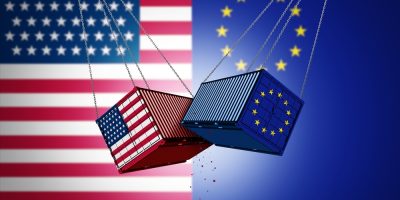
US Tariffs | Commercial risk management in contracts with international clients and suppliers
2025年4月14日
- 分销协议
- 税务
The Trump approach: power and dominance
In his autobiography, The Art of the Deal, Donald Trump describes negotiation as a contest of strength, determination, and dominance. His vision is clear: anyone who shows uncertainty or makes concessions too early is immediately perceived as a loser. His negotiating style is based on constant pressure, maximalist demands, and calculated threats, to obtain unilateral advantages. In this scheme, compromise is not a point of arrival, but a sign of weakness to be avoided.
Trump has always been a competitive negotiator, focused on immediate results and uninterested in balanced solutions unless they are strictly functional to his interests.
Other negotiating styles: compromising and collaborative
In contrast to this competitive approach, there are two other relevant negotiating styles:
- The compromising style aims to reach a ‘middle ground’ agreement, in which both parties give something up to achieve an acceptable solution. It is a pragmatic approach, practical in situations where time is limited or positions are too far apart for genuine collaboration.
- The collaborative style, on the other hand, aims to create win-win solutions. The parties seek to thoroughly understand each other’s interests and work together to build an outcome that maximizes the benefit for both. It requires openness, time, and trust.
In commercial negotiations, the compromising or collaborative approach can only work if the other party shares the same logic. But when dealing with an explicitly competitive actor such as Trump, adopting a compromising style risks seriously penalizing the other party, for at least three reasons:
- It conveys weakness
An accommodating gesture is seen not as a sign of openness, but as a point of pressure to be exploited. The competitive negotiator, focused on gaining an immediate advantage, interprets it as a willingness to give even more.
- It relinquishes bargaining power
The EU has a vast market and significant trade levers, especially in a context where the US is closing the door to the Chinese market. Offering concessions at the outset is tantamount to burning your cards without getting anything in return. In a competitive confrontation, the first move can set the tone for the negotiation: once a concession has been made, it is very difficult to backtrack.
- It legitimizes the negotiating imbalance
An unbalanced compromise, if accepted without resistance, risks becoming the new basis for future trade relations, systematically penalizing the EU in subsequent rounds.
Why 30%? The anchor technique
Trump often uses a negotiating technique known as the anchor technique. This consists of deliberately setting a very high target at the beginning of the negotiation (in our case, the threat of 30% tariffs).
The aim is to create a psychological perimeter for the negotiation and force the other party to reason on the basis of that figure, even though they are aware that it is arbitrary. This technique allows one to influence the scope of the discussion and obtain greater concessions, just as Trump has done.
The worst response: unilateral concessions with no return
Unfortunately, the European Union has already shown worrying signs of a compromising attitude that has not been negotiated with the Trump administration, for example:
- The waiver of the web tax* on American digital giants, without obtaining any regulation or shared tax contribution in return.
- The offer to increase imports of liquefied natural gas (LNG) from the US, made to reassure Washington, without obtaining anything in return.
- The acceptance of the increase in NATO spending to 5% of GDP, demanded by Trump, again without obtaining anything in return.
All these offers without asking for anything in return reinforce the idea that the EU is willing to concede from the outset. Trump, true to his competitive logic, sees these concessions as a starting point, not a compromise: this pushes him to raise his demands, not moderate them.
Persevering would be a fatal mistake
Continuing along this path of compromise, in the hope that accommodation will ease the pressure, would be not only ineffective but counterproductive. With a competitive negotiator, unilateral concessions do not stop escalation: they fuel it. Any sign of weakness is interpreted as additional room for maneuver.
A helpful example is China’s reaction during the trade war initiated by Trump. Faced with massive tariffs imposed by the US, Beijing responded in kind, imposing equivalent tariffs. Instead of giving in, it spoke the same language of power. The result is there for all to see: after weeks of escalation, the US had to moderate its position, opening up to a more balanced agreement.
The right strategy: speak his language
To avoid the mistakes of the past, the EU should therefore reverse its negotiating logic. Not to fuel confrontation, but to restore a credible balance. Some applicable countermeasures could be:
- Target Trump’s electoral base, particularly the agricultural sectors (soy, corn, beef), with selective tariffs or targeted restrictions.
- Put the European web tax* back on the table, even with a minimum rate, linking any exemptions to real concessions from the US.
These well-calibrated moves would strengthen the EU’s position and show that it can defend its interests by speaking a language Trump understands: that of strength and bargaining power.
Going beyond requests, seeking the other party’s interests
A fundamental principle in any negotiation is to identify the other side’s interests and find a way to allow them to achieve them without sacrificing your own. This is no easy task, given Trump’s notorious volatility and the lack of sound arguments to justify the demands made in the negotiations.
In the case of the EU-US negotiations, it must be borne in mind that Trump is playing the game with his electoral base in mind: an agreement must offer him a narrative of victory to communicate to his electorate.
Takeaway
When negotiating with a competitive player like Trump, one should abandon the accommodating approach, avoid concessions without something in return, and adopt a style that is more assertive, strategic, and symmetrical.
Only then will it be able to build an agreement that is solid, fair, and respectful of its economic and political strength.
I have often dealt with commercial distribution agreements between Italian and Chinese companies, sometimes following negotiations in the wine sector for various types of agreements: sales, distribution, franchising, establishment of joint ventures, and sales through online stores.
I am sharing some key considerations for approaching this complex but opportunity-rich market.
📌 Here are my 10 takeaways
Step Zero. Protect your IP
it is essential to protect your intellectual property before entering China. This includes trademarks (including their Chinese transliteration), labels, web domains, and social media accounts. Neglecting this aspect can have disastrous consequences, exposing you to the widespread phenomenon of trademark squatting (even famous names such as Michael Jordan, Elon Musk, and Donald Trump have fallen victim to this).
For more information, you can read this article about Intellectual property protection in China
1 – Know your enemy
trust is good, but mistrust is better. Before entering into commercial agreements, it is essential to check the credentials of potential partners through the databases of the State Administration for Industry and Commerce. When it comes to wine, it is necessary to check whether the prospective distributor has a license to import and distribute wine.
2 – No copy-paste
Contracts must be tailor-made, adapting them to local specificities. In particular, it is crucial to clearly regulate promotional activities: budget, commercial actions, communication methods, and management of the producer’s trademarks. It is also best to write the contract in Chinese to ensure that there are no misunderstandings and in case it needs to be used before a judge or local administrative body, as Chinese is the only official language. (N.B.: if you think of entrusting the task to ChatGPT, this is not a good idea).
For an in-depth article, check out The commercial distribution contract in China
3 – Decide immediately how and where to litigate
It may seem counterintuitive, but it is best to avoid providing for Italian (or French, or German) jurisdiction and applicable law, which is an ineffective solution, especially in cases where urgent action is needed to stop unfair competition or counterfeiting. Consider applying Chinese law and provide for an arbitration clause at CIETAC. An effective dispute management strategy is a key element of the agreement and must be negotiated carefully. (P.S.: This applies not only to China but to all international agreements. For more information, see this article).
4 – China is big
And it is the sum of many very different internal markets. Exclusivity should be granted for good reasons, but only if the distributor has a well-developed commercial network and can achieve specific shared objectives. If granted, it should be limited to the province where the distributor is based and subject to the achievement of agreed sales volumes. Having a single distributor for the whole of China is like entrusting an Italian distributor with promoting a product throughout Europe. Or appoint a NYC-based company to promote and sell your wines in all 50 US States.
5 – China is far away
Delegating everything to the local distributor and taking no interest in what is happening on the Chinese market is never a good idea. Firstly, because you have no idea how, where, and with what results the wines are being sold. Secondly, because you cannot verify compliance with agreements, for example on non-competition or the use of trademarks. It is therefore important to schedule meetings to share commercial policies and be able to verify what is happening, including through audits and visits to warehouses and the sales network.
6 – China is expensive
Competition in the Chinese domestic market is fierce. This is also true in terms of price, as some countries that are direct competitors of Italy (Australia, Chile, New Zealand) have free trade agreements and can therefore enter the market on more favorable terms than Italian wine, which is subject to a total tax burden of around 43% after payment of duties, excise taxes, and VAT. It is necessary to position oneself in the right market segment (medium-high), and to do so, it is necessary to plan the right commercial actions together with the distributor. Selling Ex-Works and hoping that the distributor will take care of everything is not an excellent strategy for being competitive.
7 – China is dangerous
Scams are always around the corner. In the wine world in particular, for example, spontaneous expressions of interest are frequent, arriving via the company website, social media accounts, or directly via email. They sound like this: we have discovered your wines, we think they are fantastic, we want to place an order immediately. If it sounds too good and easy, it is certainly a scam. There is an easy way to check: if the next step is a request for payment of a few thousand euros, justified by the need to register the wines on the CIFER (China Imported Food Enterprise Registration) portal, or to register your trademark to prevent others from doing so, or to authenticate the signature on the sales contract… these are attempts at fraud, and the elusive order will never arrive after payment has been received. How can you check whether the person you are dealing with is a reputable company or a fraudster? 👉🏼Go back to point 1 (here is an in-depth article).
8 – E-commerce? Yes, but with method (and money)
Online wine sales continue to grow, but entering large platforms is complex, competition is fierce, and running an online store requires meticulous planning and highly efficient system implementation. The online market in China is all pay-for-play. Nothing is achieved with no money or minimal effort. If you want to sell online, you need to build an omnichannel system integrated with traditional distribution, and to do this, it is essential to involve a local partner with well-defined investments and responsibilities.
9 – China is not a market for everyone
You need to protect your brands, study the market thoroughly, know your competition (both foreign and local), find the right market channel, select a distributor motivated to invest time and money in promoting your product, and be willing to support them with the right investments. If you want to build a serious plan to enter the Chinese market, you must have a medium- to long-term perspective. There are no shortcuts (actually, there are many, but they almost always lead to wasted time and money). If you are unwilling to invest in entering the Chinese market through the front door, it is unlikely that anyone else will do it for you.
10 – Don’t do it yourself
If you have read up to point 9 and are still keen to enter the Chinese market, consider doing so professionally, involving consultants who can support your company throughout the market research, scouting, negotiation, and contract drafting processes. This is also part of the investment needed to build and develop a solid and resilient business model. This advice applies to all foreign markets, and even more so to China.
The most dangerous mistake one can make after the announcement of the (partial) suspension of U.S. duties for 90 days is to hope that everything will go well and we will return to the pre-April 2 world.
First, because very invasive tariffs remain in place: 10 percent on all countries that trade with the U.S., including the EU, 25 percent on automotive, 25 percent on steel and aluminum, 145 percent on China.
Second, because it is impossible to predict the actions of the U.S. Administration in the short and medium term: it cannot be ruled out that tariffs will remain, increase, change targets or that other factors will intervene to turn the tide in international markets, such as an escalation of the trade war with China.
The 90-day suspension is an opportunity
The U.S.’s temporary suspension of tariffs represents a valuable window that should be used not only as a truce but also as a valuable room for action: 90 days to rehash contracts, renegotiate key clauses, and insert levers of flexibility that can protect business in various future scenarios in the U.S. and other markets.
Today’s exporters cannot afford to “sit back and see what will happen”-it is time to act, and to do so professionally and strategically. Let’s look at a checklist of important points to consider.
What do contracts with customers and suppliers entail?
The first point is to survey agreements with the trade network in the U.S. and other countries that export to the U.S., as well as with upstream suppliers in the supply chain.
Is there a written contract? The worst-case scenario – unfortunately a very frequent one – is when the parties cooperate informally, only based on orders and order confirmations. This leaves undefined not only what happens in the case of imposition of duties, but also a whole range of other points, for example, limits on damages that can be claimed in the case of breach of contract, the duration of the agreement, the applicable law, and how any disputes will be resolved.
Another very problematic scenario is one in which contracts exist, but they are generic and do not include the necessary covenants to manage the risks involved in operating in a highly litigious market such as the U.S., which, moreover, has very high legal costs.
Having done this analysis, the necessary actions can be put in place, prioritizing according to the importance of business relationships and as appropriate:
- Negotiate and conclude a written contract from scratch
- Replace the existing agreement with a complete and correct contract
- Amend and integrate the existing agreement with pacts to manage tariffs and other causes of price fluctuations
Let us dwell on the last scenario, assuming that there is a complete and correct contract but one that does not regulate price and cost fluctuation as a direct or indirect consequence of the introduction of duties.
Contract Addendum
In such cases, the correct course of action is to sign an Addendum to the original contract, specifying which covenants are being waived and which covenants are being added. It is essential that the Addendum be negotiated and signed by persons with the power of representation of the parties and that it be drafted with the help of lawyers who specialize in this field. In addition to including correct clauses, it is necessary to verify that the covenants are valid according to the rules of law applicable to the contract.
Here are some clauses that can be the subject of the Addendum, to be modulated according to the specific case and possible scenarios.
Tariff Cost Sharing
By introducing this covenant, it is provided that in the event that duties are confirmed at [x]% or are reduced or increased within certain established thresholds, the Parties will share the increase equally, or according to other established percentages.
There may also be a ceiling on tariffs beyond which a party has the right to withdraw from the contract or request the suspension of certain orders for a specified period of time, after which it has the right to withdraw.
Price Adjustment
With this covenant, a discount or an increase in the product’s price is agreed upon, as the case may be, in the case of a duty greater than [x]%.
Among the use cases, in addition to that of the company exporting to the U.S. or other intermediate markets, with final destination of the products in the U.S., is that of those who purchase a product subject to import duty and resell it, processed or assembled.
Right to Cancel or Postpone Confirmed Orders
This covenant gives the right to revoke or suspend for a certain period already negotiated orders, as such binding, in case of confirmation or introduction of duties above a certain threshold, for example, if 20% taxation was confirmed for the import of wine from the EU.
The clause can be combined with previous covenants, for example, by stipulating that below the specified threshold, the contracts remain valid, and the parties share the duty or have the right to renegotiate the price.
Supply Forecast Adjustment
With this clause the Parties can modify supply programs already agreed for a specific duration (e.g., 24 months), with continuous sales and purchase obligations at a fixed price or indexable only within certain limits. The aim is to agree on the prerequisites for reshaping supply programs in the short and medium term, which can be very useful for defining the rules that will apply to relationships with key suppliers or customers for possible changes in volumes, delivery times, and prices.
Right to Source from Alternative Suppliers
This covenant serves to be authorized, if necessary, to source alternative suppliers of components or raw materials to those previously authorized in the contract with the end customer, for example, in cases where purchasing from the original suppliers has become too costly or difficult due to duties imposed at import or in previous steps in the supply chain, or other events such as currency or price fluctuation of certain commodities beyond a certain level established in the agreement.
Hardship and Force Majeure
The imposition of duties cannot be invoked as a cause of Force Majeure or hardship, respectively, to excuse contract non-performance or to renegotiate the price, even in cases of very high price increases (such as the 145% duty imposed on Chinese products). This conclusion is almost uniform under the law and jurisprudence of the major countries involved in the tariff war: U.S., China, Canada, Mexico, France and Italy: I refer to this practical guide for a timely examination of what the various rules provide.
If the contract lacks a well drafter Force Majeure and Hardship clause, or contains a generic clause, it is important to get your hands on revising it to expressly state the cases in which a party is entitled to suspend or terminate the contract, how and when to communicate the decision to invoke the exemption, and the consequences on the parties’ contractual obligations. You can go deeper on this topic here.
Conclusion
It is essential to prepare for possible future scenarios regarding duties (confirmed, increased, changed, or decreased) and to determine the consequences on trade relations with foreign clients and suppliers: moving today, at a standstill (or nearly so), allows entrepreneurs to negotiate shared and fair solutions and to avoid, as far as possible, the emergence of tensions and conflicts with the various partners along the international supply chain.
The case: A consumer bought a Ford car in Italy from an Italian car distributor. The car was manufactured by Ford WAG in Germany and supplied by Ford Italia, which belong to the same group of companies. Following an accident in December 2001 in which the airbag failed, the consumer sued the Italian distributor as well as Ford Italia for damages. Ford Italia disputed the claims for damages asserted against it, arguing that it had not manufactured the vehicle and, because it was itself only a distributor/supplier, referred to Ford WAG in Germany as the actual manufacturer.
Question to the European Court of Justice (ECJ)
The Italian Supreme Court (Corte di Cassazione) referred the following question to the ECJ:
- the manufacturer’s liability under the Product Liability Directive 85/374/EEC is limited in accordance with Art 3 to cases where the supplier physically puts his name, trade mark, or other distinguishing feature on the product to create confusion between his identity and that of the actual manufacturer;
- or is the distributor liable as a “quasi-producer” even if he has not physically put his name or trademark on the product, but nevertheless “presents himself as its producer” within the meaning of Article 3(1) of the Directive by using the distinguishing feature in his company name, which was put on the car by another person, but leading to identity with the actual car manufacturer.
ECJ judgement (European Court of Justice) of 19/12/2024, Case C-157/23
A company that does not manufacture a product itself, but only distributes it, can still be considered a “manufacturer” within the meaning of the Product Liability Directive (85/374/EEC). This is the case if the distributor puts his name, trademark or other distinguishing feature on the product and consequently presents itself as the manufacturer. According to the ECJ, this can give the consumer the impression that the distributor is responsible for the quality and safety of the product.
However, the ECJ emphasizes that liability does not depend on whether the distributor puts the sign on the product itself. The distributor did not do so in the specific case. However, the distributor used the corresponding distinguishing feature in its company name. According to the ECJ, the decisive factor is, therefore, whether the distributor uses this name match to gain the trust of consumers and is thus perceived as a responsible manufacturer.
The distributor is jointly and severally liable with the actual manufacturer. This means that consumers can either make a claim against the manufacturer or the dealer directly. However, the dealer has the right to ask for a regress for the damage incurred from the actual manufacturer.
Remarks
The ECJ emphasizes consumer protection. In my opinion, this argument is slightly overstretched:
- According to the ECJ, the consumer should not be burdened with the complex task of identifying the actual manufacturer of a defective product.
- A distributor that sells a product and uses its name or trademark to do so creates trust in the consumer. This trust is to be protected by the liability of the authorized distributor – regardless of whether the distributor has actively put its trademark on the product or not.
- This increases the liability risk for authorized car dealers because they must obtain appropriate insurance against such a risk. In the constellation described above, authorized dealers can be exposed to unexpectedly high claims for damages under strict product liability.
Good advice is not expensive
- It is essential that such cases are legally clarified when drawing up and formulating distribution agreements with car manufacturers and that the ECJ ruling is considered.
- In addition, authorized dealers/distributors should reconsider the use of product names from the actual producer in their company name and/or in their corporate image.
The Brazilian market has not been immune to the protectionist wave of “America First.” If such measures persist over time, they could have a lasting impact on the local economy. Still, a sour lemon can often become a sweet caipirinha in the resilient and optimistic spirit that characterizes both Brazilian society and its entrepreneurs.
As is often the case in the chessboard of global economic geopolitics, a move from one player creates room for another countermove. Brazil reacted with reciprocal trade measures, signaling clearly that it would not accept a position of commercial vulnerability.
This firmer stance — almost unthinkable in earlier years — strengthened Brazil’s image in Europe as a country ready to reposition itself with greater autonomy and pragmatism, opening new doors to international markets. In a world where global value chains are being restructured and reliable trade partners are in high demand, Brazil is increasingly seen not just as a supplier of raw materials, but as a strategic partner in critical industries.
The rapprochement with Europe has been further energized by progress in the Mercosur–European Union Agreement, whose negotiations spanned decades and now seem to be gaining momentum. While the United States embraces a more isolationist commercial posture, Europe is actively diversifying its trade relations — and Brazil, by demonstrating a commitment to clear rules, economic stability, and legal certainty, emerges as a natural candidate to fill that gap.
The Direct Impact of U.S. Tariffs
The trade measures introduced under President Trump primarily affected Brazilian producers of semi-finished steel and primary aluminum, with the removal of long-standing exemptions and quotas. In 2024, Brazil exported US$ 2.2 billion in semi-finished steel to the United States, representing nearly 60% of U.S. imports in that category. In the same year, Brazilian aluminum exports to the U.S. reached US$ 796 million, accounting for 14% of the sector’s total. Losses in exports for 2025 are estimated at around US$ 1.5 billion.
Brazil’s Response and a New Phase
In April 2025, the Brazilian Congress passed a new legal framework for trade retaliation, empowering the Executive Branch to adopt countermeasures in a faster and more technically structured way. The new legislation allows, for example, the automatic imposition of retaliatory tariffs on goods from countries that adopt unilateral measures incompatible with WTO norms; the suspension of tax or customs benefits previously granted under bilateral agreements; the creation of a list of priority sectors for trade defense and diversification of export markets.
Beyond the retaliation itself, the move marked a significant shift in posture: Brazil began positioning itself as an active player in global trade governance, aligning with mid-sized economies that advocate for predictable, balanced, and rules-based trade relations.
An Opportunity for Brazil–Europe Relations
This new stage sets Brazil as a reliable supplier to European industry — not only of raw materials but also of higher-value-added goods, particularly in processed foods, bioenergy, critical minerals, pharmaceuticals, and infrastructure.
Moreover, as US–China tensions drive European companies to seek nearshoring or “friend-shoring” strategies with more predictable partners, Brazil, with its clean energy matrix, large domestic market, and relatively stable institutions, emerges as a strong alternative.
Legal Implications and Strategic Recommendations
This changing landscape brings new opportunities for companies and legal advisors involved in Brazil–Europe investment and trade relations. Particular attention should be paid to:
- Monitoring rules of origin in the Mercosur–EU agreement, especially in sectors requiring supply chain restructuring;
- Reviewing contractual and tax structures for import/export operations, including clauses addressing tariff instability or non-tariff barriers (e.g., environmental or sanitary standards), and clearly defining force majeure events;
- Reassessing distribution and agency agreements in light of the new commercial environment;
- Exploring joint ventures and technology transfer arrangements with Brazilian partners, particularly in bioeconomy, green hydrogen, and mineral processing.
From lemon to caipirinha
The world is becoming more fragmented and competitive, but also more open to realignment. What began as a protectionist blow from the United States has revealed new opportunities for transatlantic cooperation. For Brazil, Europe is no longer just a client: it is poised to become a long-term strategic partner. It is now up to lawyers and businesses on both sides of the Atlantic to turn this opportunity into lasting, mutually beneficial relationships.
On April 2, 2025, U.S. tariffs toward products from the EU will go into effect.
Given what happened with the tariffs imposed on Canada and Mexico, with a chase of announcements of entry into force and suspensions and new announcements, it is impossible to make even short-term predictions.
One must prepare oneself for the possibility of imposition of duty, which is a foreseeable and anticipated event and, as such, should be regulated in the contract. Failure to do so is likely to be very costly because there are no valid arguments for excusing the non-performance of contracts already concluded by invoking a situation of Force Majeure (which does not exist, because the performance has not become objectively impossible) or of supervening excessive onerousness or hardship: even in the case of increases well over 25 percent, tribunals around the world tend to rule out its invocation).
The caution that can be taken is to negotiate a price update clause, expressly referring, among other factors, to the eventual adoption of tariffs.
A useful clause may be the so-called Escalator or Price Adjustment Clause, by which the right to renegotiate the price is provided in the case of imposing a duty above a certain threshold, for example:
PRICE ADJUSTMENT CLAUSE
Triggering Event
A “Triggering Event” shall be deemed to occur if:
- There is an increase in customs duties or the introduction of new trade barriers not previously contemplated, resulting in an increase in the total price of the goods or services by X% or more.
- Such an increase affects either (i) the Buyer directly or (ii) the Seller due to tariffs imposed on its upstream suppliers, materially impacting the cost of performance.
Trigger Mechanism
In the event of a Triggering Event:
- The affected Party shall notify the other Party in writing within thirty (30) days of the effective date of the customs duty change or the introduction of the new trade barrier.
- The notification must include supporting documentation demonstrating the financial impact of the Triggering Event.
Renegotiation Process
Upon receipt of a valid notification, the Parties shall engage in good-faith negotiations for sixty (60) days to agree on an adjusted price that reflects the increased costs.
Failure to Reach an Agreement
If the Parties fail to reach an agreement on the price adjustment within the prescribed sixty (60) days:
Option 1 – Contract Termination: Either Party shall have the right to terminate the contract by providing written notice to the other Party, without liability for damages, except for obligations already accrued up to the termination date.
Option 2 – Third-Party Arbitrator: The Parties shall appoint an independent third-party arbitrator with expertise in international trade and pricing. The arbitrator shall determine a fair market price, which shall be binding on both Parties. The cost of the arbitrator shall be borne equally by both Parties unless otherwise agreed.
***
Another possible tool as an alternative to the clause just seen is the so-called Cost Sharing clause, for example:
COST SHARING CLAUSE
Triggering Event
A “Triggering Event” shall be deemed to occur if there is an increase in customs duties or the introduction of new trade barriers not previously contemplated, resulting in an increase in the total price of the goods by [X]% or more. Such an increase will be borne by the Buyer by up to [X]%, while higher increases will be shared equally between the seller and buyer.
***
It is appropriate for such clauses to be adapted on a case-by-case basis to best to reflect the scenarios that are expected to affect the price of the products, namely
- imposition of duty on U.S. entry
- imposition of duty on EU entry
but also indirect effects, such as where it is the seller who invokes price renegotiation, for example because the price of the product has increased due to the duty paid by one of its upstream suppliers in the supply chain, in which case it is crucial to identify which products are relevant and to document the increases resulting from the imposition of tariffs.
Duties are not paid by foreign governments (as Donald Trump repeatedly said on the electoral campaign) but by the importing companies of the country that issued the tax on the value of the imported product, i.e., in the case of the Trump administration’s recent round of tariffs, U.S. companies. Similarly, Canadian, Mexican, Chinese, and – probably – European companies will pay the import duties on U.S.-origin products levied by their respective countries as a trade retaliation measure against U.S. tariffs.
In this context, several scenarios open up, all of them problematic
- U.S. companies will pay the import taxes
- foreign companies exporting taxed products to the U.S., will see export volumes fall as a result of the price increase
- foreign companies that import products from the U.S., in turn, will pay tariffs imposed by their countries in retaliation to U.S. duties
- intermediate or end customers in markets affected by the tariffs will pay a higher price for imported products
Does the imposition of the duty constitute force majeure?
A frequent first objection of the party affected by the duty (it may be the buyer-importer or the one who resells the product after paying the duty), in such cases, is to invoke force majeure to evade the performance of the contract, which, as a result of the duty has become too onerous.
The application of the duty, however, does not fall under force majeure since we are not faced with an unforeseeable event, resulting in the objective impossibility of fulfilling the contract. The buyer/importer, in fact, can always fulfill the contract, with only the issue of price increase.
Does the imposition of the duty constitute a cause of hardship?
If a situation of excessive onerousness arises after the conclusion of the contract (hardship), the affected party has the right to demand a revision of the price or to terminate the contract.
Is this the case for tariffs? A case-by-case assessment is needed, leading to a finding of recurrence of hardship if an extraordinary and unforeseeable situation exists (in the case of the U.S. duties, which have been announced for months, it isn’t easy to support this) and the price, as a result of the application of the tariff, is manifestly excessive.
These are exceptional situations, rarely applied, and should be investigated further based on the law applicable to the contract. Generally, price fluctuations in international markets are part of business risk and do not constitute sufficient grounds for renegotiating concluded agreements, which remain binding unless the parties have included a hardship clause (discussed below).
Does the application of the tariff entail a right to renegotiate prices?
Contracts already concluded, such as orders already accepted and supply schedules with agreed prices for a certain period, are binding and must be fulfilled according to the original agreements.
In the absence of specific clauses in the contract, the party affected by the tariff is therefore obliged to comply with the previously agreed price and give fulfillment to the agreement.
The parties are free to renegotiate future contracts, e.g.
- the seller may give a discount to lessen the impact of the duty affecting the buyer-importer, or
- the buyer may agree to a price increase to compensate for a duty that the seller has paid to import a component or semi-finished product into his country, and then export the finished product
but this does not affect the validity of contracts already negotatied, which remain binding.
The situation is particularly delicate for companies in the middle of the supply chain, such as those who import raw materials or components from abroad (potentially subject to tariffs, including double duties in the case of repeated import and export) and resell the semi-finished or finished products, since they are not entitled to pass the cost on to the following link in the supply chain, unless this was expressly provided for in the contract with the customer.
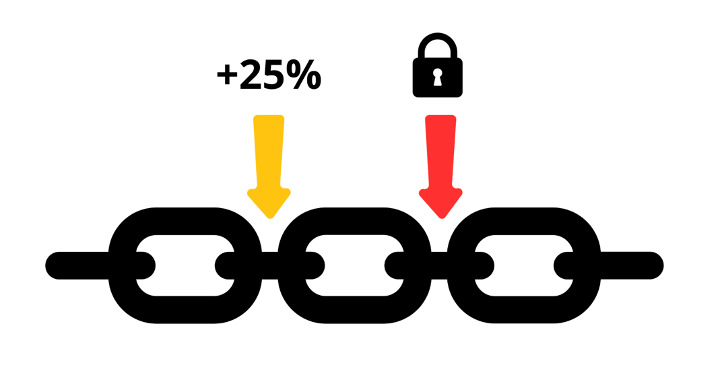
What can be done in case of imposition of future duties affecting foreign suppliers or customers?
It is advisable to expressly provide for the right to renegotiate prices, if necessary by adding an addendum to the original agreement. This can be achieved, for example, by a clause providing that in case future events, including any duties, cause an increase in the overall cost of the product above a certain threshold (e.g., 10 percent), the party affected by the tariffs has the right to initiate a renegotiation of the price and, in the event of a failure to agree, can withdraw from the contract.
An example of a clause might be as follows:
Import Duties Adjustment
“If any new import duties, tariffs, or similar governmental charges are imposed after the conclusion of this Contract, and such measures increase a Party’s costs exceeding X% of the agreed price of the Products, the affected Party shall have the right to request an immediate renegotiation of the price. The Parties shall engage in good faith negotiations to reach a fair adjustment of the contractual price to reflect the increased costs.
If the Parties fail to reach an agreement within [X] days from the affected Party’s request for renegotiation, the latter shall have the right to terminate this Contract with [Y] days‘ written notice to other Party, without liability for damages, except for the fulfillment of obligations already accrued.”
“This agreement is not just an economic opportunity. It is a political necessity.” In the current geopolitical context of growing protectionism and significant regional conflicts, Ursula von der Leyen’s statement says a lot.
Even though there is still a long way to go before the agreement is approved internally in each bloc and comes into force, the milestone is highly significant. It took 25 years from the start of negotiations between Mercosur and the European Union to reach a consensus text. The impacts will be considerable. Together, the blocs represent a GDP of over 22 trillion dollars, and are home to over 700 million people.
Our aim here is to highlight, in a simplified manner, the most important information about the agreement’s content and its progress, which we will update here at each stage.
What is it?
The agreement was signed as a trade treaty, with the main goal of reducing import and export tariffs, eliminating bureaucratic barriers, and facilitating trade between Mercosur countries and European Union members. Additionally, the pact includes commitments in areas such as sustainability, labor rights, technological cooperation, and environmental protection.
Mercosur (Southern Common Market) is an economic bloc created in 1991 by Brazil, Argentina, Paraguay, and Uruguay. Now, Bolivia and Chile participate as associated members, accessing some trade agreements, but not fully integrated into the common market. On the other hand, the European Union, with its 27 members (20 of which have adopted the common currency), is a broader union with greater economic and social integration compared to Mercosur.
What does the EU Mercosur agreement include?
Trade in goods:
- Reduction or elimination of tariffs on products traded between the blocs, such as meat, grains, fruits, automobiles, wines, and dairy products (the expected reduction will affect over 90% of the traded goods between the blocks).
- Easier access to European high-tech and industrialized products.
Trade in services:
- Expands access to financial services, telecommunications, transportation, and consulting for businesses in both blocs.
Movement of people:
- Provides facilities for temporary visas for qualified workers, such as technology professionals and engineers, promoting talent exchange.
- Encourages educational and cultural cooperation programs.
Sustainability and environment:
- Includes commitments to combat deforestation and meet the goals of the Paris Agreement on climate change.
- Provides penalties for violations of environmental standards.
Intellectual property and regulations:
- Protects geographical indications for European cheese, wines, and South American coffee and cachaça.
- Harmonizes regulatory standards to reduce bureaucracy and avoid technical barriers.
Labor rights:
- Commitment to decent working conditions and compliance with International Labor Organization (ILO) standards.
Which benefits to expect?
- Access to new markets: Mercosur companies will have easier access to the European market, which has more than 450 million consumers, while European products will become more competitive in South America.
- Costs reduction: The elimination or reduction of tariffs could lower the prices of products such as wines, cheese, and automobiles and boost South American exports of meat, grains, and fruits.
- Strengthened diplomatic relations: The agreement symbolizes a bridge of cooperation between two regions historically connected by cultural and economic ties.
What’s next?
The signing is only the first step. For the agreement to come into force, it must be ratified by both blocs, and the approval process is quite distinct between them, since Mercosur does not have a common Council or Parliament.
In the European Union, the ratification process involves multiple institutional steps:
- Council of the European Union: Ministers from the member states will discuss and approve the text of the agreement. This step is crucial, as each country has representation and may raise specific national concerns.
- European Parliament: After approval by the Council, the European Parliament, composed of elected deputies, votes to ratify the agreement. The debate at this stage may include environmental, social, and economic impacts.
- National Parliaments: In cases where the agreement affects shared competencies between the bloc and member states (such as environmental regulations), it must also be approved by the parliaments of each member country. This can be challenging, given that countries like France and Ireland have already expressed specific concerns about agricultural and environmental issues.
In Mercosur, the approval depends on each member country:
- National Congresses: The agreement text is submitted to the parliaments of Brazil, Argentina, Paraguay, and Uruguay. Each congress evaluates independently, and approval depends on the political majority in each country.
- Political Context: Mercosur countries have diverse political realities. In Brazil, for example, environmental issues can spark heated debates, while in Argentina, the impact on agricultural competitiveness may be the focus of discussion.
- Regional Coordination: Even after national approval, it is necessary to ensure that all Mercosur members ratify the agreement, as the bloc acts as a single negotiating entity.
Stay tuned: you will find the update here as the processes advance.


 加拿大
加拿大 
 波兰
波兰 


 法国
法国 


 越南
越南 



 中国
中国 
写信给 Roberto
Car dealers can be held liable as a quasi-manufacturer for damages caused by the vehicle
2025年4月11日
- 分销协议
The Trump approach: power and dominance
In his autobiography, The Art of the Deal, Donald Trump describes negotiation as a contest of strength, determination, and dominance. His vision is clear: anyone who shows uncertainty or makes concessions too early is immediately perceived as a loser. His negotiating style is based on constant pressure, maximalist demands, and calculated threats, to obtain unilateral advantages. In this scheme, compromise is not a point of arrival, but a sign of weakness to be avoided.
Trump has always been a competitive negotiator, focused on immediate results and uninterested in balanced solutions unless they are strictly functional to his interests.
Other negotiating styles: compromising and collaborative
In contrast to this competitive approach, there are two other relevant negotiating styles:
- The compromising style aims to reach a ‘middle ground’ agreement, in which both parties give something up to achieve an acceptable solution. It is a pragmatic approach, practical in situations where time is limited or positions are too far apart for genuine collaboration.
- The collaborative style, on the other hand, aims to create win-win solutions. The parties seek to thoroughly understand each other’s interests and work together to build an outcome that maximizes the benefit for both. It requires openness, time, and trust.
In commercial negotiations, the compromising or collaborative approach can only work if the other party shares the same logic. But when dealing with an explicitly competitive actor such as Trump, adopting a compromising style risks seriously penalizing the other party, for at least three reasons:
- It conveys weakness
An accommodating gesture is seen not as a sign of openness, but as a point of pressure to be exploited. The competitive negotiator, focused on gaining an immediate advantage, interprets it as a willingness to give even more.
- It relinquishes bargaining power
The EU has a vast market and significant trade levers, especially in a context where the US is closing the door to the Chinese market. Offering concessions at the outset is tantamount to burning your cards without getting anything in return. In a competitive confrontation, the first move can set the tone for the negotiation: once a concession has been made, it is very difficult to backtrack.
- It legitimizes the negotiating imbalance
An unbalanced compromise, if accepted without resistance, risks becoming the new basis for future trade relations, systematically penalizing the EU in subsequent rounds.
Why 30%? The anchor technique
Trump often uses a negotiating technique known as the anchor technique. This consists of deliberately setting a very high target at the beginning of the negotiation (in our case, the threat of 30% tariffs).
The aim is to create a psychological perimeter for the negotiation and force the other party to reason on the basis of that figure, even though they are aware that it is arbitrary. This technique allows one to influence the scope of the discussion and obtain greater concessions, just as Trump has done.
The worst response: unilateral concessions with no return
Unfortunately, the European Union has already shown worrying signs of a compromising attitude that has not been negotiated with the Trump administration, for example:
- The waiver of the web tax* on American digital giants, without obtaining any regulation or shared tax contribution in return.
- The offer to increase imports of liquefied natural gas (LNG) from the US, made to reassure Washington, without obtaining anything in return.
- The acceptance of the increase in NATO spending to 5% of GDP, demanded by Trump, again without obtaining anything in return.
All these offers without asking for anything in return reinforce the idea that the EU is willing to concede from the outset. Trump, true to his competitive logic, sees these concessions as a starting point, not a compromise: this pushes him to raise his demands, not moderate them.
Persevering would be a fatal mistake
Continuing along this path of compromise, in the hope that accommodation will ease the pressure, would be not only ineffective but counterproductive. With a competitive negotiator, unilateral concessions do not stop escalation: they fuel it. Any sign of weakness is interpreted as additional room for maneuver.
A helpful example is China’s reaction during the trade war initiated by Trump. Faced with massive tariffs imposed by the US, Beijing responded in kind, imposing equivalent tariffs. Instead of giving in, it spoke the same language of power. The result is there for all to see: after weeks of escalation, the US had to moderate its position, opening up to a more balanced agreement.
The right strategy: speak his language
To avoid the mistakes of the past, the EU should therefore reverse its negotiating logic. Not to fuel confrontation, but to restore a credible balance. Some applicable countermeasures could be:
- Target Trump’s electoral base, particularly the agricultural sectors (soy, corn, beef), with selective tariffs or targeted restrictions.
- Put the European web tax* back on the table, even with a minimum rate, linking any exemptions to real concessions from the US.
These well-calibrated moves would strengthen the EU’s position and show that it can defend its interests by speaking a language Trump understands: that of strength and bargaining power.
Going beyond requests, seeking the other party’s interests
A fundamental principle in any negotiation is to identify the other side’s interests and find a way to allow them to achieve them without sacrificing your own. This is no easy task, given Trump’s notorious volatility and the lack of sound arguments to justify the demands made in the negotiations.
In the case of the EU-US negotiations, it must be borne in mind that Trump is playing the game with his electoral base in mind: an agreement must offer him a narrative of victory to communicate to his electorate.
Takeaway
When negotiating with a competitive player like Trump, one should abandon the accommodating approach, avoid concessions without something in return, and adopt a style that is more assertive, strategic, and symmetrical.
Only then will it be able to build an agreement that is solid, fair, and respectful of its economic and political strength.
I have often dealt with commercial distribution agreements between Italian and Chinese companies, sometimes following negotiations in the wine sector for various types of agreements: sales, distribution, franchising, establishment of joint ventures, and sales through online stores.
I am sharing some key considerations for approaching this complex but opportunity-rich market.
📌 Here are my 10 takeaways
Step Zero. Protect your IP
it is essential to protect your intellectual property before entering China. This includes trademarks (including their Chinese transliteration), labels, web domains, and social media accounts. Neglecting this aspect can have disastrous consequences, exposing you to the widespread phenomenon of trademark squatting (even famous names such as Michael Jordan, Elon Musk, and Donald Trump have fallen victim to this).
For more information, you can read this article about Intellectual property protection in China
1 – Know your enemy
trust is good, but mistrust is better. Before entering into commercial agreements, it is essential to check the credentials of potential partners through the databases of the State Administration for Industry and Commerce. When it comes to wine, it is necessary to check whether the prospective distributor has a license to import and distribute wine.
2 – No copy-paste
Contracts must be tailor-made, adapting them to local specificities. In particular, it is crucial to clearly regulate promotional activities: budget, commercial actions, communication methods, and management of the producer’s trademarks. It is also best to write the contract in Chinese to ensure that there are no misunderstandings and in case it needs to be used before a judge or local administrative body, as Chinese is the only official language. (N.B.: if you think of entrusting the task to ChatGPT, this is not a good idea).
For an in-depth article, check out The commercial distribution contract in China
3 – Decide immediately how and where to litigate
It may seem counterintuitive, but it is best to avoid providing for Italian (or French, or German) jurisdiction and applicable law, which is an ineffective solution, especially in cases where urgent action is needed to stop unfair competition or counterfeiting. Consider applying Chinese law and provide for an arbitration clause at CIETAC. An effective dispute management strategy is a key element of the agreement and must be negotiated carefully. (P.S.: This applies not only to China but to all international agreements. For more information, see this article).
4 – China is big
And it is the sum of many very different internal markets. Exclusivity should be granted for good reasons, but only if the distributor has a well-developed commercial network and can achieve specific shared objectives. If granted, it should be limited to the province where the distributor is based and subject to the achievement of agreed sales volumes. Having a single distributor for the whole of China is like entrusting an Italian distributor with promoting a product throughout Europe. Or appoint a NYC-based company to promote and sell your wines in all 50 US States.
5 – China is far away
Delegating everything to the local distributor and taking no interest in what is happening on the Chinese market is never a good idea. Firstly, because you have no idea how, where, and with what results the wines are being sold. Secondly, because you cannot verify compliance with agreements, for example on non-competition or the use of trademarks. It is therefore important to schedule meetings to share commercial policies and be able to verify what is happening, including through audits and visits to warehouses and the sales network.
6 – China is expensive
Competition in the Chinese domestic market is fierce. This is also true in terms of price, as some countries that are direct competitors of Italy (Australia, Chile, New Zealand) have free trade agreements and can therefore enter the market on more favorable terms than Italian wine, which is subject to a total tax burden of around 43% after payment of duties, excise taxes, and VAT. It is necessary to position oneself in the right market segment (medium-high), and to do so, it is necessary to plan the right commercial actions together with the distributor. Selling Ex-Works and hoping that the distributor will take care of everything is not an excellent strategy for being competitive.
7 – China is dangerous
Scams are always around the corner. In the wine world in particular, for example, spontaneous expressions of interest are frequent, arriving via the company website, social media accounts, or directly via email. They sound like this: we have discovered your wines, we think they are fantastic, we want to place an order immediately. If it sounds too good and easy, it is certainly a scam. There is an easy way to check: if the next step is a request for payment of a few thousand euros, justified by the need to register the wines on the CIFER (China Imported Food Enterprise Registration) portal, or to register your trademark to prevent others from doing so, or to authenticate the signature on the sales contract… these are attempts at fraud, and the elusive order will never arrive after payment has been received. How can you check whether the person you are dealing with is a reputable company or a fraudster? 👉🏼Go back to point 1 (here is an in-depth article).
8 – E-commerce? Yes, but with method (and money)
Online wine sales continue to grow, but entering large platforms is complex, competition is fierce, and running an online store requires meticulous planning and highly efficient system implementation. The online market in China is all pay-for-play. Nothing is achieved with no money or minimal effort. If you want to sell online, you need to build an omnichannel system integrated with traditional distribution, and to do this, it is essential to involve a local partner with well-defined investments and responsibilities.
9 – China is not a market for everyone
You need to protect your brands, study the market thoroughly, know your competition (both foreign and local), find the right market channel, select a distributor motivated to invest time and money in promoting your product, and be willing to support them with the right investments. If you want to build a serious plan to enter the Chinese market, you must have a medium- to long-term perspective. There are no shortcuts (actually, there are many, but they almost always lead to wasted time and money). If you are unwilling to invest in entering the Chinese market through the front door, it is unlikely that anyone else will do it for you.
10 – Don’t do it yourself
If you have read up to point 9 and are still keen to enter the Chinese market, consider doing so professionally, involving consultants who can support your company throughout the market research, scouting, negotiation, and contract drafting processes. This is also part of the investment needed to build and develop a solid and resilient business model. This advice applies to all foreign markets, and even more so to China.
The most dangerous mistake one can make after the announcement of the (partial) suspension of U.S. duties for 90 days is to hope that everything will go well and we will return to the pre-April 2 world.
First, because very invasive tariffs remain in place: 10 percent on all countries that trade with the U.S., including the EU, 25 percent on automotive, 25 percent on steel and aluminum, 145 percent on China.
Second, because it is impossible to predict the actions of the U.S. Administration in the short and medium term: it cannot be ruled out that tariffs will remain, increase, change targets or that other factors will intervene to turn the tide in international markets, such as an escalation of the trade war with China.
The 90-day suspension is an opportunity
The U.S.’s temporary suspension of tariffs represents a valuable window that should be used not only as a truce but also as a valuable room for action: 90 days to rehash contracts, renegotiate key clauses, and insert levers of flexibility that can protect business in various future scenarios in the U.S. and other markets.
Today’s exporters cannot afford to “sit back and see what will happen”-it is time to act, and to do so professionally and strategically. Let’s look at a checklist of important points to consider.
What do contracts with customers and suppliers entail?
The first point is to survey agreements with the trade network in the U.S. and other countries that export to the U.S., as well as with upstream suppliers in the supply chain.
Is there a written contract? The worst-case scenario – unfortunately a very frequent one – is when the parties cooperate informally, only based on orders and order confirmations. This leaves undefined not only what happens in the case of imposition of duties, but also a whole range of other points, for example, limits on damages that can be claimed in the case of breach of contract, the duration of the agreement, the applicable law, and how any disputes will be resolved.
Another very problematic scenario is one in which contracts exist, but they are generic and do not include the necessary covenants to manage the risks involved in operating in a highly litigious market such as the U.S., which, moreover, has very high legal costs.
Having done this analysis, the necessary actions can be put in place, prioritizing according to the importance of business relationships and as appropriate:
- Negotiate and conclude a written contract from scratch
- Replace the existing agreement with a complete and correct contract
- Amend and integrate the existing agreement with pacts to manage tariffs and other causes of price fluctuations
Let us dwell on the last scenario, assuming that there is a complete and correct contract but one that does not regulate price and cost fluctuation as a direct or indirect consequence of the introduction of duties.
Contract Addendum
In such cases, the correct course of action is to sign an Addendum to the original contract, specifying which covenants are being waived and which covenants are being added. It is essential that the Addendum be negotiated and signed by persons with the power of representation of the parties and that it be drafted with the help of lawyers who specialize in this field. In addition to including correct clauses, it is necessary to verify that the covenants are valid according to the rules of law applicable to the contract.
Here are some clauses that can be the subject of the Addendum, to be modulated according to the specific case and possible scenarios.
Tariff Cost Sharing
By introducing this covenant, it is provided that in the event that duties are confirmed at [x]% or are reduced or increased within certain established thresholds, the Parties will share the increase equally, or according to other established percentages.
There may also be a ceiling on tariffs beyond which a party has the right to withdraw from the contract or request the suspension of certain orders for a specified period of time, after which it has the right to withdraw.
Price Adjustment
With this covenant, a discount or an increase in the product’s price is agreed upon, as the case may be, in the case of a duty greater than [x]%.
Among the use cases, in addition to that of the company exporting to the U.S. or other intermediate markets, with final destination of the products in the U.S., is that of those who purchase a product subject to import duty and resell it, processed or assembled.
Right to Cancel or Postpone Confirmed Orders
This covenant gives the right to revoke or suspend for a certain period already negotiated orders, as such binding, in case of confirmation or introduction of duties above a certain threshold, for example, if 20% taxation was confirmed for the import of wine from the EU.
The clause can be combined with previous covenants, for example, by stipulating that below the specified threshold, the contracts remain valid, and the parties share the duty or have the right to renegotiate the price.
Supply Forecast Adjustment
With this clause the Parties can modify supply programs already agreed for a specific duration (e.g., 24 months), with continuous sales and purchase obligations at a fixed price or indexable only within certain limits. The aim is to agree on the prerequisites for reshaping supply programs in the short and medium term, which can be very useful for defining the rules that will apply to relationships with key suppliers or customers for possible changes in volumes, delivery times, and prices.
Right to Source from Alternative Suppliers
This covenant serves to be authorized, if necessary, to source alternative suppliers of components or raw materials to those previously authorized in the contract with the end customer, for example, in cases where purchasing from the original suppliers has become too costly or difficult due to duties imposed at import or in previous steps in the supply chain, or other events such as currency or price fluctuation of certain commodities beyond a certain level established in the agreement.
Hardship and Force Majeure
The imposition of duties cannot be invoked as a cause of Force Majeure or hardship, respectively, to excuse contract non-performance or to renegotiate the price, even in cases of very high price increases (such as the 145% duty imposed on Chinese products). This conclusion is almost uniform under the law and jurisprudence of the major countries involved in the tariff war: U.S., China, Canada, Mexico, France and Italy: I refer to this practical guide for a timely examination of what the various rules provide.
If the contract lacks a well drafter Force Majeure and Hardship clause, or contains a generic clause, it is important to get your hands on revising it to expressly state the cases in which a party is entitled to suspend or terminate the contract, how and when to communicate the decision to invoke the exemption, and the consequences on the parties’ contractual obligations. You can go deeper on this topic here.
Conclusion
It is essential to prepare for possible future scenarios regarding duties (confirmed, increased, changed, or decreased) and to determine the consequences on trade relations with foreign clients and suppliers: moving today, at a standstill (or nearly so), allows entrepreneurs to negotiate shared and fair solutions and to avoid, as far as possible, the emergence of tensions and conflicts with the various partners along the international supply chain.
The case: A consumer bought a Ford car in Italy from an Italian car distributor. The car was manufactured by Ford WAG in Germany and supplied by Ford Italia, which belong to the same group of companies. Following an accident in December 2001 in which the airbag failed, the consumer sued the Italian distributor as well as Ford Italia for damages. Ford Italia disputed the claims for damages asserted against it, arguing that it had not manufactured the vehicle and, because it was itself only a distributor/supplier, referred to Ford WAG in Germany as the actual manufacturer.
Question to the European Court of Justice (ECJ)
The Italian Supreme Court (Corte di Cassazione) referred the following question to the ECJ:
- the manufacturer’s liability under the Product Liability Directive 85/374/EEC is limited in accordance with Art 3 to cases where the supplier physically puts his name, trade mark, or other distinguishing feature on the product to create confusion between his identity and that of the actual manufacturer;
- or is the distributor liable as a “quasi-producer” even if he has not physically put his name or trademark on the product, but nevertheless “presents himself as its producer” within the meaning of Article 3(1) of the Directive by using the distinguishing feature in his company name, which was put on the car by another person, but leading to identity with the actual car manufacturer.
ECJ judgement (European Court of Justice) of 19/12/2024, Case C-157/23
A company that does not manufacture a product itself, but only distributes it, can still be considered a “manufacturer” within the meaning of the Product Liability Directive (85/374/EEC). This is the case if the distributor puts his name, trademark or other distinguishing feature on the product and consequently presents itself as the manufacturer. According to the ECJ, this can give the consumer the impression that the distributor is responsible for the quality and safety of the product.
However, the ECJ emphasizes that liability does not depend on whether the distributor puts the sign on the product itself. The distributor did not do so in the specific case. However, the distributor used the corresponding distinguishing feature in its company name. According to the ECJ, the decisive factor is, therefore, whether the distributor uses this name match to gain the trust of consumers and is thus perceived as a responsible manufacturer.
The distributor is jointly and severally liable with the actual manufacturer. This means that consumers can either make a claim against the manufacturer or the dealer directly. However, the dealer has the right to ask for a regress for the damage incurred from the actual manufacturer.
Remarks
The ECJ emphasizes consumer protection. In my opinion, this argument is slightly overstretched:
- According to the ECJ, the consumer should not be burdened with the complex task of identifying the actual manufacturer of a defective product.
- A distributor that sells a product and uses its name or trademark to do so creates trust in the consumer. This trust is to be protected by the liability of the authorized distributor – regardless of whether the distributor has actively put its trademark on the product or not.
- This increases the liability risk for authorized car dealers because they must obtain appropriate insurance against such a risk. In the constellation described above, authorized dealers can be exposed to unexpectedly high claims for damages under strict product liability.
Good advice is not expensive
- It is essential that such cases are legally clarified when drawing up and formulating distribution agreements with car manufacturers and that the ECJ ruling is considered.
- In addition, authorized dealers/distributors should reconsider the use of product names from the actual producer in their company name and/or in their corporate image.
The Brazilian market has not been immune to the protectionist wave of “America First.” If such measures persist over time, they could have a lasting impact on the local economy. Still, a sour lemon can often become a sweet caipirinha in the resilient and optimistic spirit that characterizes both Brazilian society and its entrepreneurs.
As is often the case in the chessboard of global economic geopolitics, a move from one player creates room for another countermove. Brazil reacted with reciprocal trade measures, signaling clearly that it would not accept a position of commercial vulnerability.
This firmer stance — almost unthinkable in earlier years — strengthened Brazil’s image in Europe as a country ready to reposition itself with greater autonomy and pragmatism, opening new doors to international markets. In a world where global value chains are being restructured and reliable trade partners are in high demand, Brazil is increasingly seen not just as a supplier of raw materials, but as a strategic partner in critical industries.
The rapprochement with Europe has been further energized by progress in the Mercosur–European Union Agreement, whose negotiations spanned decades and now seem to be gaining momentum. While the United States embraces a more isolationist commercial posture, Europe is actively diversifying its trade relations — and Brazil, by demonstrating a commitment to clear rules, economic stability, and legal certainty, emerges as a natural candidate to fill that gap.
The Direct Impact of U.S. Tariffs
The trade measures introduced under President Trump primarily affected Brazilian producers of semi-finished steel and primary aluminum, with the removal of long-standing exemptions and quotas. In 2024, Brazil exported US$ 2.2 billion in semi-finished steel to the United States, representing nearly 60% of U.S. imports in that category. In the same year, Brazilian aluminum exports to the U.S. reached US$ 796 million, accounting for 14% of the sector’s total. Losses in exports for 2025 are estimated at around US$ 1.5 billion.
Brazil’s Response and a New Phase
In April 2025, the Brazilian Congress passed a new legal framework for trade retaliation, empowering the Executive Branch to adopt countermeasures in a faster and more technically structured way. The new legislation allows, for example, the automatic imposition of retaliatory tariffs on goods from countries that adopt unilateral measures incompatible with WTO norms; the suspension of tax or customs benefits previously granted under bilateral agreements; the creation of a list of priority sectors for trade defense and diversification of export markets.
Beyond the retaliation itself, the move marked a significant shift in posture: Brazil began positioning itself as an active player in global trade governance, aligning with mid-sized economies that advocate for predictable, balanced, and rules-based trade relations.
An Opportunity for Brazil–Europe Relations
This new stage sets Brazil as a reliable supplier to European industry — not only of raw materials but also of higher-value-added goods, particularly in processed foods, bioenergy, critical minerals, pharmaceuticals, and infrastructure.
Moreover, as US–China tensions drive European companies to seek nearshoring or “friend-shoring” strategies with more predictable partners, Brazil, with its clean energy matrix, large domestic market, and relatively stable institutions, emerges as a strong alternative.
Legal Implications and Strategic Recommendations
This changing landscape brings new opportunities for companies and legal advisors involved in Brazil–Europe investment and trade relations. Particular attention should be paid to:
- Monitoring rules of origin in the Mercosur–EU agreement, especially in sectors requiring supply chain restructuring;
- Reviewing contractual and tax structures for import/export operations, including clauses addressing tariff instability or non-tariff barriers (e.g., environmental or sanitary standards), and clearly defining force majeure events;
- Reassessing distribution and agency agreements in light of the new commercial environment;
- Exploring joint ventures and technology transfer arrangements with Brazilian partners, particularly in bioeconomy, green hydrogen, and mineral processing.
From lemon to caipirinha
The world is becoming more fragmented and competitive, but also more open to realignment. What began as a protectionist blow from the United States has revealed new opportunities for transatlantic cooperation. For Brazil, Europe is no longer just a client: it is poised to become a long-term strategic partner. It is now up to lawyers and businesses on both sides of the Atlantic to turn this opportunity into lasting, mutually beneficial relationships.
On April 2, 2025, U.S. tariffs toward products from the EU will go into effect.
Given what happened with the tariffs imposed on Canada and Mexico, with a chase of announcements of entry into force and suspensions and new announcements, it is impossible to make even short-term predictions.
One must prepare oneself for the possibility of imposition of duty, which is a foreseeable and anticipated event and, as such, should be regulated in the contract. Failure to do so is likely to be very costly because there are no valid arguments for excusing the non-performance of contracts already concluded by invoking a situation of Force Majeure (which does not exist, because the performance has not become objectively impossible) or of supervening excessive onerousness or hardship: even in the case of increases well over 25 percent, tribunals around the world tend to rule out its invocation).
The caution that can be taken is to negotiate a price update clause, expressly referring, among other factors, to the eventual adoption of tariffs.
A useful clause may be the so-called Escalator or Price Adjustment Clause, by which the right to renegotiate the price is provided in the case of imposing a duty above a certain threshold, for example:
PRICE ADJUSTMENT CLAUSE
Triggering Event
A “Triggering Event” shall be deemed to occur if:
- There is an increase in customs duties or the introduction of new trade barriers not previously contemplated, resulting in an increase in the total price of the goods or services by X% or more.
- Such an increase affects either (i) the Buyer directly or (ii) the Seller due to tariffs imposed on its upstream suppliers, materially impacting the cost of performance.
Trigger Mechanism
In the event of a Triggering Event:
- The affected Party shall notify the other Party in writing within thirty (30) days of the effective date of the customs duty change or the introduction of the new trade barrier.
- The notification must include supporting documentation demonstrating the financial impact of the Triggering Event.
Renegotiation Process
Upon receipt of a valid notification, the Parties shall engage in good-faith negotiations for sixty (60) days to agree on an adjusted price that reflects the increased costs.
Failure to Reach an Agreement
If the Parties fail to reach an agreement on the price adjustment within the prescribed sixty (60) days:
Option 1 – Contract Termination: Either Party shall have the right to terminate the contract by providing written notice to the other Party, without liability for damages, except for obligations already accrued up to the termination date.
Option 2 – Third-Party Arbitrator: The Parties shall appoint an independent third-party arbitrator with expertise in international trade and pricing. The arbitrator shall determine a fair market price, which shall be binding on both Parties. The cost of the arbitrator shall be borne equally by both Parties unless otherwise agreed.
***
Another possible tool as an alternative to the clause just seen is the so-called Cost Sharing clause, for example:
COST SHARING CLAUSE
Triggering Event
A “Triggering Event” shall be deemed to occur if there is an increase in customs duties or the introduction of new trade barriers not previously contemplated, resulting in an increase in the total price of the goods by [X]% or more. Such an increase will be borne by the Buyer by up to [X]%, while higher increases will be shared equally between the seller and buyer.
***
It is appropriate for such clauses to be adapted on a case-by-case basis to best to reflect the scenarios that are expected to affect the price of the products, namely
- imposition of duty on U.S. entry
- imposition of duty on EU entry
but also indirect effects, such as where it is the seller who invokes price renegotiation, for example because the price of the product has increased due to the duty paid by one of its upstream suppliers in the supply chain, in which case it is crucial to identify which products are relevant and to document the increases resulting from the imposition of tariffs.
Duties are not paid by foreign governments (as Donald Trump repeatedly said on the electoral campaign) but by the importing companies of the country that issued the tax on the value of the imported product, i.e., in the case of the Trump administration’s recent round of tariffs, U.S. companies. Similarly, Canadian, Mexican, Chinese, and – probably – European companies will pay the import duties on U.S.-origin products levied by their respective countries as a trade retaliation measure against U.S. tariffs.
In this context, several scenarios open up, all of them problematic
- U.S. companies will pay the import taxes
- foreign companies exporting taxed products to the U.S., will see export volumes fall as a result of the price increase
- foreign companies that import products from the U.S., in turn, will pay tariffs imposed by their countries in retaliation to U.S. duties
- intermediate or end customers in markets affected by the tariffs will pay a higher price for imported products
Does the imposition of the duty constitute force majeure?
A frequent first objection of the party affected by the duty (it may be the buyer-importer or the one who resells the product after paying the duty), in such cases, is to invoke force majeure to evade the performance of the contract, which, as a result of the duty has become too onerous.
The application of the duty, however, does not fall under force majeure since we are not faced with an unforeseeable event, resulting in the objective impossibility of fulfilling the contract. The buyer/importer, in fact, can always fulfill the contract, with only the issue of price increase.
Does the imposition of the duty constitute a cause of hardship?
If a situation of excessive onerousness arises after the conclusion of the contract (hardship), the affected party has the right to demand a revision of the price or to terminate the contract.
Is this the case for tariffs? A case-by-case assessment is needed, leading to a finding of recurrence of hardship if an extraordinary and unforeseeable situation exists (in the case of the U.S. duties, which have been announced for months, it isn’t easy to support this) and the price, as a result of the application of the tariff, is manifestly excessive.
These are exceptional situations, rarely applied, and should be investigated further based on the law applicable to the contract. Generally, price fluctuations in international markets are part of business risk and do not constitute sufficient grounds for renegotiating concluded agreements, which remain binding unless the parties have included a hardship clause (discussed below).
Does the application of the tariff entail a right to renegotiate prices?
Contracts already concluded, such as orders already accepted and supply schedules with agreed prices for a certain period, are binding and must be fulfilled according to the original agreements.
In the absence of specific clauses in the contract, the party affected by the tariff is therefore obliged to comply with the previously agreed price and give fulfillment to the agreement.
The parties are free to renegotiate future contracts, e.g.
- the seller may give a discount to lessen the impact of the duty affecting the buyer-importer, or
- the buyer may agree to a price increase to compensate for a duty that the seller has paid to import a component or semi-finished product into his country, and then export the finished product
but this does not affect the validity of contracts already negotatied, which remain binding.
The situation is particularly delicate for companies in the middle of the supply chain, such as those who import raw materials or components from abroad (potentially subject to tariffs, including double duties in the case of repeated import and export) and resell the semi-finished or finished products, since they are not entitled to pass the cost on to the following link in the supply chain, unless this was expressly provided for in the contract with the customer.
What can be done in case of imposition of future duties affecting foreign suppliers or customers?
It is advisable to expressly provide for the right to renegotiate prices, if necessary by adding an addendum to the original agreement. This can be achieved, for example, by a clause providing that in case future events, including any duties, cause an increase in the overall cost of the product above a certain threshold (e.g., 10 percent), the party affected by the tariffs has the right to initiate a renegotiation of the price and, in the event of a failure to agree, can withdraw from the contract.
An example of a clause might be as follows:
Import Duties Adjustment
“If any new import duties, tariffs, or similar governmental charges are imposed after the conclusion of this Contract, and such measures increase a Party’s costs exceeding X% of the agreed price of the Products, the affected Party shall have the right to request an immediate renegotiation of the price. The Parties shall engage in good faith negotiations to reach a fair adjustment of the contractual price to reflect the increased costs.
If the Parties fail to reach an agreement within [X] days from the affected Party’s request for renegotiation, the latter shall have the right to terminate this Contract with [Y] days‘ written notice to other Party, without liability for damages, except for the fulfillment of obligations already accrued.”
“This agreement is not just an economic opportunity. It is a political necessity.” In the current geopolitical context of growing protectionism and significant regional conflicts, Ursula von der Leyen’s statement says a lot.
Even though there is still a long way to go before the agreement is approved internally in each bloc and comes into force, the milestone is highly significant. It took 25 years from the start of negotiations between Mercosur and the European Union to reach a consensus text. The impacts will be considerable. Together, the blocs represent a GDP of over 22 trillion dollars, and are home to over 700 million people.
Our aim here is to highlight, in a simplified manner, the most important information about the agreement’s content and its progress, which we will update here at each stage.
What is it?
The agreement was signed as a trade treaty, with the main goal of reducing import and export tariffs, eliminating bureaucratic barriers, and facilitating trade between Mercosur countries and European Union members. Additionally, the pact includes commitments in areas such as sustainability, labor rights, technological cooperation, and environmental protection.
Mercosur (Southern Common Market) is an economic bloc created in 1991 by Brazil, Argentina, Paraguay, and Uruguay. Now, Bolivia and Chile participate as associated members, accessing some trade agreements, but not fully integrated into the common market. On the other hand, the European Union, with its 27 members (20 of which have adopted the common currency), is a broader union with greater economic and social integration compared to Mercosur.
What does the EU Mercosur agreement include?
Trade in goods:
- Reduction or elimination of tariffs on products traded between the blocs, such as meat, grains, fruits, automobiles, wines, and dairy products (the expected reduction will affect over 90% of the traded goods between the blocks).
- Easier access to European high-tech and industrialized products.
Trade in services:
- Expands access to financial services, telecommunications, transportation, and consulting for businesses in both blocs.
Movement of people:
- Provides facilities for temporary visas for qualified workers, such as technology professionals and engineers, promoting talent exchange.
- Encourages educational and cultural cooperation programs.
Sustainability and environment:
- Includes commitments to combat deforestation and meet the goals of the Paris Agreement on climate change.
- Provides penalties for violations of environmental standards.
Intellectual property and regulations:
- Protects geographical indications for European cheese, wines, and South American coffee and cachaça.
- Harmonizes regulatory standards to reduce bureaucracy and avoid technical barriers.
Labor rights:
- Commitment to decent working conditions and compliance with International Labor Organization (ILO) standards.
Which benefits to expect?
- Access to new markets: Mercosur companies will have easier access to the European market, which has more than 450 million consumers, while European products will become more competitive in South America.
- Costs reduction: The elimination or reduction of tariffs could lower the prices of products such as wines, cheese, and automobiles and boost South American exports of meat, grains, and fruits.
- Strengthened diplomatic relations: The agreement symbolizes a bridge of cooperation between two regions historically connected by cultural and economic ties.
What’s next?
The signing is only the first step. For the agreement to come into force, it must be ratified by both blocs, and the approval process is quite distinct between them, since Mercosur does not have a common Council or Parliament.
In the European Union, the ratification process involves multiple institutional steps:
- Council of the European Union: Ministers from the member states will discuss and approve the text of the agreement. This step is crucial, as each country has representation and may raise specific national concerns.
- European Parliament: After approval by the Council, the European Parliament, composed of elected deputies, votes to ratify the agreement. The debate at this stage may include environmental, social, and economic impacts.
- National Parliaments: In cases where the agreement affects shared competencies between the bloc and member states (such as environmental regulations), it must also be approved by the parliaments of each member country. This can be challenging, given that countries like France and Ireland have already expressed specific concerns about agricultural and environmental issues.
In Mercosur, the approval depends on each member country:
- National Congresses: The agreement text is submitted to the parliaments of Brazil, Argentina, Paraguay, and Uruguay. Each congress evaluates independently, and approval depends on the political majority in each country.
- Political Context: Mercosur countries have diverse political realities. In Brazil, for example, environmental issues can spark heated debates, while in Argentina, the impact on agricultural competitiveness may be the focus of discussion.
- Regional Coordination: Even after national approval, it is necessary to ensure that all Mercosur members ratify the agreement, as the bloc acts as a single negotiating entity.
Stay tuned: you will find the update here as the processes advance.

写信给 Andreas
When Life Gives You Tariffs… Make New Allies: Brazil, Europe and a New Trade Chapter
2025年4月3日
-
 巴西
巴西
- 分销协议
- 税务
The Trump approach: power and dominance
In his autobiography, The Art of the Deal, Donald Trump describes negotiation as a contest of strength, determination, and dominance. His vision is clear: anyone who shows uncertainty or makes concessions too early is immediately perceived as a loser. His negotiating style is based on constant pressure, maximalist demands, and calculated threats, to obtain unilateral advantages. In this scheme, compromise is not a point of arrival, but a sign of weakness to be avoided.
Trump has always been a competitive negotiator, focused on immediate results and uninterested in balanced solutions unless they are strictly functional to his interests.
Other negotiating styles: compromising and collaborative
In contrast to this competitive approach, there are two other relevant negotiating styles:
- The compromising style aims to reach a ‘middle ground’ agreement, in which both parties give something up to achieve an acceptable solution. It is a pragmatic approach, practical in situations where time is limited or positions are too far apart for genuine collaboration.
- The collaborative style, on the other hand, aims to create win-win solutions. The parties seek to thoroughly understand each other’s interests and work together to build an outcome that maximizes the benefit for both. It requires openness, time, and trust.
In commercial negotiations, the compromising or collaborative approach can only work if the other party shares the same logic. But when dealing with an explicitly competitive actor such as Trump, adopting a compromising style risks seriously penalizing the other party, for at least three reasons:
- It conveys weakness
An accommodating gesture is seen not as a sign of openness, but as a point of pressure to be exploited. The competitive negotiator, focused on gaining an immediate advantage, interprets it as a willingness to give even more.
- It relinquishes bargaining power
The EU has a vast market and significant trade levers, especially in a context where the US is closing the door to the Chinese market. Offering concessions at the outset is tantamount to burning your cards without getting anything in return. In a competitive confrontation, the first move can set the tone for the negotiation: once a concession has been made, it is very difficult to backtrack.
- It legitimizes the negotiating imbalance
An unbalanced compromise, if accepted without resistance, risks becoming the new basis for future trade relations, systematically penalizing the EU in subsequent rounds.
Why 30%? The anchor technique
Trump often uses a negotiating technique known as the anchor technique. This consists of deliberately setting a very high target at the beginning of the negotiation (in our case, the threat of 30% tariffs).
The aim is to create a psychological perimeter for the negotiation and force the other party to reason on the basis of that figure, even though they are aware that it is arbitrary. This technique allows one to influence the scope of the discussion and obtain greater concessions, just as Trump has done.
The worst response: unilateral concessions with no return
Unfortunately, the European Union has already shown worrying signs of a compromising attitude that has not been negotiated with the Trump administration, for example:
- The waiver of the web tax* on American digital giants, without obtaining any regulation or shared tax contribution in return.
- The offer to increase imports of liquefied natural gas (LNG) from the US, made to reassure Washington, without obtaining anything in return.
- The acceptance of the increase in NATO spending to 5% of GDP, demanded by Trump, again without obtaining anything in return.
All these offers without asking for anything in return reinforce the idea that the EU is willing to concede from the outset. Trump, true to his competitive logic, sees these concessions as a starting point, not a compromise: this pushes him to raise his demands, not moderate them.
Persevering would be a fatal mistake
Continuing along this path of compromise, in the hope that accommodation will ease the pressure, would be not only ineffective but counterproductive. With a competitive negotiator, unilateral concessions do not stop escalation: they fuel it. Any sign of weakness is interpreted as additional room for maneuver.
A helpful example is China’s reaction during the trade war initiated by Trump. Faced with massive tariffs imposed by the US, Beijing responded in kind, imposing equivalent tariffs. Instead of giving in, it spoke the same language of power. The result is there for all to see: after weeks of escalation, the US had to moderate its position, opening up to a more balanced agreement.
The right strategy: speak his language
To avoid the mistakes of the past, the EU should therefore reverse its negotiating logic. Not to fuel confrontation, but to restore a credible balance. Some applicable countermeasures could be:
- Target Trump’s electoral base, particularly the agricultural sectors (soy, corn, beef), with selective tariffs or targeted restrictions.
- Put the European web tax* back on the table, even with a minimum rate, linking any exemptions to real concessions from the US.
These well-calibrated moves would strengthen the EU’s position and show that it can defend its interests by speaking a language Trump understands: that of strength and bargaining power.
Going beyond requests, seeking the other party’s interests
A fundamental principle in any negotiation is to identify the other side’s interests and find a way to allow them to achieve them without sacrificing your own. This is no easy task, given Trump’s notorious volatility and the lack of sound arguments to justify the demands made in the negotiations.
In the case of the EU-US negotiations, it must be borne in mind that Trump is playing the game with his electoral base in mind: an agreement must offer him a narrative of victory to communicate to his electorate.
Takeaway
When negotiating with a competitive player like Trump, one should abandon the accommodating approach, avoid concessions without something in return, and adopt a style that is more assertive, strategic, and symmetrical.
Only then will it be able to build an agreement that is solid, fair, and respectful of its economic and political strength.
I have often dealt with commercial distribution agreements between Italian and Chinese companies, sometimes following negotiations in the wine sector for various types of agreements: sales, distribution, franchising, establishment of joint ventures, and sales through online stores.
I am sharing some key considerations for approaching this complex but opportunity-rich market.
📌 Here are my 10 takeaways
Step Zero. Protect your IP
it is essential to protect your intellectual property before entering China. This includes trademarks (including their Chinese transliteration), labels, web domains, and social media accounts. Neglecting this aspect can have disastrous consequences, exposing you to the widespread phenomenon of trademark squatting (even famous names such as Michael Jordan, Elon Musk, and Donald Trump have fallen victim to this).
For more information, you can read this article about Intellectual property protection in China
1 – Know your enemy
trust is good, but mistrust is better. Before entering into commercial agreements, it is essential to check the credentials of potential partners through the databases of the State Administration for Industry and Commerce. When it comes to wine, it is necessary to check whether the prospective distributor has a license to import and distribute wine.
2 – No copy-paste
Contracts must be tailor-made, adapting them to local specificities. In particular, it is crucial to clearly regulate promotional activities: budget, commercial actions, communication methods, and management of the producer’s trademarks. It is also best to write the contract in Chinese to ensure that there are no misunderstandings and in case it needs to be used before a judge or local administrative body, as Chinese is the only official language. (N.B.: if you think of entrusting the task to ChatGPT, this is not a good idea).
For an in-depth article, check out The commercial distribution contract in China
3 – Decide immediately how and where to litigate
It may seem counterintuitive, but it is best to avoid providing for Italian (or French, or German) jurisdiction and applicable law, which is an ineffective solution, especially in cases where urgent action is needed to stop unfair competition or counterfeiting. Consider applying Chinese law and provide for an arbitration clause at CIETAC. An effective dispute management strategy is a key element of the agreement and must be negotiated carefully. (P.S.: This applies not only to China but to all international agreements. For more information, see this article).
4 – China is big
And it is the sum of many very different internal markets. Exclusivity should be granted for good reasons, but only if the distributor has a well-developed commercial network and can achieve specific shared objectives. If granted, it should be limited to the province where the distributor is based and subject to the achievement of agreed sales volumes. Having a single distributor for the whole of China is like entrusting an Italian distributor with promoting a product throughout Europe. Or appoint a NYC-based company to promote and sell your wines in all 50 US States.
5 – China is far away
Delegating everything to the local distributor and taking no interest in what is happening on the Chinese market is never a good idea. Firstly, because you have no idea how, where, and with what results the wines are being sold. Secondly, because you cannot verify compliance with agreements, for example on non-competition or the use of trademarks. It is therefore important to schedule meetings to share commercial policies and be able to verify what is happening, including through audits and visits to warehouses and the sales network.
6 – China is expensive
Competition in the Chinese domestic market is fierce. This is also true in terms of price, as some countries that are direct competitors of Italy (Australia, Chile, New Zealand) have free trade agreements and can therefore enter the market on more favorable terms than Italian wine, which is subject to a total tax burden of around 43% after payment of duties, excise taxes, and VAT. It is necessary to position oneself in the right market segment (medium-high), and to do so, it is necessary to plan the right commercial actions together with the distributor. Selling Ex-Works and hoping that the distributor will take care of everything is not an excellent strategy for being competitive.
7 – China is dangerous
Scams are always around the corner. In the wine world in particular, for example, spontaneous expressions of interest are frequent, arriving via the company website, social media accounts, or directly via email. They sound like this: we have discovered your wines, we think they are fantastic, we want to place an order immediately. If it sounds too good and easy, it is certainly a scam. There is an easy way to check: if the next step is a request for payment of a few thousand euros, justified by the need to register the wines on the CIFER (China Imported Food Enterprise Registration) portal, or to register your trademark to prevent others from doing so, or to authenticate the signature on the sales contract… these are attempts at fraud, and the elusive order will never arrive after payment has been received. How can you check whether the person you are dealing with is a reputable company or a fraudster? 👉🏼Go back to point 1 (here is an in-depth article).
8 – E-commerce? Yes, but with method (and money)
Online wine sales continue to grow, but entering large platforms is complex, competition is fierce, and running an online store requires meticulous planning and highly efficient system implementation. The online market in China is all pay-for-play. Nothing is achieved with no money or minimal effort. If you want to sell online, you need to build an omnichannel system integrated with traditional distribution, and to do this, it is essential to involve a local partner with well-defined investments and responsibilities.
9 – China is not a market for everyone
You need to protect your brands, study the market thoroughly, know your competition (both foreign and local), find the right market channel, select a distributor motivated to invest time and money in promoting your product, and be willing to support them with the right investments. If you want to build a serious plan to enter the Chinese market, you must have a medium- to long-term perspective. There are no shortcuts (actually, there are many, but they almost always lead to wasted time and money). If you are unwilling to invest in entering the Chinese market through the front door, it is unlikely that anyone else will do it for you.
10 – Don’t do it yourself
If you have read up to point 9 and are still keen to enter the Chinese market, consider doing so professionally, involving consultants who can support your company throughout the market research, scouting, negotiation, and contract drafting processes. This is also part of the investment needed to build and develop a solid and resilient business model. This advice applies to all foreign markets, and even more so to China.
The most dangerous mistake one can make after the announcement of the (partial) suspension of U.S. duties for 90 days is to hope that everything will go well and we will return to the pre-April 2 world.
First, because very invasive tariffs remain in place: 10 percent on all countries that trade with the U.S., including the EU, 25 percent on automotive, 25 percent on steel and aluminum, 145 percent on China.
Second, because it is impossible to predict the actions of the U.S. Administration in the short and medium term: it cannot be ruled out that tariffs will remain, increase, change targets or that other factors will intervene to turn the tide in international markets, such as an escalation of the trade war with China.
The 90-day suspension is an opportunity
The U.S.’s temporary suspension of tariffs represents a valuable window that should be used not only as a truce but also as a valuable room for action: 90 days to rehash contracts, renegotiate key clauses, and insert levers of flexibility that can protect business in various future scenarios in the U.S. and other markets.
Today’s exporters cannot afford to “sit back and see what will happen”-it is time to act, and to do so professionally and strategically. Let’s look at a checklist of important points to consider.
What do contracts with customers and suppliers entail?
The first point is to survey agreements with the trade network in the U.S. and other countries that export to the U.S., as well as with upstream suppliers in the supply chain.
Is there a written contract? The worst-case scenario – unfortunately a very frequent one – is when the parties cooperate informally, only based on orders and order confirmations. This leaves undefined not only what happens in the case of imposition of duties, but also a whole range of other points, for example, limits on damages that can be claimed in the case of breach of contract, the duration of the agreement, the applicable law, and how any disputes will be resolved.
Another very problematic scenario is one in which contracts exist, but they are generic and do not include the necessary covenants to manage the risks involved in operating in a highly litigious market such as the U.S., which, moreover, has very high legal costs.
Having done this analysis, the necessary actions can be put in place, prioritizing according to the importance of business relationships and as appropriate:
- Negotiate and conclude a written contract from scratch
- Replace the existing agreement with a complete and correct contract
- Amend and integrate the existing agreement with pacts to manage tariffs and other causes of price fluctuations
Let us dwell on the last scenario, assuming that there is a complete and correct contract but one that does not regulate price and cost fluctuation as a direct or indirect consequence of the introduction of duties.
Contract Addendum
In such cases, the correct course of action is to sign an Addendum to the original contract, specifying which covenants are being waived and which covenants are being added. It is essential that the Addendum be negotiated and signed by persons with the power of representation of the parties and that it be drafted with the help of lawyers who specialize in this field. In addition to including correct clauses, it is necessary to verify that the covenants are valid according to the rules of law applicable to the contract.
Here are some clauses that can be the subject of the Addendum, to be modulated according to the specific case and possible scenarios.
Tariff Cost Sharing
By introducing this covenant, it is provided that in the event that duties are confirmed at [x]% or are reduced or increased within certain established thresholds, the Parties will share the increase equally, or according to other established percentages.
There may also be a ceiling on tariffs beyond which a party has the right to withdraw from the contract or request the suspension of certain orders for a specified period of time, after which it has the right to withdraw.
Price Adjustment
With this covenant, a discount or an increase in the product’s price is agreed upon, as the case may be, in the case of a duty greater than [x]%.
Among the use cases, in addition to that of the company exporting to the U.S. or other intermediate markets, with final destination of the products in the U.S., is that of those who purchase a product subject to import duty and resell it, processed or assembled.
Right to Cancel or Postpone Confirmed Orders
This covenant gives the right to revoke or suspend for a certain period already negotiated orders, as such binding, in case of confirmation or introduction of duties above a certain threshold, for example, if 20% taxation was confirmed for the import of wine from the EU.
The clause can be combined with previous covenants, for example, by stipulating that below the specified threshold, the contracts remain valid, and the parties share the duty or have the right to renegotiate the price.
Supply Forecast Adjustment
With this clause the Parties can modify supply programs already agreed for a specific duration (e.g., 24 months), with continuous sales and purchase obligations at a fixed price or indexable only within certain limits. The aim is to agree on the prerequisites for reshaping supply programs in the short and medium term, which can be very useful for defining the rules that will apply to relationships with key suppliers or customers for possible changes in volumes, delivery times, and prices.
Right to Source from Alternative Suppliers
This covenant serves to be authorized, if necessary, to source alternative suppliers of components or raw materials to those previously authorized in the contract with the end customer, for example, in cases where purchasing from the original suppliers has become too costly or difficult due to duties imposed at import or in previous steps in the supply chain, or other events such as currency or price fluctuation of certain commodities beyond a certain level established in the agreement.
Hardship and Force Majeure
The imposition of duties cannot be invoked as a cause of Force Majeure or hardship, respectively, to excuse contract non-performance or to renegotiate the price, even in cases of very high price increases (such as the 145% duty imposed on Chinese products). This conclusion is almost uniform under the law and jurisprudence of the major countries involved in the tariff war: U.S., China, Canada, Mexico, France and Italy: I refer to this practical guide for a timely examination of what the various rules provide.
If the contract lacks a well drafter Force Majeure and Hardship clause, or contains a generic clause, it is important to get your hands on revising it to expressly state the cases in which a party is entitled to suspend or terminate the contract, how and when to communicate the decision to invoke the exemption, and the consequences on the parties’ contractual obligations. You can go deeper on this topic here.
Conclusion
It is essential to prepare for possible future scenarios regarding duties (confirmed, increased, changed, or decreased) and to determine the consequences on trade relations with foreign clients and suppliers: moving today, at a standstill (or nearly so), allows entrepreneurs to negotiate shared and fair solutions and to avoid, as far as possible, the emergence of tensions and conflicts with the various partners along the international supply chain.
The case: A consumer bought a Ford car in Italy from an Italian car distributor. The car was manufactured by Ford WAG in Germany and supplied by Ford Italia, which belong to the same group of companies. Following an accident in December 2001 in which the airbag failed, the consumer sued the Italian distributor as well as Ford Italia for damages. Ford Italia disputed the claims for damages asserted against it, arguing that it had not manufactured the vehicle and, because it was itself only a distributor/supplier, referred to Ford WAG in Germany as the actual manufacturer.
Question to the European Court of Justice (ECJ)
The Italian Supreme Court (Corte di Cassazione) referred the following question to the ECJ:
- the manufacturer’s liability under the Product Liability Directive 85/374/EEC is limited in accordance with Art 3 to cases where the supplier physically puts his name, trade mark, or other distinguishing feature on the product to create confusion between his identity and that of the actual manufacturer;
- or is the distributor liable as a “quasi-producer” even if he has not physically put his name or trademark on the product, but nevertheless “presents himself as its producer” within the meaning of Article 3(1) of the Directive by using the distinguishing feature in his company name, which was put on the car by another person, but leading to identity with the actual car manufacturer.
ECJ judgement (European Court of Justice) of 19/12/2024, Case C-157/23
A company that does not manufacture a product itself, but only distributes it, can still be considered a “manufacturer” within the meaning of the Product Liability Directive (85/374/EEC). This is the case if the distributor puts his name, trademark or other distinguishing feature on the product and consequently presents itself as the manufacturer. According to the ECJ, this can give the consumer the impression that the distributor is responsible for the quality and safety of the product.
However, the ECJ emphasizes that liability does not depend on whether the distributor puts the sign on the product itself. The distributor did not do so in the specific case. However, the distributor used the corresponding distinguishing feature in its company name. According to the ECJ, the decisive factor is, therefore, whether the distributor uses this name match to gain the trust of consumers and is thus perceived as a responsible manufacturer.
The distributor is jointly and severally liable with the actual manufacturer. This means that consumers can either make a claim against the manufacturer or the dealer directly. However, the dealer has the right to ask for a regress for the damage incurred from the actual manufacturer.
Remarks
The ECJ emphasizes consumer protection. In my opinion, this argument is slightly overstretched:
- According to the ECJ, the consumer should not be burdened with the complex task of identifying the actual manufacturer of a defective product.
- A distributor that sells a product and uses its name or trademark to do so creates trust in the consumer. This trust is to be protected by the liability of the authorized distributor – regardless of whether the distributor has actively put its trademark on the product or not.
- This increases the liability risk for authorized car dealers because they must obtain appropriate insurance against such a risk. In the constellation described above, authorized dealers can be exposed to unexpectedly high claims for damages under strict product liability.
Good advice is not expensive
- It is essential that such cases are legally clarified when drawing up and formulating distribution agreements with car manufacturers and that the ECJ ruling is considered.
- In addition, authorized dealers/distributors should reconsider the use of product names from the actual producer in their company name and/or in their corporate image.
The Brazilian market has not been immune to the protectionist wave of “America First.” If such measures persist over time, they could have a lasting impact on the local economy. Still, a sour lemon can often become a sweet caipirinha in the resilient and optimistic spirit that characterizes both Brazilian society and its entrepreneurs.
As is often the case in the chessboard of global economic geopolitics, a move from one player creates room for another countermove. Brazil reacted with reciprocal trade measures, signaling clearly that it would not accept a position of commercial vulnerability.
This firmer stance — almost unthinkable in earlier years — strengthened Brazil’s image in Europe as a country ready to reposition itself with greater autonomy and pragmatism, opening new doors to international markets. In a world where global value chains are being restructured and reliable trade partners are in high demand, Brazil is increasingly seen not just as a supplier of raw materials, but as a strategic partner in critical industries.
The rapprochement with Europe has been further energized by progress in the Mercosur–European Union Agreement, whose negotiations spanned decades and now seem to be gaining momentum. While the United States embraces a more isolationist commercial posture, Europe is actively diversifying its trade relations — and Brazil, by demonstrating a commitment to clear rules, economic stability, and legal certainty, emerges as a natural candidate to fill that gap.
The Direct Impact of U.S. Tariffs
The trade measures introduced under President Trump primarily affected Brazilian producers of semi-finished steel and primary aluminum, with the removal of long-standing exemptions and quotas. In 2024, Brazil exported US$ 2.2 billion in semi-finished steel to the United States, representing nearly 60% of U.S. imports in that category. In the same year, Brazilian aluminum exports to the U.S. reached US$ 796 million, accounting for 14% of the sector’s total. Losses in exports for 2025 are estimated at around US$ 1.5 billion.
Brazil’s Response and a New Phase
In April 2025, the Brazilian Congress passed a new legal framework for trade retaliation, empowering the Executive Branch to adopt countermeasures in a faster and more technically structured way. The new legislation allows, for example, the automatic imposition of retaliatory tariffs on goods from countries that adopt unilateral measures incompatible with WTO norms; the suspension of tax or customs benefits previously granted under bilateral agreements; the creation of a list of priority sectors for trade defense and diversification of export markets.
Beyond the retaliation itself, the move marked a significant shift in posture: Brazil began positioning itself as an active player in global trade governance, aligning with mid-sized economies that advocate for predictable, balanced, and rules-based trade relations.
An Opportunity for Brazil–Europe Relations
This new stage sets Brazil as a reliable supplier to European industry — not only of raw materials but also of higher-value-added goods, particularly in processed foods, bioenergy, critical minerals, pharmaceuticals, and infrastructure.
Moreover, as US–China tensions drive European companies to seek nearshoring or “friend-shoring” strategies with more predictable partners, Brazil, with its clean energy matrix, large domestic market, and relatively stable institutions, emerges as a strong alternative.
Legal Implications and Strategic Recommendations
This changing landscape brings new opportunities for companies and legal advisors involved in Brazil–Europe investment and trade relations. Particular attention should be paid to:
- Monitoring rules of origin in the Mercosur–EU agreement, especially in sectors requiring supply chain restructuring;
- Reviewing contractual and tax structures for import/export operations, including clauses addressing tariff instability or non-tariff barriers (e.g., environmental or sanitary standards), and clearly defining force majeure events;
- Reassessing distribution and agency agreements in light of the new commercial environment;
- Exploring joint ventures and technology transfer arrangements with Brazilian partners, particularly in bioeconomy, green hydrogen, and mineral processing.
From lemon to caipirinha
The world is becoming more fragmented and competitive, but also more open to realignment. What began as a protectionist blow from the United States has revealed new opportunities for transatlantic cooperation. For Brazil, Europe is no longer just a client: it is poised to become a long-term strategic partner. It is now up to lawyers and businesses on both sides of the Atlantic to turn this opportunity into lasting, mutually beneficial relationships.
On April 2, 2025, U.S. tariffs toward products from the EU will go into effect.
Given what happened with the tariffs imposed on Canada and Mexico, with a chase of announcements of entry into force and suspensions and new announcements, it is impossible to make even short-term predictions.
One must prepare oneself for the possibility of imposition of duty, which is a foreseeable and anticipated event and, as such, should be regulated in the contract. Failure to do so is likely to be very costly because there are no valid arguments for excusing the non-performance of contracts already concluded by invoking a situation of Force Majeure (which does not exist, because the performance has not become objectively impossible) or of supervening excessive onerousness or hardship: even in the case of increases well over 25 percent, tribunals around the world tend to rule out its invocation).
The caution that can be taken is to negotiate a price update clause, expressly referring, among other factors, to the eventual adoption of tariffs.
A useful clause may be the so-called Escalator or Price Adjustment Clause, by which the right to renegotiate the price is provided in the case of imposing a duty above a certain threshold, for example:
PRICE ADJUSTMENT CLAUSE
Triggering Event
A “Triggering Event” shall be deemed to occur if:
- There is an increase in customs duties or the introduction of new trade barriers not previously contemplated, resulting in an increase in the total price of the goods or services by X% or more.
- Such an increase affects either (i) the Buyer directly or (ii) the Seller due to tariffs imposed on its upstream suppliers, materially impacting the cost of performance.
Trigger Mechanism
In the event of a Triggering Event:
- The affected Party shall notify the other Party in writing within thirty (30) days of the effective date of the customs duty change or the introduction of the new trade barrier.
- The notification must include supporting documentation demonstrating the financial impact of the Triggering Event.
Renegotiation Process
Upon receipt of a valid notification, the Parties shall engage in good-faith negotiations for sixty (60) days to agree on an adjusted price that reflects the increased costs.
Failure to Reach an Agreement
If the Parties fail to reach an agreement on the price adjustment within the prescribed sixty (60) days:
Option 1 – Contract Termination: Either Party shall have the right to terminate the contract by providing written notice to the other Party, without liability for damages, except for obligations already accrued up to the termination date.
Option 2 – Third-Party Arbitrator: The Parties shall appoint an independent third-party arbitrator with expertise in international trade and pricing. The arbitrator shall determine a fair market price, which shall be binding on both Parties. The cost of the arbitrator shall be borne equally by both Parties unless otherwise agreed.
***
Another possible tool as an alternative to the clause just seen is the so-called Cost Sharing clause, for example:
COST SHARING CLAUSE
Triggering Event
A “Triggering Event” shall be deemed to occur if there is an increase in customs duties or the introduction of new trade barriers not previously contemplated, resulting in an increase in the total price of the goods by [X]% or more. Such an increase will be borne by the Buyer by up to [X]%, while higher increases will be shared equally between the seller and buyer.
***
It is appropriate for such clauses to be adapted on a case-by-case basis to best to reflect the scenarios that are expected to affect the price of the products, namely
- imposition of duty on U.S. entry
- imposition of duty on EU entry
but also indirect effects, such as where it is the seller who invokes price renegotiation, for example because the price of the product has increased due to the duty paid by one of its upstream suppliers in the supply chain, in which case it is crucial to identify which products are relevant and to document the increases resulting from the imposition of tariffs.
Duties are not paid by foreign governments (as Donald Trump repeatedly said on the electoral campaign) but by the importing companies of the country that issued the tax on the value of the imported product, i.e., in the case of the Trump administration’s recent round of tariffs, U.S. companies. Similarly, Canadian, Mexican, Chinese, and – probably – European companies will pay the import duties on U.S.-origin products levied by their respective countries as a trade retaliation measure against U.S. tariffs.
In this context, several scenarios open up, all of them problematic
- U.S. companies will pay the import taxes
- foreign companies exporting taxed products to the U.S., will see export volumes fall as a result of the price increase
- foreign companies that import products from the U.S., in turn, will pay tariffs imposed by their countries in retaliation to U.S. duties
- intermediate or end customers in markets affected by the tariffs will pay a higher price for imported products
Does the imposition of the duty constitute force majeure?
A frequent first objection of the party affected by the duty (it may be the buyer-importer or the one who resells the product after paying the duty), in such cases, is to invoke force majeure to evade the performance of the contract, which, as a result of the duty has become too onerous.
The application of the duty, however, does not fall under force majeure since we are not faced with an unforeseeable event, resulting in the objective impossibility of fulfilling the contract. The buyer/importer, in fact, can always fulfill the contract, with only the issue of price increase.
Does the imposition of the duty constitute a cause of hardship?
If a situation of excessive onerousness arises after the conclusion of the contract (hardship), the affected party has the right to demand a revision of the price or to terminate the contract.
Is this the case for tariffs? A case-by-case assessment is needed, leading to a finding of recurrence of hardship if an extraordinary and unforeseeable situation exists (in the case of the U.S. duties, which have been announced for months, it isn’t easy to support this) and the price, as a result of the application of the tariff, is manifestly excessive.
These are exceptional situations, rarely applied, and should be investigated further based on the law applicable to the contract. Generally, price fluctuations in international markets are part of business risk and do not constitute sufficient grounds for renegotiating concluded agreements, which remain binding unless the parties have included a hardship clause (discussed below).
Does the application of the tariff entail a right to renegotiate prices?
Contracts already concluded, such as orders already accepted and supply schedules with agreed prices for a certain period, are binding and must be fulfilled according to the original agreements.
In the absence of specific clauses in the contract, the party affected by the tariff is therefore obliged to comply with the previously agreed price and give fulfillment to the agreement.
The parties are free to renegotiate future contracts, e.g.
- the seller may give a discount to lessen the impact of the duty affecting the buyer-importer, or
- the buyer may agree to a price increase to compensate for a duty that the seller has paid to import a component or semi-finished product into his country, and then export the finished product
but this does not affect the validity of contracts already negotatied, which remain binding.
The situation is particularly delicate for companies in the middle of the supply chain, such as those who import raw materials or components from abroad (potentially subject to tariffs, including double duties in the case of repeated import and export) and resell the semi-finished or finished products, since they are not entitled to pass the cost on to the following link in the supply chain, unless this was expressly provided for in the contract with the customer.
What can be done in case of imposition of future duties affecting foreign suppliers or customers?
It is advisable to expressly provide for the right to renegotiate prices, if necessary by adding an addendum to the original agreement. This can be achieved, for example, by a clause providing that in case future events, including any duties, cause an increase in the overall cost of the product above a certain threshold (e.g., 10 percent), the party affected by the tariffs has the right to initiate a renegotiation of the price and, in the event of a failure to agree, can withdraw from the contract.
An example of a clause might be as follows:
Import Duties Adjustment
“If any new import duties, tariffs, or similar governmental charges are imposed after the conclusion of this Contract, and such measures increase a Party’s costs exceeding X% of the agreed price of the Products, the affected Party shall have the right to request an immediate renegotiation of the price. The Parties shall engage in good faith negotiations to reach a fair adjustment of the contractual price to reflect the increased costs.
If the Parties fail to reach an agreement within [X] days from the affected Party’s request for renegotiation, the latter shall have the right to terminate this Contract with [Y] days‘ written notice to other Party, without liability for damages, except for the fulfillment of obligations already accrued.”
“This agreement is not just an economic opportunity. It is a political necessity.” In the current geopolitical context of growing protectionism and significant regional conflicts, Ursula von der Leyen’s statement says a lot.
Even though there is still a long way to go before the agreement is approved internally in each bloc and comes into force, the milestone is highly significant. It took 25 years from the start of negotiations between Mercosur and the European Union to reach a consensus text. The impacts will be considerable. Together, the blocs represent a GDP of over 22 trillion dollars, and are home to over 700 million people.
Our aim here is to highlight, in a simplified manner, the most important information about the agreement’s content and its progress, which we will update here at each stage.
What is it?
The agreement was signed as a trade treaty, with the main goal of reducing import and export tariffs, eliminating bureaucratic barriers, and facilitating trade between Mercosur countries and European Union members. Additionally, the pact includes commitments in areas such as sustainability, labor rights, technological cooperation, and environmental protection.
Mercosur (Southern Common Market) is an economic bloc created in 1991 by Brazil, Argentina, Paraguay, and Uruguay. Now, Bolivia and Chile participate as associated members, accessing some trade agreements, but not fully integrated into the common market. On the other hand, the European Union, with its 27 members (20 of which have adopted the common currency), is a broader union with greater economic and social integration compared to Mercosur.
What does the EU Mercosur agreement include?
Trade in goods:
- Reduction or elimination of tariffs on products traded between the blocs, such as meat, grains, fruits, automobiles, wines, and dairy products (the expected reduction will affect over 90% of the traded goods between the blocks).
- Easier access to European high-tech and industrialized products.
Trade in services:
- Expands access to financial services, telecommunications, transportation, and consulting for businesses in both blocs.
Movement of people:
- Provides facilities for temporary visas for qualified workers, such as technology professionals and engineers, promoting talent exchange.
- Encourages educational and cultural cooperation programs.
Sustainability and environment:
- Includes commitments to combat deforestation and meet the goals of the Paris Agreement on climate change.
- Provides penalties for violations of environmental standards.
Intellectual property and regulations:
- Protects geographical indications for European cheese, wines, and South American coffee and cachaça.
- Harmonizes regulatory standards to reduce bureaucracy and avoid technical barriers.
Labor rights:
- Commitment to decent working conditions and compliance with International Labor Organization (ILO) standards.
Which benefits to expect?
- Access to new markets: Mercosur companies will have easier access to the European market, which has more than 450 million consumers, while European products will become more competitive in South America.
- Costs reduction: The elimination or reduction of tariffs could lower the prices of products such as wines, cheese, and automobiles and boost South American exports of meat, grains, and fruits.
- Strengthened diplomatic relations: The agreement symbolizes a bridge of cooperation between two regions historically connected by cultural and economic ties.
What’s next?
The signing is only the first step. For the agreement to come into force, it must be ratified by both blocs, and the approval process is quite distinct between them, since Mercosur does not have a common Council or Parliament.
In the European Union, the ratification process involves multiple institutional steps:
- Council of the European Union: Ministers from the member states will discuss and approve the text of the agreement. This step is crucial, as each country has representation and may raise specific national concerns.
- European Parliament: After approval by the Council, the European Parliament, composed of elected deputies, votes to ratify the agreement. The debate at this stage may include environmental, social, and economic impacts.
- National Parliaments: In cases where the agreement affects shared competencies between the bloc and member states (such as environmental regulations), it must also be approved by the parliaments of each member country. This can be challenging, given that countries like France and Ireland have already expressed specific concerns about agricultural and environmental issues.
In Mercosur, the approval depends on each member country:
- National Congresses: The agreement text is submitted to the parliaments of Brazil, Argentina, Paraguay, and Uruguay. Each congress evaluates independently, and approval depends on the political majority in each country.
- Political Context: Mercosur countries have diverse political realities. In Brazil, for example, environmental issues can spark heated debates, while in Argentina, the impact on agricultural competitiveness may be the focus of discussion.
- Regional Coordination: Even after national approval, it is necessary to ensure that all Mercosur members ratify the agreement, as the bloc acts as a single negotiating entity.
Stay tuned: you will find the update here as the processes advance.

写信给 Geraldo
US TARIFFS | Contractual clauses for managing price increases
2025年3月14日
-
 欧洲
欧洲 -
美国
- 分销协议
- 税务
The Trump approach: power and dominance
In his autobiography, The Art of the Deal, Donald Trump describes negotiation as a contest of strength, determination, and dominance. His vision is clear: anyone who shows uncertainty or makes concessions too early is immediately perceived as a loser. His negotiating style is based on constant pressure, maximalist demands, and calculated threats, to obtain unilateral advantages. In this scheme, compromise is not a point of arrival, but a sign of weakness to be avoided.
Trump has always been a competitive negotiator, focused on immediate results and uninterested in balanced solutions unless they are strictly functional to his interests.
Other negotiating styles: compromising and collaborative
In contrast to this competitive approach, there are two other relevant negotiating styles:
- The compromising style aims to reach a ‘middle ground’ agreement, in which both parties give something up to achieve an acceptable solution. It is a pragmatic approach, practical in situations where time is limited or positions are too far apart for genuine collaboration.
- The collaborative style, on the other hand, aims to create win-win solutions. The parties seek to thoroughly understand each other’s interests and work together to build an outcome that maximizes the benefit for both. It requires openness, time, and trust.
In commercial negotiations, the compromising or collaborative approach can only work if the other party shares the same logic. But when dealing with an explicitly competitive actor such as Trump, adopting a compromising style risks seriously penalizing the other party, for at least three reasons:
- It conveys weakness
An accommodating gesture is seen not as a sign of openness, but as a point of pressure to be exploited. The competitive negotiator, focused on gaining an immediate advantage, interprets it as a willingness to give even more.
- It relinquishes bargaining power
The EU has a vast market and significant trade levers, especially in a context where the US is closing the door to the Chinese market. Offering concessions at the outset is tantamount to burning your cards without getting anything in return. In a competitive confrontation, the first move can set the tone for the negotiation: once a concession has been made, it is very difficult to backtrack.
- It legitimizes the negotiating imbalance
An unbalanced compromise, if accepted without resistance, risks becoming the new basis for future trade relations, systematically penalizing the EU in subsequent rounds.
Why 30%? The anchor technique
Trump often uses a negotiating technique known as the anchor technique. This consists of deliberately setting a very high target at the beginning of the negotiation (in our case, the threat of 30% tariffs).
The aim is to create a psychological perimeter for the negotiation and force the other party to reason on the basis of that figure, even though they are aware that it is arbitrary. This technique allows one to influence the scope of the discussion and obtain greater concessions, just as Trump has done.
The worst response: unilateral concessions with no return
Unfortunately, the European Union has already shown worrying signs of a compromising attitude that has not been negotiated with the Trump administration, for example:
- The waiver of the web tax* on American digital giants, without obtaining any regulation or shared tax contribution in return.
- The offer to increase imports of liquefied natural gas (LNG) from the US, made to reassure Washington, without obtaining anything in return.
- The acceptance of the increase in NATO spending to 5% of GDP, demanded by Trump, again without obtaining anything in return.
All these offers without asking for anything in return reinforce the idea that the EU is willing to concede from the outset. Trump, true to his competitive logic, sees these concessions as a starting point, not a compromise: this pushes him to raise his demands, not moderate them.
Persevering would be a fatal mistake
Continuing along this path of compromise, in the hope that accommodation will ease the pressure, would be not only ineffective but counterproductive. With a competitive negotiator, unilateral concessions do not stop escalation: they fuel it. Any sign of weakness is interpreted as additional room for maneuver.
A helpful example is China’s reaction during the trade war initiated by Trump. Faced with massive tariffs imposed by the US, Beijing responded in kind, imposing equivalent tariffs. Instead of giving in, it spoke the same language of power. The result is there for all to see: after weeks of escalation, the US had to moderate its position, opening up to a more balanced agreement.
The right strategy: speak his language
To avoid the mistakes of the past, the EU should therefore reverse its negotiating logic. Not to fuel confrontation, but to restore a credible balance. Some applicable countermeasures could be:
- Target Trump’s electoral base, particularly the agricultural sectors (soy, corn, beef), with selective tariffs or targeted restrictions.
- Put the European web tax* back on the table, even with a minimum rate, linking any exemptions to real concessions from the US.
These well-calibrated moves would strengthen the EU’s position and show that it can defend its interests by speaking a language Trump understands: that of strength and bargaining power.
Going beyond requests, seeking the other party’s interests
A fundamental principle in any negotiation is to identify the other side’s interests and find a way to allow them to achieve them without sacrificing your own. This is no easy task, given Trump’s notorious volatility and the lack of sound arguments to justify the demands made in the negotiations.
In the case of the EU-US negotiations, it must be borne in mind that Trump is playing the game with his electoral base in mind: an agreement must offer him a narrative of victory to communicate to his electorate.
Takeaway
When negotiating with a competitive player like Trump, one should abandon the accommodating approach, avoid concessions without something in return, and adopt a style that is more assertive, strategic, and symmetrical.
Only then will it be able to build an agreement that is solid, fair, and respectful of its economic and political strength.
I have often dealt with commercial distribution agreements between Italian and Chinese companies, sometimes following negotiations in the wine sector for various types of agreements: sales, distribution, franchising, establishment of joint ventures, and sales through online stores.
I am sharing some key considerations for approaching this complex but opportunity-rich market.
📌 Here are my 10 takeaways
Step Zero. Protect your IP
it is essential to protect your intellectual property before entering China. This includes trademarks (including their Chinese transliteration), labels, web domains, and social media accounts. Neglecting this aspect can have disastrous consequences, exposing you to the widespread phenomenon of trademark squatting (even famous names such as Michael Jordan, Elon Musk, and Donald Trump have fallen victim to this).
For more information, you can read this article about Intellectual property protection in China
1 – Know your enemy
trust is good, but mistrust is better. Before entering into commercial agreements, it is essential to check the credentials of potential partners through the databases of the State Administration for Industry and Commerce. When it comes to wine, it is necessary to check whether the prospective distributor has a license to import and distribute wine.
2 – No copy-paste
Contracts must be tailor-made, adapting them to local specificities. In particular, it is crucial to clearly regulate promotional activities: budget, commercial actions, communication methods, and management of the producer’s trademarks. It is also best to write the contract in Chinese to ensure that there are no misunderstandings and in case it needs to be used before a judge or local administrative body, as Chinese is the only official language. (N.B.: if you think of entrusting the task to ChatGPT, this is not a good idea).
For an in-depth article, check out The commercial distribution contract in China
3 – Decide immediately how and where to litigate
It may seem counterintuitive, but it is best to avoid providing for Italian (or French, or German) jurisdiction and applicable law, which is an ineffective solution, especially in cases where urgent action is needed to stop unfair competition or counterfeiting. Consider applying Chinese law and provide for an arbitration clause at CIETAC. An effective dispute management strategy is a key element of the agreement and must be negotiated carefully. (P.S.: This applies not only to China but to all international agreements. For more information, see this article).
4 – China is big
And it is the sum of many very different internal markets. Exclusivity should be granted for good reasons, but only if the distributor has a well-developed commercial network and can achieve specific shared objectives. If granted, it should be limited to the province where the distributor is based and subject to the achievement of agreed sales volumes. Having a single distributor for the whole of China is like entrusting an Italian distributor with promoting a product throughout Europe. Or appoint a NYC-based company to promote and sell your wines in all 50 US States.
5 – China is far away
Delegating everything to the local distributor and taking no interest in what is happening on the Chinese market is never a good idea. Firstly, because you have no idea how, where, and with what results the wines are being sold. Secondly, because you cannot verify compliance with agreements, for example on non-competition or the use of trademarks. It is therefore important to schedule meetings to share commercial policies and be able to verify what is happening, including through audits and visits to warehouses and the sales network.
6 – China is expensive
Competition in the Chinese domestic market is fierce. This is also true in terms of price, as some countries that are direct competitors of Italy (Australia, Chile, New Zealand) have free trade agreements and can therefore enter the market on more favorable terms than Italian wine, which is subject to a total tax burden of around 43% after payment of duties, excise taxes, and VAT. It is necessary to position oneself in the right market segment (medium-high), and to do so, it is necessary to plan the right commercial actions together with the distributor. Selling Ex-Works and hoping that the distributor will take care of everything is not an excellent strategy for being competitive.
7 – China is dangerous
Scams are always around the corner. In the wine world in particular, for example, spontaneous expressions of interest are frequent, arriving via the company website, social media accounts, or directly via email. They sound like this: we have discovered your wines, we think they are fantastic, we want to place an order immediately. If it sounds too good and easy, it is certainly a scam. There is an easy way to check: if the next step is a request for payment of a few thousand euros, justified by the need to register the wines on the CIFER (China Imported Food Enterprise Registration) portal, or to register your trademark to prevent others from doing so, or to authenticate the signature on the sales contract… these are attempts at fraud, and the elusive order will never arrive after payment has been received. How can you check whether the person you are dealing with is a reputable company or a fraudster? 👉🏼Go back to point 1 (here is an in-depth article).
8 – E-commerce? Yes, but with method (and money)
Online wine sales continue to grow, but entering large platforms is complex, competition is fierce, and running an online store requires meticulous planning and highly efficient system implementation. The online market in China is all pay-for-play. Nothing is achieved with no money or minimal effort. If you want to sell online, you need to build an omnichannel system integrated with traditional distribution, and to do this, it is essential to involve a local partner with well-defined investments and responsibilities.
9 – China is not a market for everyone
You need to protect your brands, study the market thoroughly, know your competition (both foreign and local), find the right market channel, select a distributor motivated to invest time and money in promoting your product, and be willing to support them with the right investments. If you want to build a serious plan to enter the Chinese market, you must have a medium- to long-term perspective. There are no shortcuts (actually, there are many, but they almost always lead to wasted time and money). If you are unwilling to invest in entering the Chinese market through the front door, it is unlikely that anyone else will do it for you.
10 – Don’t do it yourself
If you have read up to point 9 and are still keen to enter the Chinese market, consider doing so professionally, involving consultants who can support your company throughout the market research, scouting, negotiation, and contract drafting processes. This is also part of the investment needed to build and develop a solid and resilient business model. This advice applies to all foreign markets, and even more so to China.
The most dangerous mistake one can make after the announcement of the (partial) suspension of U.S. duties for 90 days is to hope that everything will go well and we will return to the pre-April 2 world.
First, because very invasive tariffs remain in place: 10 percent on all countries that trade with the U.S., including the EU, 25 percent on automotive, 25 percent on steel and aluminum, 145 percent on China.
Second, because it is impossible to predict the actions of the U.S. Administration in the short and medium term: it cannot be ruled out that tariffs will remain, increase, change targets or that other factors will intervene to turn the tide in international markets, such as an escalation of the trade war with China.
The 90-day suspension is an opportunity
The U.S.’s temporary suspension of tariffs represents a valuable window that should be used not only as a truce but also as a valuable room for action: 90 days to rehash contracts, renegotiate key clauses, and insert levers of flexibility that can protect business in various future scenarios in the U.S. and other markets.
Today’s exporters cannot afford to “sit back and see what will happen”-it is time to act, and to do so professionally and strategically. Let’s look at a checklist of important points to consider.
What do contracts with customers and suppliers entail?
The first point is to survey agreements with the trade network in the U.S. and other countries that export to the U.S., as well as with upstream suppliers in the supply chain.
Is there a written contract? The worst-case scenario – unfortunately a very frequent one – is when the parties cooperate informally, only based on orders and order confirmations. This leaves undefined not only what happens in the case of imposition of duties, but also a whole range of other points, for example, limits on damages that can be claimed in the case of breach of contract, the duration of the agreement, the applicable law, and how any disputes will be resolved.
Another very problematic scenario is one in which contracts exist, but they are generic and do not include the necessary covenants to manage the risks involved in operating in a highly litigious market such as the U.S., which, moreover, has very high legal costs.
Having done this analysis, the necessary actions can be put in place, prioritizing according to the importance of business relationships and as appropriate:
- Negotiate and conclude a written contract from scratch
- Replace the existing agreement with a complete and correct contract
- Amend and integrate the existing agreement with pacts to manage tariffs and other causes of price fluctuations
Let us dwell on the last scenario, assuming that there is a complete and correct contract but one that does not regulate price and cost fluctuation as a direct or indirect consequence of the introduction of duties.
Contract Addendum
In such cases, the correct course of action is to sign an Addendum to the original contract, specifying which covenants are being waived and which covenants are being added. It is essential that the Addendum be negotiated and signed by persons with the power of representation of the parties and that it be drafted with the help of lawyers who specialize in this field. In addition to including correct clauses, it is necessary to verify that the covenants are valid according to the rules of law applicable to the contract.
Here are some clauses that can be the subject of the Addendum, to be modulated according to the specific case and possible scenarios.
Tariff Cost Sharing
By introducing this covenant, it is provided that in the event that duties are confirmed at [x]% or are reduced or increased within certain established thresholds, the Parties will share the increase equally, or according to other established percentages.
There may also be a ceiling on tariffs beyond which a party has the right to withdraw from the contract or request the suspension of certain orders for a specified period of time, after which it has the right to withdraw.
Price Adjustment
With this covenant, a discount or an increase in the product’s price is agreed upon, as the case may be, in the case of a duty greater than [x]%.
Among the use cases, in addition to that of the company exporting to the U.S. or other intermediate markets, with final destination of the products in the U.S., is that of those who purchase a product subject to import duty and resell it, processed or assembled.
Right to Cancel or Postpone Confirmed Orders
This covenant gives the right to revoke or suspend for a certain period already negotiated orders, as such binding, in case of confirmation or introduction of duties above a certain threshold, for example, if 20% taxation was confirmed for the import of wine from the EU.
The clause can be combined with previous covenants, for example, by stipulating that below the specified threshold, the contracts remain valid, and the parties share the duty or have the right to renegotiate the price.
Supply Forecast Adjustment
With this clause the Parties can modify supply programs already agreed for a specific duration (e.g., 24 months), with continuous sales and purchase obligations at a fixed price or indexable only within certain limits. The aim is to agree on the prerequisites for reshaping supply programs in the short and medium term, which can be very useful for defining the rules that will apply to relationships with key suppliers or customers for possible changes in volumes, delivery times, and prices.
Right to Source from Alternative Suppliers
This covenant serves to be authorized, if necessary, to source alternative suppliers of components or raw materials to those previously authorized in the contract with the end customer, for example, in cases where purchasing from the original suppliers has become too costly or difficult due to duties imposed at import or in previous steps in the supply chain, or other events such as currency or price fluctuation of certain commodities beyond a certain level established in the agreement.
Hardship and Force Majeure
The imposition of duties cannot be invoked as a cause of Force Majeure or hardship, respectively, to excuse contract non-performance or to renegotiate the price, even in cases of very high price increases (such as the 145% duty imposed on Chinese products). This conclusion is almost uniform under the law and jurisprudence of the major countries involved in the tariff war: U.S., China, Canada, Mexico, France and Italy: I refer to this practical guide for a timely examination of what the various rules provide.
If the contract lacks a well drafter Force Majeure and Hardship clause, or contains a generic clause, it is important to get your hands on revising it to expressly state the cases in which a party is entitled to suspend or terminate the contract, how and when to communicate the decision to invoke the exemption, and the consequences on the parties’ contractual obligations. You can go deeper on this topic here.
Conclusion
It is essential to prepare for possible future scenarios regarding duties (confirmed, increased, changed, or decreased) and to determine the consequences on trade relations with foreign clients and suppliers: moving today, at a standstill (or nearly so), allows entrepreneurs to negotiate shared and fair solutions and to avoid, as far as possible, the emergence of tensions and conflicts with the various partners along the international supply chain.
The case: A consumer bought a Ford car in Italy from an Italian car distributor. The car was manufactured by Ford WAG in Germany and supplied by Ford Italia, which belong to the same group of companies. Following an accident in December 2001 in which the airbag failed, the consumer sued the Italian distributor as well as Ford Italia for damages. Ford Italia disputed the claims for damages asserted against it, arguing that it had not manufactured the vehicle and, because it was itself only a distributor/supplier, referred to Ford WAG in Germany as the actual manufacturer.
Question to the European Court of Justice (ECJ)
The Italian Supreme Court (Corte di Cassazione) referred the following question to the ECJ:
- the manufacturer’s liability under the Product Liability Directive 85/374/EEC is limited in accordance with Art 3 to cases where the supplier physically puts his name, trade mark, or other distinguishing feature on the product to create confusion between his identity and that of the actual manufacturer;
- or is the distributor liable as a “quasi-producer” even if he has not physically put his name or trademark on the product, but nevertheless “presents himself as its producer” within the meaning of Article 3(1) of the Directive by using the distinguishing feature in his company name, which was put on the car by another person, but leading to identity with the actual car manufacturer.
ECJ judgement (European Court of Justice) of 19/12/2024, Case C-157/23
A company that does not manufacture a product itself, but only distributes it, can still be considered a “manufacturer” within the meaning of the Product Liability Directive (85/374/EEC). This is the case if the distributor puts his name, trademark or other distinguishing feature on the product and consequently presents itself as the manufacturer. According to the ECJ, this can give the consumer the impression that the distributor is responsible for the quality and safety of the product.
However, the ECJ emphasizes that liability does not depend on whether the distributor puts the sign on the product itself. The distributor did not do so in the specific case. However, the distributor used the corresponding distinguishing feature in its company name. According to the ECJ, the decisive factor is, therefore, whether the distributor uses this name match to gain the trust of consumers and is thus perceived as a responsible manufacturer.
The distributor is jointly and severally liable with the actual manufacturer. This means that consumers can either make a claim against the manufacturer or the dealer directly. However, the dealer has the right to ask for a regress for the damage incurred from the actual manufacturer.
Remarks
The ECJ emphasizes consumer protection. In my opinion, this argument is slightly overstretched:
- According to the ECJ, the consumer should not be burdened with the complex task of identifying the actual manufacturer of a defective product.
- A distributor that sells a product and uses its name or trademark to do so creates trust in the consumer. This trust is to be protected by the liability of the authorized distributor – regardless of whether the distributor has actively put its trademark on the product or not.
- This increases the liability risk for authorized car dealers because they must obtain appropriate insurance against such a risk. In the constellation described above, authorized dealers can be exposed to unexpectedly high claims for damages under strict product liability.
Good advice is not expensive
- It is essential that such cases are legally clarified when drawing up and formulating distribution agreements with car manufacturers and that the ECJ ruling is considered.
- In addition, authorized dealers/distributors should reconsider the use of product names from the actual producer in their company name and/or in their corporate image.
The Brazilian market has not been immune to the protectionist wave of “America First.” If such measures persist over time, they could have a lasting impact on the local economy. Still, a sour lemon can often become a sweet caipirinha in the resilient and optimistic spirit that characterizes both Brazilian society and its entrepreneurs.
As is often the case in the chessboard of global economic geopolitics, a move from one player creates room for another countermove. Brazil reacted with reciprocal trade measures, signaling clearly that it would not accept a position of commercial vulnerability.
This firmer stance — almost unthinkable in earlier years — strengthened Brazil’s image in Europe as a country ready to reposition itself with greater autonomy and pragmatism, opening new doors to international markets. In a world where global value chains are being restructured and reliable trade partners are in high demand, Brazil is increasingly seen not just as a supplier of raw materials, but as a strategic partner in critical industries.
The rapprochement with Europe has been further energized by progress in the Mercosur–European Union Agreement, whose negotiations spanned decades and now seem to be gaining momentum. While the United States embraces a more isolationist commercial posture, Europe is actively diversifying its trade relations — and Brazil, by demonstrating a commitment to clear rules, economic stability, and legal certainty, emerges as a natural candidate to fill that gap.
The Direct Impact of U.S. Tariffs
The trade measures introduced under President Trump primarily affected Brazilian producers of semi-finished steel and primary aluminum, with the removal of long-standing exemptions and quotas. In 2024, Brazil exported US$ 2.2 billion in semi-finished steel to the United States, representing nearly 60% of U.S. imports in that category. In the same year, Brazilian aluminum exports to the U.S. reached US$ 796 million, accounting for 14% of the sector’s total. Losses in exports for 2025 are estimated at around US$ 1.5 billion.
Brazil’s Response and a New Phase
In April 2025, the Brazilian Congress passed a new legal framework for trade retaliation, empowering the Executive Branch to adopt countermeasures in a faster and more technically structured way. The new legislation allows, for example, the automatic imposition of retaliatory tariffs on goods from countries that adopt unilateral measures incompatible with WTO norms; the suspension of tax or customs benefits previously granted under bilateral agreements; the creation of a list of priority sectors for trade defense and diversification of export markets.
Beyond the retaliation itself, the move marked a significant shift in posture: Brazil began positioning itself as an active player in global trade governance, aligning with mid-sized economies that advocate for predictable, balanced, and rules-based trade relations.
An Opportunity for Brazil–Europe Relations
This new stage sets Brazil as a reliable supplier to European industry — not only of raw materials but also of higher-value-added goods, particularly in processed foods, bioenergy, critical minerals, pharmaceuticals, and infrastructure.
Moreover, as US–China tensions drive European companies to seek nearshoring or “friend-shoring” strategies with more predictable partners, Brazil, with its clean energy matrix, large domestic market, and relatively stable institutions, emerges as a strong alternative.
Legal Implications and Strategic Recommendations
This changing landscape brings new opportunities for companies and legal advisors involved in Brazil–Europe investment and trade relations. Particular attention should be paid to:
- Monitoring rules of origin in the Mercosur–EU agreement, especially in sectors requiring supply chain restructuring;
- Reviewing contractual and tax structures for import/export operations, including clauses addressing tariff instability or non-tariff barriers (e.g., environmental or sanitary standards), and clearly defining force majeure events;
- Reassessing distribution and agency agreements in light of the new commercial environment;
- Exploring joint ventures and technology transfer arrangements with Brazilian partners, particularly in bioeconomy, green hydrogen, and mineral processing.
From lemon to caipirinha
The world is becoming more fragmented and competitive, but also more open to realignment. What began as a protectionist blow from the United States has revealed new opportunities for transatlantic cooperation. For Brazil, Europe is no longer just a client: it is poised to become a long-term strategic partner. It is now up to lawyers and businesses on both sides of the Atlantic to turn this opportunity into lasting, mutually beneficial relationships.
On April 2, 2025, U.S. tariffs toward products from the EU will go into effect.
Given what happened with the tariffs imposed on Canada and Mexico, with a chase of announcements of entry into force and suspensions and new announcements, it is impossible to make even short-term predictions.
One must prepare oneself for the possibility of imposition of duty, which is a foreseeable and anticipated event and, as such, should be regulated in the contract. Failure to do so is likely to be very costly because there are no valid arguments for excusing the non-performance of contracts already concluded by invoking a situation of Force Majeure (which does not exist, because the performance has not become objectively impossible) or of supervening excessive onerousness or hardship: even in the case of increases well over 25 percent, tribunals around the world tend to rule out its invocation).
The caution that can be taken is to negotiate a price update clause, expressly referring, among other factors, to the eventual adoption of tariffs.
A useful clause may be the so-called Escalator or Price Adjustment Clause, by which the right to renegotiate the price is provided in the case of imposing a duty above a certain threshold, for example:
PRICE ADJUSTMENT CLAUSE
Triggering Event
A “Triggering Event” shall be deemed to occur if:
- There is an increase in customs duties or the introduction of new trade barriers not previously contemplated, resulting in an increase in the total price of the goods or services by X% or more.
- Such an increase affects either (i) the Buyer directly or (ii) the Seller due to tariffs imposed on its upstream suppliers, materially impacting the cost of performance.
Trigger Mechanism
In the event of a Triggering Event:
- The affected Party shall notify the other Party in writing within thirty (30) days of the effective date of the customs duty change or the introduction of the new trade barrier.
- The notification must include supporting documentation demonstrating the financial impact of the Triggering Event.
Renegotiation Process
Upon receipt of a valid notification, the Parties shall engage in good-faith negotiations for sixty (60) days to agree on an adjusted price that reflects the increased costs.
Failure to Reach an Agreement
If the Parties fail to reach an agreement on the price adjustment within the prescribed sixty (60) days:
Option 1 – Contract Termination: Either Party shall have the right to terminate the contract by providing written notice to the other Party, without liability for damages, except for obligations already accrued up to the termination date.
Option 2 – Third-Party Arbitrator: The Parties shall appoint an independent third-party arbitrator with expertise in international trade and pricing. The arbitrator shall determine a fair market price, which shall be binding on both Parties. The cost of the arbitrator shall be borne equally by both Parties unless otherwise agreed.
***
Another possible tool as an alternative to the clause just seen is the so-called Cost Sharing clause, for example:
COST SHARING CLAUSE
Triggering Event
A “Triggering Event” shall be deemed to occur if there is an increase in customs duties or the introduction of new trade barriers not previously contemplated, resulting in an increase in the total price of the goods by [X]% or more. Such an increase will be borne by the Buyer by up to [X]%, while higher increases will be shared equally between the seller and buyer.
***
It is appropriate for such clauses to be adapted on a case-by-case basis to best to reflect the scenarios that are expected to affect the price of the products, namely
- imposition of duty on U.S. entry
- imposition of duty on EU entry
but also indirect effects, such as where it is the seller who invokes price renegotiation, for example because the price of the product has increased due to the duty paid by one of its upstream suppliers in the supply chain, in which case it is crucial to identify which products are relevant and to document the increases resulting from the imposition of tariffs.
Duties are not paid by foreign governments (as Donald Trump repeatedly said on the electoral campaign) but by the importing companies of the country that issued the tax on the value of the imported product, i.e., in the case of the Trump administration’s recent round of tariffs, U.S. companies. Similarly, Canadian, Mexican, Chinese, and – probably – European companies will pay the import duties on U.S.-origin products levied by their respective countries as a trade retaliation measure against U.S. tariffs.
In this context, several scenarios open up, all of them problematic
- U.S. companies will pay the import taxes
- foreign companies exporting taxed products to the U.S., will see export volumes fall as a result of the price increase
- foreign companies that import products from the U.S., in turn, will pay tariffs imposed by their countries in retaliation to U.S. duties
- intermediate or end customers in markets affected by the tariffs will pay a higher price for imported products
Does the imposition of the duty constitute force majeure?
A frequent first objection of the party affected by the duty (it may be the buyer-importer or the one who resells the product after paying the duty), in such cases, is to invoke force majeure to evade the performance of the contract, which, as a result of the duty has become too onerous.
The application of the duty, however, does not fall under force majeure since we are not faced with an unforeseeable event, resulting in the objective impossibility of fulfilling the contract. The buyer/importer, in fact, can always fulfill the contract, with only the issue of price increase.
Does the imposition of the duty constitute a cause of hardship?
If a situation of excessive onerousness arises after the conclusion of the contract (hardship), the affected party has the right to demand a revision of the price or to terminate the contract.
Is this the case for tariffs? A case-by-case assessment is needed, leading to a finding of recurrence of hardship if an extraordinary and unforeseeable situation exists (in the case of the U.S. duties, which have been announced for months, it isn’t easy to support this) and the price, as a result of the application of the tariff, is manifestly excessive.
These are exceptional situations, rarely applied, and should be investigated further based on the law applicable to the contract. Generally, price fluctuations in international markets are part of business risk and do not constitute sufficient grounds for renegotiating concluded agreements, which remain binding unless the parties have included a hardship clause (discussed below).
Does the application of the tariff entail a right to renegotiate prices?
Contracts already concluded, such as orders already accepted and supply schedules with agreed prices for a certain period, are binding and must be fulfilled according to the original agreements.
In the absence of specific clauses in the contract, the party affected by the tariff is therefore obliged to comply with the previously agreed price and give fulfillment to the agreement.
The parties are free to renegotiate future contracts, e.g.
- the seller may give a discount to lessen the impact of the duty affecting the buyer-importer, or
- the buyer may agree to a price increase to compensate for a duty that the seller has paid to import a component or semi-finished product into his country, and then export the finished product
but this does not affect the validity of contracts already negotatied, which remain binding.
The situation is particularly delicate for companies in the middle of the supply chain, such as those who import raw materials or components from abroad (potentially subject to tariffs, including double duties in the case of repeated import and export) and resell the semi-finished or finished products, since they are not entitled to pass the cost on to the following link in the supply chain, unless this was expressly provided for in the contract with the customer.
What can be done in case of imposition of future duties affecting foreign suppliers or customers?
It is advisable to expressly provide for the right to renegotiate prices, if necessary by adding an addendum to the original agreement. This can be achieved, for example, by a clause providing that in case future events, including any duties, cause an increase in the overall cost of the product above a certain threshold (e.g., 10 percent), the party affected by the tariffs has the right to initiate a renegotiation of the price and, in the event of a failure to agree, can withdraw from the contract.
An example of a clause might be as follows:
Import Duties Adjustment
“If any new import duties, tariffs, or similar governmental charges are imposed after the conclusion of this Contract, and such measures increase a Party’s costs exceeding X% of the agreed price of the Products, the affected Party shall have the right to request an immediate renegotiation of the price. The Parties shall engage in good faith negotiations to reach a fair adjustment of the contractual price to reflect the increased costs.
If the Parties fail to reach an agreement within [X] days from the affected Party’s request for renegotiation, the latter shall have the right to terminate this Contract with [Y] days‘ written notice to other Party, without liability for damages, except for the fulfillment of obligations already accrued.”
“This agreement is not just an economic opportunity. It is a political necessity.” In the current geopolitical context of growing protectionism and significant regional conflicts, Ursula von der Leyen’s statement says a lot.
Even though there is still a long way to go before the agreement is approved internally in each bloc and comes into force, the milestone is highly significant. It took 25 years from the start of negotiations between Mercosur and the European Union to reach a consensus text. The impacts will be considerable. Together, the blocs represent a GDP of over 22 trillion dollars, and are home to over 700 million people.
Our aim here is to highlight, in a simplified manner, the most important information about the agreement’s content and its progress, which we will update here at each stage.
What is it?
The agreement was signed as a trade treaty, with the main goal of reducing import and export tariffs, eliminating bureaucratic barriers, and facilitating trade between Mercosur countries and European Union members. Additionally, the pact includes commitments in areas such as sustainability, labor rights, technological cooperation, and environmental protection.
Mercosur (Southern Common Market) is an economic bloc created in 1991 by Brazil, Argentina, Paraguay, and Uruguay. Now, Bolivia and Chile participate as associated members, accessing some trade agreements, but not fully integrated into the common market. On the other hand, the European Union, with its 27 members (20 of which have adopted the common currency), is a broader union with greater economic and social integration compared to Mercosur.
What does the EU Mercosur agreement include?
Trade in goods:
- Reduction or elimination of tariffs on products traded between the blocs, such as meat, grains, fruits, automobiles, wines, and dairy products (the expected reduction will affect over 90% of the traded goods between the blocks).
- Easier access to European high-tech and industrialized products.
Trade in services:
- Expands access to financial services, telecommunications, transportation, and consulting for businesses in both blocs.
Movement of people:
- Provides facilities for temporary visas for qualified workers, such as technology professionals and engineers, promoting talent exchange.
- Encourages educational and cultural cooperation programs.
Sustainability and environment:
- Includes commitments to combat deforestation and meet the goals of the Paris Agreement on climate change.
- Provides penalties for violations of environmental standards.
Intellectual property and regulations:
- Protects geographical indications for European cheese, wines, and South American coffee and cachaça.
- Harmonizes regulatory standards to reduce bureaucracy and avoid technical barriers.
Labor rights:
- Commitment to decent working conditions and compliance with International Labor Organization (ILO) standards.
Which benefits to expect?
- Access to new markets: Mercosur companies will have easier access to the European market, which has more than 450 million consumers, while European products will become more competitive in South America.
- Costs reduction: The elimination or reduction of tariffs could lower the prices of products such as wines, cheese, and automobiles and boost South American exports of meat, grains, and fruits.
- Strengthened diplomatic relations: The agreement symbolizes a bridge of cooperation between two regions historically connected by cultural and economic ties.
What’s next?
The signing is only the first step. For the agreement to come into force, it must be ratified by both blocs, and the approval process is quite distinct between them, since Mercosur does not have a common Council or Parliament.
In the European Union, the ratification process involves multiple institutional steps:
- Council of the European Union: Ministers from the member states will discuss and approve the text of the agreement. This step is crucial, as each country has representation and may raise specific national concerns.
- European Parliament: After approval by the Council, the European Parliament, composed of elected deputies, votes to ratify the agreement. The debate at this stage may include environmental, social, and economic impacts.
- National Parliaments: In cases where the agreement affects shared competencies between the bloc and member states (such as environmental regulations), it must also be approved by the parliaments of each member country. This can be challenging, given that countries like France and Ireland have already expressed specific concerns about agricultural and environmental issues.
In Mercosur, the approval depends on each member country:
- National Congresses: The agreement text is submitted to the parliaments of Brazil, Argentina, Paraguay, and Uruguay. Each congress evaluates independently, and approval depends on the political majority in each country.
- Political Context: Mercosur countries have diverse political realities. In Brazil, for example, environmental issues can spark heated debates, while in Argentina, the impact on agricultural competitiveness may be the focus of discussion.
- Regional Coordination: Even after national approval, it is necessary to ensure that all Mercosur members ratify the agreement, as the bloc acts as a single negotiating entity.
Stay tuned: you will find the update here as the processes advance.
写信给 Roberto
How to manage the impact of tariffs on the international supply chain
2025年2月9日
-
 意大利
意大利
- 分销协议
The Trump approach: power and dominance
In his autobiography, The Art of the Deal, Donald Trump describes negotiation as a contest of strength, determination, and dominance. His vision is clear: anyone who shows uncertainty or makes concessions too early is immediately perceived as a loser. His negotiating style is based on constant pressure, maximalist demands, and calculated threats, to obtain unilateral advantages. In this scheme, compromise is not a point of arrival, but a sign of weakness to be avoided.
Trump has always been a competitive negotiator, focused on immediate results and uninterested in balanced solutions unless they are strictly functional to his interests.
Other negotiating styles: compromising and collaborative
In contrast to this competitive approach, there are two other relevant negotiating styles:
- The compromising style aims to reach a ‘middle ground’ agreement, in which both parties give something up to achieve an acceptable solution. It is a pragmatic approach, practical in situations where time is limited or positions are too far apart for genuine collaboration.
- The collaborative style, on the other hand, aims to create win-win solutions. The parties seek to thoroughly understand each other’s interests and work together to build an outcome that maximizes the benefit for both. It requires openness, time, and trust.
In commercial negotiations, the compromising or collaborative approach can only work if the other party shares the same logic. But when dealing with an explicitly competitive actor such as Trump, adopting a compromising style risks seriously penalizing the other party, for at least three reasons:
- It conveys weakness
An accommodating gesture is seen not as a sign of openness, but as a point of pressure to be exploited. The competitive negotiator, focused on gaining an immediate advantage, interprets it as a willingness to give even more.
- It relinquishes bargaining power
The EU has a vast market and significant trade levers, especially in a context where the US is closing the door to the Chinese market. Offering concessions at the outset is tantamount to burning your cards without getting anything in return. In a competitive confrontation, the first move can set the tone for the negotiation: once a concession has been made, it is very difficult to backtrack.
- It legitimizes the negotiating imbalance
An unbalanced compromise, if accepted without resistance, risks becoming the new basis for future trade relations, systematically penalizing the EU in subsequent rounds.
Why 30%? The anchor technique
Trump often uses a negotiating technique known as the anchor technique. This consists of deliberately setting a very high target at the beginning of the negotiation (in our case, the threat of 30% tariffs).
The aim is to create a psychological perimeter for the negotiation and force the other party to reason on the basis of that figure, even though they are aware that it is arbitrary. This technique allows one to influence the scope of the discussion and obtain greater concessions, just as Trump has done.
The worst response: unilateral concessions with no return
Unfortunately, the European Union has already shown worrying signs of a compromising attitude that has not been negotiated with the Trump administration, for example:
- The waiver of the web tax* on American digital giants, without obtaining any regulation or shared tax contribution in return.
- The offer to increase imports of liquefied natural gas (LNG) from the US, made to reassure Washington, without obtaining anything in return.
- The acceptance of the increase in NATO spending to 5% of GDP, demanded by Trump, again without obtaining anything in return.
All these offers without asking for anything in return reinforce the idea that the EU is willing to concede from the outset. Trump, true to his competitive logic, sees these concessions as a starting point, not a compromise: this pushes him to raise his demands, not moderate them.
Persevering would be a fatal mistake
Continuing along this path of compromise, in the hope that accommodation will ease the pressure, would be not only ineffective but counterproductive. With a competitive negotiator, unilateral concessions do not stop escalation: they fuel it. Any sign of weakness is interpreted as additional room for maneuver.
A helpful example is China’s reaction during the trade war initiated by Trump. Faced with massive tariffs imposed by the US, Beijing responded in kind, imposing equivalent tariffs. Instead of giving in, it spoke the same language of power. The result is there for all to see: after weeks of escalation, the US had to moderate its position, opening up to a more balanced agreement.
The right strategy: speak his language
To avoid the mistakes of the past, the EU should therefore reverse its negotiating logic. Not to fuel confrontation, but to restore a credible balance. Some applicable countermeasures could be:
- Target Trump’s electoral base, particularly the agricultural sectors (soy, corn, beef), with selective tariffs or targeted restrictions.
- Put the European web tax* back on the table, even with a minimum rate, linking any exemptions to real concessions from the US.
These well-calibrated moves would strengthen the EU’s position and show that it can defend its interests by speaking a language Trump understands: that of strength and bargaining power.
Going beyond requests, seeking the other party’s interests
A fundamental principle in any negotiation is to identify the other side’s interests and find a way to allow them to achieve them without sacrificing your own. This is no easy task, given Trump’s notorious volatility and the lack of sound arguments to justify the demands made in the negotiations.
In the case of the EU-US negotiations, it must be borne in mind that Trump is playing the game with his electoral base in mind: an agreement must offer him a narrative of victory to communicate to his electorate.
Takeaway
When negotiating with a competitive player like Trump, one should abandon the accommodating approach, avoid concessions without something in return, and adopt a style that is more assertive, strategic, and symmetrical.
Only then will it be able to build an agreement that is solid, fair, and respectful of its economic and political strength.
I have often dealt with commercial distribution agreements between Italian and Chinese companies, sometimes following negotiations in the wine sector for various types of agreements: sales, distribution, franchising, establishment of joint ventures, and sales through online stores.
I am sharing some key considerations for approaching this complex but opportunity-rich market.
📌 Here are my 10 takeaways
Step Zero. Protect your IP
it is essential to protect your intellectual property before entering China. This includes trademarks (including their Chinese transliteration), labels, web domains, and social media accounts. Neglecting this aspect can have disastrous consequences, exposing you to the widespread phenomenon of trademark squatting (even famous names such as Michael Jordan, Elon Musk, and Donald Trump have fallen victim to this).
For more information, you can read this article about Intellectual property protection in China
1 – Know your enemy
trust is good, but mistrust is better. Before entering into commercial agreements, it is essential to check the credentials of potential partners through the databases of the State Administration for Industry and Commerce. When it comes to wine, it is necessary to check whether the prospective distributor has a license to import and distribute wine.
2 – No copy-paste
Contracts must be tailor-made, adapting them to local specificities. In particular, it is crucial to clearly regulate promotional activities: budget, commercial actions, communication methods, and management of the producer’s trademarks. It is also best to write the contract in Chinese to ensure that there are no misunderstandings and in case it needs to be used before a judge or local administrative body, as Chinese is the only official language. (N.B.: if you think of entrusting the task to ChatGPT, this is not a good idea).
For an in-depth article, check out The commercial distribution contract in China
3 – Decide immediately how and where to litigate
It may seem counterintuitive, but it is best to avoid providing for Italian (or French, or German) jurisdiction and applicable law, which is an ineffective solution, especially in cases where urgent action is needed to stop unfair competition or counterfeiting. Consider applying Chinese law and provide for an arbitration clause at CIETAC. An effective dispute management strategy is a key element of the agreement and must be negotiated carefully. (P.S.: This applies not only to China but to all international agreements. For more information, see this article).
4 – China is big
And it is the sum of many very different internal markets. Exclusivity should be granted for good reasons, but only if the distributor has a well-developed commercial network and can achieve specific shared objectives. If granted, it should be limited to the province where the distributor is based and subject to the achievement of agreed sales volumes. Having a single distributor for the whole of China is like entrusting an Italian distributor with promoting a product throughout Europe. Or appoint a NYC-based company to promote and sell your wines in all 50 US States.
5 – China is far away
Delegating everything to the local distributor and taking no interest in what is happening on the Chinese market is never a good idea. Firstly, because you have no idea how, where, and with what results the wines are being sold. Secondly, because you cannot verify compliance with agreements, for example on non-competition or the use of trademarks. It is therefore important to schedule meetings to share commercial policies and be able to verify what is happening, including through audits and visits to warehouses and the sales network.
6 – China is expensive
Competition in the Chinese domestic market is fierce. This is also true in terms of price, as some countries that are direct competitors of Italy (Australia, Chile, New Zealand) have free trade agreements and can therefore enter the market on more favorable terms than Italian wine, which is subject to a total tax burden of around 43% after payment of duties, excise taxes, and VAT. It is necessary to position oneself in the right market segment (medium-high), and to do so, it is necessary to plan the right commercial actions together with the distributor. Selling Ex-Works and hoping that the distributor will take care of everything is not an excellent strategy for being competitive.
7 – China is dangerous
Scams are always around the corner. In the wine world in particular, for example, spontaneous expressions of interest are frequent, arriving via the company website, social media accounts, or directly via email. They sound like this: we have discovered your wines, we think they are fantastic, we want to place an order immediately. If it sounds too good and easy, it is certainly a scam. There is an easy way to check: if the next step is a request for payment of a few thousand euros, justified by the need to register the wines on the CIFER (China Imported Food Enterprise Registration) portal, or to register your trademark to prevent others from doing so, or to authenticate the signature on the sales contract… these are attempts at fraud, and the elusive order will never arrive after payment has been received. How can you check whether the person you are dealing with is a reputable company or a fraudster? 👉🏼Go back to point 1 (here is an in-depth article).
8 – E-commerce? Yes, but with method (and money)
Online wine sales continue to grow, but entering large platforms is complex, competition is fierce, and running an online store requires meticulous planning and highly efficient system implementation. The online market in China is all pay-for-play. Nothing is achieved with no money or minimal effort. If you want to sell online, you need to build an omnichannel system integrated with traditional distribution, and to do this, it is essential to involve a local partner with well-defined investments and responsibilities.
9 – China is not a market for everyone
You need to protect your brands, study the market thoroughly, know your competition (both foreign and local), find the right market channel, select a distributor motivated to invest time and money in promoting your product, and be willing to support them with the right investments. If you want to build a serious plan to enter the Chinese market, you must have a medium- to long-term perspective. There are no shortcuts (actually, there are many, but they almost always lead to wasted time and money). If you are unwilling to invest in entering the Chinese market through the front door, it is unlikely that anyone else will do it for you.
10 – Don’t do it yourself
If you have read up to point 9 and are still keen to enter the Chinese market, consider doing so professionally, involving consultants who can support your company throughout the market research, scouting, negotiation, and contract drafting processes. This is also part of the investment needed to build and develop a solid and resilient business model. This advice applies to all foreign markets, and even more so to China.
The most dangerous mistake one can make after the announcement of the (partial) suspension of U.S. duties for 90 days is to hope that everything will go well and we will return to the pre-April 2 world.
First, because very invasive tariffs remain in place: 10 percent on all countries that trade with the U.S., including the EU, 25 percent on automotive, 25 percent on steel and aluminum, 145 percent on China.
Second, because it is impossible to predict the actions of the U.S. Administration in the short and medium term: it cannot be ruled out that tariffs will remain, increase, change targets or that other factors will intervene to turn the tide in international markets, such as an escalation of the trade war with China.
The 90-day suspension is an opportunity
The U.S.’s temporary suspension of tariffs represents a valuable window that should be used not only as a truce but also as a valuable room for action: 90 days to rehash contracts, renegotiate key clauses, and insert levers of flexibility that can protect business in various future scenarios in the U.S. and other markets.
Today’s exporters cannot afford to “sit back and see what will happen”-it is time to act, and to do so professionally and strategically. Let’s look at a checklist of important points to consider.
What do contracts with customers and suppliers entail?
The first point is to survey agreements with the trade network in the U.S. and other countries that export to the U.S., as well as with upstream suppliers in the supply chain.
Is there a written contract? The worst-case scenario – unfortunately a very frequent one – is when the parties cooperate informally, only based on orders and order confirmations. This leaves undefined not only what happens in the case of imposition of duties, but also a whole range of other points, for example, limits on damages that can be claimed in the case of breach of contract, the duration of the agreement, the applicable law, and how any disputes will be resolved.
Another very problematic scenario is one in which contracts exist, but they are generic and do not include the necessary covenants to manage the risks involved in operating in a highly litigious market such as the U.S., which, moreover, has very high legal costs.
Having done this analysis, the necessary actions can be put in place, prioritizing according to the importance of business relationships and as appropriate:
- Negotiate and conclude a written contract from scratch
- Replace the existing agreement with a complete and correct contract
- Amend and integrate the existing agreement with pacts to manage tariffs and other causes of price fluctuations
Let us dwell on the last scenario, assuming that there is a complete and correct contract but one that does not regulate price and cost fluctuation as a direct or indirect consequence of the introduction of duties.
Contract Addendum
In such cases, the correct course of action is to sign an Addendum to the original contract, specifying which covenants are being waived and which covenants are being added. It is essential that the Addendum be negotiated and signed by persons with the power of representation of the parties and that it be drafted with the help of lawyers who specialize in this field. In addition to including correct clauses, it is necessary to verify that the covenants are valid according to the rules of law applicable to the contract.
Here are some clauses that can be the subject of the Addendum, to be modulated according to the specific case and possible scenarios.
Tariff Cost Sharing
By introducing this covenant, it is provided that in the event that duties are confirmed at [x]% or are reduced or increased within certain established thresholds, the Parties will share the increase equally, or according to other established percentages.
There may also be a ceiling on tariffs beyond which a party has the right to withdraw from the contract or request the suspension of certain orders for a specified period of time, after which it has the right to withdraw.
Price Adjustment
With this covenant, a discount or an increase in the product’s price is agreed upon, as the case may be, in the case of a duty greater than [x]%.
Among the use cases, in addition to that of the company exporting to the U.S. or other intermediate markets, with final destination of the products in the U.S., is that of those who purchase a product subject to import duty and resell it, processed or assembled.
Right to Cancel or Postpone Confirmed Orders
This covenant gives the right to revoke or suspend for a certain period already negotiated orders, as such binding, in case of confirmation or introduction of duties above a certain threshold, for example, if 20% taxation was confirmed for the import of wine from the EU.
The clause can be combined with previous covenants, for example, by stipulating that below the specified threshold, the contracts remain valid, and the parties share the duty or have the right to renegotiate the price.
Supply Forecast Adjustment
With this clause the Parties can modify supply programs already agreed for a specific duration (e.g., 24 months), with continuous sales and purchase obligations at a fixed price or indexable only within certain limits. The aim is to agree on the prerequisites for reshaping supply programs in the short and medium term, which can be very useful for defining the rules that will apply to relationships with key suppliers or customers for possible changes in volumes, delivery times, and prices.
Right to Source from Alternative Suppliers
This covenant serves to be authorized, if necessary, to source alternative suppliers of components or raw materials to those previously authorized in the contract with the end customer, for example, in cases where purchasing from the original suppliers has become too costly or difficult due to duties imposed at import or in previous steps in the supply chain, or other events such as currency or price fluctuation of certain commodities beyond a certain level established in the agreement.
Hardship and Force Majeure
The imposition of duties cannot be invoked as a cause of Force Majeure or hardship, respectively, to excuse contract non-performance or to renegotiate the price, even in cases of very high price increases (such as the 145% duty imposed on Chinese products). This conclusion is almost uniform under the law and jurisprudence of the major countries involved in the tariff war: U.S., China, Canada, Mexico, France and Italy: I refer to this practical guide for a timely examination of what the various rules provide.
If the contract lacks a well drafter Force Majeure and Hardship clause, or contains a generic clause, it is important to get your hands on revising it to expressly state the cases in which a party is entitled to suspend or terminate the contract, how and when to communicate the decision to invoke the exemption, and the consequences on the parties’ contractual obligations. You can go deeper on this topic here.
Conclusion
It is essential to prepare for possible future scenarios regarding duties (confirmed, increased, changed, or decreased) and to determine the consequences on trade relations with foreign clients and suppliers: moving today, at a standstill (or nearly so), allows entrepreneurs to negotiate shared and fair solutions and to avoid, as far as possible, the emergence of tensions and conflicts with the various partners along the international supply chain.
The case: A consumer bought a Ford car in Italy from an Italian car distributor. The car was manufactured by Ford WAG in Germany and supplied by Ford Italia, which belong to the same group of companies. Following an accident in December 2001 in which the airbag failed, the consumer sued the Italian distributor as well as Ford Italia for damages. Ford Italia disputed the claims for damages asserted against it, arguing that it had not manufactured the vehicle and, because it was itself only a distributor/supplier, referred to Ford WAG in Germany as the actual manufacturer.
Question to the European Court of Justice (ECJ)
The Italian Supreme Court (Corte di Cassazione) referred the following question to the ECJ:
- the manufacturer’s liability under the Product Liability Directive 85/374/EEC is limited in accordance with Art 3 to cases where the supplier physically puts his name, trade mark, or other distinguishing feature on the product to create confusion between his identity and that of the actual manufacturer;
- or is the distributor liable as a “quasi-producer” even if he has not physically put his name or trademark on the product, but nevertheless “presents himself as its producer” within the meaning of Article 3(1) of the Directive by using the distinguishing feature in his company name, which was put on the car by another person, but leading to identity with the actual car manufacturer.
ECJ judgement (European Court of Justice) of 19/12/2024, Case C-157/23
A company that does not manufacture a product itself, but only distributes it, can still be considered a “manufacturer” within the meaning of the Product Liability Directive (85/374/EEC). This is the case if the distributor puts his name, trademark or other distinguishing feature on the product and consequently presents itself as the manufacturer. According to the ECJ, this can give the consumer the impression that the distributor is responsible for the quality and safety of the product.
However, the ECJ emphasizes that liability does not depend on whether the distributor puts the sign on the product itself. The distributor did not do so in the specific case. However, the distributor used the corresponding distinguishing feature in its company name. According to the ECJ, the decisive factor is, therefore, whether the distributor uses this name match to gain the trust of consumers and is thus perceived as a responsible manufacturer.
The distributor is jointly and severally liable with the actual manufacturer. This means that consumers can either make a claim against the manufacturer or the dealer directly. However, the dealer has the right to ask for a regress for the damage incurred from the actual manufacturer.
Remarks
The ECJ emphasizes consumer protection. In my opinion, this argument is slightly overstretched:
- According to the ECJ, the consumer should not be burdened with the complex task of identifying the actual manufacturer of a defective product.
- A distributor that sells a product and uses its name or trademark to do so creates trust in the consumer. This trust is to be protected by the liability of the authorized distributor – regardless of whether the distributor has actively put its trademark on the product or not.
- This increases the liability risk for authorized car dealers because they must obtain appropriate insurance against such a risk. In the constellation described above, authorized dealers can be exposed to unexpectedly high claims for damages under strict product liability.
Good advice is not expensive
- It is essential that such cases are legally clarified when drawing up and formulating distribution agreements with car manufacturers and that the ECJ ruling is considered.
- In addition, authorized dealers/distributors should reconsider the use of product names from the actual producer in their company name and/or in their corporate image.
The Brazilian market has not been immune to the protectionist wave of “America First.” If such measures persist over time, they could have a lasting impact on the local economy. Still, a sour lemon can often become a sweet caipirinha in the resilient and optimistic spirit that characterizes both Brazilian society and its entrepreneurs.
As is often the case in the chessboard of global economic geopolitics, a move from one player creates room for another countermove. Brazil reacted with reciprocal trade measures, signaling clearly that it would not accept a position of commercial vulnerability.
This firmer stance — almost unthinkable in earlier years — strengthened Brazil’s image in Europe as a country ready to reposition itself with greater autonomy and pragmatism, opening new doors to international markets. In a world where global value chains are being restructured and reliable trade partners are in high demand, Brazil is increasingly seen not just as a supplier of raw materials, but as a strategic partner in critical industries.
The rapprochement with Europe has been further energized by progress in the Mercosur–European Union Agreement, whose negotiations spanned decades and now seem to be gaining momentum. While the United States embraces a more isolationist commercial posture, Europe is actively diversifying its trade relations — and Brazil, by demonstrating a commitment to clear rules, economic stability, and legal certainty, emerges as a natural candidate to fill that gap.
The Direct Impact of U.S. Tariffs
The trade measures introduced under President Trump primarily affected Brazilian producers of semi-finished steel and primary aluminum, with the removal of long-standing exemptions and quotas. In 2024, Brazil exported US$ 2.2 billion in semi-finished steel to the United States, representing nearly 60% of U.S. imports in that category. In the same year, Brazilian aluminum exports to the U.S. reached US$ 796 million, accounting for 14% of the sector’s total. Losses in exports for 2025 are estimated at around US$ 1.5 billion.
Brazil’s Response and a New Phase
In April 2025, the Brazilian Congress passed a new legal framework for trade retaliation, empowering the Executive Branch to adopt countermeasures in a faster and more technically structured way. The new legislation allows, for example, the automatic imposition of retaliatory tariffs on goods from countries that adopt unilateral measures incompatible with WTO norms; the suspension of tax or customs benefits previously granted under bilateral agreements; the creation of a list of priority sectors for trade defense and diversification of export markets.
Beyond the retaliation itself, the move marked a significant shift in posture: Brazil began positioning itself as an active player in global trade governance, aligning with mid-sized economies that advocate for predictable, balanced, and rules-based trade relations.
An Opportunity for Brazil–Europe Relations
This new stage sets Brazil as a reliable supplier to European industry — not only of raw materials but also of higher-value-added goods, particularly in processed foods, bioenergy, critical minerals, pharmaceuticals, and infrastructure.
Moreover, as US–China tensions drive European companies to seek nearshoring or “friend-shoring” strategies with more predictable partners, Brazil, with its clean energy matrix, large domestic market, and relatively stable institutions, emerges as a strong alternative.
Legal Implications and Strategic Recommendations
This changing landscape brings new opportunities for companies and legal advisors involved in Brazil–Europe investment and trade relations. Particular attention should be paid to:
- Monitoring rules of origin in the Mercosur–EU agreement, especially in sectors requiring supply chain restructuring;
- Reviewing contractual and tax structures for import/export operations, including clauses addressing tariff instability or non-tariff barriers (e.g., environmental or sanitary standards), and clearly defining force majeure events;
- Reassessing distribution and agency agreements in light of the new commercial environment;
- Exploring joint ventures and technology transfer arrangements with Brazilian partners, particularly in bioeconomy, green hydrogen, and mineral processing.
From lemon to caipirinha
The world is becoming more fragmented and competitive, but also more open to realignment. What began as a protectionist blow from the United States has revealed new opportunities for transatlantic cooperation. For Brazil, Europe is no longer just a client: it is poised to become a long-term strategic partner. It is now up to lawyers and businesses on both sides of the Atlantic to turn this opportunity into lasting, mutually beneficial relationships.
On April 2, 2025, U.S. tariffs toward products from the EU will go into effect.
Given what happened with the tariffs imposed on Canada and Mexico, with a chase of announcements of entry into force and suspensions and new announcements, it is impossible to make even short-term predictions.
One must prepare oneself for the possibility of imposition of duty, which is a foreseeable and anticipated event and, as such, should be regulated in the contract. Failure to do so is likely to be very costly because there are no valid arguments for excusing the non-performance of contracts already concluded by invoking a situation of Force Majeure (which does not exist, because the performance has not become objectively impossible) or of supervening excessive onerousness or hardship: even in the case of increases well over 25 percent, tribunals around the world tend to rule out its invocation).
The caution that can be taken is to negotiate a price update clause, expressly referring, among other factors, to the eventual adoption of tariffs.
A useful clause may be the so-called Escalator or Price Adjustment Clause, by which the right to renegotiate the price is provided in the case of imposing a duty above a certain threshold, for example:
PRICE ADJUSTMENT CLAUSE
Triggering Event
A “Triggering Event” shall be deemed to occur if:
- There is an increase in customs duties or the introduction of new trade barriers not previously contemplated, resulting in an increase in the total price of the goods or services by X% or more.
- Such an increase affects either (i) the Buyer directly or (ii) the Seller due to tariffs imposed on its upstream suppliers, materially impacting the cost of performance.
Trigger Mechanism
In the event of a Triggering Event:
- The affected Party shall notify the other Party in writing within thirty (30) days of the effective date of the customs duty change or the introduction of the new trade barrier.
- The notification must include supporting documentation demonstrating the financial impact of the Triggering Event.
Renegotiation Process
Upon receipt of a valid notification, the Parties shall engage in good-faith negotiations for sixty (60) days to agree on an adjusted price that reflects the increased costs.
Failure to Reach an Agreement
If the Parties fail to reach an agreement on the price adjustment within the prescribed sixty (60) days:
Option 1 – Contract Termination: Either Party shall have the right to terminate the contract by providing written notice to the other Party, without liability for damages, except for obligations already accrued up to the termination date.
Option 2 – Third-Party Arbitrator: The Parties shall appoint an independent third-party arbitrator with expertise in international trade and pricing. The arbitrator shall determine a fair market price, which shall be binding on both Parties. The cost of the arbitrator shall be borne equally by both Parties unless otherwise agreed.
***
Another possible tool as an alternative to the clause just seen is the so-called Cost Sharing clause, for example:
COST SHARING CLAUSE
Triggering Event
A “Triggering Event” shall be deemed to occur if there is an increase in customs duties or the introduction of new trade barriers not previously contemplated, resulting in an increase in the total price of the goods by [X]% or more. Such an increase will be borne by the Buyer by up to [X]%, while higher increases will be shared equally between the seller and buyer.
***
It is appropriate for such clauses to be adapted on a case-by-case basis to best to reflect the scenarios that are expected to affect the price of the products, namely
- imposition of duty on U.S. entry
- imposition of duty on EU entry
but also indirect effects, such as where it is the seller who invokes price renegotiation, for example because the price of the product has increased due to the duty paid by one of its upstream suppliers in the supply chain, in which case it is crucial to identify which products are relevant and to document the increases resulting from the imposition of tariffs.
Duties are not paid by foreign governments (as Donald Trump repeatedly said on the electoral campaign) but by the importing companies of the country that issued the tax on the value of the imported product, i.e., in the case of the Trump administration’s recent round of tariffs, U.S. companies. Similarly, Canadian, Mexican, Chinese, and – probably – European companies will pay the import duties on U.S.-origin products levied by their respective countries as a trade retaliation measure against U.S. tariffs.
In this context, several scenarios open up, all of them problematic
- U.S. companies will pay the import taxes
- foreign companies exporting taxed products to the U.S., will see export volumes fall as a result of the price increase
- foreign companies that import products from the U.S., in turn, will pay tariffs imposed by their countries in retaliation to U.S. duties
- intermediate or end customers in markets affected by the tariffs will pay a higher price for imported products
Does the imposition of the duty constitute force majeure?
A frequent first objection of the party affected by the duty (it may be the buyer-importer or the one who resells the product after paying the duty), in such cases, is to invoke force majeure to evade the performance of the contract, which, as a result of the duty has become too onerous.
The application of the duty, however, does not fall under force majeure since we are not faced with an unforeseeable event, resulting in the objective impossibility of fulfilling the contract. The buyer/importer, in fact, can always fulfill the contract, with only the issue of price increase.
Does the imposition of the duty constitute a cause of hardship?
If a situation of excessive onerousness arises after the conclusion of the contract (hardship), the affected party has the right to demand a revision of the price or to terminate the contract.
Is this the case for tariffs? A case-by-case assessment is needed, leading to a finding of recurrence of hardship if an extraordinary and unforeseeable situation exists (in the case of the U.S. duties, which have been announced for months, it isn’t easy to support this) and the price, as a result of the application of the tariff, is manifestly excessive.
These are exceptional situations, rarely applied, and should be investigated further based on the law applicable to the contract. Generally, price fluctuations in international markets are part of business risk and do not constitute sufficient grounds for renegotiating concluded agreements, which remain binding unless the parties have included a hardship clause (discussed below).
Does the application of the tariff entail a right to renegotiate prices?
Contracts already concluded, such as orders already accepted and supply schedules with agreed prices for a certain period, are binding and must be fulfilled according to the original agreements.
In the absence of specific clauses in the contract, the party affected by the tariff is therefore obliged to comply with the previously agreed price and give fulfillment to the agreement.
The parties are free to renegotiate future contracts, e.g.
- the seller may give a discount to lessen the impact of the duty affecting the buyer-importer, or
- the buyer may agree to a price increase to compensate for a duty that the seller has paid to import a component or semi-finished product into his country, and then export the finished product
but this does not affect the validity of contracts already negotatied, which remain binding.
The situation is particularly delicate for companies in the middle of the supply chain, such as those who import raw materials or components from abroad (potentially subject to tariffs, including double duties in the case of repeated import and export) and resell the semi-finished or finished products, since they are not entitled to pass the cost on to the following link in the supply chain, unless this was expressly provided for in the contract with the customer.
What can be done in case of imposition of future duties affecting foreign suppliers or customers?
It is advisable to expressly provide for the right to renegotiate prices, if necessary by adding an addendum to the original agreement. This can be achieved, for example, by a clause providing that in case future events, including any duties, cause an increase in the overall cost of the product above a certain threshold (e.g., 10 percent), the party affected by the tariffs has the right to initiate a renegotiation of the price and, in the event of a failure to agree, can withdraw from the contract.
An example of a clause might be as follows:
Import Duties Adjustment
“If any new import duties, tariffs, or similar governmental charges are imposed after the conclusion of this Contract, and such measures increase a Party’s costs exceeding X% of the agreed price of the Products, the affected Party shall have the right to request an immediate renegotiation of the price. The Parties shall engage in good faith negotiations to reach a fair adjustment of the contractual price to reflect the increased costs.
If the Parties fail to reach an agreement within [X] days from the affected Party’s request for renegotiation, the latter shall have the right to terminate this Contract with [Y] days‘ written notice to other Party, without liability for damages, except for the fulfillment of obligations already accrued.”
“This agreement is not just an economic opportunity. It is a political necessity.” In the current geopolitical context of growing protectionism and significant regional conflicts, Ursula von der Leyen’s statement says a lot.
Even though there is still a long way to go before the agreement is approved internally in each bloc and comes into force, the milestone is highly significant. It took 25 years from the start of negotiations between Mercosur and the European Union to reach a consensus text. The impacts will be considerable. Together, the blocs represent a GDP of over 22 trillion dollars, and are home to over 700 million people.
Our aim here is to highlight, in a simplified manner, the most important information about the agreement’s content and its progress, which we will update here at each stage.
What is it?
The agreement was signed as a trade treaty, with the main goal of reducing import and export tariffs, eliminating bureaucratic barriers, and facilitating trade between Mercosur countries and European Union members. Additionally, the pact includes commitments in areas such as sustainability, labor rights, technological cooperation, and environmental protection.
Mercosur (Southern Common Market) is an economic bloc created in 1991 by Brazil, Argentina, Paraguay, and Uruguay. Now, Bolivia and Chile participate as associated members, accessing some trade agreements, but not fully integrated into the common market. On the other hand, the European Union, with its 27 members (20 of which have adopted the common currency), is a broader union with greater economic and social integration compared to Mercosur.
What does the EU Mercosur agreement include?
Trade in goods:
- Reduction or elimination of tariffs on products traded between the blocs, such as meat, grains, fruits, automobiles, wines, and dairy products (the expected reduction will affect over 90% of the traded goods between the blocks).
- Easier access to European high-tech and industrialized products.
Trade in services:
- Expands access to financial services, telecommunications, transportation, and consulting for businesses in both blocs.
Movement of people:
- Provides facilities for temporary visas for qualified workers, such as technology professionals and engineers, promoting talent exchange.
- Encourages educational and cultural cooperation programs.
Sustainability and environment:
- Includes commitments to combat deforestation and meet the goals of the Paris Agreement on climate change.
- Provides penalties for violations of environmental standards.
Intellectual property and regulations:
- Protects geographical indications for European cheese, wines, and South American coffee and cachaça.
- Harmonizes regulatory standards to reduce bureaucracy and avoid technical barriers.
Labor rights:
- Commitment to decent working conditions and compliance with International Labor Organization (ILO) standards.
Which benefits to expect?
- Access to new markets: Mercosur companies will have easier access to the European market, which has more than 450 million consumers, while European products will become more competitive in South America.
- Costs reduction: The elimination or reduction of tariffs could lower the prices of products such as wines, cheese, and automobiles and boost South American exports of meat, grains, and fruits.
- Strengthened diplomatic relations: The agreement symbolizes a bridge of cooperation between two regions historically connected by cultural and economic ties.
What’s next?
The signing is only the first step. For the agreement to come into force, it must be ratified by both blocs, and the approval process is quite distinct between them, since Mercosur does not have a common Council or Parliament.
In the European Union, the ratification process involves multiple institutional steps:
- Council of the European Union: Ministers from the member states will discuss and approve the text of the agreement. This step is crucial, as each country has representation and may raise specific national concerns.
- European Parliament: After approval by the Council, the European Parliament, composed of elected deputies, votes to ratify the agreement. The debate at this stage may include environmental, social, and economic impacts.
- National Parliaments: In cases where the agreement affects shared competencies between the bloc and member states (such as environmental regulations), it must also be approved by the parliaments of each member country. This can be challenging, given that countries like France and Ireland have already expressed specific concerns about agricultural and environmental issues.
In Mercosur, the approval depends on each member country:
- National Congresses: The agreement text is submitted to the parliaments of Brazil, Argentina, Paraguay, and Uruguay. Each congress evaluates independently, and approval depends on the political majority in each country.
- Political Context: Mercosur countries have diverse political realities. In Brazil, for example, environmental issues can spark heated debates, while in Argentina, the impact on agricultural competitiveness may be the focus of discussion.
- Regional Coordination: Even after national approval, it is necessary to ensure that all Mercosur members ratify the agreement, as the bloc acts as a single negotiating entity.
Stay tuned: you will find the update here as the processes advance.
写信给 Roberto
The Milestone EU-Mercosur Trade Deal
2024年12月9日
-
 阿根廷
阿根廷 -
巴西
-
意大利
-
 乌拉圭
乌拉圭
- 分销协议
- 外国投资
- 税务
The Trump approach: power and dominance
In his autobiography, The Art of the Deal, Donald Trump describes negotiation as a contest of strength, determination, and dominance. His vision is clear: anyone who shows uncertainty or makes concessions too early is immediately perceived as a loser. His negotiating style is based on constant pressure, maximalist demands, and calculated threats, to obtain unilateral advantages. In this scheme, compromise is not a point of arrival, but a sign of weakness to be avoided.
Trump has always been a competitive negotiator, focused on immediate results and uninterested in balanced solutions unless they are strictly functional to his interests.
Other negotiating styles: compromising and collaborative
In contrast to this competitive approach, there are two other relevant negotiating styles:
- The compromising style aims to reach a ‘middle ground’ agreement, in which both parties give something up to achieve an acceptable solution. It is a pragmatic approach, practical in situations where time is limited or positions are too far apart for genuine collaboration.
- The collaborative style, on the other hand, aims to create win-win solutions. The parties seek to thoroughly understand each other’s interests and work together to build an outcome that maximizes the benefit for both. It requires openness, time, and trust.
In commercial negotiations, the compromising or collaborative approach can only work if the other party shares the same logic. But when dealing with an explicitly competitive actor such as Trump, adopting a compromising style risks seriously penalizing the other party, for at least three reasons:
- It conveys weakness
An accommodating gesture is seen not as a sign of openness, but as a point of pressure to be exploited. The competitive negotiator, focused on gaining an immediate advantage, interprets it as a willingness to give even more.
- It relinquishes bargaining power
The EU has a vast market and significant trade levers, especially in a context where the US is closing the door to the Chinese market. Offering concessions at the outset is tantamount to burning your cards without getting anything in return. In a competitive confrontation, the first move can set the tone for the negotiation: once a concession has been made, it is very difficult to backtrack.
- It legitimizes the negotiating imbalance
An unbalanced compromise, if accepted without resistance, risks becoming the new basis for future trade relations, systematically penalizing the EU in subsequent rounds.
Why 30%? The anchor technique
Trump often uses a negotiating technique known as the anchor technique. This consists of deliberately setting a very high target at the beginning of the negotiation (in our case, the threat of 30% tariffs).
The aim is to create a psychological perimeter for the negotiation and force the other party to reason on the basis of that figure, even though they are aware that it is arbitrary. This technique allows one to influence the scope of the discussion and obtain greater concessions, just as Trump has done.
The worst response: unilateral concessions with no return
Unfortunately, the European Union has already shown worrying signs of a compromising attitude that has not been negotiated with the Trump administration, for example:
- The waiver of the web tax* on American digital giants, without obtaining any regulation or shared tax contribution in return.
- The offer to increase imports of liquefied natural gas (LNG) from the US, made to reassure Washington, without obtaining anything in return.
- The acceptance of the increase in NATO spending to 5% of GDP, demanded by Trump, again without obtaining anything in return.
All these offers without asking for anything in return reinforce the idea that the EU is willing to concede from the outset. Trump, true to his competitive logic, sees these concessions as a starting point, not a compromise: this pushes him to raise his demands, not moderate them.
Persevering would be a fatal mistake
Continuing along this path of compromise, in the hope that accommodation will ease the pressure, would be not only ineffective but counterproductive. With a competitive negotiator, unilateral concessions do not stop escalation: they fuel it. Any sign of weakness is interpreted as additional room for maneuver.
A helpful example is China’s reaction during the trade war initiated by Trump. Faced with massive tariffs imposed by the US, Beijing responded in kind, imposing equivalent tariffs. Instead of giving in, it spoke the same language of power. The result is there for all to see: after weeks of escalation, the US had to moderate its position, opening up to a more balanced agreement.
The right strategy: speak his language
To avoid the mistakes of the past, the EU should therefore reverse its negotiating logic. Not to fuel confrontation, but to restore a credible balance. Some applicable countermeasures could be:
- Target Trump’s electoral base, particularly the agricultural sectors (soy, corn, beef), with selective tariffs or targeted restrictions.
- Put the European web tax* back on the table, even with a minimum rate, linking any exemptions to real concessions from the US.
These well-calibrated moves would strengthen the EU’s position and show that it can defend its interests by speaking a language Trump understands: that of strength and bargaining power.
Going beyond requests, seeking the other party’s interests
A fundamental principle in any negotiation is to identify the other side’s interests and find a way to allow them to achieve them without sacrificing your own. This is no easy task, given Trump’s notorious volatility and the lack of sound arguments to justify the demands made in the negotiations.
In the case of the EU-US negotiations, it must be borne in mind that Trump is playing the game with his electoral base in mind: an agreement must offer him a narrative of victory to communicate to his electorate.
Takeaway
When negotiating with a competitive player like Trump, one should abandon the accommodating approach, avoid concessions without something in return, and adopt a style that is more assertive, strategic, and symmetrical.
Only then will it be able to build an agreement that is solid, fair, and respectful of its economic and political strength.
I have often dealt with commercial distribution agreements between Italian and Chinese companies, sometimes following negotiations in the wine sector for various types of agreements: sales, distribution, franchising, establishment of joint ventures, and sales through online stores.
I am sharing some key considerations for approaching this complex but opportunity-rich market.
📌 Here are my 10 takeaways
Step Zero. Protect your IP
it is essential to protect your intellectual property before entering China. This includes trademarks (including their Chinese transliteration), labels, web domains, and social media accounts. Neglecting this aspect can have disastrous consequences, exposing you to the widespread phenomenon of trademark squatting (even famous names such as Michael Jordan, Elon Musk, and Donald Trump have fallen victim to this).
For more information, you can read this article about Intellectual property protection in China
1 – Know your enemy
trust is good, but mistrust is better. Before entering into commercial agreements, it is essential to check the credentials of potential partners through the databases of the State Administration for Industry and Commerce. When it comes to wine, it is necessary to check whether the prospective distributor has a license to import and distribute wine.
2 – No copy-paste
Contracts must be tailor-made, adapting them to local specificities. In particular, it is crucial to clearly regulate promotional activities: budget, commercial actions, communication methods, and management of the producer’s trademarks. It is also best to write the contract in Chinese to ensure that there are no misunderstandings and in case it needs to be used before a judge or local administrative body, as Chinese is the only official language. (N.B.: if you think of entrusting the task to ChatGPT, this is not a good idea).
For an in-depth article, check out The commercial distribution contract in China
3 – Decide immediately how and where to litigate
It may seem counterintuitive, but it is best to avoid providing for Italian (or French, or German) jurisdiction and applicable law, which is an ineffective solution, especially in cases where urgent action is needed to stop unfair competition or counterfeiting. Consider applying Chinese law and provide for an arbitration clause at CIETAC. An effective dispute management strategy is a key element of the agreement and must be negotiated carefully. (P.S.: This applies not only to China but to all international agreements. For more information, see this article).
4 – China is big
And it is the sum of many very different internal markets. Exclusivity should be granted for good reasons, but only if the distributor has a well-developed commercial network and can achieve specific shared objectives. If granted, it should be limited to the province where the distributor is based and subject to the achievement of agreed sales volumes. Having a single distributor for the whole of China is like entrusting an Italian distributor with promoting a product throughout Europe. Or appoint a NYC-based company to promote and sell your wines in all 50 US States.
5 – China is far away
Delegating everything to the local distributor and taking no interest in what is happening on the Chinese market is never a good idea. Firstly, because you have no idea how, where, and with what results the wines are being sold. Secondly, because you cannot verify compliance with agreements, for example on non-competition or the use of trademarks. It is therefore important to schedule meetings to share commercial policies and be able to verify what is happening, including through audits and visits to warehouses and the sales network.
6 – China is expensive
Competition in the Chinese domestic market is fierce. This is also true in terms of price, as some countries that are direct competitors of Italy (Australia, Chile, New Zealand) have free trade agreements and can therefore enter the market on more favorable terms than Italian wine, which is subject to a total tax burden of around 43% after payment of duties, excise taxes, and VAT. It is necessary to position oneself in the right market segment (medium-high), and to do so, it is necessary to plan the right commercial actions together with the distributor. Selling Ex-Works and hoping that the distributor will take care of everything is not an excellent strategy for being competitive.
7 – China is dangerous
Scams are always around the corner. In the wine world in particular, for example, spontaneous expressions of interest are frequent, arriving via the company website, social media accounts, or directly via email. They sound like this: we have discovered your wines, we think they are fantastic, we want to place an order immediately. If it sounds too good and easy, it is certainly a scam. There is an easy way to check: if the next step is a request for payment of a few thousand euros, justified by the need to register the wines on the CIFER (China Imported Food Enterprise Registration) portal, or to register your trademark to prevent others from doing so, or to authenticate the signature on the sales contract… these are attempts at fraud, and the elusive order will never arrive after payment has been received. How can you check whether the person you are dealing with is a reputable company or a fraudster? 👉🏼Go back to point 1 (here is an in-depth article).
8 – E-commerce? Yes, but with method (and money)
Online wine sales continue to grow, but entering large platforms is complex, competition is fierce, and running an online store requires meticulous planning and highly efficient system implementation. The online market in China is all pay-for-play. Nothing is achieved with no money or minimal effort. If you want to sell online, you need to build an omnichannel system integrated with traditional distribution, and to do this, it is essential to involve a local partner with well-defined investments and responsibilities.
9 – China is not a market for everyone
You need to protect your brands, study the market thoroughly, know your competition (both foreign and local), find the right market channel, select a distributor motivated to invest time and money in promoting your product, and be willing to support them with the right investments. If you want to build a serious plan to enter the Chinese market, you must have a medium- to long-term perspective. There are no shortcuts (actually, there are many, but they almost always lead to wasted time and money). If you are unwilling to invest in entering the Chinese market through the front door, it is unlikely that anyone else will do it for you.
10 – Don’t do it yourself
If you have read up to point 9 and are still keen to enter the Chinese market, consider doing so professionally, involving consultants who can support your company throughout the market research, scouting, negotiation, and contract drafting processes. This is also part of the investment needed to build and develop a solid and resilient business model. This advice applies to all foreign markets, and even more so to China.
The most dangerous mistake one can make after the announcement of the (partial) suspension of U.S. duties for 90 days is to hope that everything will go well and we will return to the pre-April 2 world.
First, because very invasive tariffs remain in place: 10 percent on all countries that trade with the U.S., including the EU, 25 percent on automotive, 25 percent on steel and aluminum, 145 percent on China.
Second, because it is impossible to predict the actions of the U.S. Administration in the short and medium term: it cannot be ruled out that tariffs will remain, increase, change targets or that other factors will intervene to turn the tide in international markets, such as an escalation of the trade war with China.
The 90-day suspension is an opportunity
The U.S.’s temporary suspension of tariffs represents a valuable window that should be used not only as a truce but also as a valuable room for action: 90 days to rehash contracts, renegotiate key clauses, and insert levers of flexibility that can protect business in various future scenarios in the U.S. and other markets.
Today’s exporters cannot afford to “sit back and see what will happen”-it is time to act, and to do so professionally and strategically. Let’s look at a checklist of important points to consider.
What do contracts with customers and suppliers entail?
The first point is to survey agreements with the trade network in the U.S. and other countries that export to the U.S., as well as with upstream suppliers in the supply chain.
Is there a written contract? The worst-case scenario – unfortunately a very frequent one – is when the parties cooperate informally, only based on orders and order confirmations. This leaves undefined not only what happens in the case of imposition of duties, but also a whole range of other points, for example, limits on damages that can be claimed in the case of breach of contract, the duration of the agreement, the applicable law, and how any disputes will be resolved.
Another very problematic scenario is one in which contracts exist, but they are generic and do not include the necessary covenants to manage the risks involved in operating in a highly litigious market such as the U.S., which, moreover, has very high legal costs.
Having done this analysis, the necessary actions can be put in place, prioritizing according to the importance of business relationships and as appropriate:
- Negotiate and conclude a written contract from scratch
- Replace the existing agreement with a complete and correct contract
- Amend and integrate the existing agreement with pacts to manage tariffs and other causes of price fluctuations
Let us dwell on the last scenario, assuming that there is a complete and correct contract but one that does not regulate price and cost fluctuation as a direct or indirect consequence of the introduction of duties.
Contract Addendum
In such cases, the correct course of action is to sign an Addendum to the original contract, specifying which covenants are being waived and which covenants are being added. It is essential that the Addendum be negotiated and signed by persons with the power of representation of the parties and that it be drafted with the help of lawyers who specialize in this field. In addition to including correct clauses, it is necessary to verify that the covenants are valid according to the rules of law applicable to the contract.
Here are some clauses that can be the subject of the Addendum, to be modulated according to the specific case and possible scenarios.
Tariff Cost Sharing
By introducing this covenant, it is provided that in the event that duties are confirmed at [x]% or are reduced or increased within certain established thresholds, the Parties will share the increase equally, or according to other established percentages.
There may also be a ceiling on tariffs beyond which a party has the right to withdraw from the contract or request the suspension of certain orders for a specified period of time, after which it has the right to withdraw.
Price Adjustment
With this covenant, a discount or an increase in the product’s price is agreed upon, as the case may be, in the case of a duty greater than [x]%.
Among the use cases, in addition to that of the company exporting to the U.S. or other intermediate markets, with final destination of the products in the U.S., is that of those who purchase a product subject to import duty and resell it, processed or assembled.
Right to Cancel or Postpone Confirmed Orders
This covenant gives the right to revoke or suspend for a certain period already negotiated orders, as such binding, in case of confirmation or introduction of duties above a certain threshold, for example, if 20% taxation was confirmed for the import of wine from the EU.
The clause can be combined with previous covenants, for example, by stipulating that below the specified threshold, the contracts remain valid, and the parties share the duty or have the right to renegotiate the price.
Supply Forecast Adjustment
With this clause the Parties can modify supply programs already agreed for a specific duration (e.g., 24 months), with continuous sales and purchase obligations at a fixed price or indexable only within certain limits. The aim is to agree on the prerequisites for reshaping supply programs in the short and medium term, which can be very useful for defining the rules that will apply to relationships with key suppliers or customers for possible changes in volumes, delivery times, and prices.
Right to Source from Alternative Suppliers
This covenant serves to be authorized, if necessary, to source alternative suppliers of components or raw materials to those previously authorized in the contract with the end customer, for example, in cases where purchasing from the original suppliers has become too costly or difficult due to duties imposed at import or in previous steps in the supply chain, or other events such as currency or price fluctuation of certain commodities beyond a certain level established in the agreement.
Hardship and Force Majeure
The imposition of duties cannot be invoked as a cause of Force Majeure or hardship, respectively, to excuse contract non-performance or to renegotiate the price, even in cases of very high price increases (such as the 145% duty imposed on Chinese products). This conclusion is almost uniform under the law and jurisprudence of the major countries involved in the tariff war: U.S., China, Canada, Mexico, France and Italy: I refer to this practical guide for a timely examination of what the various rules provide.
If the contract lacks a well drafter Force Majeure and Hardship clause, or contains a generic clause, it is important to get your hands on revising it to expressly state the cases in which a party is entitled to suspend or terminate the contract, how and when to communicate the decision to invoke the exemption, and the consequences on the parties’ contractual obligations. You can go deeper on this topic here.
Conclusion
It is essential to prepare for possible future scenarios regarding duties (confirmed, increased, changed, or decreased) and to determine the consequences on trade relations with foreign clients and suppliers: moving today, at a standstill (or nearly so), allows entrepreneurs to negotiate shared and fair solutions and to avoid, as far as possible, the emergence of tensions and conflicts with the various partners along the international supply chain.
The case: A consumer bought a Ford car in Italy from an Italian car distributor. The car was manufactured by Ford WAG in Germany and supplied by Ford Italia, which belong to the same group of companies. Following an accident in December 2001 in which the airbag failed, the consumer sued the Italian distributor as well as Ford Italia for damages. Ford Italia disputed the claims for damages asserted against it, arguing that it had not manufactured the vehicle and, because it was itself only a distributor/supplier, referred to Ford WAG in Germany as the actual manufacturer.
Question to the European Court of Justice (ECJ)
The Italian Supreme Court (Corte di Cassazione) referred the following question to the ECJ:
- the manufacturer’s liability under the Product Liability Directive 85/374/EEC is limited in accordance with Art 3 to cases where the supplier physically puts his name, trade mark, or other distinguishing feature on the product to create confusion between his identity and that of the actual manufacturer;
- or is the distributor liable as a “quasi-producer” even if he has not physically put his name or trademark on the product, but nevertheless “presents himself as its producer” within the meaning of Article 3(1) of the Directive by using the distinguishing feature in his company name, which was put on the car by another person, but leading to identity with the actual car manufacturer.
ECJ judgement (European Court of Justice) of 19/12/2024, Case C-157/23
A company that does not manufacture a product itself, but only distributes it, can still be considered a “manufacturer” within the meaning of the Product Liability Directive (85/374/EEC). This is the case if the distributor puts his name, trademark or other distinguishing feature on the product and consequently presents itself as the manufacturer. According to the ECJ, this can give the consumer the impression that the distributor is responsible for the quality and safety of the product.
However, the ECJ emphasizes that liability does not depend on whether the distributor puts the sign on the product itself. The distributor did not do so in the specific case. However, the distributor used the corresponding distinguishing feature in its company name. According to the ECJ, the decisive factor is, therefore, whether the distributor uses this name match to gain the trust of consumers and is thus perceived as a responsible manufacturer.
The distributor is jointly and severally liable with the actual manufacturer. This means that consumers can either make a claim against the manufacturer or the dealer directly. However, the dealer has the right to ask for a regress for the damage incurred from the actual manufacturer.
Remarks
The ECJ emphasizes consumer protection. In my opinion, this argument is slightly overstretched:
- According to the ECJ, the consumer should not be burdened with the complex task of identifying the actual manufacturer of a defective product.
- A distributor that sells a product and uses its name or trademark to do so creates trust in the consumer. This trust is to be protected by the liability of the authorized distributor – regardless of whether the distributor has actively put its trademark on the product or not.
- This increases the liability risk for authorized car dealers because they must obtain appropriate insurance against such a risk. In the constellation described above, authorized dealers can be exposed to unexpectedly high claims for damages under strict product liability.
Good advice is not expensive
- It is essential that such cases are legally clarified when drawing up and formulating distribution agreements with car manufacturers and that the ECJ ruling is considered.
- In addition, authorized dealers/distributors should reconsider the use of product names from the actual producer in their company name and/or in their corporate image.
The Brazilian market has not been immune to the protectionist wave of “America First.” If such measures persist over time, they could have a lasting impact on the local economy. Still, a sour lemon can often become a sweet caipirinha in the resilient and optimistic spirit that characterizes both Brazilian society and its entrepreneurs.
As is often the case in the chessboard of global economic geopolitics, a move from one player creates room for another countermove. Brazil reacted with reciprocal trade measures, signaling clearly that it would not accept a position of commercial vulnerability.
This firmer stance — almost unthinkable in earlier years — strengthened Brazil’s image in Europe as a country ready to reposition itself with greater autonomy and pragmatism, opening new doors to international markets. In a world where global value chains are being restructured and reliable trade partners are in high demand, Brazil is increasingly seen not just as a supplier of raw materials, but as a strategic partner in critical industries.
The rapprochement with Europe has been further energized by progress in the Mercosur–European Union Agreement, whose negotiations spanned decades and now seem to be gaining momentum. While the United States embraces a more isolationist commercial posture, Europe is actively diversifying its trade relations — and Brazil, by demonstrating a commitment to clear rules, economic stability, and legal certainty, emerges as a natural candidate to fill that gap.
The Direct Impact of U.S. Tariffs
The trade measures introduced under President Trump primarily affected Brazilian producers of semi-finished steel and primary aluminum, with the removal of long-standing exemptions and quotas. In 2024, Brazil exported US$ 2.2 billion in semi-finished steel to the United States, representing nearly 60% of U.S. imports in that category. In the same year, Brazilian aluminum exports to the U.S. reached US$ 796 million, accounting for 14% of the sector’s total. Losses in exports for 2025 are estimated at around US$ 1.5 billion.
Brazil’s Response and a New Phase
In April 2025, the Brazilian Congress passed a new legal framework for trade retaliation, empowering the Executive Branch to adopt countermeasures in a faster and more technically structured way. The new legislation allows, for example, the automatic imposition of retaliatory tariffs on goods from countries that adopt unilateral measures incompatible with WTO norms; the suspension of tax or customs benefits previously granted under bilateral agreements; the creation of a list of priority sectors for trade defense and diversification of export markets.
Beyond the retaliation itself, the move marked a significant shift in posture: Brazil began positioning itself as an active player in global trade governance, aligning with mid-sized economies that advocate for predictable, balanced, and rules-based trade relations.
An Opportunity for Brazil–Europe Relations
This new stage sets Brazil as a reliable supplier to European industry — not only of raw materials but also of higher-value-added goods, particularly in processed foods, bioenergy, critical minerals, pharmaceuticals, and infrastructure.
Moreover, as US–China tensions drive European companies to seek nearshoring or “friend-shoring” strategies with more predictable partners, Brazil, with its clean energy matrix, large domestic market, and relatively stable institutions, emerges as a strong alternative.
Legal Implications and Strategic Recommendations
This changing landscape brings new opportunities for companies and legal advisors involved in Brazil–Europe investment and trade relations. Particular attention should be paid to:
- Monitoring rules of origin in the Mercosur–EU agreement, especially in sectors requiring supply chain restructuring;
- Reviewing contractual and tax structures for import/export operations, including clauses addressing tariff instability or non-tariff barriers (e.g., environmental or sanitary standards), and clearly defining force majeure events;
- Reassessing distribution and agency agreements in light of the new commercial environment;
- Exploring joint ventures and technology transfer arrangements with Brazilian partners, particularly in bioeconomy, green hydrogen, and mineral processing.
From lemon to caipirinha
The world is becoming more fragmented and competitive, but also more open to realignment. What began as a protectionist blow from the United States has revealed new opportunities for transatlantic cooperation. For Brazil, Europe is no longer just a client: it is poised to become a long-term strategic partner. It is now up to lawyers and businesses on both sides of the Atlantic to turn this opportunity into lasting, mutually beneficial relationships.
On April 2, 2025, U.S. tariffs toward products from the EU will go into effect.
Given what happened with the tariffs imposed on Canada and Mexico, with a chase of announcements of entry into force and suspensions and new announcements, it is impossible to make even short-term predictions.
One must prepare oneself for the possibility of imposition of duty, which is a foreseeable and anticipated event and, as such, should be regulated in the contract. Failure to do so is likely to be very costly because there are no valid arguments for excusing the non-performance of contracts already concluded by invoking a situation of Force Majeure (which does not exist, because the performance has not become objectively impossible) or of supervening excessive onerousness or hardship: even in the case of increases well over 25 percent, tribunals around the world tend to rule out its invocation).
The caution that can be taken is to negotiate a price update clause, expressly referring, among other factors, to the eventual adoption of tariffs.
A useful clause may be the so-called Escalator or Price Adjustment Clause, by which the right to renegotiate the price is provided in the case of imposing a duty above a certain threshold, for example:
PRICE ADJUSTMENT CLAUSE
Triggering Event
A “Triggering Event” shall be deemed to occur if:
- There is an increase in customs duties or the introduction of new trade barriers not previously contemplated, resulting in an increase in the total price of the goods or services by X% or more.
- Such an increase affects either (i) the Buyer directly or (ii) the Seller due to tariffs imposed on its upstream suppliers, materially impacting the cost of performance.
Trigger Mechanism
In the event of a Triggering Event:
- The affected Party shall notify the other Party in writing within thirty (30) days of the effective date of the customs duty change or the introduction of the new trade barrier.
- The notification must include supporting documentation demonstrating the financial impact of the Triggering Event.
Renegotiation Process
Upon receipt of a valid notification, the Parties shall engage in good-faith negotiations for sixty (60) days to agree on an adjusted price that reflects the increased costs.
Failure to Reach an Agreement
If the Parties fail to reach an agreement on the price adjustment within the prescribed sixty (60) days:
Option 1 – Contract Termination: Either Party shall have the right to terminate the contract by providing written notice to the other Party, without liability for damages, except for obligations already accrued up to the termination date.
Option 2 – Third-Party Arbitrator: The Parties shall appoint an independent third-party arbitrator with expertise in international trade and pricing. The arbitrator shall determine a fair market price, which shall be binding on both Parties. The cost of the arbitrator shall be borne equally by both Parties unless otherwise agreed.
***
Another possible tool as an alternative to the clause just seen is the so-called Cost Sharing clause, for example:
COST SHARING CLAUSE
Triggering Event
A “Triggering Event” shall be deemed to occur if there is an increase in customs duties or the introduction of new trade barriers not previously contemplated, resulting in an increase in the total price of the goods by [X]% or more. Such an increase will be borne by the Buyer by up to [X]%, while higher increases will be shared equally between the seller and buyer.
***
It is appropriate for such clauses to be adapted on a case-by-case basis to best to reflect the scenarios that are expected to affect the price of the products, namely
- imposition of duty on U.S. entry
- imposition of duty on EU entry
but also indirect effects, such as where it is the seller who invokes price renegotiation, for example because the price of the product has increased due to the duty paid by one of its upstream suppliers in the supply chain, in which case it is crucial to identify which products are relevant and to document the increases resulting from the imposition of tariffs.
Duties are not paid by foreign governments (as Donald Trump repeatedly said on the electoral campaign) but by the importing companies of the country that issued the tax on the value of the imported product, i.e., in the case of the Trump administration’s recent round of tariffs, U.S. companies. Similarly, Canadian, Mexican, Chinese, and – probably – European companies will pay the import duties on U.S.-origin products levied by their respective countries as a trade retaliation measure against U.S. tariffs.
In this context, several scenarios open up, all of them problematic
- U.S. companies will pay the import taxes
- foreign companies exporting taxed products to the U.S., will see export volumes fall as a result of the price increase
- foreign companies that import products from the U.S., in turn, will pay tariffs imposed by their countries in retaliation to U.S. duties
- intermediate or end customers in markets affected by the tariffs will pay a higher price for imported products
Does the imposition of the duty constitute force majeure?
A frequent first objection of the party affected by the duty (it may be the buyer-importer or the one who resells the product after paying the duty), in such cases, is to invoke force majeure to evade the performance of the contract, which, as a result of the duty has become too onerous.
The application of the duty, however, does not fall under force majeure since we are not faced with an unforeseeable event, resulting in the objective impossibility of fulfilling the contract. The buyer/importer, in fact, can always fulfill the contract, with only the issue of price increase.
Does the imposition of the duty constitute a cause of hardship?
If a situation of excessive onerousness arises after the conclusion of the contract (hardship), the affected party has the right to demand a revision of the price or to terminate the contract.
Is this the case for tariffs? A case-by-case assessment is needed, leading to a finding of recurrence of hardship if an extraordinary and unforeseeable situation exists (in the case of the U.S. duties, which have been announced for months, it isn’t easy to support this) and the price, as a result of the application of the tariff, is manifestly excessive.
These are exceptional situations, rarely applied, and should be investigated further based on the law applicable to the contract. Generally, price fluctuations in international markets are part of business risk and do not constitute sufficient grounds for renegotiating concluded agreements, which remain binding unless the parties have included a hardship clause (discussed below).
Does the application of the tariff entail a right to renegotiate prices?
Contracts already concluded, such as orders already accepted and supply schedules with agreed prices for a certain period, are binding and must be fulfilled according to the original agreements.
In the absence of specific clauses in the contract, the party affected by the tariff is therefore obliged to comply with the previously agreed price and give fulfillment to the agreement.
The parties are free to renegotiate future contracts, e.g.
- the seller may give a discount to lessen the impact of the duty affecting the buyer-importer, or
- the buyer may agree to a price increase to compensate for a duty that the seller has paid to import a component or semi-finished product into his country, and then export the finished product
but this does not affect the validity of contracts already negotatied, which remain binding.
The situation is particularly delicate for companies in the middle of the supply chain, such as those who import raw materials or components from abroad (potentially subject to tariffs, including double duties in the case of repeated import and export) and resell the semi-finished or finished products, since they are not entitled to pass the cost on to the following link in the supply chain, unless this was expressly provided for in the contract with the customer.
What can be done in case of imposition of future duties affecting foreign suppliers or customers?
It is advisable to expressly provide for the right to renegotiate prices, if necessary by adding an addendum to the original agreement. This can be achieved, for example, by a clause providing that in case future events, including any duties, cause an increase in the overall cost of the product above a certain threshold (e.g., 10 percent), the party affected by the tariffs has the right to initiate a renegotiation of the price and, in the event of a failure to agree, can withdraw from the contract.
An example of a clause might be as follows:
Import Duties Adjustment
“If any new import duties, tariffs, or similar governmental charges are imposed after the conclusion of this Contract, and such measures increase a Party’s costs exceeding X% of the agreed price of the Products, the affected Party shall have the right to request an immediate renegotiation of the price. The Parties shall engage in good faith negotiations to reach a fair adjustment of the contractual price to reflect the increased costs.
If the Parties fail to reach an agreement within [X] days from the affected Party’s request for renegotiation, the latter shall have the right to terminate this Contract with [Y] days‘ written notice to other Party, without liability for damages, except for the fulfillment of obligations already accrued.”
“This agreement is not just an economic opportunity. It is a political necessity.” In the current geopolitical context of growing protectionism and significant regional conflicts, Ursula von der Leyen’s statement says a lot.
Even though there is still a long way to go before the agreement is approved internally in each bloc and comes into force, the milestone is highly significant. It took 25 years from the start of negotiations between Mercosur and the European Union to reach a consensus text. The impacts will be considerable. Together, the blocs represent a GDP of over 22 trillion dollars, and are home to over 700 million people.
Our aim here is to highlight, in a simplified manner, the most important information about the agreement’s content and its progress, which we will update here at each stage.
What is it?
The agreement was signed as a trade treaty, with the main goal of reducing import and export tariffs, eliminating bureaucratic barriers, and facilitating trade between Mercosur countries and European Union members. Additionally, the pact includes commitments in areas such as sustainability, labor rights, technological cooperation, and environmental protection.
Mercosur (Southern Common Market) is an economic bloc created in 1991 by Brazil, Argentina, Paraguay, and Uruguay. Now, Bolivia and Chile participate as associated members, accessing some trade agreements, but not fully integrated into the common market. On the other hand, the European Union, with its 27 members (20 of which have adopted the common currency), is a broader union with greater economic and social integration compared to Mercosur.
What does the EU Mercosur agreement include?
Trade in goods:
- Reduction or elimination of tariffs on products traded between the blocs, such as meat, grains, fruits, automobiles, wines, and dairy products (the expected reduction will affect over 90% of the traded goods between the blocks).
- Easier access to European high-tech and industrialized products.
Trade in services:
- Expands access to financial services, telecommunications, transportation, and consulting for businesses in both blocs.
Movement of people:
- Provides facilities for temporary visas for qualified workers, such as technology professionals and engineers, promoting talent exchange.
- Encourages educational and cultural cooperation programs.
Sustainability and environment:
- Includes commitments to combat deforestation and meet the goals of the Paris Agreement on climate change.
- Provides penalties for violations of environmental standards.
Intellectual property and regulations:
- Protects geographical indications for European cheese, wines, and South American coffee and cachaça.
- Harmonizes regulatory standards to reduce bureaucracy and avoid technical barriers.
Labor rights:
- Commitment to decent working conditions and compliance with International Labor Organization (ILO) standards.
Which benefits to expect?
- Access to new markets: Mercosur companies will have easier access to the European market, which has more than 450 million consumers, while European products will become more competitive in South America.
- Costs reduction: The elimination or reduction of tariffs could lower the prices of products such as wines, cheese, and automobiles and boost South American exports of meat, grains, and fruits.
- Strengthened diplomatic relations: The agreement symbolizes a bridge of cooperation between two regions historically connected by cultural and economic ties.
What’s next?
The signing is only the first step. For the agreement to come into force, it must be ratified by both blocs, and the approval process is quite distinct between them, since Mercosur does not have a common Council or Parliament.
In the European Union, the ratification process involves multiple institutional steps:
- Council of the European Union: Ministers from the member states will discuss and approve the text of the agreement. This step is crucial, as each country has representation and may raise specific national concerns.
- European Parliament: After approval by the Council, the European Parliament, composed of elected deputies, votes to ratify the agreement. The debate at this stage may include environmental, social, and economic impacts.
- National Parliaments: In cases where the agreement affects shared competencies between the bloc and member states (such as environmental regulations), it must also be approved by the parliaments of each member country. This can be challenging, given that countries like France and Ireland have already expressed specific concerns about agricultural and environmental issues.
In Mercosur, the approval depends on each member country:
- National Congresses: The agreement text is submitted to the parliaments of Brazil, Argentina, Paraguay, and Uruguay. Each congress evaluates independently, and approval depends on the political majority in each country.
- Political Context: Mercosur countries have diverse political realities. In Brazil, for example, environmental issues can spark heated debates, while in Argentina, the impact on agricultural competitiveness may be the focus of discussion.
- Regional Coordination: Even after national approval, it is necessary to ensure that all Mercosur members ratify the agreement, as the bloc acts as a single negotiating entity.
Stay tuned: you will find the update here as the processes advance.
写信给 Geraldo
Germany – To which product category do Cannabidiol spray products belong?
2024年11月30日
-
 德国
德国
- 分销协议
- 药品法
The Trump approach: power and dominance
In his autobiography, The Art of the Deal, Donald Trump describes negotiation as a contest of strength, determination, and dominance. His vision is clear: anyone who shows uncertainty or makes concessions too early is immediately perceived as a loser. His negotiating style is based on constant pressure, maximalist demands, and calculated threats, to obtain unilateral advantages. In this scheme, compromise is not a point of arrival, but a sign of weakness to be avoided.
Trump has always been a competitive negotiator, focused on immediate results and uninterested in balanced solutions unless they are strictly functional to his interests.
Other negotiating styles: compromising and collaborative
In contrast to this competitive approach, there are two other relevant negotiating styles:
- The compromising style aims to reach a ‘middle ground’ agreement, in which both parties give something up to achieve an acceptable solution. It is a pragmatic approach, practical in situations where time is limited or positions are too far apart for genuine collaboration.
- The collaborative style, on the other hand, aims to create win-win solutions. The parties seek to thoroughly understand each other’s interests and work together to build an outcome that maximizes the benefit for both. It requires openness, time, and trust.
In commercial negotiations, the compromising or collaborative approach can only work if the other party shares the same logic. But when dealing with an explicitly competitive actor such as Trump, adopting a compromising style risks seriously penalizing the other party, for at least three reasons:
- It conveys weakness
An accommodating gesture is seen not as a sign of openness, but as a point of pressure to be exploited. The competitive negotiator, focused on gaining an immediate advantage, interprets it as a willingness to give even more.
- It relinquishes bargaining power
The EU has a vast market and significant trade levers, especially in a context where the US is closing the door to the Chinese market. Offering concessions at the outset is tantamount to burning your cards without getting anything in return. In a competitive confrontation, the first move can set the tone for the negotiation: once a concession has been made, it is very difficult to backtrack.
- It legitimizes the negotiating imbalance
An unbalanced compromise, if accepted without resistance, risks becoming the new basis for future trade relations, systematically penalizing the EU in subsequent rounds.
Why 30%? The anchor technique
Trump often uses a negotiating technique known as the anchor technique. This consists of deliberately setting a very high target at the beginning of the negotiation (in our case, the threat of 30% tariffs).
The aim is to create a psychological perimeter for the negotiation and force the other party to reason on the basis of that figure, even though they are aware that it is arbitrary. This technique allows one to influence the scope of the discussion and obtain greater concessions, just as Trump has done.
The worst response: unilateral concessions with no return
Unfortunately, the European Union has already shown worrying signs of a compromising attitude that has not been negotiated with the Trump administration, for example:
- The waiver of the web tax* on American digital giants, without obtaining any regulation or shared tax contribution in return.
- The offer to increase imports of liquefied natural gas (LNG) from the US, made to reassure Washington, without obtaining anything in return.
- The acceptance of the increase in NATO spending to 5% of GDP, demanded by Trump, again without obtaining anything in return.
All these offers without asking for anything in return reinforce the idea that the EU is willing to concede from the outset. Trump, true to his competitive logic, sees these concessions as a starting point, not a compromise: this pushes him to raise his demands, not moderate them.
Persevering would be a fatal mistake
Continuing along this path of compromise, in the hope that accommodation will ease the pressure, would be not only ineffective but counterproductive. With a competitive negotiator, unilateral concessions do not stop escalation: they fuel it. Any sign of weakness is interpreted as additional room for maneuver.
A helpful example is China’s reaction during the trade war initiated by Trump. Faced with massive tariffs imposed by the US, Beijing responded in kind, imposing equivalent tariffs. Instead of giving in, it spoke the same language of power. The result is there for all to see: after weeks of escalation, the US had to moderate its position, opening up to a more balanced agreement.
The right strategy: speak his language
To avoid the mistakes of the past, the EU should therefore reverse its negotiating logic. Not to fuel confrontation, but to restore a credible balance. Some applicable countermeasures could be:
- Target Trump’s electoral base, particularly the agricultural sectors (soy, corn, beef), with selective tariffs or targeted restrictions.
- Put the European web tax* back on the table, even with a minimum rate, linking any exemptions to real concessions from the US.
These well-calibrated moves would strengthen the EU’s position and show that it can defend its interests by speaking a language Trump understands: that of strength and bargaining power.
Going beyond requests, seeking the other party’s interests
A fundamental principle in any negotiation is to identify the other side’s interests and find a way to allow them to achieve them without sacrificing your own. This is no easy task, given Trump’s notorious volatility and the lack of sound arguments to justify the demands made in the negotiations.
In the case of the EU-US negotiations, it must be borne in mind that Trump is playing the game with his electoral base in mind: an agreement must offer him a narrative of victory to communicate to his electorate.
Takeaway
When negotiating with a competitive player like Trump, one should abandon the accommodating approach, avoid concessions without something in return, and adopt a style that is more assertive, strategic, and symmetrical.
Only then will it be able to build an agreement that is solid, fair, and respectful of its economic and political strength.
I have often dealt with commercial distribution agreements between Italian and Chinese companies, sometimes following negotiations in the wine sector for various types of agreements: sales, distribution, franchising, establishment of joint ventures, and sales through online stores.
I am sharing some key considerations for approaching this complex but opportunity-rich market.
📌 Here are my 10 takeaways
Step Zero. Protect your IP
it is essential to protect your intellectual property before entering China. This includes trademarks (including their Chinese transliteration), labels, web domains, and social media accounts. Neglecting this aspect can have disastrous consequences, exposing you to the widespread phenomenon of trademark squatting (even famous names such as Michael Jordan, Elon Musk, and Donald Trump have fallen victim to this).
For more information, you can read this article about Intellectual property protection in China
1 – Know your enemy
trust is good, but mistrust is better. Before entering into commercial agreements, it is essential to check the credentials of potential partners through the databases of the State Administration for Industry and Commerce. When it comes to wine, it is necessary to check whether the prospective distributor has a license to import and distribute wine.
2 – No copy-paste
Contracts must be tailor-made, adapting them to local specificities. In particular, it is crucial to clearly regulate promotional activities: budget, commercial actions, communication methods, and management of the producer’s trademarks. It is also best to write the contract in Chinese to ensure that there are no misunderstandings and in case it needs to be used before a judge or local administrative body, as Chinese is the only official language. (N.B.: if you think of entrusting the task to ChatGPT, this is not a good idea).
For an in-depth article, check out The commercial distribution contract in China
3 – Decide immediately how and where to litigate
It may seem counterintuitive, but it is best to avoid providing for Italian (or French, or German) jurisdiction and applicable law, which is an ineffective solution, especially in cases where urgent action is needed to stop unfair competition or counterfeiting. Consider applying Chinese law and provide for an arbitration clause at CIETAC. An effective dispute management strategy is a key element of the agreement and must be negotiated carefully. (P.S.: This applies not only to China but to all international agreements. For more information, see this article).
4 – China is big
And it is the sum of many very different internal markets. Exclusivity should be granted for good reasons, but only if the distributor has a well-developed commercial network and can achieve specific shared objectives. If granted, it should be limited to the province where the distributor is based and subject to the achievement of agreed sales volumes. Having a single distributor for the whole of China is like entrusting an Italian distributor with promoting a product throughout Europe. Or appoint a NYC-based company to promote and sell your wines in all 50 US States.
5 – China is far away
Delegating everything to the local distributor and taking no interest in what is happening on the Chinese market is never a good idea. Firstly, because you have no idea how, where, and with what results the wines are being sold. Secondly, because you cannot verify compliance with agreements, for example on non-competition or the use of trademarks. It is therefore important to schedule meetings to share commercial policies and be able to verify what is happening, including through audits and visits to warehouses and the sales network.
6 – China is expensive
Competition in the Chinese domestic market is fierce. This is also true in terms of price, as some countries that are direct competitors of Italy (Australia, Chile, New Zealand) have free trade agreements and can therefore enter the market on more favorable terms than Italian wine, which is subject to a total tax burden of around 43% after payment of duties, excise taxes, and VAT. It is necessary to position oneself in the right market segment (medium-high), and to do so, it is necessary to plan the right commercial actions together with the distributor. Selling Ex-Works and hoping that the distributor will take care of everything is not an excellent strategy for being competitive.
7 – China is dangerous
Scams are always around the corner. In the wine world in particular, for example, spontaneous expressions of interest are frequent, arriving via the company website, social media accounts, or directly via email. They sound like this: we have discovered your wines, we think they are fantastic, we want to place an order immediately. If it sounds too good and easy, it is certainly a scam. There is an easy way to check: if the next step is a request for payment of a few thousand euros, justified by the need to register the wines on the CIFER (China Imported Food Enterprise Registration) portal, or to register your trademark to prevent others from doing so, or to authenticate the signature on the sales contract… these are attempts at fraud, and the elusive order will never arrive after payment has been received. How can you check whether the person you are dealing with is a reputable company or a fraudster? 👉🏼Go back to point 1 (here is an in-depth article).
8 – E-commerce? Yes, but with method (and money)
Online wine sales continue to grow, but entering large platforms is complex, competition is fierce, and running an online store requires meticulous planning and highly efficient system implementation. The online market in China is all pay-for-play. Nothing is achieved with no money or minimal effort. If you want to sell online, you need to build an omnichannel system integrated with traditional distribution, and to do this, it is essential to involve a local partner with well-defined investments and responsibilities.
9 – China is not a market for everyone
You need to protect your brands, study the market thoroughly, know your competition (both foreign and local), find the right market channel, select a distributor motivated to invest time and money in promoting your product, and be willing to support them with the right investments. If you want to build a serious plan to enter the Chinese market, you must have a medium- to long-term perspective. There are no shortcuts (actually, there are many, but they almost always lead to wasted time and money). If you are unwilling to invest in entering the Chinese market through the front door, it is unlikely that anyone else will do it for you.
10 – Don’t do it yourself
If you have read up to point 9 and are still keen to enter the Chinese market, consider doing so professionally, involving consultants who can support your company throughout the market research, scouting, negotiation, and contract drafting processes. This is also part of the investment needed to build and develop a solid and resilient business model. This advice applies to all foreign markets, and even more so to China.
The most dangerous mistake one can make after the announcement of the (partial) suspension of U.S. duties for 90 days is to hope that everything will go well and we will return to the pre-April 2 world.
First, because very invasive tariffs remain in place: 10 percent on all countries that trade with the U.S., including the EU, 25 percent on automotive, 25 percent on steel and aluminum, 145 percent on China.
Second, because it is impossible to predict the actions of the U.S. Administration in the short and medium term: it cannot be ruled out that tariffs will remain, increase, change targets or that other factors will intervene to turn the tide in international markets, such as an escalation of the trade war with China.
The 90-day suspension is an opportunity
The U.S.’s temporary suspension of tariffs represents a valuable window that should be used not only as a truce but also as a valuable room for action: 90 days to rehash contracts, renegotiate key clauses, and insert levers of flexibility that can protect business in various future scenarios in the U.S. and other markets.
Today’s exporters cannot afford to “sit back and see what will happen”-it is time to act, and to do so professionally and strategically. Let’s look at a checklist of important points to consider.
What do contracts with customers and suppliers entail?
The first point is to survey agreements with the trade network in the U.S. and other countries that export to the U.S., as well as with upstream suppliers in the supply chain.
Is there a written contract? The worst-case scenario – unfortunately a very frequent one – is when the parties cooperate informally, only based on orders and order confirmations. This leaves undefined not only what happens in the case of imposition of duties, but also a whole range of other points, for example, limits on damages that can be claimed in the case of breach of contract, the duration of the agreement, the applicable law, and how any disputes will be resolved.
Another very problematic scenario is one in which contracts exist, but they are generic and do not include the necessary covenants to manage the risks involved in operating in a highly litigious market such as the U.S., which, moreover, has very high legal costs.
Having done this analysis, the necessary actions can be put in place, prioritizing according to the importance of business relationships and as appropriate:
- Negotiate and conclude a written contract from scratch
- Replace the existing agreement with a complete and correct contract
- Amend and integrate the existing agreement with pacts to manage tariffs and other causes of price fluctuations
Let us dwell on the last scenario, assuming that there is a complete and correct contract but one that does not regulate price and cost fluctuation as a direct or indirect consequence of the introduction of duties.
Contract Addendum
In such cases, the correct course of action is to sign an Addendum to the original contract, specifying which covenants are being waived and which covenants are being added. It is essential that the Addendum be negotiated and signed by persons with the power of representation of the parties and that it be drafted with the help of lawyers who specialize in this field. In addition to including correct clauses, it is necessary to verify that the covenants are valid according to the rules of law applicable to the contract.
Here are some clauses that can be the subject of the Addendum, to be modulated according to the specific case and possible scenarios.
Tariff Cost Sharing
By introducing this covenant, it is provided that in the event that duties are confirmed at [x]% or are reduced or increased within certain established thresholds, the Parties will share the increase equally, or according to other established percentages.
There may also be a ceiling on tariffs beyond which a party has the right to withdraw from the contract or request the suspension of certain orders for a specified period of time, after which it has the right to withdraw.
Price Adjustment
With this covenant, a discount or an increase in the product’s price is agreed upon, as the case may be, in the case of a duty greater than [x]%.
Among the use cases, in addition to that of the company exporting to the U.S. or other intermediate markets, with final destination of the products in the U.S., is that of those who purchase a product subject to import duty and resell it, processed or assembled.
Right to Cancel or Postpone Confirmed Orders
This covenant gives the right to revoke or suspend for a certain period already negotiated orders, as such binding, in case of confirmation or introduction of duties above a certain threshold, for example, if 20% taxation was confirmed for the import of wine from the EU.
The clause can be combined with previous covenants, for example, by stipulating that below the specified threshold, the contracts remain valid, and the parties share the duty or have the right to renegotiate the price.
Supply Forecast Adjustment
With this clause the Parties can modify supply programs already agreed for a specific duration (e.g., 24 months), with continuous sales and purchase obligations at a fixed price or indexable only within certain limits. The aim is to agree on the prerequisites for reshaping supply programs in the short and medium term, which can be very useful for defining the rules that will apply to relationships with key suppliers or customers for possible changes in volumes, delivery times, and prices.
Right to Source from Alternative Suppliers
This covenant serves to be authorized, if necessary, to source alternative suppliers of components or raw materials to those previously authorized in the contract with the end customer, for example, in cases where purchasing from the original suppliers has become too costly or difficult due to duties imposed at import or in previous steps in the supply chain, or other events such as currency or price fluctuation of certain commodities beyond a certain level established in the agreement.
Hardship and Force Majeure
The imposition of duties cannot be invoked as a cause of Force Majeure or hardship, respectively, to excuse contract non-performance or to renegotiate the price, even in cases of very high price increases (such as the 145% duty imposed on Chinese products). This conclusion is almost uniform under the law and jurisprudence of the major countries involved in the tariff war: U.S., China, Canada, Mexico, France and Italy: I refer to this practical guide for a timely examination of what the various rules provide.
If the contract lacks a well drafter Force Majeure and Hardship clause, or contains a generic clause, it is important to get your hands on revising it to expressly state the cases in which a party is entitled to suspend or terminate the contract, how and when to communicate the decision to invoke the exemption, and the consequences on the parties’ contractual obligations. You can go deeper on this topic here.
Conclusion
It is essential to prepare for possible future scenarios regarding duties (confirmed, increased, changed, or decreased) and to determine the consequences on trade relations with foreign clients and suppliers: moving today, at a standstill (or nearly so), allows entrepreneurs to negotiate shared and fair solutions and to avoid, as far as possible, the emergence of tensions and conflicts with the various partners along the international supply chain.
The case: A consumer bought a Ford car in Italy from an Italian car distributor. The car was manufactured by Ford WAG in Germany and supplied by Ford Italia, which belong to the same group of companies. Following an accident in December 2001 in which the airbag failed, the consumer sued the Italian distributor as well as Ford Italia for damages. Ford Italia disputed the claims for damages asserted against it, arguing that it had not manufactured the vehicle and, because it was itself only a distributor/supplier, referred to Ford WAG in Germany as the actual manufacturer.
Question to the European Court of Justice (ECJ)
The Italian Supreme Court (Corte di Cassazione) referred the following question to the ECJ:
- the manufacturer’s liability under the Product Liability Directive 85/374/EEC is limited in accordance with Art 3 to cases where the supplier physically puts his name, trade mark, or other distinguishing feature on the product to create confusion between his identity and that of the actual manufacturer;
- or is the distributor liable as a “quasi-producer” even if he has not physically put his name or trademark on the product, but nevertheless “presents himself as its producer” within the meaning of Article 3(1) of the Directive by using the distinguishing feature in his company name, which was put on the car by another person, but leading to identity with the actual car manufacturer.
ECJ judgement (European Court of Justice) of 19/12/2024, Case C-157/23
A company that does not manufacture a product itself, but only distributes it, can still be considered a “manufacturer” within the meaning of the Product Liability Directive (85/374/EEC). This is the case if the distributor puts his name, trademark or other distinguishing feature on the product and consequently presents itself as the manufacturer. According to the ECJ, this can give the consumer the impression that the distributor is responsible for the quality and safety of the product.
However, the ECJ emphasizes that liability does not depend on whether the distributor puts the sign on the product itself. The distributor did not do so in the specific case. However, the distributor used the corresponding distinguishing feature in its company name. According to the ECJ, the decisive factor is, therefore, whether the distributor uses this name match to gain the trust of consumers and is thus perceived as a responsible manufacturer.
The distributor is jointly and severally liable with the actual manufacturer. This means that consumers can either make a claim against the manufacturer or the dealer directly. However, the dealer has the right to ask for a regress for the damage incurred from the actual manufacturer.
Remarks
The ECJ emphasizes consumer protection. In my opinion, this argument is slightly overstretched:
- According to the ECJ, the consumer should not be burdened with the complex task of identifying the actual manufacturer of a defective product.
- A distributor that sells a product and uses its name or trademark to do so creates trust in the consumer. This trust is to be protected by the liability of the authorized distributor – regardless of whether the distributor has actively put its trademark on the product or not.
- This increases the liability risk for authorized car dealers because they must obtain appropriate insurance against such a risk. In the constellation described above, authorized dealers can be exposed to unexpectedly high claims for damages under strict product liability.
Good advice is not expensive
- It is essential that such cases are legally clarified when drawing up and formulating distribution agreements with car manufacturers and that the ECJ ruling is considered.
- In addition, authorized dealers/distributors should reconsider the use of product names from the actual producer in their company name and/or in their corporate image.
The Brazilian market has not been immune to the protectionist wave of “America First.” If such measures persist over time, they could have a lasting impact on the local economy. Still, a sour lemon can often become a sweet caipirinha in the resilient and optimistic spirit that characterizes both Brazilian society and its entrepreneurs.
As is often the case in the chessboard of global economic geopolitics, a move from one player creates room for another countermove. Brazil reacted with reciprocal trade measures, signaling clearly that it would not accept a position of commercial vulnerability.
This firmer stance — almost unthinkable in earlier years — strengthened Brazil’s image in Europe as a country ready to reposition itself with greater autonomy and pragmatism, opening new doors to international markets. In a world where global value chains are being restructured and reliable trade partners are in high demand, Brazil is increasingly seen not just as a supplier of raw materials, but as a strategic partner in critical industries.
The rapprochement with Europe has been further energized by progress in the Mercosur–European Union Agreement, whose negotiations spanned decades and now seem to be gaining momentum. While the United States embraces a more isolationist commercial posture, Europe is actively diversifying its trade relations — and Brazil, by demonstrating a commitment to clear rules, economic stability, and legal certainty, emerges as a natural candidate to fill that gap.
The Direct Impact of U.S. Tariffs
The trade measures introduced under President Trump primarily affected Brazilian producers of semi-finished steel and primary aluminum, with the removal of long-standing exemptions and quotas. In 2024, Brazil exported US$ 2.2 billion in semi-finished steel to the United States, representing nearly 60% of U.S. imports in that category. In the same year, Brazilian aluminum exports to the U.S. reached US$ 796 million, accounting for 14% of the sector’s total. Losses in exports for 2025 are estimated at around US$ 1.5 billion.
Brazil’s Response and a New Phase
In April 2025, the Brazilian Congress passed a new legal framework for trade retaliation, empowering the Executive Branch to adopt countermeasures in a faster and more technically structured way. The new legislation allows, for example, the automatic imposition of retaliatory tariffs on goods from countries that adopt unilateral measures incompatible with WTO norms; the suspension of tax or customs benefits previously granted under bilateral agreements; the creation of a list of priority sectors for trade defense and diversification of export markets.
Beyond the retaliation itself, the move marked a significant shift in posture: Brazil began positioning itself as an active player in global trade governance, aligning with mid-sized economies that advocate for predictable, balanced, and rules-based trade relations.
An Opportunity for Brazil–Europe Relations
This new stage sets Brazil as a reliable supplier to European industry — not only of raw materials but also of higher-value-added goods, particularly in processed foods, bioenergy, critical minerals, pharmaceuticals, and infrastructure.
Moreover, as US–China tensions drive European companies to seek nearshoring or “friend-shoring” strategies with more predictable partners, Brazil, with its clean energy matrix, large domestic market, and relatively stable institutions, emerges as a strong alternative.
Legal Implications and Strategic Recommendations
This changing landscape brings new opportunities for companies and legal advisors involved in Brazil–Europe investment and trade relations. Particular attention should be paid to:
- Monitoring rules of origin in the Mercosur–EU agreement, especially in sectors requiring supply chain restructuring;
- Reviewing contractual and tax structures for import/export operations, including clauses addressing tariff instability or non-tariff barriers (e.g., environmental or sanitary standards), and clearly defining force majeure events;
- Reassessing distribution and agency agreements in light of the new commercial environment;
- Exploring joint ventures and technology transfer arrangements with Brazilian partners, particularly in bioeconomy, green hydrogen, and mineral processing.
From lemon to caipirinha
The world is becoming more fragmented and competitive, but also more open to realignment. What began as a protectionist blow from the United States has revealed new opportunities for transatlantic cooperation. For Brazil, Europe is no longer just a client: it is poised to become a long-term strategic partner. It is now up to lawyers and businesses on both sides of the Atlantic to turn this opportunity into lasting, mutually beneficial relationships.
On April 2, 2025, U.S. tariffs toward products from the EU will go into effect.
Given what happened with the tariffs imposed on Canada and Mexico, with a chase of announcements of entry into force and suspensions and new announcements, it is impossible to make even short-term predictions.
One must prepare oneself for the possibility of imposition of duty, which is a foreseeable and anticipated event and, as such, should be regulated in the contract. Failure to do so is likely to be very costly because there are no valid arguments for excusing the non-performance of contracts already concluded by invoking a situation of Force Majeure (which does not exist, because the performance has not become objectively impossible) or of supervening excessive onerousness or hardship: even in the case of increases well over 25 percent, tribunals around the world tend to rule out its invocation).
The caution that can be taken is to negotiate a price update clause, expressly referring, among other factors, to the eventual adoption of tariffs.
A useful clause may be the so-called Escalator or Price Adjustment Clause, by which the right to renegotiate the price is provided in the case of imposing a duty above a certain threshold, for example:
PRICE ADJUSTMENT CLAUSE
Triggering Event
A “Triggering Event” shall be deemed to occur if:
- There is an increase in customs duties or the introduction of new trade barriers not previously contemplated, resulting in an increase in the total price of the goods or services by X% or more.
- Such an increase affects either (i) the Buyer directly or (ii) the Seller due to tariffs imposed on its upstream suppliers, materially impacting the cost of performance.
Trigger Mechanism
In the event of a Triggering Event:
- The affected Party shall notify the other Party in writing within thirty (30) days of the effective date of the customs duty change or the introduction of the new trade barrier.
- The notification must include supporting documentation demonstrating the financial impact of the Triggering Event.
Renegotiation Process
Upon receipt of a valid notification, the Parties shall engage in good-faith negotiations for sixty (60) days to agree on an adjusted price that reflects the increased costs.
Failure to Reach an Agreement
If the Parties fail to reach an agreement on the price adjustment within the prescribed sixty (60) days:
Option 1 – Contract Termination: Either Party shall have the right to terminate the contract by providing written notice to the other Party, without liability for damages, except for obligations already accrued up to the termination date.
Option 2 – Third-Party Arbitrator: The Parties shall appoint an independent third-party arbitrator with expertise in international trade and pricing. The arbitrator shall determine a fair market price, which shall be binding on both Parties. The cost of the arbitrator shall be borne equally by both Parties unless otherwise agreed.
***
Another possible tool as an alternative to the clause just seen is the so-called Cost Sharing clause, for example:
COST SHARING CLAUSE
Triggering Event
A “Triggering Event” shall be deemed to occur if there is an increase in customs duties or the introduction of new trade barriers not previously contemplated, resulting in an increase in the total price of the goods by [X]% or more. Such an increase will be borne by the Buyer by up to [X]%, while higher increases will be shared equally between the seller and buyer.
***
It is appropriate for such clauses to be adapted on a case-by-case basis to best to reflect the scenarios that are expected to affect the price of the products, namely
- imposition of duty on U.S. entry
- imposition of duty on EU entry
but also indirect effects, such as where it is the seller who invokes price renegotiation, for example because the price of the product has increased due to the duty paid by one of its upstream suppliers in the supply chain, in which case it is crucial to identify which products are relevant and to document the increases resulting from the imposition of tariffs.
Duties are not paid by foreign governments (as Donald Trump repeatedly said on the electoral campaign) but by the importing companies of the country that issued the tax on the value of the imported product, i.e., in the case of the Trump administration’s recent round of tariffs, U.S. companies. Similarly, Canadian, Mexican, Chinese, and – probably – European companies will pay the import duties on U.S.-origin products levied by their respective countries as a trade retaliation measure against U.S. tariffs.
In this context, several scenarios open up, all of them problematic
- U.S. companies will pay the import taxes
- foreign companies exporting taxed products to the U.S., will see export volumes fall as a result of the price increase
- foreign companies that import products from the U.S., in turn, will pay tariffs imposed by their countries in retaliation to U.S. duties
- intermediate or end customers in markets affected by the tariffs will pay a higher price for imported products
Does the imposition of the duty constitute force majeure?
A frequent first objection of the party affected by the duty (it may be the buyer-importer or the one who resells the product after paying the duty), in such cases, is to invoke force majeure to evade the performance of the contract, which, as a result of the duty has become too onerous.
The application of the duty, however, does not fall under force majeure since we are not faced with an unforeseeable event, resulting in the objective impossibility of fulfilling the contract. The buyer/importer, in fact, can always fulfill the contract, with only the issue of price increase.
Does the imposition of the duty constitute a cause of hardship?
If a situation of excessive onerousness arises after the conclusion of the contract (hardship), the affected party has the right to demand a revision of the price or to terminate the contract.
Is this the case for tariffs? A case-by-case assessment is needed, leading to a finding of recurrence of hardship if an extraordinary and unforeseeable situation exists (in the case of the U.S. duties, which have been announced for months, it isn’t easy to support this) and the price, as a result of the application of the tariff, is manifestly excessive.
These are exceptional situations, rarely applied, and should be investigated further based on the law applicable to the contract. Generally, price fluctuations in international markets are part of business risk and do not constitute sufficient grounds for renegotiating concluded agreements, which remain binding unless the parties have included a hardship clause (discussed below).
Does the application of the tariff entail a right to renegotiate prices?
Contracts already concluded, such as orders already accepted and supply schedules with agreed prices for a certain period, are binding and must be fulfilled according to the original agreements.
In the absence of specific clauses in the contract, the party affected by the tariff is therefore obliged to comply with the previously agreed price and give fulfillment to the agreement.
The parties are free to renegotiate future contracts, e.g.
- the seller may give a discount to lessen the impact of the duty affecting the buyer-importer, or
- the buyer may agree to a price increase to compensate for a duty that the seller has paid to import a component or semi-finished product into his country, and then export the finished product
but this does not affect the validity of contracts already negotatied, which remain binding.
The situation is particularly delicate for companies in the middle of the supply chain, such as those who import raw materials or components from abroad (potentially subject to tariffs, including double duties in the case of repeated import and export) and resell the semi-finished or finished products, since they are not entitled to pass the cost on to the following link in the supply chain, unless this was expressly provided for in the contract with the customer.
What can be done in case of imposition of future duties affecting foreign suppliers or customers?
It is advisable to expressly provide for the right to renegotiate prices, if necessary by adding an addendum to the original agreement. This can be achieved, for example, by a clause providing that in case future events, including any duties, cause an increase in the overall cost of the product above a certain threshold (e.g., 10 percent), the party affected by the tariffs has the right to initiate a renegotiation of the price and, in the event of a failure to agree, can withdraw from the contract.
An example of a clause might be as follows:
Import Duties Adjustment
“If any new import duties, tariffs, or similar governmental charges are imposed after the conclusion of this Contract, and such measures increase a Party’s costs exceeding X% of the agreed price of the Products, the affected Party shall have the right to request an immediate renegotiation of the price. The Parties shall engage in good faith negotiations to reach a fair adjustment of the contractual price to reflect the increased costs.
If the Parties fail to reach an agreement within [X] days from the affected Party’s request for renegotiation, the latter shall have the right to terminate this Contract with [Y] days‘ written notice to other Party, without liability for damages, except for the fulfillment of obligations already accrued.”
“This agreement is not just an economic opportunity. It is a political necessity.” In the current geopolitical context of growing protectionism and significant regional conflicts, Ursula von der Leyen’s statement says a lot.
Even though there is still a long way to go before the agreement is approved internally in each bloc and comes into force, the milestone is highly significant. It took 25 years from the start of negotiations between Mercosur and the European Union to reach a consensus text. The impacts will be considerable. Together, the blocs represent a GDP of over 22 trillion dollars, and are home to over 700 million people.
Our aim here is to highlight, in a simplified manner, the most important information about the agreement’s content and its progress, which we will update here at each stage.
What is it?
The agreement was signed as a trade treaty, with the main goal of reducing import and export tariffs, eliminating bureaucratic barriers, and facilitating trade between Mercosur countries and European Union members. Additionally, the pact includes commitments in areas such as sustainability, labor rights, technological cooperation, and environmental protection.
Mercosur (Southern Common Market) is an economic bloc created in 1991 by Brazil, Argentina, Paraguay, and Uruguay. Now, Bolivia and Chile participate as associated members, accessing some trade agreements, but not fully integrated into the common market. On the other hand, the European Union, with its 27 members (20 of which have adopted the common currency), is a broader union with greater economic and social integration compared to Mercosur.
What does the EU Mercosur agreement include?
Trade in goods:
- Reduction or elimination of tariffs on products traded between the blocs, such as meat, grains, fruits, automobiles, wines, and dairy products (the expected reduction will affect over 90% of the traded goods between the blocks).
- Easier access to European high-tech and industrialized products.
Trade in services:
- Expands access to financial services, telecommunications, transportation, and consulting for businesses in both blocs.
Movement of people:
- Provides facilities for temporary visas for qualified workers, such as technology professionals and engineers, promoting talent exchange.
- Encourages educational and cultural cooperation programs.
Sustainability and environment:
- Includes commitments to combat deforestation and meet the goals of the Paris Agreement on climate change.
- Provides penalties for violations of environmental standards.
Intellectual property and regulations:
- Protects geographical indications for European cheese, wines, and South American coffee and cachaça.
- Harmonizes regulatory standards to reduce bureaucracy and avoid technical barriers.
Labor rights:
- Commitment to decent working conditions and compliance with International Labor Organization (ILO) standards.
Which benefits to expect?
- Access to new markets: Mercosur companies will have easier access to the European market, which has more than 450 million consumers, while European products will become more competitive in South America.
- Costs reduction: The elimination or reduction of tariffs could lower the prices of products such as wines, cheese, and automobiles and boost South American exports of meat, grains, and fruits.
- Strengthened diplomatic relations: The agreement symbolizes a bridge of cooperation between two regions historically connected by cultural and economic ties.
What’s next?
The signing is only the first step. For the agreement to come into force, it must be ratified by both blocs, and the approval process is quite distinct between them, since Mercosur does not have a common Council or Parliament.
In the European Union, the ratification process involves multiple institutional steps:
- Council of the European Union: Ministers from the member states will discuss and approve the text of the agreement. This step is crucial, as each country has representation and may raise specific national concerns.
- European Parliament: After approval by the Council, the European Parliament, composed of elected deputies, votes to ratify the agreement. The debate at this stage may include environmental, social, and economic impacts.
- National Parliaments: In cases where the agreement affects shared competencies between the bloc and member states (such as environmental regulations), it must also be approved by the parliaments of each member country. This can be challenging, given that countries like France and Ireland have already expressed specific concerns about agricultural and environmental issues.
In Mercosur, the approval depends on each member country:
- National Congresses: The agreement text is submitted to the parliaments of Brazil, Argentina, Paraguay, and Uruguay. Each congress evaluates independently, and approval depends on the political majority in each country.
- Political Context: Mercosur countries have diverse political realities. In Brazil, for example, environmental issues can spark heated debates, while in Argentina, the impact on agricultural competitiveness may be the focus of discussion.
- Regional Coordination: Even after national approval, it is necessary to ensure that all Mercosur members ratify the agreement, as the bloc acts as a single negotiating entity.
Stay tuned: you will find the update here as the processes advance.
Spain – Can an influencer be considered a “commercial agent”?
2024年6月18日
-
 西班牙
西班牙
- 机构
- 分销协议
The Trump approach: power and dominance
In his autobiography, The Art of the Deal, Donald Trump describes negotiation as a contest of strength, determination, and dominance. His vision is clear: anyone who shows uncertainty or makes concessions too early is immediately perceived as a loser. His negotiating style is based on constant pressure, maximalist demands, and calculated threats, to obtain unilateral advantages. In this scheme, compromise is not a point of arrival, but a sign of weakness to be avoided.
Trump has always been a competitive negotiator, focused on immediate results and uninterested in balanced solutions unless they are strictly functional to his interests.
Other negotiating styles: compromising and collaborative
In contrast to this competitive approach, there are two other relevant negotiating styles:
- The compromising style aims to reach a ‘middle ground’ agreement, in which both parties give something up to achieve an acceptable solution. It is a pragmatic approach, practical in situations where time is limited or positions are too far apart for genuine collaboration.
- The collaborative style, on the other hand, aims to create win-win solutions. The parties seek to thoroughly understand each other’s interests and work together to build an outcome that maximizes the benefit for both. It requires openness, time, and trust.
In commercial negotiations, the compromising or collaborative approach can only work if the other party shares the same logic. But when dealing with an explicitly competitive actor such as Trump, adopting a compromising style risks seriously penalizing the other party, for at least three reasons:
- It conveys weakness
An accommodating gesture is seen not as a sign of openness, but as a point of pressure to be exploited. The competitive negotiator, focused on gaining an immediate advantage, interprets it as a willingness to give even more.
- It relinquishes bargaining power
The EU has a vast market and significant trade levers, especially in a context where the US is closing the door to the Chinese market. Offering concessions at the outset is tantamount to burning your cards without getting anything in return. In a competitive confrontation, the first move can set the tone for the negotiation: once a concession has been made, it is very difficult to backtrack.
- It legitimizes the negotiating imbalance
An unbalanced compromise, if accepted without resistance, risks becoming the new basis for future trade relations, systematically penalizing the EU in subsequent rounds.
Why 30%? The anchor technique
Trump often uses a negotiating technique known as the anchor technique. This consists of deliberately setting a very high target at the beginning of the negotiation (in our case, the threat of 30% tariffs).
The aim is to create a psychological perimeter for the negotiation and force the other party to reason on the basis of that figure, even though they are aware that it is arbitrary. This technique allows one to influence the scope of the discussion and obtain greater concessions, just as Trump has done.
The worst response: unilateral concessions with no return
Unfortunately, the European Union has already shown worrying signs of a compromising attitude that has not been negotiated with the Trump administration, for example:
- The waiver of the web tax* on American digital giants, without obtaining any regulation or shared tax contribution in return.
- The offer to increase imports of liquefied natural gas (LNG) from the US, made to reassure Washington, without obtaining anything in return.
- The acceptance of the increase in NATO spending to 5% of GDP, demanded by Trump, again without obtaining anything in return.
All these offers without asking for anything in return reinforce the idea that the EU is willing to concede from the outset. Trump, true to his competitive logic, sees these concessions as a starting point, not a compromise: this pushes him to raise his demands, not moderate them.
Persevering would be a fatal mistake
Continuing along this path of compromise, in the hope that accommodation will ease the pressure, would be not only ineffective but counterproductive. With a competitive negotiator, unilateral concessions do not stop escalation: they fuel it. Any sign of weakness is interpreted as additional room for maneuver.
A helpful example is China’s reaction during the trade war initiated by Trump. Faced with massive tariffs imposed by the US, Beijing responded in kind, imposing equivalent tariffs. Instead of giving in, it spoke the same language of power. The result is there for all to see: after weeks of escalation, the US had to moderate its position, opening up to a more balanced agreement.
The right strategy: speak his language
To avoid the mistakes of the past, the EU should therefore reverse its negotiating logic. Not to fuel confrontation, but to restore a credible balance. Some applicable countermeasures could be:
- Target Trump’s electoral base, particularly the agricultural sectors (soy, corn, beef), with selective tariffs or targeted restrictions.
- Put the European web tax* back on the table, even with a minimum rate, linking any exemptions to real concessions from the US.
These well-calibrated moves would strengthen the EU’s position and show that it can defend its interests by speaking a language Trump understands: that of strength and bargaining power.
Going beyond requests, seeking the other party’s interests
A fundamental principle in any negotiation is to identify the other side’s interests and find a way to allow them to achieve them without sacrificing your own. This is no easy task, given Trump’s notorious volatility and the lack of sound arguments to justify the demands made in the negotiations.
In the case of the EU-US negotiations, it must be borne in mind that Trump is playing the game with his electoral base in mind: an agreement must offer him a narrative of victory to communicate to his electorate.
Takeaway
When negotiating with a competitive player like Trump, one should abandon the accommodating approach, avoid concessions without something in return, and adopt a style that is more assertive, strategic, and symmetrical.
Only then will it be able to build an agreement that is solid, fair, and respectful of its economic and political strength.
I have often dealt with commercial distribution agreements between Italian and Chinese companies, sometimes following negotiations in the wine sector for various types of agreements: sales, distribution, franchising, establishment of joint ventures, and sales through online stores.
I am sharing some key considerations for approaching this complex but opportunity-rich market.
📌 Here are my 10 takeaways
Step Zero. Protect your IP
it is essential to protect your intellectual property before entering China. This includes trademarks (including their Chinese transliteration), labels, web domains, and social media accounts. Neglecting this aspect can have disastrous consequences, exposing you to the widespread phenomenon of trademark squatting (even famous names such as Michael Jordan, Elon Musk, and Donald Trump have fallen victim to this).
For more information, you can read this article about Intellectual property protection in China
1 – Know your enemy
trust is good, but mistrust is better. Before entering into commercial agreements, it is essential to check the credentials of potential partners through the databases of the State Administration for Industry and Commerce. When it comes to wine, it is necessary to check whether the prospective distributor has a license to import and distribute wine.
2 – No copy-paste
Contracts must be tailor-made, adapting them to local specificities. In particular, it is crucial to clearly regulate promotional activities: budget, commercial actions, communication methods, and management of the producer’s trademarks. It is also best to write the contract in Chinese to ensure that there are no misunderstandings and in case it needs to be used before a judge or local administrative body, as Chinese is the only official language. (N.B.: if you think of entrusting the task to ChatGPT, this is not a good idea).
For an in-depth article, check out The commercial distribution contract in China
3 – Decide immediately how and where to litigate
It may seem counterintuitive, but it is best to avoid providing for Italian (or French, or German) jurisdiction and applicable law, which is an ineffective solution, especially in cases where urgent action is needed to stop unfair competition or counterfeiting. Consider applying Chinese law and provide for an arbitration clause at CIETAC. An effective dispute management strategy is a key element of the agreement and must be negotiated carefully. (P.S.: This applies not only to China but to all international agreements. For more information, see this article).
4 – China is big
And it is the sum of many very different internal markets. Exclusivity should be granted for good reasons, but only if the distributor has a well-developed commercial network and can achieve specific shared objectives. If granted, it should be limited to the province where the distributor is based and subject to the achievement of agreed sales volumes. Having a single distributor for the whole of China is like entrusting an Italian distributor with promoting a product throughout Europe. Or appoint a NYC-based company to promote and sell your wines in all 50 US States.
5 – China is far away
Delegating everything to the local distributor and taking no interest in what is happening on the Chinese market is never a good idea. Firstly, because you have no idea how, where, and with what results the wines are being sold. Secondly, because you cannot verify compliance with agreements, for example on non-competition or the use of trademarks. It is therefore important to schedule meetings to share commercial policies and be able to verify what is happening, including through audits and visits to warehouses and the sales network.
6 – China is expensive
Competition in the Chinese domestic market is fierce. This is also true in terms of price, as some countries that are direct competitors of Italy (Australia, Chile, New Zealand) have free trade agreements and can therefore enter the market on more favorable terms than Italian wine, which is subject to a total tax burden of around 43% after payment of duties, excise taxes, and VAT. It is necessary to position oneself in the right market segment (medium-high), and to do so, it is necessary to plan the right commercial actions together with the distributor. Selling Ex-Works and hoping that the distributor will take care of everything is not an excellent strategy for being competitive.
7 – China is dangerous
Scams are always around the corner. In the wine world in particular, for example, spontaneous expressions of interest are frequent, arriving via the company website, social media accounts, or directly via email. They sound like this: we have discovered your wines, we think they are fantastic, we want to place an order immediately. If it sounds too good and easy, it is certainly a scam. There is an easy way to check: if the next step is a request for payment of a few thousand euros, justified by the need to register the wines on the CIFER (China Imported Food Enterprise Registration) portal, or to register your trademark to prevent others from doing so, or to authenticate the signature on the sales contract… these are attempts at fraud, and the elusive order will never arrive after payment has been received. How can you check whether the person you are dealing with is a reputable company or a fraudster? 👉🏼Go back to point 1 (here is an in-depth article).
8 – E-commerce? Yes, but with method (and money)
Online wine sales continue to grow, but entering large platforms is complex, competition is fierce, and running an online store requires meticulous planning and highly efficient system implementation. The online market in China is all pay-for-play. Nothing is achieved with no money or minimal effort. If you want to sell online, you need to build an omnichannel system integrated with traditional distribution, and to do this, it is essential to involve a local partner with well-defined investments and responsibilities.
9 – China is not a market for everyone
You need to protect your brands, study the market thoroughly, know your competition (both foreign and local), find the right market channel, select a distributor motivated to invest time and money in promoting your product, and be willing to support them with the right investments. If you want to build a serious plan to enter the Chinese market, you must have a medium- to long-term perspective. There are no shortcuts (actually, there are many, but they almost always lead to wasted time and money). If you are unwilling to invest in entering the Chinese market through the front door, it is unlikely that anyone else will do it for you.
10 – Don’t do it yourself
If you have read up to point 9 and are still keen to enter the Chinese market, consider doing so professionally, involving consultants who can support your company throughout the market research, scouting, negotiation, and contract drafting processes. This is also part of the investment needed to build and develop a solid and resilient business model. This advice applies to all foreign markets, and even more so to China.
The most dangerous mistake one can make after the announcement of the (partial) suspension of U.S. duties for 90 days is to hope that everything will go well and we will return to the pre-April 2 world.
First, because very invasive tariffs remain in place: 10 percent on all countries that trade with the U.S., including the EU, 25 percent on automotive, 25 percent on steel and aluminum, 145 percent on China.
Second, because it is impossible to predict the actions of the U.S. Administration in the short and medium term: it cannot be ruled out that tariffs will remain, increase, change targets or that other factors will intervene to turn the tide in international markets, such as an escalation of the trade war with China.
The 90-day suspension is an opportunity
The U.S.’s temporary suspension of tariffs represents a valuable window that should be used not only as a truce but also as a valuable room for action: 90 days to rehash contracts, renegotiate key clauses, and insert levers of flexibility that can protect business in various future scenarios in the U.S. and other markets.
Today’s exporters cannot afford to “sit back and see what will happen”-it is time to act, and to do so professionally and strategically. Let’s look at a checklist of important points to consider.
What do contracts with customers and suppliers entail?
The first point is to survey agreements with the trade network in the U.S. and other countries that export to the U.S., as well as with upstream suppliers in the supply chain.
Is there a written contract? The worst-case scenario – unfortunately a very frequent one – is when the parties cooperate informally, only based on orders and order confirmations. This leaves undefined not only what happens in the case of imposition of duties, but also a whole range of other points, for example, limits on damages that can be claimed in the case of breach of contract, the duration of the agreement, the applicable law, and how any disputes will be resolved.
Another very problematic scenario is one in which contracts exist, but they are generic and do not include the necessary covenants to manage the risks involved in operating in a highly litigious market such as the U.S., which, moreover, has very high legal costs.
Having done this analysis, the necessary actions can be put in place, prioritizing according to the importance of business relationships and as appropriate:
- Negotiate and conclude a written contract from scratch
- Replace the existing agreement with a complete and correct contract
- Amend and integrate the existing agreement with pacts to manage tariffs and other causes of price fluctuations
Let us dwell on the last scenario, assuming that there is a complete and correct contract but one that does not regulate price and cost fluctuation as a direct or indirect consequence of the introduction of duties.
Contract Addendum
In such cases, the correct course of action is to sign an Addendum to the original contract, specifying which covenants are being waived and which covenants are being added. It is essential that the Addendum be negotiated and signed by persons with the power of representation of the parties and that it be drafted with the help of lawyers who specialize in this field. In addition to including correct clauses, it is necessary to verify that the covenants are valid according to the rules of law applicable to the contract.
Here are some clauses that can be the subject of the Addendum, to be modulated according to the specific case and possible scenarios.
Tariff Cost Sharing
By introducing this covenant, it is provided that in the event that duties are confirmed at [x]% or are reduced or increased within certain established thresholds, the Parties will share the increase equally, or according to other established percentages.
There may also be a ceiling on tariffs beyond which a party has the right to withdraw from the contract or request the suspension of certain orders for a specified period of time, after which it has the right to withdraw.
Price Adjustment
With this covenant, a discount or an increase in the product’s price is agreed upon, as the case may be, in the case of a duty greater than [x]%.
Among the use cases, in addition to that of the company exporting to the U.S. or other intermediate markets, with final destination of the products in the U.S., is that of those who purchase a product subject to import duty and resell it, processed or assembled.
Right to Cancel or Postpone Confirmed Orders
This covenant gives the right to revoke or suspend for a certain period already negotiated orders, as such binding, in case of confirmation or introduction of duties above a certain threshold, for example, if 20% taxation was confirmed for the import of wine from the EU.
The clause can be combined with previous covenants, for example, by stipulating that below the specified threshold, the contracts remain valid, and the parties share the duty or have the right to renegotiate the price.
Supply Forecast Adjustment
With this clause the Parties can modify supply programs already agreed for a specific duration (e.g., 24 months), with continuous sales and purchase obligations at a fixed price or indexable only within certain limits. The aim is to agree on the prerequisites for reshaping supply programs in the short and medium term, which can be very useful for defining the rules that will apply to relationships with key suppliers or customers for possible changes in volumes, delivery times, and prices.
Right to Source from Alternative Suppliers
This covenant serves to be authorized, if necessary, to source alternative suppliers of components or raw materials to those previously authorized in the contract with the end customer, for example, in cases where purchasing from the original suppliers has become too costly or difficult due to duties imposed at import or in previous steps in the supply chain, or other events such as currency or price fluctuation of certain commodities beyond a certain level established in the agreement.
Hardship and Force Majeure
The imposition of duties cannot be invoked as a cause of Force Majeure or hardship, respectively, to excuse contract non-performance or to renegotiate the price, even in cases of very high price increases (such as the 145% duty imposed on Chinese products). This conclusion is almost uniform under the law and jurisprudence of the major countries involved in the tariff war: U.S., China, Canada, Mexico, France and Italy: I refer to this practical guide for a timely examination of what the various rules provide.
If the contract lacks a well drafter Force Majeure and Hardship clause, or contains a generic clause, it is important to get your hands on revising it to expressly state the cases in which a party is entitled to suspend or terminate the contract, how and when to communicate the decision to invoke the exemption, and the consequences on the parties’ contractual obligations. You can go deeper on this topic here.
Conclusion
It is essential to prepare for possible future scenarios regarding duties (confirmed, increased, changed, or decreased) and to determine the consequences on trade relations with foreign clients and suppliers: moving today, at a standstill (or nearly so), allows entrepreneurs to negotiate shared and fair solutions and to avoid, as far as possible, the emergence of tensions and conflicts with the various partners along the international supply chain.
The case: A consumer bought a Ford car in Italy from an Italian car distributor. The car was manufactured by Ford WAG in Germany and supplied by Ford Italia, which belong to the same group of companies. Following an accident in December 2001 in which the airbag failed, the consumer sued the Italian distributor as well as Ford Italia for damages. Ford Italia disputed the claims for damages asserted against it, arguing that it had not manufactured the vehicle and, because it was itself only a distributor/supplier, referred to Ford WAG in Germany as the actual manufacturer.
Question to the European Court of Justice (ECJ)
The Italian Supreme Court (Corte di Cassazione) referred the following question to the ECJ:
- the manufacturer’s liability under the Product Liability Directive 85/374/EEC is limited in accordance with Art 3 to cases where the supplier physically puts his name, trade mark, or other distinguishing feature on the product to create confusion between his identity and that of the actual manufacturer;
- or is the distributor liable as a “quasi-producer” even if he has not physically put his name or trademark on the product, but nevertheless “presents himself as its producer” within the meaning of Article 3(1) of the Directive by using the distinguishing feature in his company name, which was put on the car by another person, but leading to identity with the actual car manufacturer.
ECJ judgement (European Court of Justice) of 19/12/2024, Case C-157/23
A company that does not manufacture a product itself, but only distributes it, can still be considered a “manufacturer” within the meaning of the Product Liability Directive (85/374/EEC). This is the case if the distributor puts his name, trademark or other distinguishing feature on the product and consequently presents itself as the manufacturer. According to the ECJ, this can give the consumer the impression that the distributor is responsible for the quality and safety of the product.
However, the ECJ emphasizes that liability does not depend on whether the distributor puts the sign on the product itself. The distributor did not do so in the specific case. However, the distributor used the corresponding distinguishing feature in its company name. According to the ECJ, the decisive factor is, therefore, whether the distributor uses this name match to gain the trust of consumers and is thus perceived as a responsible manufacturer.
The distributor is jointly and severally liable with the actual manufacturer. This means that consumers can either make a claim against the manufacturer or the dealer directly. However, the dealer has the right to ask for a regress for the damage incurred from the actual manufacturer.
Remarks
The ECJ emphasizes consumer protection. In my opinion, this argument is slightly overstretched:
- According to the ECJ, the consumer should not be burdened with the complex task of identifying the actual manufacturer of a defective product.
- A distributor that sells a product and uses its name or trademark to do so creates trust in the consumer. This trust is to be protected by the liability of the authorized distributor – regardless of whether the distributor has actively put its trademark on the product or not.
- This increases the liability risk for authorized car dealers because they must obtain appropriate insurance against such a risk. In the constellation described above, authorized dealers can be exposed to unexpectedly high claims for damages under strict product liability.
Good advice is not expensive
- It is essential that such cases are legally clarified when drawing up and formulating distribution agreements with car manufacturers and that the ECJ ruling is considered.
- In addition, authorized dealers/distributors should reconsider the use of product names from the actual producer in their company name and/or in their corporate image.
The Brazilian market has not been immune to the protectionist wave of “America First.” If such measures persist over time, they could have a lasting impact on the local economy. Still, a sour lemon can often become a sweet caipirinha in the resilient and optimistic spirit that characterizes both Brazilian society and its entrepreneurs.
As is often the case in the chessboard of global economic geopolitics, a move from one player creates room for another countermove. Brazil reacted with reciprocal trade measures, signaling clearly that it would not accept a position of commercial vulnerability.
This firmer stance — almost unthinkable in earlier years — strengthened Brazil’s image in Europe as a country ready to reposition itself with greater autonomy and pragmatism, opening new doors to international markets. In a world where global value chains are being restructured and reliable trade partners are in high demand, Brazil is increasingly seen not just as a supplier of raw materials, but as a strategic partner in critical industries.
The rapprochement with Europe has been further energized by progress in the Mercosur–European Union Agreement, whose negotiations spanned decades and now seem to be gaining momentum. While the United States embraces a more isolationist commercial posture, Europe is actively diversifying its trade relations — and Brazil, by demonstrating a commitment to clear rules, economic stability, and legal certainty, emerges as a natural candidate to fill that gap.
The Direct Impact of U.S. Tariffs
The trade measures introduced under President Trump primarily affected Brazilian producers of semi-finished steel and primary aluminum, with the removal of long-standing exemptions and quotas. In 2024, Brazil exported US$ 2.2 billion in semi-finished steel to the United States, representing nearly 60% of U.S. imports in that category. In the same year, Brazilian aluminum exports to the U.S. reached US$ 796 million, accounting for 14% of the sector’s total. Losses in exports for 2025 are estimated at around US$ 1.5 billion.
Brazil’s Response and a New Phase
In April 2025, the Brazilian Congress passed a new legal framework for trade retaliation, empowering the Executive Branch to adopt countermeasures in a faster and more technically structured way. The new legislation allows, for example, the automatic imposition of retaliatory tariffs on goods from countries that adopt unilateral measures incompatible with WTO norms; the suspension of tax or customs benefits previously granted under bilateral agreements; the creation of a list of priority sectors for trade defense and diversification of export markets.
Beyond the retaliation itself, the move marked a significant shift in posture: Brazil began positioning itself as an active player in global trade governance, aligning with mid-sized economies that advocate for predictable, balanced, and rules-based trade relations.
An Opportunity for Brazil–Europe Relations
This new stage sets Brazil as a reliable supplier to European industry — not only of raw materials but also of higher-value-added goods, particularly in processed foods, bioenergy, critical minerals, pharmaceuticals, and infrastructure.
Moreover, as US–China tensions drive European companies to seek nearshoring or “friend-shoring” strategies with more predictable partners, Brazil, with its clean energy matrix, large domestic market, and relatively stable institutions, emerges as a strong alternative.
Legal Implications and Strategic Recommendations
This changing landscape brings new opportunities for companies and legal advisors involved in Brazil–Europe investment and trade relations. Particular attention should be paid to:
- Monitoring rules of origin in the Mercosur–EU agreement, especially in sectors requiring supply chain restructuring;
- Reviewing contractual and tax structures for import/export operations, including clauses addressing tariff instability or non-tariff barriers (e.g., environmental or sanitary standards), and clearly defining force majeure events;
- Reassessing distribution and agency agreements in light of the new commercial environment;
- Exploring joint ventures and technology transfer arrangements with Brazilian partners, particularly in bioeconomy, green hydrogen, and mineral processing.
From lemon to caipirinha
The world is becoming more fragmented and competitive, but also more open to realignment. What began as a protectionist blow from the United States has revealed new opportunities for transatlantic cooperation. For Brazil, Europe is no longer just a client: it is poised to become a long-term strategic partner. It is now up to lawyers and businesses on both sides of the Atlantic to turn this opportunity into lasting, mutually beneficial relationships.
On April 2, 2025, U.S. tariffs toward products from the EU will go into effect.
Given what happened with the tariffs imposed on Canada and Mexico, with a chase of announcements of entry into force and suspensions and new announcements, it is impossible to make even short-term predictions.
One must prepare oneself for the possibility of imposition of duty, which is a foreseeable and anticipated event and, as such, should be regulated in the contract. Failure to do so is likely to be very costly because there are no valid arguments for excusing the non-performance of contracts already concluded by invoking a situation of Force Majeure (which does not exist, because the performance has not become objectively impossible) or of supervening excessive onerousness or hardship: even in the case of increases well over 25 percent, tribunals around the world tend to rule out its invocation).
The caution that can be taken is to negotiate a price update clause, expressly referring, among other factors, to the eventual adoption of tariffs.
A useful clause may be the so-called Escalator or Price Adjustment Clause, by which the right to renegotiate the price is provided in the case of imposing a duty above a certain threshold, for example:
PRICE ADJUSTMENT CLAUSE
Triggering Event
A “Triggering Event” shall be deemed to occur if:
- There is an increase in customs duties or the introduction of new trade barriers not previously contemplated, resulting in an increase in the total price of the goods or services by X% or more.
- Such an increase affects either (i) the Buyer directly or (ii) the Seller due to tariffs imposed on its upstream suppliers, materially impacting the cost of performance.
Trigger Mechanism
In the event of a Triggering Event:
- The affected Party shall notify the other Party in writing within thirty (30) days of the effective date of the customs duty change or the introduction of the new trade barrier.
- The notification must include supporting documentation demonstrating the financial impact of the Triggering Event.
Renegotiation Process
Upon receipt of a valid notification, the Parties shall engage in good-faith negotiations for sixty (60) days to agree on an adjusted price that reflects the increased costs.
Failure to Reach an Agreement
If the Parties fail to reach an agreement on the price adjustment within the prescribed sixty (60) days:
Option 1 – Contract Termination: Either Party shall have the right to terminate the contract by providing written notice to the other Party, without liability for damages, except for obligations already accrued up to the termination date.
Option 2 – Third-Party Arbitrator: The Parties shall appoint an independent third-party arbitrator with expertise in international trade and pricing. The arbitrator shall determine a fair market price, which shall be binding on both Parties. The cost of the arbitrator shall be borne equally by both Parties unless otherwise agreed.
***
Another possible tool as an alternative to the clause just seen is the so-called Cost Sharing clause, for example:
COST SHARING CLAUSE
Triggering Event
A “Triggering Event” shall be deemed to occur if there is an increase in customs duties or the introduction of new trade barriers not previously contemplated, resulting in an increase in the total price of the goods by [X]% or more. Such an increase will be borne by the Buyer by up to [X]%, while higher increases will be shared equally between the seller and buyer.
***
It is appropriate for such clauses to be adapted on a case-by-case basis to best to reflect the scenarios that are expected to affect the price of the products, namely
- imposition of duty on U.S. entry
- imposition of duty on EU entry
but also indirect effects, such as where it is the seller who invokes price renegotiation, for example because the price of the product has increased due to the duty paid by one of its upstream suppliers in the supply chain, in which case it is crucial to identify which products are relevant and to document the increases resulting from the imposition of tariffs.
Duties are not paid by foreign governments (as Donald Trump repeatedly said on the electoral campaign) but by the importing companies of the country that issued the tax on the value of the imported product, i.e., in the case of the Trump administration’s recent round of tariffs, U.S. companies. Similarly, Canadian, Mexican, Chinese, and – probably – European companies will pay the import duties on U.S.-origin products levied by their respective countries as a trade retaliation measure against U.S. tariffs.
In this context, several scenarios open up, all of them problematic
- U.S. companies will pay the import taxes
- foreign companies exporting taxed products to the U.S., will see export volumes fall as a result of the price increase
- foreign companies that import products from the U.S., in turn, will pay tariffs imposed by their countries in retaliation to U.S. duties
- intermediate or end customers in markets affected by the tariffs will pay a higher price for imported products
Does the imposition of the duty constitute force majeure?
A frequent first objection of the party affected by the duty (it may be the buyer-importer or the one who resells the product after paying the duty), in such cases, is to invoke force majeure to evade the performance of the contract, which, as a result of the duty has become too onerous.
The application of the duty, however, does not fall under force majeure since we are not faced with an unforeseeable event, resulting in the objective impossibility of fulfilling the contract. The buyer/importer, in fact, can always fulfill the contract, with only the issue of price increase.
Does the imposition of the duty constitute a cause of hardship?
If a situation of excessive onerousness arises after the conclusion of the contract (hardship), the affected party has the right to demand a revision of the price or to terminate the contract.
Is this the case for tariffs? A case-by-case assessment is needed, leading to a finding of recurrence of hardship if an extraordinary and unforeseeable situation exists (in the case of the U.S. duties, which have been announced for months, it isn’t easy to support this) and the price, as a result of the application of the tariff, is manifestly excessive.
These are exceptional situations, rarely applied, and should be investigated further based on the law applicable to the contract. Generally, price fluctuations in international markets are part of business risk and do not constitute sufficient grounds for renegotiating concluded agreements, which remain binding unless the parties have included a hardship clause (discussed below).
Does the application of the tariff entail a right to renegotiate prices?
Contracts already concluded, such as orders already accepted and supply schedules with agreed prices for a certain period, are binding and must be fulfilled according to the original agreements.
In the absence of specific clauses in the contract, the party affected by the tariff is therefore obliged to comply with the previously agreed price and give fulfillment to the agreement.
The parties are free to renegotiate future contracts, e.g.
- the seller may give a discount to lessen the impact of the duty affecting the buyer-importer, or
- the buyer may agree to a price increase to compensate for a duty that the seller has paid to import a component or semi-finished product into his country, and then export the finished product
but this does not affect the validity of contracts already negotatied, which remain binding.
The situation is particularly delicate for companies in the middle of the supply chain, such as those who import raw materials or components from abroad (potentially subject to tariffs, including double duties in the case of repeated import and export) and resell the semi-finished or finished products, since they are not entitled to pass the cost on to the following link in the supply chain, unless this was expressly provided for in the contract with the customer.
What can be done in case of imposition of future duties affecting foreign suppliers or customers?
It is advisable to expressly provide for the right to renegotiate prices, if necessary by adding an addendum to the original agreement. This can be achieved, for example, by a clause providing that in case future events, including any duties, cause an increase in the overall cost of the product above a certain threshold (e.g., 10 percent), the party affected by the tariffs has the right to initiate a renegotiation of the price and, in the event of a failure to agree, can withdraw from the contract.
An example of a clause might be as follows:
Import Duties Adjustment
“If any new import duties, tariffs, or similar governmental charges are imposed after the conclusion of this Contract, and such measures increase a Party’s costs exceeding X% of the agreed price of the Products, the affected Party shall have the right to request an immediate renegotiation of the price. The Parties shall engage in good faith negotiations to reach a fair adjustment of the contractual price to reflect the increased costs.
If the Parties fail to reach an agreement within [X] days from the affected Party’s request for renegotiation, the latter shall have the right to terminate this Contract with [Y] days‘ written notice to other Party, without liability for damages, except for the fulfillment of obligations already accrued.”
“This agreement is not just an economic opportunity. It is a political necessity.” In the current geopolitical context of growing protectionism and significant regional conflicts, Ursula von der Leyen’s statement says a lot.
Even though there is still a long way to go before the agreement is approved internally in each bloc and comes into force, the milestone is highly significant. It took 25 years from the start of negotiations between Mercosur and the European Union to reach a consensus text. The impacts will be considerable. Together, the blocs represent a GDP of over 22 trillion dollars, and are home to over 700 million people.
Our aim here is to highlight, in a simplified manner, the most important information about the agreement’s content and its progress, which we will update here at each stage.
What is it?
The agreement was signed as a trade treaty, with the main goal of reducing import and export tariffs, eliminating bureaucratic barriers, and facilitating trade between Mercosur countries and European Union members. Additionally, the pact includes commitments in areas such as sustainability, labor rights, technological cooperation, and environmental protection.
Mercosur (Southern Common Market) is an economic bloc created in 1991 by Brazil, Argentina, Paraguay, and Uruguay. Now, Bolivia and Chile participate as associated members, accessing some trade agreements, but not fully integrated into the common market. On the other hand, the European Union, with its 27 members (20 of which have adopted the common currency), is a broader union with greater economic and social integration compared to Mercosur.
What does the EU Mercosur agreement include?
Trade in goods:
- Reduction or elimination of tariffs on products traded between the blocs, such as meat, grains, fruits, automobiles, wines, and dairy products (the expected reduction will affect over 90% of the traded goods between the blocks).
- Easier access to European high-tech and industrialized products.
Trade in services:
- Expands access to financial services, telecommunications, transportation, and consulting for businesses in both blocs.
Movement of people:
- Provides facilities for temporary visas for qualified workers, such as technology professionals and engineers, promoting talent exchange.
- Encourages educational and cultural cooperation programs.
Sustainability and environment:
- Includes commitments to combat deforestation and meet the goals of the Paris Agreement on climate change.
- Provides penalties for violations of environmental standards.
Intellectual property and regulations:
- Protects geographical indications for European cheese, wines, and South American coffee and cachaça.
- Harmonizes regulatory standards to reduce bureaucracy and avoid technical barriers.
Labor rights:
- Commitment to decent working conditions and compliance with International Labor Organization (ILO) standards.
Which benefits to expect?
- Access to new markets: Mercosur companies will have easier access to the European market, which has more than 450 million consumers, while European products will become more competitive in South America.
- Costs reduction: The elimination or reduction of tariffs could lower the prices of products such as wines, cheese, and automobiles and boost South American exports of meat, grains, and fruits.
- Strengthened diplomatic relations: The agreement symbolizes a bridge of cooperation between two regions historically connected by cultural and economic ties.
What’s next?
The signing is only the first step. For the agreement to come into force, it must be ratified by both blocs, and the approval process is quite distinct between them, since Mercosur does not have a common Council or Parliament.
In the European Union, the ratification process involves multiple institutional steps:
- Council of the European Union: Ministers from the member states will discuss and approve the text of the agreement. This step is crucial, as each country has representation and may raise specific national concerns.
- European Parliament: After approval by the Council, the European Parliament, composed of elected deputies, votes to ratify the agreement. The debate at this stage may include environmental, social, and economic impacts.
- National Parliaments: In cases where the agreement affects shared competencies between the bloc and member states (such as environmental regulations), it must also be approved by the parliaments of each member country. This can be challenging, given that countries like France and Ireland have already expressed specific concerns about agricultural and environmental issues.
In Mercosur, the approval depends on each member country:
- National Congresses: The agreement text is submitted to the parliaments of Brazil, Argentina, Paraguay, and Uruguay. Each congress evaluates independently, and approval depends on the political majority in each country.
- Political Context: Mercosur countries have diverse political realities. In Brazil, for example, environmental issues can spark heated debates, while in Argentina, the impact on agricultural competitiveness may be the focus of discussion.
- Regional Coordination: Even after national approval, it is necessary to ensure that all Mercosur members ratify the agreement, as the bloc acts as a single negotiating entity.
Stay tuned: you will find the update here as the processes advance.

写信给 Ignacio
Spain – The agent’s right to information after the conclusion of his contract
2024年4月15日
-
西班牙
- 分销协议
The Trump approach: power and dominance
In his autobiography, The Art of the Deal, Donald Trump describes negotiation as a contest of strength, determination, and dominance. His vision is clear: anyone who shows uncertainty or makes concessions too early is immediately perceived as a loser. His negotiating style is based on constant pressure, maximalist demands, and calculated threats, to obtain unilateral advantages. In this scheme, compromise is not a point of arrival, but a sign of weakness to be avoided.
Trump has always been a competitive negotiator, focused on immediate results and uninterested in balanced solutions unless they are strictly functional to his interests.
Other negotiating styles: compromising and collaborative
In contrast to this competitive approach, there are two other relevant negotiating styles:
- The compromising style aims to reach a ‘middle ground’ agreement, in which both parties give something up to achieve an acceptable solution. It is a pragmatic approach, practical in situations where time is limited or positions are too far apart for genuine collaboration.
- The collaborative style, on the other hand, aims to create win-win solutions. The parties seek to thoroughly understand each other’s interests and work together to build an outcome that maximizes the benefit for both. It requires openness, time, and trust.
In commercial negotiations, the compromising or collaborative approach can only work if the other party shares the same logic. But when dealing with an explicitly competitive actor such as Trump, adopting a compromising style risks seriously penalizing the other party, for at least three reasons:
- It conveys weakness
An accommodating gesture is seen not as a sign of openness, but as a point of pressure to be exploited. The competitive negotiator, focused on gaining an immediate advantage, interprets it as a willingness to give even more.
- It relinquishes bargaining power
The EU has a vast market and significant trade levers, especially in a context where the US is closing the door to the Chinese market. Offering concessions at the outset is tantamount to burning your cards without getting anything in return. In a competitive confrontation, the first move can set the tone for the negotiation: once a concession has been made, it is very difficult to backtrack.
- It legitimizes the negotiating imbalance
An unbalanced compromise, if accepted without resistance, risks becoming the new basis for future trade relations, systematically penalizing the EU in subsequent rounds.
Why 30%? The anchor technique
Trump often uses a negotiating technique known as the anchor technique. This consists of deliberately setting a very high target at the beginning of the negotiation (in our case, the threat of 30% tariffs).
The aim is to create a psychological perimeter for the negotiation and force the other party to reason on the basis of that figure, even though they are aware that it is arbitrary. This technique allows one to influence the scope of the discussion and obtain greater concessions, just as Trump has done.
The worst response: unilateral concessions with no return
Unfortunately, the European Union has already shown worrying signs of a compromising attitude that has not been negotiated with the Trump administration, for example:
- The waiver of the web tax* on American digital giants, without obtaining any regulation or shared tax contribution in return.
- The offer to increase imports of liquefied natural gas (LNG) from the US, made to reassure Washington, without obtaining anything in return.
- The acceptance of the increase in NATO spending to 5% of GDP, demanded by Trump, again without obtaining anything in return.
All these offers without asking for anything in return reinforce the idea that the EU is willing to concede from the outset. Trump, true to his competitive logic, sees these concessions as a starting point, not a compromise: this pushes him to raise his demands, not moderate them.
Persevering would be a fatal mistake
Continuing along this path of compromise, in the hope that accommodation will ease the pressure, would be not only ineffective but counterproductive. With a competitive negotiator, unilateral concessions do not stop escalation: they fuel it. Any sign of weakness is interpreted as additional room for maneuver.
A helpful example is China’s reaction during the trade war initiated by Trump. Faced with massive tariffs imposed by the US, Beijing responded in kind, imposing equivalent tariffs. Instead of giving in, it spoke the same language of power. The result is there for all to see: after weeks of escalation, the US had to moderate its position, opening up to a more balanced agreement.
The right strategy: speak his language
To avoid the mistakes of the past, the EU should therefore reverse its negotiating logic. Not to fuel confrontation, but to restore a credible balance. Some applicable countermeasures could be:
- Target Trump’s electoral base, particularly the agricultural sectors (soy, corn, beef), with selective tariffs or targeted restrictions.
- Put the European web tax* back on the table, even with a minimum rate, linking any exemptions to real concessions from the US.
These well-calibrated moves would strengthen the EU’s position and show that it can defend its interests by speaking a language Trump understands: that of strength and bargaining power.
Going beyond requests, seeking the other party’s interests
A fundamental principle in any negotiation is to identify the other side’s interests and find a way to allow them to achieve them without sacrificing your own. This is no easy task, given Trump’s notorious volatility and the lack of sound arguments to justify the demands made in the negotiations.
In the case of the EU-US negotiations, it must be borne in mind that Trump is playing the game with his electoral base in mind: an agreement must offer him a narrative of victory to communicate to his electorate.
Takeaway
When negotiating with a competitive player like Trump, one should abandon the accommodating approach, avoid concessions without something in return, and adopt a style that is more assertive, strategic, and symmetrical.
Only then will it be able to build an agreement that is solid, fair, and respectful of its economic and political strength.
I have often dealt with commercial distribution agreements between Italian and Chinese companies, sometimes following negotiations in the wine sector for various types of agreements: sales, distribution, franchising, establishment of joint ventures, and sales through online stores.
I am sharing some key considerations for approaching this complex but opportunity-rich market.
📌 Here are my 10 takeaways
Step Zero. Protect your IP
it is essential to protect your intellectual property before entering China. This includes trademarks (including their Chinese transliteration), labels, web domains, and social media accounts. Neglecting this aspect can have disastrous consequences, exposing you to the widespread phenomenon of trademark squatting (even famous names such as Michael Jordan, Elon Musk, and Donald Trump have fallen victim to this).
For more information, you can read this article about Intellectual property protection in China
1 – Know your enemy
trust is good, but mistrust is better. Before entering into commercial agreements, it is essential to check the credentials of potential partners through the databases of the State Administration for Industry and Commerce. When it comes to wine, it is necessary to check whether the prospective distributor has a license to import and distribute wine.
2 – No copy-paste
Contracts must be tailor-made, adapting them to local specificities. In particular, it is crucial to clearly regulate promotional activities: budget, commercial actions, communication methods, and management of the producer’s trademarks. It is also best to write the contract in Chinese to ensure that there are no misunderstandings and in case it needs to be used before a judge or local administrative body, as Chinese is the only official language. (N.B.: if you think of entrusting the task to ChatGPT, this is not a good idea).
For an in-depth article, check out The commercial distribution contract in China
3 – Decide immediately how and where to litigate
It may seem counterintuitive, but it is best to avoid providing for Italian (or French, or German) jurisdiction and applicable law, which is an ineffective solution, especially in cases where urgent action is needed to stop unfair competition or counterfeiting. Consider applying Chinese law and provide for an arbitration clause at CIETAC. An effective dispute management strategy is a key element of the agreement and must be negotiated carefully. (P.S.: This applies not only to China but to all international agreements. For more information, see this article).
4 – China is big
And it is the sum of many very different internal markets. Exclusivity should be granted for good reasons, but only if the distributor has a well-developed commercial network and can achieve specific shared objectives. If granted, it should be limited to the province where the distributor is based and subject to the achievement of agreed sales volumes. Having a single distributor for the whole of China is like entrusting an Italian distributor with promoting a product throughout Europe. Or appoint a NYC-based company to promote and sell your wines in all 50 US States.
5 – China is far away
Delegating everything to the local distributor and taking no interest in what is happening on the Chinese market is never a good idea. Firstly, because you have no idea how, where, and with what results the wines are being sold. Secondly, because you cannot verify compliance with agreements, for example on non-competition or the use of trademarks. It is therefore important to schedule meetings to share commercial policies and be able to verify what is happening, including through audits and visits to warehouses and the sales network.
6 – China is expensive
Competition in the Chinese domestic market is fierce. This is also true in terms of price, as some countries that are direct competitors of Italy (Australia, Chile, New Zealand) have free trade agreements and can therefore enter the market on more favorable terms than Italian wine, which is subject to a total tax burden of around 43% after payment of duties, excise taxes, and VAT. It is necessary to position oneself in the right market segment (medium-high), and to do so, it is necessary to plan the right commercial actions together with the distributor. Selling Ex-Works and hoping that the distributor will take care of everything is not an excellent strategy for being competitive.
7 – China is dangerous
Scams are always around the corner. In the wine world in particular, for example, spontaneous expressions of interest are frequent, arriving via the company website, social media accounts, or directly via email. They sound like this: we have discovered your wines, we think they are fantastic, we want to place an order immediately. If it sounds too good and easy, it is certainly a scam. There is an easy way to check: if the next step is a request for payment of a few thousand euros, justified by the need to register the wines on the CIFER (China Imported Food Enterprise Registration) portal, or to register your trademark to prevent others from doing so, or to authenticate the signature on the sales contract… these are attempts at fraud, and the elusive order will never arrive after payment has been received. How can you check whether the person you are dealing with is a reputable company or a fraudster? 👉🏼Go back to point 1 (here is an in-depth article).
8 – E-commerce? Yes, but with method (and money)
Online wine sales continue to grow, but entering large platforms is complex, competition is fierce, and running an online store requires meticulous planning and highly efficient system implementation. The online market in China is all pay-for-play. Nothing is achieved with no money or minimal effort. If you want to sell online, you need to build an omnichannel system integrated with traditional distribution, and to do this, it is essential to involve a local partner with well-defined investments and responsibilities.
9 – China is not a market for everyone
You need to protect your brands, study the market thoroughly, know your competition (both foreign and local), find the right market channel, select a distributor motivated to invest time and money in promoting your product, and be willing to support them with the right investments. If you want to build a serious plan to enter the Chinese market, you must have a medium- to long-term perspective. There are no shortcuts (actually, there are many, but they almost always lead to wasted time and money). If you are unwilling to invest in entering the Chinese market through the front door, it is unlikely that anyone else will do it for you.
10 – Don’t do it yourself
If you have read up to point 9 and are still keen to enter the Chinese market, consider doing so professionally, involving consultants who can support your company throughout the market research, scouting, negotiation, and contract drafting processes. This is also part of the investment needed to build and develop a solid and resilient business model. This advice applies to all foreign markets, and even more so to China.
The most dangerous mistake one can make after the announcement of the (partial) suspension of U.S. duties for 90 days is to hope that everything will go well and we will return to the pre-April 2 world.
First, because very invasive tariffs remain in place: 10 percent on all countries that trade with the U.S., including the EU, 25 percent on automotive, 25 percent on steel and aluminum, 145 percent on China.
Second, because it is impossible to predict the actions of the U.S. Administration in the short and medium term: it cannot be ruled out that tariffs will remain, increase, change targets or that other factors will intervene to turn the tide in international markets, such as an escalation of the trade war with China.
The 90-day suspension is an opportunity
The U.S.’s temporary suspension of tariffs represents a valuable window that should be used not only as a truce but also as a valuable room for action: 90 days to rehash contracts, renegotiate key clauses, and insert levers of flexibility that can protect business in various future scenarios in the U.S. and other markets.
Today’s exporters cannot afford to “sit back and see what will happen”-it is time to act, and to do so professionally and strategically. Let’s look at a checklist of important points to consider.
What do contracts with customers and suppliers entail?
The first point is to survey agreements with the trade network in the U.S. and other countries that export to the U.S., as well as with upstream suppliers in the supply chain.
Is there a written contract? The worst-case scenario – unfortunately a very frequent one – is when the parties cooperate informally, only based on orders and order confirmations. This leaves undefined not only what happens in the case of imposition of duties, but also a whole range of other points, for example, limits on damages that can be claimed in the case of breach of contract, the duration of the agreement, the applicable law, and how any disputes will be resolved.
Another very problematic scenario is one in which contracts exist, but they are generic and do not include the necessary covenants to manage the risks involved in operating in a highly litigious market such as the U.S., which, moreover, has very high legal costs.
Having done this analysis, the necessary actions can be put in place, prioritizing according to the importance of business relationships and as appropriate:
- Negotiate and conclude a written contract from scratch
- Replace the existing agreement with a complete and correct contract
- Amend and integrate the existing agreement with pacts to manage tariffs and other causes of price fluctuations
Let us dwell on the last scenario, assuming that there is a complete and correct contract but one that does not regulate price and cost fluctuation as a direct or indirect consequence of the introduction of duties.
Contract Addendum
In such cases, the correct course of action is to sign an Addendum to the original contract, specifying which covenants are being waived and which covenants are being added. It is essential that the Addendum be negotiated and signed by persons with the power of representation of the parties and that it be drafted with the help of lawyers who specialize in this field. In addition to including correct clauses, it is necessary to verify that the covenants are valid according to the rules of law applicable to the contract.
Here are some clauses that can be the subject of the Addendum, to be modulated according to the specific case and possible scenarios.
Tariff Cost Sharing
By introducing this covenant, it is provided that in the event that duties are confirmed at [x]% or are reduced or increased within certain established thresholds, the Parties will share the increase equally, or according to other established percentages.
There may also be a ceiling on tariffs beyond which a party has the right to withdraw from the contract or request the suspension of certain orders for a specified period of time, after which it has the right to withdraw.
Price Adjustment
With this covenant, a discount or an increase in the product’s price is agreed upon, as the case may be, in the case of a duty greater than [x]%.
Among the use cases, in addition to that of the company exporting to the U.S. or other intermediate markets, with final destination of the products in the U.S., is that of those who purchase a product subject to import duty and resell it, processed or assembled.
Right to Cancel or Postpone Confirmed Orders
This covenant gives the right to revoke or suspend for a certain period already negotiated orders, as such binding, in case of confirmation or introduction of duties above a certain threshold, for example, if 20% taxation was confirmed for the import of wine from the EU.
The clause can be combined with previous covenants, for example, by stipulating that below the specified threshold, the contracts remain valid, and the parties share the duty or have the right to renegotiate the price.
Supply Forecast Adjustment
With this clause the Parties can modify supply programs already agreed for a specific duration (e.g., 24 months), with continuous sales and purchase obligations at a fixed price or indexable only within certain limits. The aim is to agree on the prerequisites for reshaping supply programs in the short and medium term, which can be very useful for defining the rules that will apply to relationships with key suppliers or customers for possible changes in volumes, delivery times, and prices.
Right to Source from Alternative Suppliers
This covenant serves to be authorized, if necessary, to source alternative suppliers of components or raw materials to those previously authorized in the contract with the end customer, for example, in cases where purchasing from the original suppliers has become too costly or difficult due to duties imposed at import or in previous steps in the supply chain, or other events such as currency or price fluctuation of certain commodities beyond a certain level established in the agreement.
Hardship and Force Majeure
The imposition of duties cannot be invoked as a cause of Force Majeure or hardship, respectively, to excuse contract non-performance or to renegotiate the price, even in cases of very high price increases (such as the 145% duty imposed on Chinese products). This conclusion is almost uniform under the law and jurisprudence of the major countries involved in the tariff war: U.S., China, Canada, Mexico, France and Italy: I refer to this practical guide for a timely examination of what the various rules provide.
If the contract lacks a well drafter Force Majeure and Hardship clause, or contains a generic clause, it is important to get your hands on revising it to expressly state the cases in which a party is entitled to suspend or terminate the contract, how and when to communicate the decision to invoke the exemption, and the consequences on the parties’ contractual obligations. You can go deeper on this topic here.
Conclusion
It is essential to prepare for possible future scenarios regarding duties (confirmed, increased, changed, or decreased) and to determine the consequences on trade relations with foreign clients and suppliers: moving today, at a standstill (or nearly so), allows entrepreneurs to negotiate shared and fair solutions and to avoid, as far as possible, the emergence of tensions and conflicts with the various partners along the international supply chain.
The case: A consumer bought a Ford car in Italy from an Italian car distributor. The car was manufactured by Ford WAG in Germany and supplied by Ford Italia, which belong to the same group of companies. Following an accident in December 2001 in which the airbag failed, the consumer sued the Italian distributor as well as Ford Italia for damages. Ford Italia disputed the claims for damages asserted against it, arguing that it had not manufactured the vehicle and, because it was itself only a distributor/supplier, referred to Ford WAG in Germany as the actual manufacturer.
Question to the European Court of Justice (ECJ)
The Italian Supreme Court (Corte di Cassazione) referred the following question to the ECJ:
- the manufacturer’s liability under the Product Liability Directive 85/374/EEC is limited in accordance with Art 3 to cases where the supplier physically puts his name, trade mark, or other distinguishing feature on the product to create confusion between his identity and that of the actual manufacturer;
- or is the distributor liable as a “quasi-producer” even if he has not physically put his name or trademark on the product, but nevertheless “presents himself as its producer” within the meaning of Article 3(1) of the Directive by using the distinguishing feature in his company name, which was put on the car by another person, but leading to identity with the actual car manufacturer.
ECJ judgement (European Court of Justice) of 19/12/2024, Case C-157/23
A company that does not manufacture a product itself, but only distributes it, can still be considered a “manufacturer” within the meaning of the Product Liability Directive (85/374/EEC). This is the case if the distributor puts his name, trademark or other distinguishing feature on the product and consequently presents itself as the manufacturer. According to the ECJ, this can give the consumer the impression that the distributor is responsible for the quality and safety of the product.
However, the ECJ emphasizes that liability does not depend on whether the distributor puts the sign on the product itself. The distributor did not do so in the specific case. However, the distributor used the corresponding distinguishing feature in its company name. According to the ECJ, the decisive factor is, therefore, whether the distributor uses this name match to gain the trust of consumers and is thus perceived as a responsible manufacturer.
The distributor is jointly and severally liable with the actual manufacturer. This means that consumers can either make a claim against the manufacturer or the dealer directly. However, the dealer has the right to ask for a regress for the damage incurred from the actual manufacturer.
Remarks
The ECJ emphasizes consumer protection. In my opinion, this argument is slightly overstretched:
- According to the ECJ, the consumer should not be burdened with the complex task of identifying the actual manufacturer of a defective product.
- A distributor that sells a product and uses its name or trademark to do so creates trust in the consumer. This trust is to be protected by the liability of the authorized distributor – regardless of whether the distributor has actively put its trademark on the product or not.
- This increases the liability risk for authorized car dealers because they must obtain appropriate insurance against such a risk. In the constellation described above, authorized dealers can be exposed to unexpectedly high claims for damages under strict product liability.
Good advice is not expensive
- It is essential that such cases are legally clarified when drawing up and formulating distribution agreements with car manufacturers and that the ECJ ruling is considered.
- In addition, authorized dealers/distributors should reconsider the use of product names from the actual producer in their company name and/or in their corporate image.
The Brazilian market has not been immune to the protectionist wave of “America First.” If such measures persist over time, they could have a lasting impact on the local economy. Still, a sour lemon can often become a sweet caipirinha in the resilient and optimistic spirit that characterizes both Brazilian society and its entrepreneurs.
As is often the case in the chessboard of global economic geopolitics, a move from one player creates room for another countermove. Brazil reacted with reciprocal trade measures, signaling clearly that it would not accept a position of commercial vulnerability.
This firmer stance — almost unthinkable in earlier years — strengthened Brazil’s image in Europe as a country ready to reposition itself with greater autonomy and pragmatism, opening new doors to international markets. In a world where global value chains are being restructured and reliable trade partners are in high demand, Brazil is increasingly seen not just as a supplier of raw materials, but as a strategic partner in critical industries.
The rapprochement with Europe has been further energized by progress in the Mercosur–European Union Agreement, whose negotiations spanned decades and now seem to be gaining momentum. While the United States embraces a more isolationist commercial posture, Europe is actively diversifying its trade relations — and Brazil, by demonstrating a commitment to clear rules, economic stability, and legal certainty, emerges as a natural candidate to fill that gap.
The Direct Impact of U.S. Tariffs
The trade measures introduced under President Trump primarily affected Brazilian producers of semi-finished steel and primary aluminum, with the removal of long-standing exemptions and quotas. In 2024, Brazil exported US$ 2.2 billion in semi-finished steel to the United States, representing nearly 60% of U.S. imports in that category. In the same year, Brazilian aluminum exports to the U.S. reached US$ 796 million, accounting for 14% of the sector’s total. Losses in exports for 2025 are estimated at around US$ 1.5 billion.
Brazil’s Response and a New Phase
In April 2025, the Brazilian Congress passed a new legal framework for trade retaliation, empowering the Executive Branch to adopt countermeasures in a faster and more technically structured way. The new legislation allows, for example, the automatic imposition of retaliatory tariffs on goods from countries that adopt unilateral measures incompatible with WTO norms; the suspension of tax or customs benefits previously granted under bilateral agreements; the creation of a list of priority sectors for trade defense and diversification of export markets.
Beyond the retaliation itself, the move marked a significant shift in posture: Brazil began positioning itself as an active player in global trade governance, aligning with mid-sized economies that advocate for predictable, balanced, and rules-based trade relations.
An Opportunity for Brazil–Europe Relations
This new stage sets Brazil as a reliable supplier to European industry — not only of raw materials but also of higher-value-added goods, particularly in processed foods, bioenergy, critical minerals, pharmaceuticals, and infrastructure.
Moreover, as US–China tensions drive European companies to seek nearshoring or “friend-shoring” strategies with more predictable partners, Brazil, with its clean energy matrix, large domestic market, and relatively stable institutions, emerges as a strong alternative.
Legal Implications and Strategic Recommendations
This changing landscape brings new opportunities for companies and legal advisors involved in Brazil–Europe investment and trade relations. Particular attention should be paid to:
- Monitoring rules of origin in the Mercosur–EU agreement, especially in sectors requiring supply chain restructuring;
- Reviewing contractual and tax structures for import/export operations, including clauses addressing tariff instability or non-tariff barriers (e.g., environmental or sanitary standards), and clearly defining force majeure events;
- Reassessing distribution and agency agreements in light of the new commercial environment;
- Exploring joint ventures and technology transfer arrangements with Brazilian partners, particularly in bioeconomy, green hydrogen, and mineral processing.
From lemon to caipirinha
The world is becoming more fragmented and competitive, but also more open to realignment. What began as a protectionist blow from the United States has revealed new opportunities for transatlantic cooperation. For Brazil, Europe is no longer just a client: it is poised to become a long-term strategic partner. It is now up to lawyers and businesses on both sides of the Atlantic to turn this opportunity into lasting, mutually beneficial relationships.
On April 2, 2025, U.S. tariffs toward products from the EU will go into effect.
Given what happened with the tariffs imposed on Canada and Mexico, with a chase of announcements of entry into force and suspensions and new announcements, it is impossible to make even short-term predictions.
One must prepare oneself for the possibility of imposition of duty, which is a foreseeable and anticipated event and, as such, should be regulated in the contract. Failure to do so is likely to be very costly because there are no valid arguments for excusing the non-performance of contracts already concluded by invoking a situation of Force Majeure (which does not exist, because the performance has not become objectively impossible) or of supervening excessive onerousness or hardship: even in the case of increases well over 25 percent, tribunals around the world tend to rule out its invocation).
The caution that can be taken is to negotiate a price update clause, expressly referring, among other factors, to the eventual adoption of tariffs.
A useful clause may be the so-called Escalator or Price Adjustment Clause, by which the right to renegotiate the price is provided in the case of imposing a duty above a certain threshold, for example:
PRICE ADJUSTMENT CLAUSE
Triggering Event
A “Triggering Event” shall be deemed to occur if:
- There is an increase in customs duties or the introduction of new trade barriers not previously contemplated, resulting in an increase in the total price of the goods or services by X% or more.
- Such an increase affects either (i) the Buyer directly or (ii) the Seller due to tariffs imposed on its upstream suppliers, materially impacting the cost of performance.
Trigger Mechanism
In the event of a Triggering Event:
- The affected Party shall notify the other Party in writing within thirty (30) days of the effective date of the customs duty change or the introduction of the new trade barrier.
- The notification must include supporting documentation demonstrating the financial impact of the Triggering Event.
Renegotiation Process
Upon receipt of a valid notification, the Parties shall engage in good-faith negotiations for sixty (60) days to agree on an adjusted price that reflects the increased costs.
Failure to Reach an Agreement
If the Parties fail to reach an agreement on the price adjustment within the prescribed sixty (60) days:
Option 1 – Contract Termination: Either Party shall have the right to terminate the contract by providing written notice to the other Party, without liability for damages, except for obligations already accrued up to the termination date.
Option 2 – Third-Party Arbitrator: The Parties shall appoint an independent third-party arbitrator with expertise in international trade and pricing. The arbitrator shall determine a fair market price, which shall be binding on both Parties. The cost of the arbitrator shall be borne equally by both Parties unless otherwise agreed.
***
Another possible tool as an alternative to the clause just seen is the so-called Cost Sharing clause, for example:
COST SHARING CLAUSE
Triggering Event
A “Triggering Event” shall be deemed to occur if there is an increase in customs duties or the introduction of new trade barriers not previously contemplated, resulting in an increase in the total price of the goods by [X]% or more. Such an increase will be borne by the Buyer by up to [X]%, while higher increases will be shared equally between the seller and buyer.
***
It is appropriate for such clauses to be adapted on a case-by-case basis to best to reflect the scenarios that are expected to affect the price of the products, namely
- imposition of duty on U.S. entry
- imposition of duty on EU entry
but also indirect effects, such as where it is the seller who invokes price renegotiation, for example because the price of the product has increased due to the duty paid by one of its upstream suppliers in the supply chain, in which case it is crucial to identify which products are relevant and to document the increases resulting from the imposition of tariffs.
Duties are not paid by foreign governments (as Donald Trump repeatedly said on the electoral campaign) but by the importing companies of the country that issued the tax on the value of the imported product, i.e., in the case of the Trump administration’s recent round of tariffs, U.S. companies. Similarly, Canadian, Mexican, Chinese, and – probably – European companies will pay the import duties on U.S.-origin products levied by their respective countries as a trade retaliation measure against U.S. tariffs.
In this context, several scenarios open up, all of them problematic
- U.S. companies will pay the import taxes
- foreign companies exporting taxed products to the U.S., will see export volumes fall as a result of the price increase
- foreign companies that import products from the U.S., in turn, will pay tariffs imposed by their countries in retaliation to U.S. duties
- intermediate or end customers in markets affected by the tariffs will pay a higher price for imported products
Does the imposition of the duty constitute force majeure?
A frequent first objection of the party affected by the duty (it may be the buyer-importer or the one who resells the product after paying the duty), in such cases, is to invoke force majeure to evade the performance of the contract, which, as a result of the duty has become too onerous.
The application of the duty, however, does not fall under force majeure since we are not faced with an unforeseeable event, resulting in the objective impossibility of fulfilling the contract. The buyer/importer, in fact, can always fulfill the contract, with only the issue of price increase.
Does the imposition of the duty constitute a cause of hardship?
If a situation of excessive onerousness arises after the conclusion of the contract (hardship), the affected party has the right to demand a revision of the price or to terminate the contract.
Is this the case for tariffs? A case-by-case assessment is needed, leading to a finding of recurrence of hardship if an extraordinary and unforeseeable situation exists (in the case of the U.S. duties, which have been announced for months, it isn’t easy to support this) and the price, as a result of the application of the tariff, is manifestly excessive.
These are exceptional situations, rarely applied, and should be investigated further based on the law applicable to the contract. Generally, price fluctuations in international markets are part of business risk and do not constitute sufficient grounds for renegotiating concluded agreements, which remain binding unless the parties have included a hardship clause (discussed below).
Does the application of the tariff entail a right to renegotiate prices?
Contracts already concluded, such as orders already accepted and supply schedules with agreed prices for a certain period, are binding and must be fulfilled according to the original agreements.
In the absence of specific clauses in the contract, the party affected by the tariff is therefore obliged to comply with the previously agreed price and give fulfillment to the agreement.
The parties are free to renegotiate future contracts, e.g.
- the seller may give a discount to lessen the impact of the duty affecting the buyer-importer, or
- the buyer may agree to a price increase to compensate for a duty that the seller has paid to import a component or semi-finished product into his country, and then export the finished product
but this does not affect the validity of contracts already negotatied, which remain binding.
The situation is particularly delicate for companies in the middle of the supply chain, such as those who import raw materials or components from abroad (potentially subject to tariffs, including double duties in the case of repeated import and export) and resell the semi-finished or finished products, since they are not entitled to pass the cost on to the following link in the supply chain, unless this was expressly provided for in the contract with the customer.
What can be done in case of imposition of future duties affecting foreign suppliers or customers?
It is advisable to expressly provide for the right to renegotiate prices, if necessary by adding an addendum to the original agreement. This can be achieved, for example, by a clause providing that in case future events, including any duties, cause an increase in the overall cost of the product above a certain threshold (e.g., 10 percent), the party affected by the tariffs has the right to initiate a renegotiation of the price and, in the event of a failure to agree, can withdraw from the contract.
An example of a clause might be as follows:
Import Duties Adjustment
“If any new import duties, tariffs, or similar governmental charges are imposed after the conclusion of this Contract, and such measures increase a Party’s costs exceeding X% of the agreed price of the Products, the affected Party shall have the right to request an immediate renegotiation of the price. The Parties shall engage in good faith negotiations to reach a fair adjustment of the contractual price to reflect the increased costs.
If the Parties fail to reach an agreement within [X] days from the affected Party’s request for renegotiation, the latter shall have the right to terminate this Contract with [Y] days‘ written notice to other Party, without liability for damages, except for the fulfillment of obligations already accrued.”
“This agreement is not just an economic opportunity. It is a political necessity.” In the current geopolitical context of growing protectionism and significant regional conflicts, Ursula von der Leyen’s statement says a lot.
Even though there is still a long way to go before the agreement is approved internally in each bloc and comes into force, the milestone is highly significant. It took 25 years from the start of negotiations between Mercosur and the European Union to reach a consensus text. The impacts will be considerable. Together, the blocs represent a GDP of over 22 trillion dollars, and are home to over 700 million people.
Our aim here is to highlight, in a simplified manner, the most important information about the agreement’s content and its progress, which we will update here at each stage.
What is it?
The agreement was signed as a trade treaty, with the main goal of reducing import and export tariffs, eliminating bureaucratic barriers, and facilitating trade between Mercosur countries and European Union members. Additionally, the pact includes commitments in areas such as sustainability, labor rights, technological cooperation, and environmental protection.
Mercosur (Southern Common Market) is an economic bloc created in 1991 by Brazil, Argentina, Paraguay, and Uruguay. Now, Bolivia and Chile participate as associated members, accessing some trade agreements, but not fully integrated into the common market. On the other hand, the European Union, with its 27 members (20 of which have adopted the common currency), is a broader union with greater economic and social integration compared to Mercosur.
What does the EU Mercosur agreement include?
Trade in goods:
- Reduction or elimination of tariffs on products traded between the blocs, such as meat, grains, fruits, automobiles, wines, and dairy products (the expected reduction will affect over 90% of the traded goods between the blocks).
- Easier access to European high-tech and industrialized products.
Trade in services:
- Expands access to financial services, telecommunications, transportation, and consulting for businesses in both blocs.
Movement of people:
- Provides facilities for temporary visas for qualified workers, such as technology professionals and engineers, promoting talent exchange.
- Encourages educational and cultural cooperation programs.
Sustainability and environment:
- Includes commitments to combat deforestation and meet the goals of the Paris Agreement on climate change.
- Provides penalties for violations of environmental standards.
Intellectual property and regulations:
- Protects geographical indications for European cheese, wines, and South American coffee and cachaça.
- Harmonizes regulatory standards to reduce bureaucracy and avoid technical barriers.
Labor rights:
- Commitment to decent working conditions and compliance with International Labor Organization (ILO) standards.
Which benefits to expect?
- Access to new markets: Mercosur companies will have easier access to the European market, which has more than 450 million consumers, while European products will become more competitive in South America.
- Costs reduction: The elimination or reduction of tariffs could lower the prices of products such as wines, cheese, and automobiles and boost South American exports of meat, grains, and fruits.
- Strengthened diplomatic relations: The agreement symbolizes a bridge of cooperation between two regions historically connected by cultural and economic ties.
What’s next?
The signing is only the first step. For the agreement to come into force, it must be ratified by both blocs, and the approval process is quite distinct between them, since Mercosur does not have a common Council or Parliament.
In the European Union, the ratification process involves multiple institutional steps:
- Council of the European Union: Ministers from the member states will discuss and approve the text of the agreement. This step is crucial, as each country has representation and may raise specific national concerns.
- European Parliament: After approval by the Council, the European Parliament, composed of elected deputies, votes to ratify the agreement. The debate at this stage may include environmental, social, and economic impacts.
- National Parliaments: In cases where the agreement affects shared competencies between the bloc and member states (such as environmental regulations), it must also be approved by the parliaments of each member country. This can be challenging, given that countries like France and Ireland have already expressed specific concerns about agricultural and environmental issues.
In Mercosur, the approval depends on each member country:
- National Congresses: The agreement text is submitted to the parliaments of Brazil, Argentina, Paraguay, and Uruguay. Each congress evaluates independently, and approval depends on the political majority in each country.
- Political Context: Mercosur countries have diverse political realities. In Brazil, for example, environmental issues can spark heated debates, while in Argentina, the impact on agricultural competitiveness may be the focus of discussion.
- Regional Coordination: Even after national approval, it is necessary to ensure that all Mercosur members ratify the agreement, as the bloc acts as a single negotiating entity.
Stay tuned: you will find the update here as the processes advance.
 Tutte le categorie